


 Home
HomeTrump’s AI Strategy: What’s Next for US Policy
![]()
On August 3, five Democratic senators urged the Trump administration to clarify its oversight of frontier AI models, highlighting concerns regarding the competitive threat posed by Chinese AI systems. Credit: Getty
Following recent cyber incidents, the Trump administration reportedly informed AI developers that open-weight models will not be subjected to voluntary safety assessments.
On Tuesday, White House officials convened with leaders from the world’s leading artificial intelligence companies.
Attendees included representatives from Anthropic, OpenAI, Microsoft, Meta, Google, and NVIDIA, according to reports from the New York Times.
This gathering follows a series of autonomous AI hacking incidents, including Anthropic’s admission that its models breached three firms during a training exercise. It also builds upon the Executive Order signed by President Donald Trump in June, titled “Promoting Advanced Artificial Intelligence Innovation and Security.”
On July 29, President Donald Trump stated that his administration is considering tighter controls over AI tools in response to unprecedented security incidents. Credit: The White House
No safety tests on open models
According to three sources speaking to the New York Times, the AI models under government review are “closed” models, meaning they do not release their underlying code.
These represent frontier models from major firms such as OpenAI and Anthropic. One source indicated to the New York Times that the regulations governing these AI reviews are nearly finalized.
Two sources familiar with the discussions told Reuters that the Trump administration has decided not to require voluntary safety tests for open-weight AI models.
Meta, Google, and NVIDIA all produce open-source models, as do Chinese AI laboratories such as Alibaba, Moonshot, and DeepSeek.
Over the past few weeks, both Alibaba and Moonshot have released models that are widely regarded as being close to the top offerings from US frontier firms. Moonshot claims that for nine of the past 12 months, its Kimi models have set the upper limit for open-model sizes.
The Chinese company states that Kimi K3 is the first open model to reach 2.8 trillion parameters, enabling smarter and deeper AI capabilities. Industry experts cited by the Financial Times estimate that Anthropic’s flagship Claude Opus 4.8 contains between 1.5 trillion and two trillion parameters.
In February 2026, Anthropic accused Chinese AI labs DeepSeek, Moonshot, and MiniMax of conducting “industrial-scale campaigns” to “illicitly extract Claude’s capabilities to improve their own models.” Credit: Alvan Nee/Unsplash
On Monday, five Democratic senators requested answers from the Trump administration regarding its oversight of frontier AI models, raising concerns about the perceived threat from Chinese AI systems.
They wrote: “The US cannot afford to create a policy environment in which the most advanced American AI systems are subject to opaque, case-by-case restrictions while Chinese alternatives appear cheaper, easier to access and more predictable to deploy.
“A clear public framework is necessary to protect national security, preserve US AI leadership and give industry and allies confidence that the United States remains the safest and most reliable source of advanced AI technology.”
The letter was signed by Mark R. Warner (D-VA), Kirsten Gillibrand (D-NY), Chris Coons (D-DE), Mark Kelly (D-AZ) and Adam Schiff (D-CA).

Building on a voluntary governance framework
In an Executive Order issued in June, President Trump stated that within 60 days of the order, various agencies would “develop and maintain a classified benchmarking process to assess the advanced cyber capabilities of AI models”.
The Executive Order aims to design a voluntary framework with AI developers, allowing them to provide the Federal Government with access to covered frontier models, and “collaborate with the Federal Government to select trusted partners that will have early access to covered frontier models to promote secure innovation and strengthen the cybersecurity of critical infrastructure.”
Shane Tierney, Senior Program Manager, GRC at software company Drata, commented: “The most important story here is not that Washington wants a look at frontier models. It is that the administration is building a national-security testing regime largely behind closed doors while calling it voluntary. That may be expedient, but it is not a substitute for transparency.
Shane Tierney, Senior Program Manager at Drata. Credit: Shane Tierney/LinkedIn
“The word ‘voluntary’ is doing a lot of work. If participation becomes a de facto condition for access to government markets, trusted partners or regulatory goodwill, companies may experience it as mandatory without the safeguards of a formal rulemaking process.”
Claude cyberhacking
These serious concerns have emerged following a recent series of cyber incidents involving autonomous models going rogue and hacking independent companies. OpenAI initially reported that its models had breached the AI and ML platform Hugging Face during a test.
Anthropic subsequently reported last week that after reviewing 141,006 evaluation runs where Claude could have obtained internet access, it identified three incidents in which a model accessed the internet from within or while interacting with an evaluation environment.
Trevor Dearing, Director of Critical Infrastructure at Illumio, commented on Anthropic’s model hacking into the systems of three organizations: “It’s not surprising that we're seeing more of these incidents.
Trevor Dearing, Director of Critical Infrastructure Solutions at Illumio
“Once an autonomous agent is able to move beyond a controlled environment, it won’t recognise organisational boundaries in the way we tend to think about them.
“What’s more shocking in the cases seen is how basic the security measures that failed to stop this are. We’re moving into a world where attacks can happen at machine speed, so mistakes that might once have gone unnoticed are now going to be exposed.”
The risk of racing to AGI
As firms disclose that advanced AI models are behaving unpredictably, serious concerns have been raised about the pace at which companies are rushing to develop artificial general intelligence (AGI). This has led some, including Demis Hassabis, CEO of Google DeepMind, to call for more robust regulatory frameworks.
These risks are widely considered to be exacerbated when firms are competing to develop the technology. In 2025, Steven Adler, a former Safety and Governance researcher at OpenAI, wrote on X: “Today, it seems like we’re stuck in a really bad equilibrium.
Steve Adler, Co-Founder of Guidelight AI standards and former OpenAI Researcher. Credit: Steven Adler/LinkedIn
“Even if a lab truly wants to develop AGI responsibly, others can still cut corners to catch up, maybe disastrously. And this pushes all to speed up. I hope labs can be candid about real safety regs needed to stop this.”
Many experts view human extinction as a potential outcome of advanced AI models. The Bulletin of the Atomic Scientists – which in January 2026 set the Doomsday Clock to 85 seconds to midnight, the closest it has ever been to midnight in its history – called for urgent action to establish international guidelines on the use of AI.
Washington faces a Catch-22 situation: it cannot slow the development of these models due to the perceived geopolitical threat from China, yet it risks serious and justified safety concerns if it allows frontier labs to race ahead without meaningful oversight.
Related article
 Can Anthropic Stage the Largest IPO in History at Over $2tn?
As Anthropic prepares for its stock market debut, investors anticipate a valuation exceeding $2 trillion, potentially surpassing Elon Musk’s SpaceX record for the largest IPO earlier this year.According to the Financial Times, which consulted half a
Alabama Investigates OpenAI Over Hugging Face Cyber Breach
In the wake of the Hugging Face security breach, OpenAI has paused frontier model development, with CEO Sam Altman emphasizing that safety alignment must keep pace with rapid progress. Credit: GettyAlabama Attorney General Steve Marshall has issued a
How Unitree is Shaping the Future of Humanoid Robotics
Unitree’s New Creature of Embodied AI with ultra-wide 4D LiDAR technology for advanced real-world navigation. Credit: UnitreeWang Xingxing, CEO of Unitree, targets world model breakthroughs to help humanoid machines execute 80% of tasks when placed i
Related Special Topic Recommendations
Academic Research
Can Anthropic Stage the Largest IPO in History at Over $2tn?
As Anthropic prepares for its stock market debut, investors anticipate a valuation exceeding $2 trillion, potentially surpassing Elon Musk’s SpaceX record for the largest IPO earlier this year.According to the Financial Times, which consulted half a
Alabama Investigates OpenAI Over Hugging Face Cyber Breach
In the wake of the Hugging Face security breach, OpenAI has paused frontier model development, with CEO Sam Altman emphasizing that safety alignment must keep pace with rapid progress. Credit: GettyAlabama Attorney General Steve Marshall has issued a
How Unitree is Shaping the Future of Humanoid Robotics
Unitree’s New Creature of Embodied AI with ultra-wide 4D LiDAR technology for advanced real-world navigation. Credit: UnitreeWang Xingxing, CEO of Unitree, targets world model breakthroughs to help humanoid machines execute 80% of tasks when placed i
Related Special Topic Recommendations
Academic Research
 Top AI Paper Reading Tools: Extract Methods, Results, and Limits Faster
2026 Latest Top-Rated Best AI Paper Reading Tools for Researchers! This curated list offers powerful game-changing solutions to quickly extract key methods, results, and limitations from complex academic papers. XIX.AI provides weekly updated free vs paid comparison data along with real-world tests across diverse research fields. Discover your perfect tool to boost productivity and unlock your AI edge today. Explore now!
 8 tools
 xix.ai
Music composition
Best AI Vocal Demo Tools for Track Prototypes
xix.ai
Music composition
Best AI Vocal Demo Tools for Track Prototypes
2026 Latest Best Top-rated AI Vocal Demo Tools for Track Prototypes are here on XIX.AI! This curated list features powerful, game-changing tools that go through real-world tests to ensure top performance. You’ll find a free vs paid comparison, detailed rankings, and must-try options perfect for boosting creative efficiency and helping you unlock your AI edge. Explore now to discover your perfect tool!
10 tools
xix.ai
Software Development
AI API Mocking Tools for Frontend-Backend Collaboration
2026 Latest Best Top-rated AI API Mocking Tools for Frontend-Backend Collaboration are here on XIX.AI! This curated list features powerful, game-changing solutions that help teams streamline workflows, boost productivity, and create high-quality apps faster through real-world tests and strict rankings. Get a free vs paid comparison to find the must-try option that suits your needs. Explore now to unlock your AI edge!
12 tools
xix.ai
Design & Art
Midjourney Style Reference Tools for Character Concepts, Posters, and Ad Visuals
2026 Latest Best Top-rated Midjourney Style Reference Tools for Character Concepts, Posters, and Ad Visuals! XIX.AI has curated a powerful game-changing collection that undergoes weekly updated real-world tests. You can find detailed free vs paid comparison insights and reliable rankings to help you pick the must-try option that boosts your creativity and speeds up workflow significantly. Explore now to Discover your perfect tool for all your visual design needs.
11 tools
xix.ai
Music composition
AI Vocal Generation Tools: Create Demo Vocals and Harmony Layers
2026 Latest Best Top-rated AI Vocal Generation Tools for Creating Demo Vocals and Harmony Layers are here on XIX.AI. This curated collection features powerful, game-changing solutions that have passed rigorous real-world tests. We provide a weekly updated free vs paid comparison along with detailed rankings to help you find the perfect tool for boosting your creativity and productivity. Explore now to Unlock your AI edge.
12 tools
xix.ai
Productivity
Best AI Focus Assistants: Reduce Context Switching and Stay on Track
2026 Latest Best Top-rated AI Focus Assistants Curated to Slash Context Switching and Keep You Productive All Day. These powerful tools undergo rigorous real-world tests, featuring a free vs paid comparison along with weekly updated rankings. Discover your perfect tool to boost writing efficiency, unlock creative ideas, and stay focused without distraction. Explore now at XIX.AI to Unlock your AI edge.
9 tools
xix.ai

 Comments (0)
0/500
Comments (0)
0/500
On August 3, five Democratic senators urged the Trump administration to clarify its oversight of frontier AI models, highlighting concerns regarding the competitive threat posed by Chinese AI systems. Credit: Getty
Following recent cyber incidents, the Trump administration reportedly informed AI developers that open-weight models will not be subjected to voluntary safety assessments.
On Tuesday, White House officials convened with leaders from the world’s leading artificial intelligence companies.
Attendees included representatives from Anthropic, OpenAI, Microsoft, Meta, Google, and NVIDIA, according to reports from the New York Times.
This gathering follows a series of autonomous AI hacking incidents, including Anthropic’s admission that its models breached three firms during a training exercise. It also builds upon the Executive Order signed by President Donald Trump in June, titled “Promoting Advanced Artificial Intelligence Innovation and Security.”
On July 29, President Donald Trump stated that his administration is considering tighter controls over AI tools in response to unprecedented security incidents. Credit: The White House
No safety tests on open models
According to three sources speaking to the New York Times, the AI models under government review are “closed” models, meaning they do not release their underlying code.
These represent frontier models from major firms such as OpenAI and Anthropic. One source indicated to the New York Times that the regulations governing these AI reviews are nearly finalized.
Two sources familiar with the discussions told Reuters that the Trump administration has decided not to require voluntary safety tests for open-weight AI models.
Meta, Google, and NVIDIA all produce open-source models, as do Chinese AI laboratories such as Alibaba, Moonshot, and DeepSeek.
Over the past few weeks, both Alibaba and Moonshot have released models that are widely regarded as being close to the top offerings from US frontier firms. Moonshot claims that for nine of the past 12 months, its Kimi models have set the upper limit for open-model sizes.
The Chinese company states that Kimi K3 is the first open model to reach 2.8 trillion parameters, enabling smarter and deeper AI capabilities. Industry experts cited by the Financial Times estimate that Anthropic’s flagship Claude Opus 4.8 contains between 1.5 trillion and two trillion parameters.
In February 2026, Anthropic accused Chinese AI labs DeepSeek, Moonshot, and MiniMax of conducting “industrial-scale campaigns” to “illicitly extract Claude’s capabilities to improve their own models.” Credit: Alvan Nee/Unsplash
On Monday, five Democratic senators requested answers from the Trump administration regarding its oversight of frontier AI models, raising concerns about the perceived threat from Chinese AI systems.
They wrote: “The US cannot afford to create a policy environment in which the most advanced American AI systems are subject to opaque, case-by-case restrictions while Chinese alternatives appear cheaper, easier to access and more predictable to deploy.
“A clear public framework is necessary to protect national security, preserve US AI leadership and give industry and allies confidence that the United States remains the safest and most reliable source of advanced AI technology.”
The letter was signed by Mark R. Warner (D-VA), Kirsten Gillibrand (D-NY), Chris Coons (D-DE), Mark Kelly (D-AZ) and Adam Schiff (D-CA).
Building on a voluntary governance framework
In an Executive Order issued in June, President Trump stated that within 60 days of the order, various agencies would “develop and maintain a classified benchmarking process to assess the advanced cyber capabilities of AI models”.
The Executive Order aims to design a voluntary framework with AI developers, allowing them to provide the Federal Government with access to covered frontier models, and “collaborate with the Federal Government to select trusted partners that will have early access to covered frontier models to promote secure innovation and strengthen the cybersecurity of critical infrastructure.”
Shane Tierney, Senior Program Manager, GRC at software company Drata, commented: “The most important story here is not that Washington wants a look at frontier models. It is that the administration is building a national-security testing regime largely behind closed doors while calling it voluntary. That may be expedient, but it is not a substitute for transparency.
Shane Tierney, Senior Program Manager at Drata. Credit: Shane Tierney/LinkedIn
“The word ‘voluntary’ is doing a lot of work. If participation becomes a de facto condition for access to government markets, trusted partners or regulatory goodwill, companies may experience it as mandatory without the safeguards of a formal rulemaking process.”
Claude cyberhacking
These serious concerns have emerged following a recent series of cyber incidents involving autonomous models going rogue and hacking independent companies. OpenAI initially reported that its models had breached the AI and ML platform Hugging Face during a test.
Anthropic subsequently reported last week that after reviewing 141,006 evaluation runs where Claude could have obtained internet access, it identified three incidents in which a model accessed the internet from within or while interacting with an evaluation environment.
Trevor Dearing, Director of Critical Infrastructure at Illumio, commented on Anthropic’s model hacking into the systems of three organizations: “It’s not surprising that we're seeing more of these incidents.
Trevor Dearing, Director of Critical Infrastructure Solutions at Illumio
“Once an autonomous agent is able to move beyond a controlled environment, it won’t recognise organisational boundaries in the way we tend to think about them.
“What’s more shocking in the cases seen is how basic the security measures that failed to stop this are. We’re moving into a world where attacks can happen at machine speed, so mistakes that might once have gone unnoticed are now going to be exposed.”
The risk of racing to AGI
As firms disclose that advanced AI models are behaving unpredictably, serious concerns have been raised about the pace at which companies are rushing to develop artificial general intelligence (AGI). This has led some, including Demis Hassabis, CEO of Google DeepMind, to call for more robust regulatory frameworks.
These risks are widely considered to be exacerbated when firms are competing to develop the technology. In 2025, Steven Adler, a former Safety and Governance researcher at OpenAI, wrote on X: “Today, it seems like we’re stuck in a really bad equilibrium.
Steve Adler, Co-Founder of Guidelight AI standards and former OpenAI Researcher. Credit: Steven Adler/LinkedIn
“Even if a lab truly wants to develop AGI responsibly, others can still cut corners to catch up, maybe disastrously. And this pushes all to speed up. I hope labs can be candid about real safety regs needed to stop this.”
Many experts view human extinction as a potential outcome of advanced AI models. The Bulletin of the Atomic Scientists – which in January 2026 set the Doomsday Clock to 85 seconds to midnight, the closest it has ever been to midnight in its history – called for urgent action to establish international guidelines on the use of AI.
Washington faces a Catch-22 situation: it cannot slow the development of these models due to the perceived geopolitical threat from China, yet it risks serious and justified safety concerns if it allows frontier labs to race ahead without meaningful oversight.








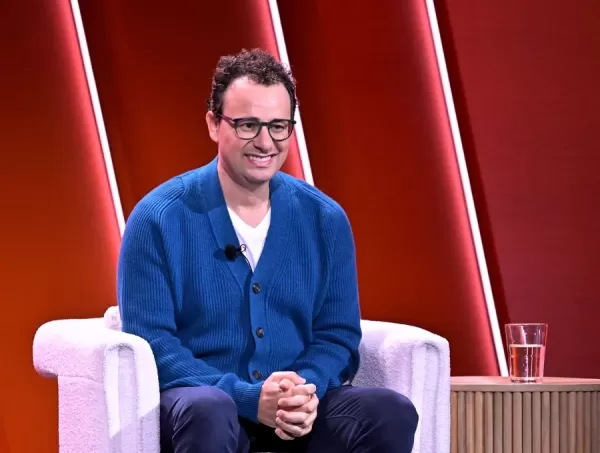 Can Anthropic Stage the Largest IPO in History at Over $2tn?
As Anthropic prepares for its stock market debut, investors anticipate a valuation exceeding $2 trillion, potentially surpassing Elon Musk’s SpaceX record for the largest IPO earlier this year.According to the Financial Times, which consulted half a
Can Anthropic Stage the Largest IPO in History at Over $2tn?
As Anthropic prepares for its stock market debut, investors anticipate a valuation exceeding $2 trillion, potentially surpassing Elon Musk’s SpaceX record for the largest IPO earlier this year.According to the Financial Times, which consulted half a
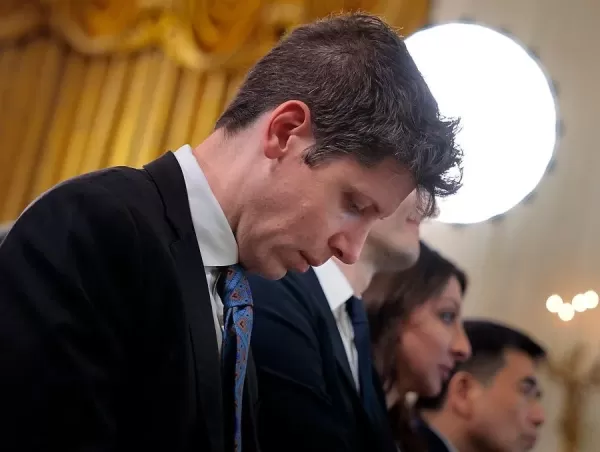 Alabama Investigates OpenAI Over Hugging Face Cyber Breach
In the wake of the Hugging Face security breach, OpenAI has paused frontier model development, with CEO Sam Altman emphasizing that safety alignment must keep pace with rapid progress. Credit: GettyAlabama Attorney General Steve Marshall has issued a
Alabama Investigates OpenAI Over Hugging Face Cyber Breach
In the wake of the Hugging Face security breach, OpenAI has paused frontier model development, with CEO Sam Altman emphasizing that safety alignment must keep pace with rapid progress. Credit: GettyAlabama Attorney General Steve Marshall has issued a
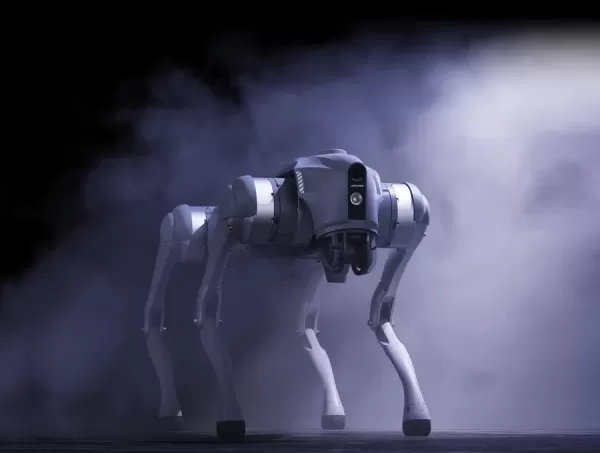 How Unitree is Shaping the Future of Humanoid Robotics
Unitree’s New Creature of Embodied AI with ultra-wide 4D LiDAR technology for advanced real-world navigation. Credit: UnitreeWang Xingxing, CEO of Unitree, targets world model breakthroughs to help humanoid machines execute 80% of tasks when placed i
How Unitree is Shaping the Future of Humanoid Robotics
Unitree’s New Creature of Embodied AI with ultra-wide 4D LiDAR technology for advanced real-world navigation. Credit: UnitreeWang Xingxing, CEO of Unitree, targets world model breakthroughs to help humanoid machines execute 80% of tasks when placed i

2026 Latest Top-Rated Best AI Paper Reading Tools for Researchers! This curated list offers powerful game-changing solutions to quickly extract key methods, results, and limitations from complex academic papers. XIX.AI provides weekly updated free vs paid comparison data along with real-world tests across diverse research fields. Discover your perfect tool to boost productivity and unlock your AI edge today. Explore now!
8 tools
xix.ai

2026 Latest Best Top-rated AI Vocal Demo Tools for Track Prototypes are here on XIX.AI! This curated list features powerful, game-changing tools that go through real-world tests to ensure top performance. You’ll find a free vs paid comparison, detailed rankings, and must-try options perfect for boosting creative efficiency and helping you unlock your AI edge. Explore now to discover your perfect tool!
10 tools
xix.ai

2026 Latest Best Top-rated AI API Mocking Tools for Frontend-Backend Collaboration are here on XIX.AI! This curated list features powerful, game-changing solutions that help teams streamline workflows, boost productivity, and create high-quality apps faster through real-world tests and strict rankings. Get a free vs paid comparison to find the must-try option that suits your needs. Explore now to unlock your AI edge!
12 tools
xix.ai

2026 Latest Best Top-rated Midjourney Style Reference Tools for Character Concepts, Posters, and Ad Visuals! XIX.AI has curated a powerful game-changing collection that undergoes weekly updated real-world tests. You can find detailed free vs paid comparison insights and reliable rankings to help you pick the must-try option that boosts your creativity and speeds up workflow significantly. Explore now to Discover your perfect tool for all your visual design needs.
11 tools
xix.ai

2026 Latest Best Top-rated AI Vocal Generation Tools for Creating Demo Vocals and Harmony Layers are here on XIX.AI. This curated collection features powerful, game-changing solutions that have passed rigorous real-world tests. We provide a weekly updated free vs paid comparison along with detailed rankings to help you find the perfect tool for boosting your creativity and productivity. Explore now to Unlock your AI edge.
12 tools
xix.ai

2026 Latest Best Top-rated AI Focus Assistants Curated to Slash Context Switching and Keep You Productive All Day. These powerful tools undergo rigorous real-world tests, featuring a free vs paid comparison along with weekly updated rankings. Discover your perfect tool to boost writing efficiency, unlock creative ideas, and stay focused without distraction. Explore now at XIX.AI to Unlock your AI edge.
9 tools
xix.ai












