


 Home
Home
Tongyi Lab Open-Sources LOGOS, First Unified Scientific Large Model Outperforming NatureLM with 1B Parameters
On June 18, 2026, Tongyi Lab announced the open-source release of LOGOS (Language Of Generative Objects in Science), the first multi-domain scientific generative foundation model built on a unified "scientific grammar."
Developed jointly by ATH-Token Foundry and the Huoqian Institute of Artificial Intelligence at Renmin University, this model aims to break the fragmented "one task, one expert model" status quo in traditional AI for Science (AI4S). By encoding diverse scientific objects—proteins, small molecules, materials, and chemical reactions—into a unified discrete token sequence, it enables cross-domain knowledge integration and autoregressive generation within a native large model framework.
LOGOS's core breakthrough lies in its innovative "scientific grammar" design and spatial interaction discretization technology. This allows the model to deeply understand complex 3D spatial interaction rules and perform autoregressive generation without relying on scarce 3D coordinate data or specialized geometric networks, ensuring full consistency in form and objective between pre-training and downstream tasks.
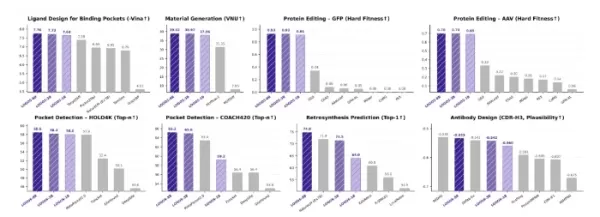
Evaluation results show that LOGOS-1B, with just 1 billion parameters, consistently matches or surpasses domain-specific methods across six representative tasks: pocket-conditioned ligand generation, retrosynthesis prediction (Top-1 accuracy 74.8%), pocket site identification (Top-n accuracy 58.5% on the HOLO4K dataset), and MOF material generation (a 76% increase in the proportion of new building units). In some tasks, it even outperformed NatureLM—which uses 8×7B parameters—while using only 1/56 of the parameter count.
Related article
 OpenAI Unveils Codex Cloud Environments for Seamless Cross-Device Use
OpenAI has expanded its software engineering agent, Codex, with new capabilities that extend its utility beyond individual laptops. These updates introduce reusable cloud development environments, enabling access from any device.Announced during Open
Tencent WorkBuddy Launches on HarmonyOS PC App Market
On July 27, Zhang Jun, Tencent’s public relations director, announced the official launch of the company’s AI office assistant, WorkBuddy, on the HarmonyOS PC app market. This marks the debut of the first desktop AI agent within the HarmonyOS ecosyst
Alibaba DAMO Academy Unveils DAMO EAGLE AI for Non-Invasive Esophageal Cancer Detection
Alibaba has unveiled its latest cancer screening AI tool, DAMO EAGLE. Developed jointly by Alibaba DAMO Academy, Sichuan Cancer Hospital, and Sun Yat-sen University Cancer Center, this model detects esophageal cancer—including early-stage and precanc
Related Special Topic Recommendations
code
OpenAI Unveils Codex Cloud Environments for Seamless Cross-Device Use
OpenAI has expanded its software engineering agent, Codex, with new capabilities that extend its utility beyond individual laptops. These updates introduce reusable cloud development environments, enabling access from any device.Announced during Open
Tencent WorkBuddy Launches on HarmonyOS PC App Market
On July 27, Zhang Jun, Tencent’s public relations director, announced the official launch of the company’s AI office assistant, WorkBuddy, on the HarmonyOS PC app market. This marks the debut of the first desktop AI agent within the HarmonyOS ecosyst
Alibaba DAMO Academy Unveils DAMO EAGLE AI for Non-Invasive Esophageal Cancer Detection
Alibaba has unveiled its latest cancer screening AI tool, DAMO EAGLE. Developed jointly by Alibaba DAMO Academy, Sichuan Cancer Hospital, and Sun Yat-sen University Cancer Center, this model detects esophageal cancer—including early-stage and precanc
Related Special Topic Recommendations
code
 Best AI Coding Tools for Python and JavaScript
2026 Latest Best Top-Rated AI Coding Tools for Python and JavaScript are here on XIX.AI’s curated list. These powerful game-changing tools have undergone rigorous real-world tests to deliver exceptional results for writing efficient code, fixing bugs, and boosting productivity. Get a free vs paid comparison and see which options suit your needs. Explore now to Discover your perfect coding tool and Unlock your AI edge.
 10 tools
 xix.ai
Academic Research
Best AI Citation Mapping Tools for Research Discovery
xix.ai
Academic Research
Best AI Citation Mapping Tools for Research Discovery
2026 Latest Best Top-Rated AI Citation Mapping Tools for Research Discovery! XIX.AI has curated a powerful, game-changing collection of must-try tools that go through rigorous real-world tests to deliver accurate results. You’ll find detailed free vs paid comparisons, weekly updated rankings, and insights to help you boost your research efficiency and uncover valuable data faster. Explore now to discover your perfect tool for academic work! 238 characters
11 tools
xix.ai
SEO
AI Meta Tag Tools for Faster On Page SEO
2026 Latest Best Top-rated AI Meta Tag Tools for Faster On Page SEO! XIX.AI has curated a powerful, game-changing collection of highly reliable tools that undergo rigorous real-world tests. You’ll find a free vs paid comparison along with detailed rankings to help you choose the perfect option for boosting your content’s search visibility and improving writing efficiency. Explore now to Unlock your AI edge!
9 tools
xix.ai
Health & Wellness
AI Habit Tracking Tools for Personal Health Goals
2026 Latest Best AI Habit Tracking Tools for Personal Health Goals are here on XIX.AI! Our curated top-rated list includes powerful, game-changing solutions that help you stay consistent with your goals through real-world tests and strict rankings. We also offer a free vs paid comparison to help you choose the perfect fit. Explore now to Unlock your AI edge in achieving better health outcomes.
10 tools
xix.ai
Data Analysis
Best AI Anomaly Detection Tools for Dashboard Monitoring
2026 Latest Best Top-rated AI Anomaly Detection Tools for Dashboard Monitoring are here on XIX.AI! This curated list features powerful, game-changing solutions that deliver accurate real-world tests through weekly updated rankings. You’ll find a free vs paid comparison and insights into how these tools boost productivity by helping users spot issues fast, streamlining workflow efficiency. Discover your perfect tool to unlock your AI edge today. Explore now!
9 tools
xix.ai
Animation Creation
AI Lip-Sync Generators for Dialogue-Driven Character Animation and Motion Scenes
2026 Latest Best AI Lip-Sync Generators for Dialogue-Driven Character Animation and Motion Scenes! XIX.AI has curated a top-rated list of powerful, game-changing tools that deliver flawless synchronized lip movements for animated characters. Each option undergoes rigorous real-world tests to ensure reliability, and our weekly updated rankings help you find the must-try solution that boosts your animation workflow efficiency. Explore now to discover your perfect tool!
9 tools
xix.ai

 Comments (0)
0/500
Comments (0)
0/500
On June 18, 2026, Tongyi Lab announced the open-source release of LOGOS (Language Of Generative Objects in Science), the first multi-domain scientific generative foundation model built on a unified "scientific grammar."
Developed jointly by ATH-Token Foundry and the Huoqian Institute of Artificial Intelligence at Renmin University, this model aims to break the fragmented "one task, one expert model" status quo in traditional AI for Science (AI4S). By encoding diverse scientific objects—proteins, small molecules, materials, and chemical reactions—into a unified discrete token sequence, it enables cross-domain knowledge integration and autoregressive generation within a native large model framework.
LOGOS's core breakthrough lies in its innovative "scientific grammar" design and spatial interaction discretization technology. This allows the model to deeply understand complex 3D spatial interaction rules and perform autoregressive generation without relying on scarce 3D coordinate data or specialized geometric networks, ensuring full consistency in form and objective between pre-training and downstream tasks.
Evaluation results show that LOGOS-1B, with just 1 billion parameters, consistently matches or surpasses domain-specific methods across six representative tasks: pocket-conditioned ligand generation, retrosynthesis prediction (Top-1 accuracy 74.8%), pocket site identification (Top-n accuracy 58.5% on the HOLO4K dataset), and MOF material generation (a 76% increase in the proportion of new building units). In some tasks, it even outperformed NatureLM—which uses 8×7B parameters—while using only 1/56 of the parameter count.








 OpenAI Unveils Codex Cloud Environments for Seamless Cross-Device Use
OpenAI has expanded its software engineering agent, Codex, with new capabilities that extend its utility beyond individual laptops. These updates introduce reusable cloud development environments, enabling access from any device.Announced during Open
OpenAI Unveils Codex Cloud Environments for Seamless Cross-Device Use
OpenAI has expanded its software engineering agent, Codex, with new capabilities that extend its utility beyond individual laptops. These updates introduce reusable cloud development environments, enabling access from any device.Announced during Open
 Tencent WorkBuddy Launches on HarmonyOS PC App Market
On July 27, Zhang Jun, Tencent’s public relations director, announced the official launch of the company’s AI office assistant, WorkBuddy, on the HarmonyOS PC app market. This marks the debut of the first desktop AI agent within the HarmonyOS ecosyst
Tencent WorkBuddy Launches on HarmonyOS PC App Market
On July 27, Zhang Jun, Tencent’s public relations director, announced the official launch of the company’s AI office assistant, WorkBuddy, on the HarmonyOS PC app market. This marks the debut of the first desktop AI agent within the HarmonyOS ecosyst
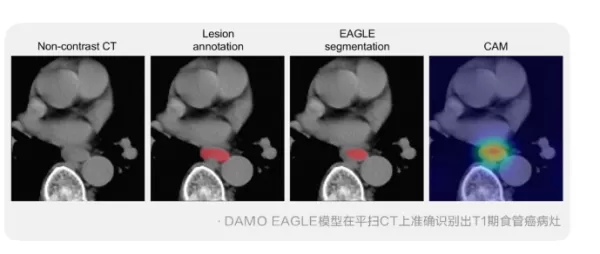 Alibaba DAMO Academy Unveils DAMO EAGLE AI for Non-Invasive Esophageal Cancer Detection
Alibaba has unveiled its latest cancer screening AI tool, DAMO EAGLE. Developed jointly by Alibaba DAMO Academy, Sichuan Cancer Hospital, and Sun Yat-sen University Cancer Center, this model detects esophageal cancer—including early-stage and precanc
Alibaba DAMO Academy Unveils DAMO EAGLE AI for Non-Invasive Esophageal Cancer Detection
Alibaba has unveiled its latest cancer screening AI tool, DAMO EAGLE. Developed jointly by Alibaba DAMO Academy, Sichuan Cancer Hospital, and Sun Yat-sen University Cancer Center, this model detects esophageal cancer—including early-stage and precanc

2026 Latest Best Top-Rated AI Coding Tools for Python and JavaScript are here on XIX.AI’s curated list. These powerful game-changing tools have undergone rigorous real-world tests to deliver exceptional results for writing efficient code, fixing bugs, and boosting productivity. Get a free vs paid comparison and see which options suit your needs. Explore now to Discover your perfect coding tool and Unlock your AI edge.
10 tools
xix.ai

2026 Latest Best Top-Rated AI Citation Mapping Tools for Research Discovery! XIX.AI has curated a powerful, game-changing collection of must-try tools that go through rigorous real-world tests to deliver accurate results. You’ll find detailed free vs paid comparisons, weekly updated rankings, and insights to help you boost your research efficiency and uncover valuable data faster. Explore now to discover your perfect tool for academic work! 238 characters
11 tools
xix.ai

2026 Latest Best Top-rated AI Meta Tag Tools for Faster On Page SEO! XIX.AI has curated a powerful, game-changing collection of highly reliable tools that undergo rigorous real-world tests. You’ll find a free vs paid comparison along with detailed rankings to help you choose the perfect option for boosting your content’s search visibility and improving writing efficiency. Explore now to Unlock your AI edge!
9 tools
xix.ai

2026 Latest Best AI Habit Tracking Tools for Personal Health Goals are here on XIX.AI! Our curated top-rated list includes powerful, game-changing solutions that help you stay consistent with your goals through real-world tests and strict rankings. We also offer a free vs paid comparison to help you choose the perfect fit. Explore now to Unlock your AI edge in achieving better health outcomes.
10 tools
xix.ai
2026 Latest Best Top-rated AI Anomaly Detection Tools for Dashboard Monitoring are here on XIX.AI! This curated list features powerful, game-changing solutions that deliver accurate real-world tests through weekly updated rankings. You’ll find a free vs paid comparison and insights into how these tools boost productivity by helping users spot issues fast, streamlining workflow efficiency. Discover your perfect tool to unlock your AI edge today. Explore now!
9 tools
xix.ai

2026 Latest Best AI Lip-Sync Generators for Dialogue-Driven Character Animation and Motion Scenes! XIX.AI has curated a top-rated list of powerful, game-changing tools that deliver flawless synchronized lip movements for animated characters. Each option undergoes rigorous real-world tests to ensure reliability, and our weekly updated rankings help you find the must-try solution that boosts your animation workflow efficiency. Explore now to discover your perfect tool!
9 tools
xix.ai












