


 Home
HomeSora's Potential Shutdown Poses Reality Check for AI Video
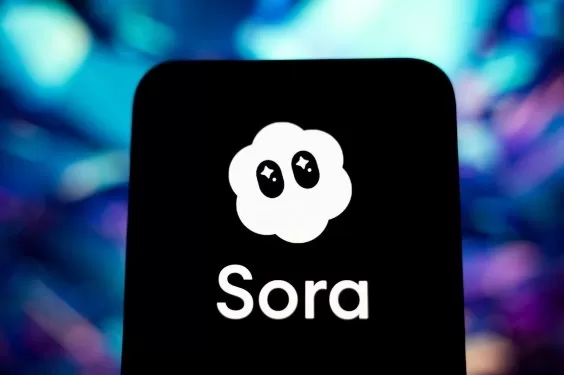
OpenAI announced this week that it is shutting down its Sora app and related video models, just six months after launch.
On the latest episode of TechCrunch's Equity podcast, Kirsten Korosec, Sean O'Kane, and I discussed the implications of this decision for OpenAI and the broader industry. To some extent, this move aligns with reports about OpenAI shifting its focus toward enterprise and productivity tools ahead of a potential IPO.
In fact, Kirsten noted that OpenAI's decision to shutter Sora demonstrated "a sign of maturity that was nice to see in an AI lab."
However, the shutdown of Sora—coupled with reports of ByteDance delaying the global launch of its Seedance 2.0 video model—may signal a reality check for AI video tool developers and proponents who claim these technologies will soon replace Hollywood.
Read an edited preview of our conversation below.
Anthony: It's important to note that this isn't just about the app. The app itself was particularly unappealing, at least to me and others, because it essentially functioned as a social network without genuine human interaction—it felt empty.
But beyond the app, OpenAI appears to be winding down nearly all its video initiatives. According to the Wall Street Journal, which broke this news, the decision reflects OpenAI's strategic pivot—potentially ahead of going public—toward business, enterprise, and programming products. Consumer social apps and video are simply not a current priority.
Sean: I never really used the app. The concept itself was off-putting for several reasons. This serves as a reminder, perhaps even for OpenAI internally, of the role luck played in ChatGPT's extraordinary success.
Clearly, ChatGPT offers significant value to users, and its sustained, high usage numbers over years prove it resonates deeply. However, with Sora, there was a sense of, "We built the most successful consumer product ever, and now we're doing it again—we'll bring in Disney and more." This shutdown is a stark reminder that there's no guaranteed shortcut to creating legendary consumer products. For an app to endure, people must find genuine meaning in it.
Kirsten: I actually commend OpenAI for this decision. While "move fast and break things" is often mocked, there's value in companies that can iterate rapidly and discontinue underperforming products without viewing it as a failure. Significant money was lost—consider the reported billion-dollar deal with Disney. While we don't have access to their balance sheets, one must question the expenditure and long-term value.
It was interesting to see what they could create, but their choice to shut it down showed a level of maturity that is refreshing to see in an AI lab.
Anthony: Regarding what this means for OpenAI, it seems entirely consistent with their rumored forward strategy. It doesn't appear to be a major setback for the future of generative AI.
The timing is interesting, especially with recent reports about ByteDance's Seedance. There are claims that Seedance 2.0's launch has been delayed due to engineering challenges and legal questions, particularly concerning IP protections—issues they may not have fully anticipated.
This is a moment of reality. There were hyperbolic statements, including from within Hollywood, claiming, "We're done, this is the future—just type prompts to make feature films." It turns out, for various technical and legal reasons, it's not that simple. We are still very far from that becoming a reality.
Sean: One final point: this is one of several decisions that seem to coincide with Fidji Simo taking over day-to-day operations. Her leadership marks a significant shift within OpenAI. As time passes and she makes more decisive moves regarding these consumer products, we'll better understand the impact of this leadership transition on the company's direction.
Loading the player…
Related article
 PHP Armageddon: OpenAI, Google’s Wiz uncover ancient holes, sparking internet panic
The U.S. National Security Agency issued a critical alert on Wednesday regarding two severe vulnerabilities in PHP, for which patches have already been released by the PHP Foundation.As a server-side scripting language, PHP powers approximately 70% o
OpenAI launches GPT-5.5 Instant as ChatGPT’s new default model
OpenAI launched GPT-5.5 Instant on Monday, replacing GPT-5.3 Instant as the default ChatGPT model. The company states that this update minimizes hallucinations in high-stakes fields like law, medicine, and finance, while preserving the fast response
Nvidia to Derive 25% of Next Year’s Revenue from Funded Labs
Nvidia has deployed nearly US$50 billion into AI labs purchasing its chips, securing commitments for over $500 billion in total.On August 26, CFO Colette Kress informed analysts that these labs, backed by Nvidia’s balance sheet, will account for roug
Related Special Topic Recommendations
Design & Art
PHP Armageddon: OpenAI, Google’s Wiz uncover ancient holes, sparking internet panic
The U.S. National Security Agency issued a critical alert on Wednesday regarding two severe vulnerabilities in PHP, for which patches have already been released by the PHP Foundation.As a server-side scripting language, PHP powers approximately 70% o
OpenAI launches GPT-5.5 Instant as ChatGPT’s new default model
OpenAI launched GPT-5.5 Instant on Monday, replacing GPT-5.3 Instant as the default ChatGPT model. The company states that this update minimizes hallucinations in high-stakes fields like law, medicine, and finance, while preserving the fast response
Nvidia to Derive 25% of Next Year’s Revenue from Funded Labs
Nvidia has deployed nearly US$50 billion into AI labs purchasing its chips, securing commitments for over $500 billion in total.On August 26, CFO Colette Kress informed analysts that these labs, backed by Nvidia’s balance sheet, will account for roug
Related Special Topic Recommendations
Design & Art
 Top AI Illustration Tools: Create Editorial Scenes and Cover Art Faster
2026 Latest Top-rated AI Illustration Tools: Our curated list features the best powerfully designed tools for creating stunning editorial scenes and eye-catching cover art quickly. Each option has gone through rigorous real-world tests, offering a free vs paid comparison to help you find the perfect match for your workflow. Try these must-try solutions today to unlock your AI edge and boost your creative productivity. Explore now at XIX.AI.
 10 tools
 xix.ai
Education and Learning
Top AI Tutors for Exam Prep: Practice Math, Science, and English
xix.ai
Education and Learning
Top AI Tutors for Exam Prep: Practice Math, Science, and English
2026 Latest Top-Rated Best AI Tutors for Exam Prep are here on XIX.AI! Our curated list features powerful game-changing tools that offer free vs paid comparison, real-world tests, and weekly updated rankings. They help boost your writing efficiency, simplify complex topic learning, and unlock your academic potential. Explore now to Discover your perfect exam prep tool and Start creating today to Unlock your AI edge!
10 tools
xix.ai
Finance
AI Budget Planning Tools for Personal Money Management
2026 Latest Best Top-Rated AI Budget Planning Tools for Personal Money Management are here on XIX.AI! This curated collection features powerful, game-changing solutions that help you conduct real-world tests, understand spending habits, and create personalized plans to boost productivity. Enjoy a free vs paid comparison along with detailed rankings. Must-try tools designed to simplify money management and unlock your AI edge. Explore now!
11 tools
xix.ai
Health & Wellness
AI Sleep Tracking Assistants: Improve Recovery with Better Bedtime Habits
2026 Latest Best Top-Rated AI Sleep Tracking Assistants curated for ultimate recovery. This fully updated weekly guide features powerful tools that deliver real-world tests, free vs paid comparison, and detailed rankings to help you find the must-try solution that boosts sleep quality and supports better bedtime habits. Explore now at XIX.AI to Unlock your AI edge.
10 tools
xix.ai
Data Analysis
AI SQL Copilots for Product and Revenue Analytics
2026 Latest Best Top-Rated AI SQL Copilots for Product and Revenue Analytics! XIX.AI has curated a powerful, game-changing collection of must-try tools that undergo real-world tests through weekly updated rankings. These tools help users boost productivity significantly by accelerating data analysis, streamlining complex queries, and generating accurate insights to drive smarter business decisions. Explore now to Discover your perfect tool for unlocking your AI edge!
14 tools
xix.ai
Education and Learning
Best AI Homework Helpers That Teach: Learn Concepts, Not Just Answers
2026 Latest Best Top-Rated AI Homework Helpers That Teach Core Concepts Not Just Answers Powerful Tools for Students Must-Try Curated List Weekly Updated Free vs Paid Comparison Real-World Tests Accurate Rankings to Help You Unlock Your Full Learning Potential Explore now to Discover your perfect tool for smarter studying.
10 tools
xix.ai

 Comments (0)
0/500
Comments (0)
0/500
OpenAI announced this week that it is shutting down its Sora app and related video models, just six months after launch.
On the latest episode of TechCrunch's Equity podcast, Kirsten Korosec, Sean O'Kane, and I discussed the implications of this decision for OpenAI and the broader industry. To some extent, this move aligns with reports about OpenAI shifting its focus toward enterprise and productivity tools ahead of a potential IPO.
In fact, Kirsten noted that OpenAI's decision to shutter Sora demonstrated "a sign of maturity that was nice to see in an AI lab."
However, the shutdown of Sora—coupled with reports of ByteDance delaying the global launch of its Seedance 2.0 video model—may signal a reality check for AI video tool developers and proponents who claim these technologies will soon replace Hollywood.
Read an edited preview of our conversation below.
Anthony: It's important to note that this isn't just about the app. The app itself was particularly unappealing, at least to me and others, because it essentially functioned as a social network without genuine human interaction—it felt empty.
But beyond the app, OpenAI appears to be winding down nearly all its video initiatives. According to the Wall Street Journal, which broke this news, the decision reflects OpenAI's strategic pivot—potentially ahead of going public—toward business, enterprise, and programming products. Consumer social apps and video are simply not a current priority.
Sean: I never really used the app. The concept itself was off-putting for several reasons. This serves as a reminder, perhaps even for OpenAI internally, of the role luck played in ChatGPT's extraordinary success.
Clearly, ChatGPT offers significant value to users, and its sustained, high usage numbers over years prove it resonates deeply. However, with Sora, there was a sense of, "We built the most successful consumer product ever, and now we're doing it again—we'll bring in Disney and more." This shutdown is a stark reminder that there's no guaranteed shortcut to creating legendary consumer products. For an app to endure, people must find genuine meaning in it.
Kirsten: I actually commend OpenAI for this decision. While "move fast and break things" is often mocked, there's value in companies that can iterate rapidly and discontinue underperforming products without viewing it as a failure. Significant money was lost—consider the reported billion-dollar deal with Disney. While we don't have access to their balance sheets, one must question the expenditure and long-term value.
It was interesting to see what they could create, but their choice to shut it down showed a level of maturity that is refreshing to see in an AI lab.
Anthony: Regarding what this means for OpenAI, it seems entirely consistent with their rumored forward strategy. It doesn't appear to be a major setback for the future of generative AI.
The timing is interesting, especially with recent reports about ByteDance's Seedance. There are claims that Seedance 2.0's launch has been delayed due to engineering challenges and legal questions, particularly concerning IP protections—issues they may not have fully anticipated.
This is a moment of reality. There were hyperbolic statements, including from within Hollywood, claiming, "We're done, this is the future—just type prompts to make feature films." It turns out, for various technical and legal reasons, it's not that simple. We are still very far from that becoming a reality.
Sean: One final point: this is one of several decisions that seem to coincide with Fidji Simo taking over day-to-day operations. Her leadership marks a significant shift within OpenAI. As time passes and she makes more decisive moves regarding these consumer products, we'll better understand the impact of this leadership transition on the company's direction.
Loading the player…








 PHP Armageddon: OpenAI, Google’s Wiz uncover ancient holes, sparking internet panic
The U.S. National Security Agency issued a critical alert on Wednesday regarding two severe vulnerabilities in PHP, for which patches have already been released by the PHP Foundation.As a server-side scripting language, PHP powers approximately 70% o
PHP Armageddon: OpenAI, Google’s Wiz uncover ancient holes, sparking internet panic
The U.S. National Security Agency issued a critical alert on Wednesday regarding two severe vulnerabilities in PHP, for which patches have already been released by the PHP Foundation.As a server-side scripting language, PHP powers approximately 70% o
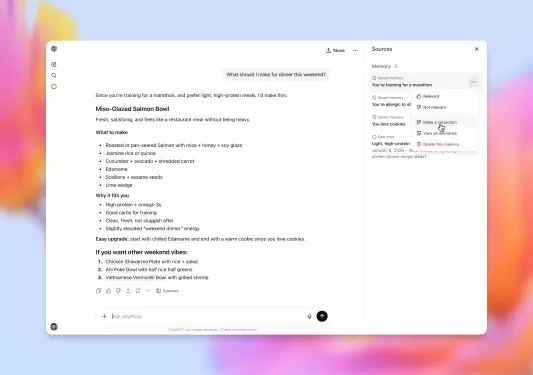 OpenAI launches GPT-5.5 Instant as ChatGPT’s new default model
OpenAI launched GPT-5.5 Instant on Monday, replacing GPT-5.3 Instant as the default ChatGPT model. The company states that this update minimizes hallucinations in high-stakes fields like law, medicine, and finance, while preserving the fast response
OpenAI launches GPT-5.5 Instant as ChatGPT’s new default model
OpenAI launched GPT-5.5 Instant on Monday, replacing GPT-5.3 Instant as the default ChatGPT model. The company states that this update minimizes hallucinations in high-stakes fields like law, medicine, and finance, while preserving the fast response
 Nvidia to Derive 25% of Next Year’s Revenue from Funded Labs
Nvidia has deployed nearly US$50 billion into AI labs purchasing its chips, securing commitments for over $500 billion in total.On August 26, CFO Colette Kress informed analysts that these labs, backed by Nvidia’s balance sheet, will account for roug
Nvidia to Derive 25% of Next Year’s Revenue from Funded Labs
Nvidia has deployed nearly US$50 billion into AI labs purchasing its chips, securing commitments for over $500 billion in total.On August 26, CFO Colette Kress informed analysts that these labs, backed by Nvidia’s balance sheet, will account for roug

2026 Latest Top-rated AI Illustration Tools: Our curated list features the best powerfully designed tools for creating stunning editorial scenes and eye-catching cover art quickly. Each option has gone through rigorous real-world tests, offering a free vs paid comparison to help you find the perfect match for your workflow. Try these must-try solutions today to unlock your AI edge and boost your creative productivity. Explore now at XIX.AI.
10 tools
xix.ai

2026 Latest Top-Rated Best AI Tutors for Exam Prep are here on XIX.AI! Our curated list features powerful game-changing tools that offer free vs paid comparison, real-world tests, and weekly updated rankings. They help boost your writing efficiency, simplify complex topic learning, and unlock your academic potential. Explore now to Discover your perfect exam prep tool and Start creating today to Unlock your AI edge!
10 tools
xix.ai

2026 Latest Best Top-Rated AI Budget Planning Tools for Personal Money Management are here on XIX.AI! This curated collection features powerful, game-changing solutions that help you conduct real-world tests, understand spending habits, and create personalized plans to boost productivity. Enjoy a free vs paid comparison along with detailed rankings. Must-try tools designed to simplify money management and unlock your AI edge. Explore now!
11 tools
xix.ai
2026 Latest Best Top-Rated AI Sleep Tracking Assistants curated for ultimate recovery. This fully updated weekly guide features powerful tools that deliver real-world tests, free vs paid comparison, and detailed rankings to help you find the must-try solution that boosts sleep quality and supports better bedtime habits. Explore now at XIX.AI to Unlock your AI edge.
10 tools
xix.ai

2026 Latest Best Top-Rated AI SQL Copilots for Product and Revenue Analytics! XIX.AI has curated a powerful, game-changing collection of must-try tools that undergo real-world tests through weekly updated rankings. These tools help users boost productivity significantly by accelerating data analysis, streamlining complex queries, and generating accurate insights to drive smarter business decisions. Explore now to Discover your perfect tool for unlocking your AI edge!
14 tools
xix.ai

2026 Latest Best Top-Rated AI Homework Helpers That Teach Core Concepts Not Just Answers Powerful Tools for Students Must-Try Curated List Weekly Updated Free vs Paid Comparison Real-World Tests Accurate Rankings to Help You Unlock Your Full Learning Potential Explore now to Discover your perfect tool for smarter studying.
10 tools
xix.ai












