


 Home
HomeSenator Proposes Data Center Fee to Counteract AI Job Losses

Warning signs that AI could trigger widespread job displacement are accumulating: U.S. entry-level job postings have plunged 35% since 2023, mass layoffs have rippled through Big Tech, and even AI industry leaders are sounding the alarm.
Backstage at the Axios AI Summit in Washington on Wednesday, Sen. Mark Warner (D-VA) shared that a venture capitalist recently admitted to writing down software investments to zero, largely due to the rapid advancements of Anthropic's Claude. A major law firm also confided it has halted hiring first-year associates because AI can now manage much of the work traditionally given to junior lawyers.
Warner describes the fear of AI-driven job loss as "palpable," even as data from an AI firm suggests widespread displacement hasn't begun. This growing anxiety is fueling a separate debate: who should bear the financial responsibility for the transition.
Warner has a proposal: tax the data centers fueling the AI boom and direct that revenue to support displaced workers. He hasn't yet introduced formal legislation, but the idea is gaining traction as public frustration with AI and data centers mounts.
Nationwide, data centers are facing growing opposition. A bill introduced Wednesday by Sen. Bernie Sanders (D-VT) and Rep. Alexandria Ocasio-Cortez (D-NY) calls for a moratorium on new data centers. The most vocal concerns cite noise, pollution, and soaring electricity costs. Underlying these issues, however, is a simmering resentment—a reluctance to endure the downsides of hosting a data center that powers technology many fear will replace human jobs.
Warner does not plan to support his colleagues' moratorium bill. On stage at the event, he stated, "A data center moratorium simply means China is going to move quicker, and this is one area where we cannot afford to fall behind."
There is no putting the AI genie back in the bottle, he added. While Warner advocates for strict requirements to prevent data centers from passing water and power costs to local residents, he told TechCrunch he believes there is another way for communities to secure their "pound of flesh" and address underlying job loss fears.
"I've long believed the industry has an obligation to help solve this problem and help pay for it, but one question I've been asking is, who should pay?" Warner told TechCrunch. "Should it be the chipmakers, like Jensen [Huang, NVIDIA's CEO]? Should it be the large language model companies? Or should it be firms like Goldman Sachs, which are using these tools to reduce their hiring of first-year associates?"
Ultimately, he concluded, the "easiest place to extract the pound of flesh is probably going to be from the data centers."
This could involve directing data center tax revenue toward training programs for new nurses or funding AI upskilling initiatives—provided there is a "tangible benefit to communities" navigating an economic transition forced upon them by AI companies.
Warner views this as a way to balance the imperative to build data centers with a duty to the communities that shoulder their burdens.
The concept is not without precedent. Warner pointed to Henrico County, Virginia, which used tax revenue from a local data center to launch a new affordable housing project.
Finding a way to link data centers to clear community benefits will be essential, he argues, because otherwise, "the pitchforks are coming out."
The public mood suggests his concerns are valid. A recent NBC News poll found AI has a lower public approval rating than Immigration and Customs Enforcement (ICE), with 46% of registered voters viewing AI negatively versus only 26% positively. In Virginia, this sentiment is manifesting in a proposal to repeal state tax breaks for data center construction, which cost state and local governments nearly $2 billion annually in lost revenue in one of the world's largest data center markets. Warner predicts other states may follow Virginia's lead.
AI and data centers, he noted, are "easy to demonize."
Related article
 QueryStory urges caution on AI-generated content
In 2009, Shapor Naghibzadeh discovered the power of compelling storytelling while working as a Google sysops engineer. During Operation Aurora, when state-sponsored hackers targeted the tech giant, he was summoned to a crisis room to clarify server a
French Startup ZML Unveils Free Tool to Accelerate AI Inference Across Multiple Chips
Nvidia’s era of unchecked market supremacy may be winding down, yet competitors and alternatives are emerging from every angle.ZML, a prominent French AI startup backed by Turing Award laureate Yann LeCun, has unveiled inference-performance software
Anthropic Unveils Opus 4.6, a Controversial Content Generator
Anthropic’s universal usage standards for Claude prohibit the model from generating sexually explicit content, including depicting or requesting sexual intercourse or sex acts, generating content related to sexual fetishes or fantasies, or engaging i
Related Special Topic Recommendations
Design & Art
QueryStory urges caution on AI-generated content
In 2009, Shapor Naghibzadeh discovered the power of compelling storytelling while working as a Google sysops engineer. During Operation Aurora, when state-sponsored hackers targeted the tech giant, he was summoned to a crisis room to clarify server a
French Startup ZML Unveils Free Tool to Accelerate AI Inference Across Multiple Chips
Nvidia’s era of unchecked market supremacy may be winding down, yet competitors and alternatives are emerging from every angle.ZML, a prominent French AI startup backed by Turing Award laureate Yann LeCun, has unveiled inference-performance software
Anthropic Unveils Opus 4.6, a Controversial Content Generator
Anthropic’s universal usage standards for Claude prohibit the model from generating sexually explicit content, including depicting or requesting sexual intercourse or sex acts, generating content related to sexual fetishes or fantasies, or engaging i
Related Special Topic Recommendations
Design & Art
 Top AI Illustration Tools: Create Editorial Scenes and Cover Art Faster
2026 Latest Top-rated AI Illustration Tools: Our curated list features the best powerfully designed tools for creating stunning editorial scenes and eye-catching cover art quickly. Each option has gone through rigorous real-world tests, offering a free vs paid comparison to help you find the perfect match for your workflow. Try these must-try solutions today to unlock your AI edge and boost your creative productivity. Explore now at XIX.AI.
 10 tools
 xix.ai
Education and Learning
Top AI Tutors for Exam Prep: Practice Math, Science, and English
xix.ai
Education and Learning
Top AI Tutors for Exam Prep: Practice Math, Science, and English
2026 Latest Top-Rated Best AI Tutors for Exam Prep are here on XIX.AI! Our curated list features powerful game-changing tools that offer free vs paid comparison, real-world tests, and weekly updated rankings. They help boost your writing efficiency, simplify complex topic learning, and unlock your academic potential. Explore now to Discover your perfect exam prep tool and Start creating today to Unlock your AI edge!
10 tools
xix.ai
Finance
AI Budget Planning Tools for Personal Money Management
2026 Latest Best Top-Rated AI Budget Planning Tools for Personal Money Management are here on XIX.AI! This curated collection features powerful, game-changing solutions that help you conduct real-world tests, understand spending habits, and create personalized plans to boost productivity. Enjoy a free vs paid comparison along with detailed rankings. Must-try tools designed to simplify money management and unlock your AI edge. Explore now!
11 tools
xix.ai
Health & Wellness
AI Sleep Tracking Assistants: Improve Recovery with Better Bedtime Habits
2026 Latest Best Top-Rated AI Sleep Tracking Assistants curated for ultimate recovery. This fully updated weekly guide features powerful tools that deliver real-world tests, free vs paid comparison, and detailed rankings to help you find the must-try solution that boosts sleep quality and supports better bedtime habits. Explore now at XIX.AI to Unlock your AI edge.
10 tools
xix.ai
Data Analysis
AI SQL Copilots for Product and Revenue Analytics
2026 Latest Best Top-Rated AI SQL Copilots for Product and Revenue Analytics! XIX.AI has curated a powerful, game-changing collection of must-try tools that undergo real-world tests through weekly updated rankings. These tools help users boost productivity significantly by accelerating data analysis, streamlining complex queries, and generating accurate insights to drive smarter business decisions. Explore now to Discover your perfect tool for unlocking your AI edge!
14 tools
xix.ai
Education and Learning
Best AI Homework Helpers That Teach: Learn Concepts, Not Just Answers
2026 Latest Best Top-Rated AI Homework Helpers That Teach Core Concepts Not Just Answers Powerful Tools for Students Must-Try Curated List Weekly Updated Free vs Paid Comparison Real-World Tests Accurate Rankings to Help You Unlock Your Full Learning Potential Explore now to Discover your perfect tool for smarter studying.
10 tools
xix.ai

 Comments (1)
0/500
Comments (1)
0/500
![NicholasClark]()
AIが職を奪うって本当?entry-levelの募集が減ってるってニュース見たけど、自分もいつか置き換わっちゃうかもって不安だな。技術の進歩は速いけど、人間の価値が下がるのは嫌だよね。
Warning signs that AI could trigger widespread job displacement are accumulating: U.S. entry-level job postings have plunged 35% since 2023, mass layoffs have rippled through Big Tech, and even AI industry leaders are sounding the alarm.
Backstage at the Axios AI Summit in Washington on Wednesday, Sen. Mark Warner (D-VA) shared that a venture capitalist recently admitted to writing down software investments to zero, largely due to the rapid advancements of Anthropic's Claude. A major law firm also confided it has halted hiring first-year associates because AI can now manage much of the work traditionally given to junior lawyers.
Warner describes the fear of AI-driven job loss as "palpable," even as data from an AI firm suggests widespread displacement hasn't begun. This growing anxiety is fueling a separate debate: who should bear the financial responsibility for the transition.
Warner has a proposal: tax the data centers fueling the AI boom and direct that revenue to support displaced workers. He hasn't yet introduced formal legislation, but the idea is gaining traction as public frustration with AI and data centers mounts.
Nationwide, data centers are facing growing opposition. A bill introduced Wednesday by Sen. Bernie Sanders (D-VT) and Rep. Alexandria Ocasio-Cortez (D-NY) calls for a moratorium on new data centers. The most vocal concerns cite noise, pollution, and soaring electricity costs. Underlying these issues, however, is a simmering resentment—a reluctance to endure the downsides of hosting a data center that powers technology many fear will replace human jobs.
Warner does not plan to support his colleagues' moratorium bill. On stage at the event, he stated, "A data center moratorium simply means China is going to move quicker, and this is one area where we cannot afford to fall behind."
There is no putting the AI genie back in the bottle, he added. While Warner advocates for strict requirements to prevent data centers from passing water and power costs to local residents, he told TechCrunch he believes there is another way for communities to secure their "pound of flesh" and address underlying job loss fears.
"I've long believed the industry has an obligation to help solve this problem and help pay for it, but one question I've been asking is, who should pay?" Warner told TechCrunch. "Should it be the chipmakers, like Jensen [Huang, NVIDIA's CEO]? Should it be the large language model companies? Or should it be firms like Goldman Sachs, which are using these tools to reduce their hiring of first-year associates?"
Ultimately, he concluded, the "easiest place to extract the pound of flesh is probably going to be from the data centers."
This could involve directing data center tax revenue toward training programs for new nurses or funding AI upskilling initiatives—provided there is a "tangible benefit to communities" navigating an economic transition forced upon them by AI companies.
Warner views this as a way to balance the imperative to build data centers with a duty to the communities that shoulder their burdens.
The concept is not without precedent. Warner pointed to Henrico County, Virginia, which used tax revenue from a local data center to launch a new affordable housing project.
Finding a way to link data centers to clear community benefits will be essential, he argues, because otherwise, "the pitchforks are coming out."
The public mood suggests his concerns are valid. A recent NBC News poll found AI has a lower public approval rating than Immigration and Customs Enforcement (ICE), with 46% of registered voters viewing AI negatively versus only 26% positively. In Virginia, this sentiment is manifesting in a proposal to repeal state tax breaks for data center construction, which cost state and local governments nearly $2 billion annually in lost revenue in one of the world's largest data center markets. Warner predicts other states may follow Virginia's lead.
AI and data centers, he noted, are "easy to demonize."








 QueryStory urges caution on AI-generated content
In 2009, Shapor Naghibzadeh discovered the power of compelling storytelling while working as a Google sysops engineer. During Operation Aurora, when state-sponsored hackers targeted the tech giant, he was summoned to a crisis room to clarify server a
QueryStory urges caution on AI-generated content
In 2009, Shapor Naghibzadeh discovered the power of compelling storytelling while working as a Google sysops engineer. During Operation Aurora, when state-sponsored hackers targeted the tech giant, he was summoned to a crisis room to clarify server a
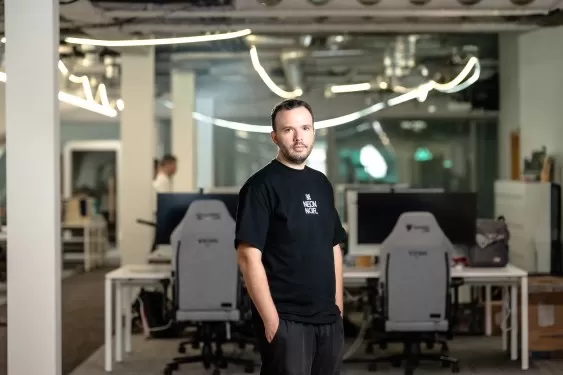 French Startup ZML Unveils Free Tool to Accelerate AI Inference Across Multiple Chips
Nvidia’s era of unchecked market supremacy may be winding down, yet competitors and alternatives are emerging from every angle.ZML, a prominent French AI startup backed by Turing Award laureate Yann LeCun, has unveiled inference-performance software
French Startup ZML Unveils Free Tool to Accelerate AI Inference Across Multiple Chips
Nvidia’s era of unchecked market supremacy may be winding down, yet competitors and alternatives are emerging from every angle.ZML, a prominent French AI startup backed by Turing Award laureate Yann LeCun, has unveiled inference-performance software
 Anthropic Unveils Opus 4.6, a Controversial Content Generator
Anthropic’s universal usage standards for Claude prohibit the model from generating sexually explicit content, including depicting or requesting sexual intercourse or sex acts, generating content related to sexual fetishes or fantasies, or engaging i
Anthropic Unveils Opus 4.6, a Controversial Content Generator
Anthropic’s universal usage standards for Claude prohibit the model from generating sexually explicit content, including depicting or requesting sexual intercourse or sex acts, generating content related to sexual fetishes or fantasies, or engaging i

2026 Latest Top-rated AI Illustration Tools: Our curated list features the best powerfully designed tools for creating stunning editorial scenes and eye-catching cover art quickly. Each option has gone through rigorous real-world tests, offering a free vs paid comparison to help you find the perfect match for your workflow. Try these must-try solutions today to unlock your AI edge and boost your creative productivity. Explore now at XIX.AI.
10 tools
xix.ai

2026 Latest Top-Rated Best AI Tutors for Exam Prep are here on XIX.AI! Our curated list features powerful game-changing tools that offer free vs paid comparison, real-world tests, and weekly updated rankings. They help boost your writing efficiency, simplify complex topic learning, and unlock your academic potential. Explore now to Discover your perfect exam prep tool and Start creating today to Unlock your AI edge!
10 tools
xix.ai

2026 Latest Best Top-Rated AI Budget Planning Tools for Personal Money Management are here on XIX.AI! This curated collection features powerful, game-changing solutions that help you conduct real-world tests, understand spending habits, and create personalized plans to boost productivity. Enjoy a free vs paid comparison along with detailed rankings. Must-try tools designed to simplify money management and unlock your AI edge. Explore now!
11 tools
xix.ai

2026 Latest Best Top-Rated AI Sleep Tracking Assistants curated for ultimate recovery. This fully updated weekly guide features powerful tools that deliver real-world tests, free vs paid comparison, and detailed rankings to help you find the must-try solution that boosts sleep quality and supports better bedtime habits. Explore now at XIX.AI to Unlock your AI edge.
10 tools
xix.ai

2026 Latest Best Top-Rated AI SQL Copilots for Product and Revenue Analytics! XIX.AI has curated a powerful, game-changing collection of must-try tools that undergo real-world tests through weekly updated rankings. These tools help users boost productivity significantly by accelerating data analysis, streamlining complex queries, and generating accurate insights to drive smarter business decisions. Explore now to Discover your perfect tool for unlocking your AI edge!
14 tools
xix.ai

2026 Latest Best Top-Rated AI Homework Helpers That Teach Core Concepts Not Just Answers Powerful Tools for Students Must-Try Curated List Weekly Updated Free vs Paid Comparison Real-World Tests Accurate Rankings to Help You Unlock Your Full Learning Potential Explore now to Discover your perfect tool for smarter studying.
10 tools
xix.ai

AIが職を奪うって本当?entry-levelの募集が減ってるってニュース見たけど、自分もいつか置き換わっちゃうかもって不安だな。技術の進歩は速いけど、人間の価値が下がるのは嫌だよね。












