


 Home
HomeScaleOps secures $130 million funding to boost compute efficiency for AI workloads
The AI boom is in full swing, yet companies are hemorrhaging money on wasted compute power. Expensive GPUs sit idle, workloads are overprovisioned, and cloud bills keep rising. ScaleOps argues the core issue isn't a hardware shortage—it's inefficient resource management.
The startup, which develops software to automatically manage and reallocate computing resources in real time, announced a $130 million Series C funding round on Monday, valuing the company at $800 million. Insight Partners led the round, with participation from existing investors Lightspeed Venture Partners, NFX, Glilot Capital Partners, and Picture Capital. ScaleOps claims its platform can slash cloud and AI infrastructure costs by up to 80%.
Co-founded in 2022 by former Run:ai engineer Yodar Shafrir, ScaleOps was born from witnessing the struggles companies face managing complex AI workloads. While tools like Kubernetes help orchestrate applications across large machine clusters, their reliance on static configurations often fails to adapt to rapid demand changes. This results in underutilized GPUs, performance bottlenecks, and significant financial waste.
"In my previous role at Run:ai, I spoke with many customers, particularly DevOps teams," Shafrir, now CEO of ScaleOps, told TechCrunch. "They appreciated what Run:ai offered but still grappled with managing production workloads, especially with the rise of AI inference. Looking at the bigger picture, I saw the problem wasn't confined to GPUs. It encompassed compute, memory, storage, and networking. The same pattern of inefficient resource management kept recurring."
DevOps teams often spent excessive time coordinating with multiple stakeholders to fix issues, with limited success. While many tools could identify problems, they rarely provided automated solutions. This gap presented a clear market opportunity.
ScaleOps aims to bridge that gap by dynamically aligning application requirements with infrastructure decisions, offering a fully autonomous, end-to-end management solution, Shafrir explained.
"Kubernetes is a powerful, flexible, and highly configurable system. But that configurability is also its weakness," Shafrir noted. "It depends on static settings, while modern applications are dynamic. This mismatch creates constant manual toil across teams. What's needed is a system that understands each application's unique context—its needs, behavior, and the evolving environment."
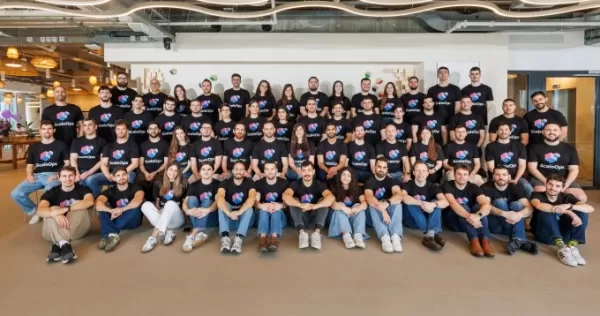
image credits: Scaleops
The market includes competitors like Cast AI, Kubecost, and Spot. According to Shafrir, while many offer automation, their solutions often lack full context, risking performance degradation or downtime and eroding trust among teams managing production systems.
ScaleOps says its platform was designed from inception for production environments. It is fully autonomous, context-aware, and requires no manual setup—features the company believes set it apart.
Headquartered in New York, ScaleOps serves enterprise customers worldwide, particularly those using Kubernetes. Its client base includes large organizations and companies across Europe and India, such as Adobe, Wiz, DocuSign, Salesforce, and Coupa.
This Series C round follows a $58 million Series B in November 2024. Shafrir stated that demand for autonomous cloud infrastructure management has surged, and the company is still in its early growth phase. A spokesperson confirmed total funding now stands at approximately $210 million.
ScaleOps reported over 450% year-over-year revenue growth and a tripling of its workforce in the past year, with plans to more than triple headcount again by the end of the current year.
The new capital will fuel product development and platform expansion. As AI accelerates compute demand, efficient infrastructure management becomes paramount. The startup is committed to advancing its vision of fully autonomous infrastructure.
Related article
 OneRail Leverages Nvidia AI to Optimize Real-Time Last-Mile Delivery
OneRail has introduced an AI-driven delivery platform leveraging Nvidia technology to assist retailers, wholesalers, and distributors in determining the most efficient delivery methods for individual orders.Named OmniSTAR, the system assesses various
Meta signs deal for millions of Amazon AI CPUs
Amazon has secured a significant partnership with Meta, once again relying on its own custom-designed chips. Meta has agreed to deploy millions of AWS Graviton chips to meet its expanding AI demands, Amazon confirmed on Friday.Note that AWS Graviton
Dell and NVIDIA Unveil Next-Generation AI Infrastructure at SC25
At SC25, Dell Technologies and NVIDIA unveiled enhancements to their combined AI platform, designed to help organizations run a broader spectrum of AI workloads—from legacy models to modern agent-based systems—with greater ease.As businesses expand t
Related Special Topic Recommendations
Design & Art
OneRail Leverages Nvidia AI to Optimize Real-Time Last-Mile Delivery
OneRail has introduced an AI-driven delivery platform leveraging Nvidia technology to assist retailers, wholesalers, and distributors in determining the most efficient delivery methods for individual orders.Named OmniSTAR, the system assesses various
Meta signs deal for millions of Amazon AI CPUs
Amazon has secured a significant partnership with Meta, once again relying on its own custom-designed chips. Meta has agreed to deploy millions of AWS Graviton chips to meet its expanding AI demands, Amazon confirmed on Friday.Note that AWS Graviton
Dell and NVIDIA Unveil Next-Generation AI Infrastructure at SC25
At SC25, Dell Technologies and NVIDIA unveiled enhancements to their combined AI platform, designed to help organizations run a broader spectrum of AI workloads—from legacy models to modern agent-based systems—with greater ease.As businesses expand t
Related Special Topic Recommendations
Design & Art
 Top AI Illustration Tools: Create Editorial Scenes and Cover Art Faster
2026 Latest Top-rated AI Illustration Tools: Our curated list features the best powerfully designed tools for creating stunning editorial scenes and eye-catching cover art quickly. Each option has gone through rigorous real-world tests, offering a free vs paid comparison to help you find the perfect match for your workflow. Try these must-try solutions today to unlock your AI edge and boost your creative productivity. Explore now at XIX.AI.
 10 tools
 xix.ai
Education and Learning
Top AI Tutors for Exam Prep: Practice Math, Science, and English
xix.ai
Education and Learning
Top AI Tutors for Exam Prep: Practice Math, Science, and English
2026 Latest Top-Rated Best AI Tutors for Exam Prep are here on XIX.AI! Our curated list features powerful game-changing tools that offer free vs paid comparison, real-world tests, and weekly updated rankings. They help boost your writing efficiency, simplify complex topic learning, and unlock your academic potential. Explore now to Discover your perfect exam prep tool and Start creating today to Unlock your AI edge!
10 tools
xix.ai
Finance
AI Budget Planning Tools for Personal Money Management
2026 Latest Best Top-Rated AI Budget Planning Tools for Personal Money Management are here on XIX.AI! This curated collection features powerful, game-changing solutions that help you conduct real-world tests, understand spending habits, and create personalized plans to boost productivity. Enjoy a free vs paid comparison along with detailed rankings. Must-try tools designed to simplify money management and unlock your AI edge. Explore now!
11 tools
xix.ai
Health & Wellness
AI Sleep Tracking Assistants: Improve Recovery with Better Bedtime Habits
2026 Latest Best Top-Rated AI Sleep Tracking Assistants curated for ultimate recovery. This fully updated weekly guide features powerful tools that deliver real-world tests, free vs paid comparison, and detailed rankings to help you find the must-try solution that boosts sleep quality and supports better bedtime habits. Explore now at XIX.AI to Unlock your AI edge.
10 tools
xix.ai
Data Analysis
AI SQL Copilots for Product and Revenue Analytics
2026 Latest Best Top-Rated AI SQL Copilots for Product and Revenue Analytics! XIX.AI has curated a powerful, game-changing collection of must-try tools that undergo real-world tests through weekly updated rankings. These tools help users boost productivity significantly by accelerating data analysis, streamlining complex queries, and generating accurate insights to drive smarter business decisions. Explore now to Discover your perfect tool for unlocking your AI edge!
14 tools
xix.ai
Education and Learning
Best AI Homework Helpers That Teach: Learn Concepts, Not Just Answers
2026 Latest Best Top-Rated AI Homework Helpers That Teach Core Concepts Not Just Answers Powerful Tools for Students Must-Try Curated List Weekly Updated Free vs Paid Comparison Real-World Tests Accurate Rankings to Help You Unlock Your Full Learning Potential Explore now to Discover your perfect tool for smarter studying.
10 tools
xix.ai

 Comments (0)
0/500
Comments (0)
0/500
The AI boom is in full swing, yet companies are hemorrhaging money on wasted compute power. Expensive GPUs sit idle, workloads are overprovisioned, and cloud bills keep rising. ScaleOps argues the core issue isn't a hardware shortage—it's inefficient resource management.
The startup, which develops software to automatically manage and reallocate computing resources in real time, announced a $130 million Series C funding round on Monday, valuing the company at $800 million. Insight Partners led the round, with participation from existing investors Lightspeed Venture Partners, NFX, Glilot Capital Partners, and Picture Capital. ScaleOps claims its platform can slash cloud and AI infrastructure costs by up to 80%.
Co-founded in 2022 by former Run:ai engineer Yodar Shafrir, ScaleOps was born from witnessing the struggles companies face managing complex AI workloads. While tools like Kubernetes help orchestrate applications across large machine clusters, their reliance on static configurations often fails to adapt to rapid demand changes. This results in underutilized GPUs, performance bottlenecks, and significant financial waste.
"In my previous role at Run:ai, I spoke with many customers, particularly DevOps teams," Shafrir, now CEO of ScaleOps, told TechCrunch. "They appreciated what Run:ai offered but still grappled with managing production workloads, especially with the rise of AI inference. Looking at the bigger picture, I saw the problem wasn't confined to GPUs. It encompassed compute, memory, storage, and networking. The same pattern of inefficient resource management kept recurring."
DevOps teams often spent excessive time coordinating with multiple stakeholders to fix issues, with limited success. While many tools could identify problems, they rarely provided automated solutions. This gap presented a clear market opportunity.
ScaleOps aims to bridge that gap by dynamically aligning application requirements with infrastructure decisions, offering a fully autonomous, end-to-end management solution, Shafrir explained.
"Kubernetes is a powerful, flexible, and highly configurable system. But that configurability is also its weakness," Shafrir noted. "It depends on static settings, while modern applications are dynamic. This mismatch creates constant manual toil across teams. What's needed is a system that understands each application's unique context—its needs, behavior, and the evolving environment."
image credits: Scaleops
The market includes competitors like Cast AI, Kubecost, and Spot. According to Shafrir, while many offer automation, their solutions often lack full context, risking performance degradation or downtime and eroding trust among teams managing production systems.
ScaleOps says its platform was designed from inception for production environments. It is fully autonomous, context-aware, and requires no manual setup—features the company believes set it apart.
Headquartered in New York, ScaleOps serves enterprise customers worldwide, particularly those using Kubernetes. Its client base includes large organizations and companies across Europe and India, such as Adobe, Wiz, DocuSign, Salesforce, and Coupa.
This Series C round follows a $58 million Series B in November 2024. Shafrir stated that demand for autonomous cloud infrastructure management has surged, and the company is still in its early growth phase. A spokesperson confirmed total funding now stands at approximately $210 million.
ScaleOps reported over 450% year-over-year revenue growth and a tripling of its workforce in the past year, with plans to more than triple headcount again by the end of the current year.
The new capital will fuel product development and platform expansion. As AI accelerates compute demand, efficient infrastructure management becomes paramount. The startup is committed to advancing its vision of fully autonomous infrastructure.








 OneRail Leverages Nvidia AI to Optimize Real-Time Last-Mile Delivery
OneRail has introduced an AI-driven delivery platform leveraging Nvidia technology to assist retailers, wholesalers, and distributors in determining the most efficient delivery methods for individual orders.Named OmniSTAR, the system assesses various
OneRail Leverages Nvidia AI to Optimize Real-Time Last-Mile Delivery
OneRail has introduced an AI-driven delivery platform leveraging Nvidia technology to assist retailers, wholesalers, and distributors in determining the most efficient delivery methods for individual orders.Named OmniSTAR, the system assesses various
 Meta signs deal for millions of Amazon AI CPUs
Amazon has secured a significant partnership with Meta, once again relying on its own custom-designed chips. Meta has agreed to deploy millions of AWS Graviton chips to meet its expanding AI demands, Amazon confirmed on Friday.Note that AWS Graviton
Meta signs deal for millions of Amazon AI CPUs
Amazon has secured a significant partnership with Meta, once again relying on its own custom-designed chips. Meta has agreed to deploy millions of AWS Graviton chips to meet its expanding AI demands, Amazon confirmed on Friday.Note that AWS Graviton
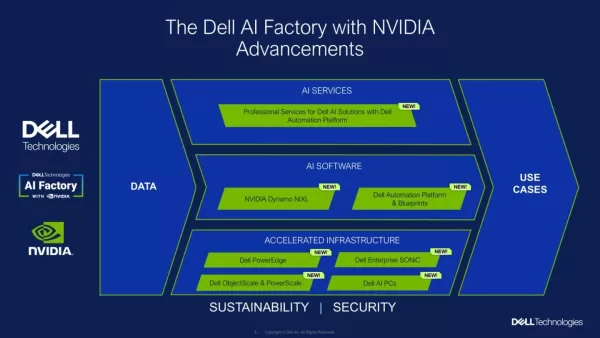 Dell and NVIDIA Unveil Next-Generation AI Infrastructure at SC25
At SC25, Dell Technologies and NVIDIA unveiled enhancements to their combined AI platform, designed to help organizations run a broader spectrum of AI workloads—from legacy models to modern agent-based systems—with greater ease.As businesses expand t
Dell and NVIDIA Unveil Next-Generation AI Infrastructure at SC25
At SC25, Dell Technologies and NVIDIA unveiled enhancements to their combined AI platform, designed to help organizations run a broader spectrum of AI workloads—from legacy models to modern agent-based systems—with greater ease.As businesses expand t

2026 Latest Top-rated AI Illustration Tools: Our curated list features the best powerfully designed tools for creating stunning editorial scenes and eye-catching cover art quickly. Each option has gone through rigorous real-world tests, offering a free vs paid comparison to help you find the perfect match for your workflow. Try these must-try solutions today to unlock your AI edge and boost your creative productivity. Explore now at XIX.AI.
10 tools
xix.ai

2026 Latest Top-Rated Best AI Tutors for Exam Prep are here on XIX.AI! Our curated list features powerful game-changing tools that offer free vs paid comparison, real-world tests, and weekly updated rankings. They help boost your writing efficiency, simplify complex topic learning, and unlock your academic potential. Explore now to Discover your perfect exam prep tool and Start creating today to Unlock your AI edge!
10 tools
xix.ai

2026 Latest Best Top-Rated AI Budget Planning Tools for Personal Money Management are here on XIX.AI! This curated collection features powerful, game-changing solutions that help you conduct real-world tests, understand spending habits, and create personalized plans to boost productivity. Enjoy a free vs paid comparison along with detailed rankings. Must-try tools designed to simplify money management and unlock your AI edge. Explore now!
11 tools
xix.ai

2026 Latest Best Top-Rated AI Sleep Tracking Assistants curated for ultimate recovery. This fully updated weekly guide features powerful tools that deliver real-world tests, free vs paid comparison, and detailed rankings to help you find the must-try solution that boosts sleep quality and supports better bedtime habits. Explore now at XIX.AI to Unlock your AI edge.
10 tools
xix.ai

2026 Latest Best Top-Rated AI SQL Copilots for Product and Revenue Analytics! XIX.AI has curated a powerful, game-changing collection of must-try tools that undergo real-world tests through weekly updated rankings. These tools help users boost productivity significantly by accelerating data analysis, streamlining complex queries, and generating accurate insights to drive smarter business decisions. Explore now to Discover your perfect tool for unlocking your AI edge!
14 tools
xix.ai

2026 Latest Best Top-Rated AI Homework Helpers That Teach Core Concepts Not Just Answers Powerful Tools for Students Must-Try Curated List Weekly Updated Free vs Paid Comparison Real-World Tests Accurate Rankings to Help You Unlock Your Full Learning Potential Explore now to Discover your perfect tool for smarter studying.
10 tools
xix.ai












