


 Home
HomeAI to Unlock New Discoveries in 2026, Says OpenAI CEO
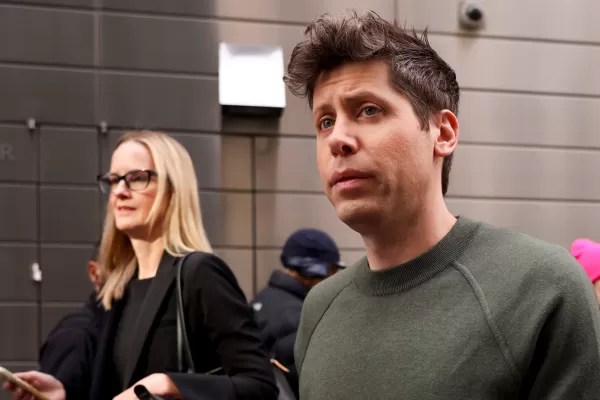
In a recent essay titled "The Gentle Singularity," published on Tuesday, OpenAI CEO Sam Altman outlined his vision for AI's transformative impact on humanity over the next 15 years.
Altman's essay blends optimism about artificial general intelligence (AGI) with a tempered view of its arrival. Known for such forward-looking writings, he envisions AGI reshaping work, energy, and societal structures. His essays often offer glimpses into OpenAI's upcoming projects.
In the essay, Altman predicted that by 2026, AI systems will likely deliver novel insights. Though not specific, this aligns with OpenAI's recent focus on developing AI models that generate innovative ideas about the world.
In April, OpenAI's co-founder and President Greg Brockman announced the o3 and o4-mini AI reasoning models, noting that scientists had used them to produce valuable new ideas.
Altman's post hints that OpenAI may intensify efforts to create AI capable of generating novel insights in the coming year. Other companies, including Google with its AlphaEvolve AI coding agent and FutureHouse, backed by former Google CEO Eric Schmidt, are also pursuing AI-driven scientific discoveries. In May, Anthropic launched a program to advance scientific research.
Success in this area could revolutionize fields like drug discovery and material science by automating critical parts of the scientific process.
Save Over $200 on Your TechCrunch All Stage Pass
Innovate smarter. Grow faster. Network deeper. Join leaders from Precursor Ventures, NEA, Index Ventures, Underscore VC, and more for a day of strategies, workshops, and impactful connections.
Save Over $200 on Your TechCrunch All Stage Pass
Innovate smarter. Grow faster. Network deeper. Join leaders from Precursor Ventures, NEA, Index Ventures, Underscore VC, and more for a day of strategies, workshops, and impactful connections.
Boston, MA | July 15 REGISTER NOWThis isn’t the first time Altman has hinted at OpenAI’s plans in a blog. In January, he suggested 2025 would be the year of AI agents, and OpenAI later released three agents: Operator, Deep Research, and Codex.
However, creating AI that generates novel insights may be tougher than building agentic systems. Some in the scientific community question AI’s ability to produce truly original ideas.
Earlier this year, Hugging Face’s Chief Science Officer Thomas Wolf argued that current AI systems struggle to ask profound questions, a cornerstone of scientific breakthroughs. Kenneth Stanley, a former OpenAI research lead, also told TechCrunch that today’s AI models cannot generate novel hypotheses.
Stanley now leads a team at Lila Sciences, a startup that raised $200 million to develop an AI-powered lab focused on improving AI’s ability to form hypotheses. He notes that this challenge requires instilling a sense of creativity and curiosity in AI models.
Whether OpenAI can deliver an AI model capable of producing novel insights remains uncertain. Yet, Altman’s essay likely offers a preview of OpenAI’s next steps.
Related article
 PHP Armageddon: OpenAI, Google’s Wiz uncover ancient holes, sparking internet panic
The U.S. National Security Agency issued a critical alert on Wednesday regarding two severe vulnerabilities in PHP, for which patches have already been released by the PHP Foundation.As a server-side scripting language, PHP powers approximately 70% o
OpenAI launches GPT-5.5 Instant as ChatGPT’s new default model
OpenAI launched GPT-5.5 Instant on Monday, replacing GPT-5.3 Instant as the default ChatGPT model. The company states that this update minimizes hallucinations in high-stakes fields like law, medicine, and finance, while preserving the fast response
Nvidia to Derive 25% of Next Year’s Revenue from Funded Labs
Nvidia has deployed nearly US$50 billion into AI labs purchasing its chips, securing commitments for over $500 billion in total.On August 26, CFO Colette Kress informed analysts that these labs, backed by Nvidia’s balance sheet, will account for roug
Related Special Topic Recommendations
Design & Art
PHP Armageddon: OpenAI, Google’s Wiz uncover ancient holes, sparking internet panic
The U.S. National Security Agency issued a critical alert on Wednesday regarding two severe vulnerabilities in PHP, for which patches have already been released by the PHP Foundation.As a server-side scripting language, PHP powers approximately 70% o
OpenAI launches GPT-5.5 Instant as ChatGPT’s new default model
OpenAI launched GPT-5.5 Instant on Monday, replacing GPT-5.3 Instant as the default ChatGPT model. The company states that this update minimizes hallucinations in high-stakes fields like law, medicine, and finance, while preserving the fast response
Nvidia to Derive 25% of Next Year’s Revenue from Funded Labs
Nvidia has deployed nearly US$50 billion into AI labs purchasing its chips, securing commitments for over $500 billion in total.On August 26, CFO Colette Kress informed analysts that these labs, backed by Nvidia’s balance sheet, will account for roug
Related Special Topic Recommendations
Design & Art
 Top AI Illustration Tools: Create Editorial Scenes and Cover Art Faster
2026 Latest Top-rated AI Illustration Tools: Our curated list features the best powerfully designed tools for creating stunning editorial scenes and eye-catching cover art quickly. Each option has gone through rigorous real-world tests, offering a free vs paid comparison to help you find the perfect match for your workflow. Try these must-try solutions today to unlock your AI edge and boost your creative productivity. Explore now at XIX.AI.
 10 tools
 xix.ai
Education and Learning
Top AI Tutors for Exam Prep: Practice Math, Science, and English
xix.ai
Education and Learning
Top AI Tutors for Exam Prep: Practice Math, Science, and English
2026 Latest Top-Rated Best AI Tutors for Exam Prep are here on XIX.AI! Our curated list features powerful game-changing tools that offer free vs paid comparison, real-world tests, and weekly updated rankings. They help boost your writing efficiency, simplify complex topic learning, and unlock your academic potential. Explore now to Discover your perfect exam prep tool and Start creating today to Unlock your AI edge!
10 tools
xix.ai
Finance
AI Budget Planning Tools for Personal Money Management
2026 Latest Best Top-Rated AI Budget Planning Tools for Personal Money Management are here on XIX.AI! This curated collection features powerful, game-changing solutions that help you conduct real-world tests, understand spending habits, and create personalized plans to boost productivity. Enjoy a free vs paid comparison along with detailed rankings. Must-try tools designed to simplify money management and unlock your AI edge. Explore now!
11 tools
xix.ai
Health & Wellness
AI Sleep Tracking Assistants: Improve Recovery with Better Bedtime Habits
2026 Latest Best Top-Rated AI Sleep Tracking Assistants curated for ultimate recovery. This fully updated weekly guide features powerful tools that deliver real-world tests, free vs paid comparison, and detailed rankings to help you find the must-try solution that boosts sleep quality and supports better bedtime habits. Explore now at XIX.AI to Unlock your AI edge.
10 tools
xix.ai
Data Analysis
AI SQL Copilots for Product and Revenue Analytics
2026 Latest Best Top-Rated AI SQL Copilots for Product and Revenue Analytics! XIX.AI has curated a powerful, game-changing collection of must-try tools that undergo real-world tests through weekly updated rankings. These tools help users boost productivity significantly by accelerating data analysis, streamlining complex queries, and generating accurate insights to drive smarter business decisions. Explore now to Discover your perfect tool for unlocking your AI edge!
14 tools
xix.ai
Education and Learning
Best AI Homework Helpers That Teach: Learn Concepts, Not Just Answers
2026 Latest Best Top-Rated AI Homework Helpers That Teach Core Concepts Not Just Answers Powerful Tools for Students Must-Try Curated List Weekly Updated Free vs Paid Comparison Real-World Tests Accurate Rankings to Help You Unlock Your Full Learning Potential Explore now to Discover your perfect tool for smarter studying.
10 tools
xix.ai

 Comments (4)
0/500
Comments (4)
0/500
![MarkWilson]()
Altman's 'gentle singularity' idea is intriguing, but I'm a bit skeptical about the 2026 timeline. Feels like we're still struggling with basic reliability issues in current models. The hype cycle is real, but I hope the focus stays on solving real-world problems, not just chasing headlines. 🤔
![JosephGreen]()
Altman's vision for AI sounds wild! 🤯 A 'gentle singularity' in 15 years? I'm curious if it'll really be that smooth or just tech hype.
![StephenScott]()
Sam Altman's vision for AI sounds like a sci-fi dream! I'm excited to see how it unfolds, but I hope it doesn't just make billionaires richer. 😅 Any chance we'll get AI that helps with my laundry?
![ScottGarcía]()
Sam Altman's vision for AI sounds like a sci-fi dream! 🤖 I'm excited to see how it reshapes science by 2026, but I hope it doesn't outsmart us too fast. What do you guys think about AI taking over research labs?
In a recent essay titled "The Gentle Singularity," published on Tuesday, OpenAI CEO Sam Altman outlined his vision for AI's transformative impact on humanity over the next 15 years.
Altman's essay blends optimism about artificial general intelligence (AGI) with a tempered view of its arrival. Known for such forward-looking writings, he envisions AGI reshaping work, energy, and societal structures. His essays often offer glimpses into OpenAI's upcoming projects.
In the essay, Altman predicted that by 2026, AI systems will likely deliver novel insights. Though not specific, this aligns with OpenAI's recent focus on developing AI models that generate innovative ideas about the world.
In April, OpenAI's co-founder and President Greg Brockman announced the o3 and o4-mini AI reasoning models, noting that scientists had used them to produce valuable new ideas.
Altman's post hints that OpenAI may intensify efforts to create AI capable of generating novel insights in the coming year. Other companies, including Google with its AlphaEvolve AI coding agent and FutureHouse, backed by former Google CEO Eric Schmidt, are also pursuing AI-driven scientific discoveries. In May, Anthropic launched a program to advance scientific research.
Success in this area could revolutionize fields like drug discovery and material science by automating critical parts of the scientific process.
Save Over $200 on Your TechCrunch All Stage Pass
Innovate smarter. Grow faster. Network deeper. Join leaders from Precursor Ventures, NEA, Index Ventures, Underscore VC, and more for a day of strategies, workshops, and impactful connections.
Save Over $200 on Your TechCrunch All Stage Pass
Innovate smarter. Grow faster. Network deeper. Join leaders from Precursor Ventures, NEA, Index Ventures, Underscore VC, and more for a day of strategies, workshops, and impactful connections.
Boston, MA | July 15 REGISTER NOWThis isn’t the first time Altman has hinted at OpenAI’s plans in a blog. In January, he suggested 2025 would be the year of AI agents, and OpenAI later released three agents: Operator, Deep Research, and Codex.
However, creating AI that generates novel insights may be tougher than building agentic systems. Some in the scientific community question AI’s ability to produce truly original ideas.
Earlier this year, Hugging Face’s Chief Science Officer Thomas Wolf argued that current AI systems struggle to ask profound questions, a cornerstone of scientific breakthroughs. Kenneth Stanley, a former OpenAI research lead, also told TechCrunch that today’s AI models cannot generate novel hypotheses.
Stanley now leads a team at Lila Sciences, a startup that raised $200 million to develop an AI-powered lab focused on improving AI’s ability to form hypotheses. He notes that this challenge requires instilling a sense of creativity and curiosity in AI models.
Whether OpenAI can deliver an AI model capable of producing novel insights remains uncertain. Yet, Altman’s essay likely offers a preview of OpenAI’s next steps.








 PHP Armageddon: OpenAI, Google’s Wiz uncover ancient holes, sparking internet panic
The U.S. National Security Agency issued a critical alert on Wednesday regarding two severe vulnerabilities in PHP, for which patches have already been released by the PHP Foundation.As a server-side scripting language, PHP powers approximately 70% o
PHP Armageddon: OpenAI, Google’s Wiz uncover ancient holes, sparking internet panic
The U.S. National Security Agency issued a critical alert on Wednesday regarding two severe vulnerabilities in PHP, for which patches have already been released by the PHP Foundation.As a server-side scripting language, PHP powers approximately 70% o
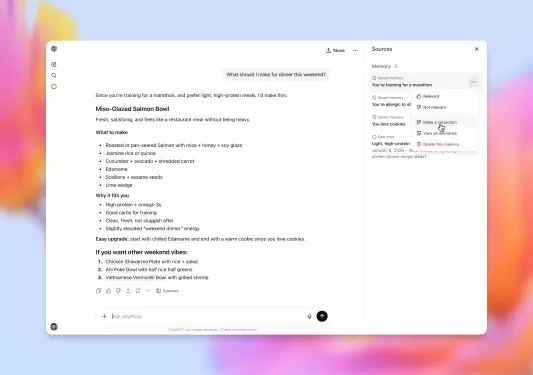 OpenAI launches GPT-5.5 Instant as ChatGPT’s new default model
OpenAI launched GPT-5.5 Instant on Monday, replacing GPT-5.3 Instant as the default ChatGPT model. The company states that this update minimizes hallucinations in high-stakes fields like law, medicine, and finance, while preserving the fast response
OpenAI launches GPT-5.5 Instant as ChatGPT’s new default model
OpenAI launched GPT-5.5 Instant on Monday, replacing GPT-5.3 Instant as the default ChatGPT model. The company states that this update minimizes hallucinations in high-stakes fields like law, medicine, and finance, while preserving the fast response
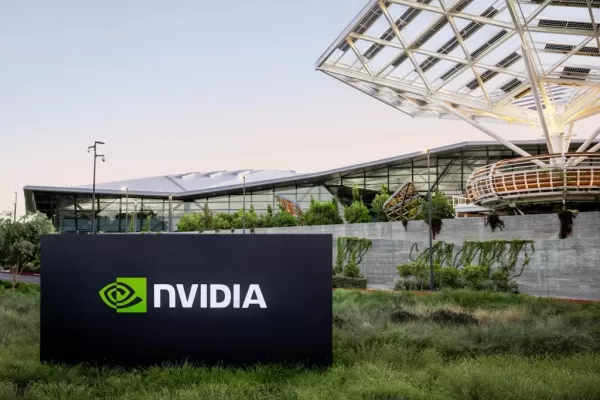 Nvidia to Derive 25% of Next Year’s Revenue from Funded Labs
Nvidia has deployed nearly US$50 billion into AI labs purchasing its chips, securing commitments for over $500 billion in total.On August 26, CFO Colette Kress informed analysts that these labs, backed by Nvidia’s balance sheet, will account for roug
Nvidia to Derive 25% of Next Year’s Revenue from Funded Labs
Nvidia has deployed nearly US$50 billion into AI labs purchasing its chips, securing commitments for over $500 billion in total.On August 26, CFO Colette Kress informed analysts that these labs, backed by Nvidia’s balance sheet, will account for roug

2026 Latest Top-rated AI Illustration Tools: Our curated list features the best powerfully designed tools for creating stunning editorial scenes and eye-catching cover art quickly. Each option has gone through rigorous real-world tests, offering a free vs paid comparison to help you find the perfect match for your workflow. Try these must-try solutions today to unlock your AI edge and boost your creative productivity. Explore now at XIX.AI.
10 tools
xix.ai
2026 Latest Top-Rated Best AI Tutors for Exam Prep are here on XIX.AI! Our curated list features powerful game-changing tools that offer free vs paid comparison, real-world tests, and weekly updated rankings. They help boost your writing efficiency, simplify complex topic learning, and unlock your academic potential. Explore now to Discover your perfect exam prep tool and Start creating today to Unlock your AI edge!
10 tools
xix.ai

2026 Latest Best Top-Rated AI Budget Planning Tools for Personal Money Management are here on XIX.AI! This curated collection features powerful, game-changing solutions that help you conduct real-world tests, understand spending habits, and create personalized plans to boost productivity. Enjoy a free vs paid comparison along with detailed rankings. Must-try tools designed to simplify money management and unlock your AI edge. Explore now!
11 tools
xix.ai

2026 Latest Best Top-Rated AI Sleep Tracking Assistants curated for ultimate recovery. This fully updated weekly guide features powerful tools that deliver real-world tests, free vs paid comparison, and detailed rankings to help you find the must-try solution that boosts sleep quality and supports better bedtime habits. Explore now at XIX.AI to Unlock your AI edge.
10 tools
xix.ai

2026 Latest Best Top-Rated AI SQL Copilots for Product and Revenue Analytics! XIX.AI has curated a powerful, game-changing collection of must-try tools that undergo real-world tests through weekly updated rankings. These tools help users boost productivity significantly by accelerating data analysis, streamlining complex queries, and generating accurate insights to drive smarter business decisions. Explore now to Discover your perfect tool for unlocking your AI edge!
14 tools
xix.ai

2026 Latest Best Top-Rated AI Homework Helpers That Teach Core Concepts Not Just Answers Powerful Tools for Students Must-Try Curated List Weekly Updated Free vs Paid Comparison Real-World Tests Accurate Rankings to Help You Unlock Your Full Learning Potential Explore now to Discover your perfect tool for smarter studying.
10 tools
xix.ai

Altman's 'gentle singularity' idea is intriguing, but I'm a bit skeptical about the 2026 timeline. Feels like we're still struggling with basic reliability issues in current models. The hype cycle is real, but I hope the focus stays on solving real-world problems, not just chasing headlines. 🤔
Altman's vision for AI sounds wild! 🤯 A 'gentle singularity' in 15 years? I'm curious if it'll really be that smooth or just tech hype.
Sam Altman's vision for AI sounds like a sci-fi dream! I'm excited to see how it unfolds, but I hope it doesn't just make billionaires richer. 😅 Any chance we'll get AI that helps with my laundry?
Sam Altman's vision for AI sounds like a sci-fi dream! 🤖 I'm excited to see how it reshapes science by 2026, but I hope it doesn't outsmart us too fast. What do you guys think about AI taking over research labs?












