


 Home
HomeQuadric's Shift to On-Device AI Inference Yields Results
Businesses and governments are increasingly seeking tools to run AI on local devices, aiming to reduce cloud infrastructure expenses and develop sovereign capabilities. Quadric, a chip-IP startup founded by veterans from early Bitcoin mining company 21E6, is positioning itself to enable this transition. The company is expanding beyond automotive applications into laptops and industrial equipment with its on-device inference technology.
This strategic expansion is already delivering results.
Quadric reported licensing revenue between $15 million and $20 million in 2025, a significant increase from approximately $4 million in 2024, according to CEO Veerbhan Kheterpal. The San Francisco-based company, which also maintains an office in Pune, India, is targeting up to $35 million in revenue this year as it builds a royalty-based on-device AI business. This growth has elevated the company's post-money valuation to between $270 million and $300 million, up from around $100 million during its 2022 Series B round, Kheterpal stated.
The company's progress has also drawn investor interest. Quadric recently announced a $30 million Series C funding round led by the ACCELERATE Fund, managed by BEENEXT Capital Management, bringing its total funding to $72 million. Kheterpal noted that this investment comes as both investors and chipmakers seek ways to shift more AI workloads from centralized cloud infrastructure to devices and local servers.
From automotive to everything
Quadric initially focused on automotive applications, where on-device AI enables real-time functions like driver assistance systems. Kheterpal explained that the widespread adoption of transformer-based models in 2023 expanded inference applications across numerous sectors, creating significant business momentum over the past 18 months as more companies seek to run AI locally instead of relying on cloud services.
"Nvidia provides a robust platform for data-center AI," Kheterpal said. "We aimed to create similar programmable infrastructure, comparable to CUDA, specifically for on-device AI applications."
Unlike Nvidia, Quadric doesn't manufacture chips directly. Instead, the company licenses programmable AI processor IP, which Kheterpal describes as a "blueprint" that clients can integrate into their own silicon designs. This is complemented by a software stack and toolchain for running various models, including vision and voice applications, directly on devices.
Disrupt 2026 Tickets: One-time offer
Tickets are now available! Secure savings of up to $680 during this limited-time offer, and be among the first 500 registrants to receive 50% off your additional guest pass. TechCrunch Disrupt gathers industry leaders from Google Cloud, Netflix, Microsoft, Box, a16z, Hugging Face, and many others for 250+ sessions focused on driving growth and enhancing competitive advantage. Engage with hundreds of innovative startups and participate in curated networking opportunities that facilitate business deals, valuable insights, and creative inspiration.
Disrupt 2026 Tickets: One-time offer
Tickets are now available! Secure savings of up to $680 during this limited-time offer, and be among the first 500 registrants to receive 50% off your additional guest pass. TechCrunch Disrupt gathers industry leaders from Google Cloud, Netflix, Microsoft, Box, a16z, Hugging Face, and many others for 250+ sessions focused on driving growth and enhancing competitive advantage. Engage with hundreds of innovative startups and participate in curated networking opportunities that facilitate business deals, valuable insights, and creative inspiration.
San Francisco|October 13-15, 2026REGISTER NOW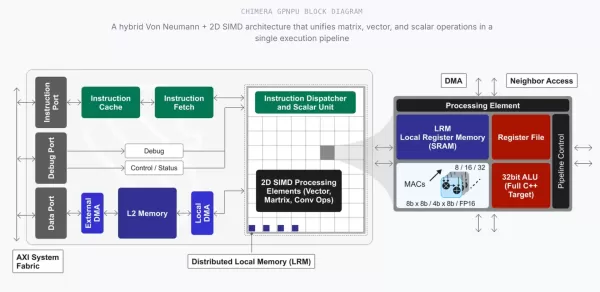
Quadric's technology is chip-agnostic and code-drivenImage Credits:Quadric The startup's client base includes manufacturers of printers, vehicles, and AI laptops, such as Kyocera and Japanese automotive supplier Denso, which produces chips for Toyota vehicles. According to Kheterpal, the first products incorporating Quadric's technology are scheduled to launch this year, starting with laptop devices.
Beyond traditional commercial applications, Quadric is now exploring markets pursuing "sovereign AI" strategies to decrease dependence on U.S.-based infrastructure, Kheterpal explained. The company is engaging with potential clients in India and Malaysia, with Moglix CEO Rahul Garg serving as a strategic investor helping shape Quadric's sovereign approach in India. Quadric employs nearly 70 people globally, including approximately 40 in the United States and about 10 in India.
This strategic direction is fueled by rising costs associated with centralized AI infrastructure and the challenges many nations face in constructing hyperscale data centers, Kheterpal noted. These factors are generating increased interest in "distributed AI" configurations where inference occurs on laptops or small on-premise servers within office environments, rather than depending on cloud-based services for every computational request.
The World Economic Forum recently highlighted this transition in an article discussing how AI inference is moving closer to end users and away from purely centralized architectures. Similarly, EY's November report indicated that sovereign AI approaches are gaining momentum as policymakers and industry organizations advocate for domestic AI capabilities encompassing computing resources, models, and data, rather than complete reliance on foreign infrastructure.
For chip manufacturers, the primary challenge lies in the rapid evolution of AI models compared to hardware design cycles, Kheterpal observed. He emphasized that clients require programmable processor IP that can adapt through software updates, avoiding expensive redesigns each time architectures transition from earlier vision-focused models to contemporary transformer-based systems.
Quadric positions itself as an alternative to chip suppliers like Qualcomm, which typically integrates its AI technology within its own processors, and IP providers such as Synopsys and Cadence, which offer neural processing engine blocks. Kheterpal noted that Qualcomm's approach can create vendor lock-in with its proprietary silicon, while traditional IP suppliers provide engine blocks that many clients find challenging to program effectively.
Quadric's programmable methodology enables clients to support new AI models through software updates rather than hardware redesigns, providing a crucial advantage in an industry where chip development often requires years, while model architectures can evolve within months.
Despite these advantages, Quadric remains in the early stages of its development, with a limited number of signed clients to date. The company's long-term success will largely depend on converting current licensing agreements into high-volume product shipments and sustainable royalty streams.
Related article
 DeepMind CEO Hassabis: I sleep six hours a day, usually feel energetic around 1 a.m.
Fortune recently featured an interview with Demis Hassabis, CEO of Google DeepMind, revealing his unconventional approach to rest and productivity. Hassabis disclosed that he sleeps very little, structuring his waking hours into two distinct work blo
OpenAI, Anthropic Vie for Market Share Despite Revenue Shortfalls
Despite recent reports suggesting OpenAI missed revenue targets, creating pressure on tech stocks this Tuesday, private AI lab investors remain resilient. Seasoned backers have confirmed they will not reduce investment despite negative media coverage
California AV Compliance: A New Era of Tickets, Geofences, and 1M Miles
Guident operates an AuveTech shuttle in South Florida, managing a four-mile route in West Palm Beach and a one-mile route in Boca Raton using its remote monitoring technology. | Credit: GuidentCalifornia is redefining the regulatory landscape for dri
Related Special Topic Recommendations
Music composition
DeepMind CEO Hassabis: I sleep six hours a day, usually feel energetic around 1 a.m.
Fortune recently featured an interview with Demis Hassabis, CEO of Google DeepMind, revealing his unconventional approach to rest and productivity. Hassabis disclosed that he sleeps very little, structuring his waking hours into two distinct work blo
OpenAI, Anthropic Vie for Market Share Despite Revenue Shortfalls
Despite recent reports suggesting OpenAI missed revenue targets, creating pressure on tech stocks this Tuesday, private AI lab investors remain resilient. Seasoned backers have confirmed they will not reduce investment despite negative media coverage
California AV Compliance: A New Era of Tickets, Geofences, and 1M Miles
Guident operates an AuveTech shuttle in South Florida, managing a four-mile route in West Palm Beach and a one-mile route in Boca Raton using its remote monitoring technology. | Credit: GuidentCalifornia is redefining the regulatory landscape for dri
Related Special Topic Recommendations
Music composition
 AI Stem Separation Tools for Remix Production, Sampling Prep, and Karaoke Masters
2026 Latest Best Top-rated AI Stem Separation Tools Curated for Remix Production, Sampling Prep, and Karaoke Masters. These powerful game-changing tools offer real-world tests to deliver precise audio isolation, boosting productivity significantly. XIX.AI provides a weekly updated free vs paid comparison guide to help you find the must-try solution that suits your needs. Explore now to unlock your AI edge.
 8 tools
 xix.ai
Data Analysis
AI SQL Copilots for Revenue Dashboards, Funnel Analysis, and Product Metrics
xix.ai
Data Analysis
AI SQL Copilots for Revenue Dashboards, Funnel Analysis, and Product Metrics
2026 Latest Best AI SQL Copilots Ranked Top-Rated! XIX.AI curates a powerful game-changing collection for weekly updated real-world tests. These must-try tools help you generate accurate revenue dashboards, analyze sales funnels, and track product metrics swiftly, boosting productivity massively. Explore now to Discover your perfect tool for data-driven decision making! 238 characters
9 tools
xix.ai
Music composition
Best AI Melody Writing Tools for Song Drafts
2026 Latest Best Top-Rated AI Melody Writing Tools for Song Drafts! XIX.AI has curated a highly powerful game-changing collection that goes through rigorous real-world tests to deliver the best writing experience. You can find detailed free vs paid comparisons, accurate rankings, and must-try options designed to help you create stunning song drafts effortlessly and boost your creative productivity significantly. Explore now to discover your perfect tool!
8 tools
xix.ai
chatbot
Best AI Conversation Trainer Tools for Interview Practice
2026 Latest Best Top-rated AI Conversation Trainer Tools for Interview Practice are here on XIX.AI! This curated collection features powerful, game-changing tools that go through rigorous real-world tests to deliver accurate feedback. You’ll find a free vs paid comparison and detailed rankings to help you choose the must-try option that boosts your confidence and skills. Explore now to Discover your perfect tool for interview success!
12 tools
xix.ai
Design & Art
Best AI Style Transfer Tools for Creative Experiments
2026 Latest Best Top-rated AI Style Transfer Tools for Creative Experiments! XIX.AI has curated a powerful, game-changing collection of must-try tools that deliver exceptional results through real-world tests and rigorous rankings. These top solutions help creatives boost productivity significantly by accelerating content creation and unlocking endless creative possibilities. Explore now to discover your perfect tool and start creating today!
9 tools
xix.ai
Comic Creation
Best AI Dialogue Bubble Tools for Visual Storytelling
2026 Latest Best Top-Rated AI Dialogue Bubble Tools for Visual Storytelling are here on XIX.AI! This curated collection features powerful, game-changing tools that help creators boost productivity and overcome creative bottlenecks. Get a free vs paid comparison, see real-world tests, and check the latest rankings to find the must-try solutions perfect for crafting engaging visual narratives. Explore now to discover your ideal tool!
10 tools
xix.ai

 Comments (1)
0/500
Comments (1)
0/500
![KevinMartinez]()
Interesting shift, but how do they plan to compete with giants like NVIDIA? 🤔 The sovereignty angle sounds like a buzzword grab, though I guess any chip-IP startup needs a hook. Still, Bitcoin mining vets pivoting to AI inference feels oddly poetic.
Businesses and governments are increasingly seeking tools to run AI on local devices, aiming to reduce cloud infrastructure expenses and develop sovereign capabilities. Quadric, a chip-IP startup founded by veterans from early Bitcoin mining company 21E6, is positioning itself to enable this transition. The company is expanding beyond automotive applications into laptops and industrial equipment with its on-device inference technology.
This strategic expansion is already delivering results.
Quadric reported licensing revenue between $15 million and $20 million in 2025, a significant increase from approximately $4 million in 2024, according to CEO Veerbhan Kheterpal. The San Francisco-based company, which also maintains an office in Pune, India, is targeting up to $35 million in revenue this year as it builds a royalty-based on-device AI business. This growth has elevated the company's post-money valuation to between $270 million and $300 million, up from around $100 million during its 2022 Series B round, Kheterpal stated.
The company's progress has also drawn investor interest. Quadric recently announced a $30 million Series C funding round led by the ACCELERATE Fund, managed by BEENEXT Capital Management, bringing its total funding to $72 million. Kheterpal noted that this investment comes as both investors and chipmakers seek ways to shift more AI workloads from centralized cloud infrastructure to devices and local servers.
From automotive to everything
Quadric initially focused on automotive applications, where on-device AI enables real-time functions like driver assistance systems. Kheterpal explained that the widespread adoption of transformer-based models in 2023 expanded inference applications across numerous sectors, creating significant business momentum over the past 18 months as more companies seek to run AI locally instead of relying on cloud services.
"Nvidia provides a robust platform for data-center AI," Kheterpal said. "We aimed to create similar programmable infrastructure, comparable to CUDA, specifically for on-device AI applications."
Unlike Nvidia, Quadric doesn't manufacture chips directly. Instead, the company licenses programmable AI processor IP, which Kheterpal describes as a "blueprint" that clients can integrate into their own silicon designs. This is complemented by a software stack and toolchain for running various models, including vision and voice applications, directly on devices.
Disrupt 2026 Tickets: One-time offer
Tickets are now available! Secure savings of up to $680 during this limited-time offer, and be among the first 500 registrants to receive 50% off your additional guest pass. TechCrunch Disrupt gathers industry leaders from Google Cloud, Netflix, Microsoft, Box, a16z, Hugging Face, and many others for 250+ sessions focused on driving growth and enhancing competitive advantage. Engage with hundreds of innovative startups and participate in curated networking opportunities that facilitate business deals, valuable insights, and creative inspiration.
Disrupt 2026 Tickets: One-time offer
Tickets are now available! Secure savings of up to $680 during this limited-time offer, and be among the first 500 registrants to receive 50% off your additional guest pass. TechCrunch Disrupt gathers industry leaders from Google Cloud, Netflix, Microsoft, Box, a16z, Hugging Face, and many others for 250+ sessions focused on driving growth and enhancing competitive advantage. Engage with hundreds of innovative startups and participate in curated networking opportunities that facilitate business deals, valuable insights, and creative inspiration.
San Francisco|October 13-15, 2026REGISTER NOWThe startup's client base includes manufacturers of printers, vehicles, and AI laptops, such as Kyocera and Japanese automotive supplier Denso, which produces chips for Toyota vehicles. According to Kheterpal, the first products incorporating Quadric's technology are scheduled to launch this year, starting with laptop devices.
Beyond traditional commercial applications, Quadric is now exploring markets pursuing "sovereign AI" strategies to decrease dependence on U.S.-based infrastructure, Kheterpal explained. The company is engaging with potential clients in India and Malaysia, with Moglix CEO Rahul Garg serving as a strategic investor helping shape Quadric's sovereign approach in India. Quadric employs nearly 70 people globally, including approximately 40 in the United States and about 10 in India.
This strategic direction is fueled by rising costs associated with centralized AI infrastructure and the challenges many nations face in constructing hyperscale data centers, Kheterpal noted. These factors are generating increased interest in "distributed AI" configurations where inference occurs on laptops or small on-premise servers within office environments, rather than depending on cloud-based services for every computational request.
The World Economic Forum recently highlighted this transition in an article discussing how AI inference is moving closer to end users and away from purely centralized architectures. Similarly, EY's November report indicated that sovereign AI approaches are gaining momentum as policymakers and industry organizations advocate for domestic AI capabilities encompassing computing resources, models, and data, rather than complete reliance on foreign infrastructure.
For chip manufacturers, the primary challenge lies in the rapid evolution of AI models compared to hardware design cycles, Kheterpal observed. He emphasized that clients require programmable processor IP that can adapt through software updates, avoiding expensive redesigns each time architectures transition from earlier vision-focused models to contemporary transformer-based systems.
Quadric positions itself as an alternative to chip suppliers like Qualcomm, which typically integrates its AI technology within its own processors, and IP providers such as Synopsys and Cadence, which offer neural processing engine blocks. Kheterpal noted that Qualcomm's approach can create vendor lock-in with its proprietary silicon, while traditional IP suppliers provide engine blocks that many clients find challenging to program effectively.
Quadric's programmable methodology enables clients to support new AI models through software updates rather than hardware redesigns, providing a crucial advantage in an industry where chip development often requires years, while model architectures can evolve within months.
Despite these advantages, Quadric remains in the early stages of its development, with a limited number of signed clients to date. The company's long-term success will largely depend on converting current licensing agreements into high-volume product shipments and sustainable royalty streams.








 DeepMind CEO Hassabis: I sleep six hours a day, usually feel energetic around 1 a.m.
Fortune recently featured an interview with Demis Hassabis, CEO of Google DeepMind, revealing his unconventional approach to rest and productivity. Hassabis disclosed that he sleeps very little, structuring his waking hours into two distinct work blo
DeepMind CEO Hassabis: I sleep six hours a day, usually feel energetic around 1 a.m.
Fortune recently featured an interview with Demis Hassabis, CEO of Google DeepMind, revealing his unconventional approach to rest and productivity. Hassabis disclosed that he sleeps very little, structuring his waking hours into two distinct work blo
 OpenAI, Anthropic Vie for Market Share Despite Revenue Shortfalls
Despite recent reports suggesting OpenAI missed revenue targets, creating pressure on tech stocks this Tuesday, private AI lab investors remain resilient. Seasoned backers have confirmed they will not reduce investment despite negative media coverage
California AV Compliance: A New Era of Tickets, Geofences, and 1M Miles
Guident operates an AuveTech shuttle in South Florida, managing a four-mile route in West Palm Beach and a one-mile route in Boca Raton using its remote monitoring technology. | Credit: GuidentCalifornia is redefining the regulatory landscape for dri
OpenAI, Anthropic Vie for Market Share Despite Revenue Shortfalls
Despite recent reports suggesting OpenAI missed revenue targets, creating pressure on tech stocks this Tuesday, private AI lab investors remain resilient. Seasoned backers have confirmed they will not reduce investment despite negative media coverage
California AV Compliance: A New Era of Tickets, Geofences, and 1M Miles
Guident operates an AuveTech shuttle in South Florida, managing a four-mile route in West Palm Beach and a one-mile route in Boca Raton using its remote monitoring technology. | Credit: GuidentCalifornia is redefining the regulatory landscape for dri

2026 Latest Best Top-rated AI Stem Separation Tools Curated for Remix Production, Sampling Prep, and Karaoke Masters. These powerful game-changing tools offer real-world tests to deliver precise audio isolation, boosting productivity significantly. XIX.AI provides a weekly updated free vs paid comparison guide to help you find the must-try solution that suits your needs. Explore now to unlock your AI edge.
8 tools
xix.ai

2026 Latest Best AI SQL Copilots Ranked Top-Rated! XIX.AI curates a powerful game-changing collection for weekly updated real-world tests. These must-try tools help you generate accurate revenue dashboards, analyze sales funnels, and track product metrics swiftly, boosting productivity massively. Explore now to Discover your perfect tool for data-driven decision making! 238 characters
9 tools
xix.ai

2026 Latest Best Top-Rated AI Melody Writing Tools for Song Drafts! XIX.AI has curated a highly powerful game-changing collection that goes through rigorous real-world tests to deliver the best writing experience. You can find detailed free vs paid comparisons, accurate rankings, and must-try options designed to help you create stunning song drafts effortlessly and boost your creative productivity significantly. Explore now to discover your perfect tool!
8 tools
xix.ai

2026 Latest Best Top-rated AI Conversation Trainer Tools for Interview Practice are here on XIX.AI! This curated collection features powerful, game-changing tools that go through rigorous real-world tests to deliver accurate feedback. You’ll find a free vs paid comparison and detailed rankings to help you choose the must-try option that boosts your confidence and skills. Explore now to Discover your perfect tool for interview success!
12 tools
xix.ai

2026 Latest Best Top-rated AI Style Transfer Tools for Creative Experiments! XIX.AI has curated a powerful, game-changing collection of must-try tools that deliver exceptional results through real-world tests and rigorous rankings. These top solutions help creatives boost productivity significantly by accelerating content creation and unlocking endless creative possibilities. Explore now to discover your perfect tool and start creating today!
9 tools
xix.ai

2026 Latest Best Top-Rated AI Dialogue Bubble Tools for Visual Storytelling are here on XIX.AI! This curated collection features powerful, game-changing tools that help creators boost productivity and overcome creative bottlenecks. Get a free vs paid comparison, see real-world tests, and check the latest rankings to find the must-try solutions perfect for crafting engaging visual narratives. Explore now to discover your ideal tool!
10 tools
xix.ai

Interesting shift, but how do they plan to compete with giants like NVIDIA? 🤔 The sovereignty angle sounds like a buzzword grab, though I guess any chip-IP startup needs a hook. Still, Bitcoin mining vets pivoting to AI inference feels oddly poetic.












