


 Home
HomeOtter.ai Launches Cross-Platform Search for Enterprise Tools
AI meeting notetaker apps have realized that simply transcribing conversations and providing summaries isn't enough to sustain their business models and valuations. They are now evolving into comprehensive workspaces where users can integrate data from various sources, search across everything, and make informed business decisions. Following the lead of notetakers like Read AI, Fireflies.ai, and Fathom, Otter is launching an enterprise search feature by becoming a Model Context Protocol (MCP) client. This allows it to connect to and pull data from external applications and services using a common standard that is gaining rapid adoption among AI tools.
Otter has been operating for nearly a decade, but it has actively shifted toward becoming an enterprise productivity tool in recent months. Last October, the company introduced a way for organizations to build custom MCPs to access Otter data outside the app. Its latest move focuses on bringing external data into the Otter platform.
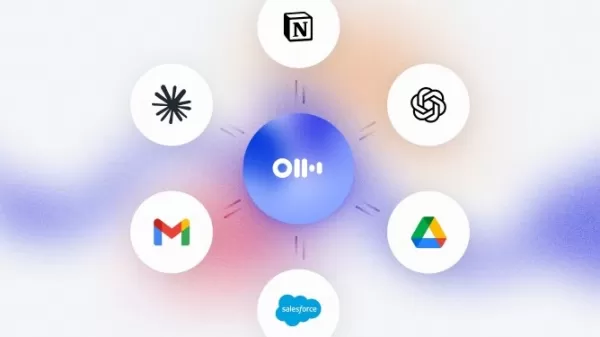
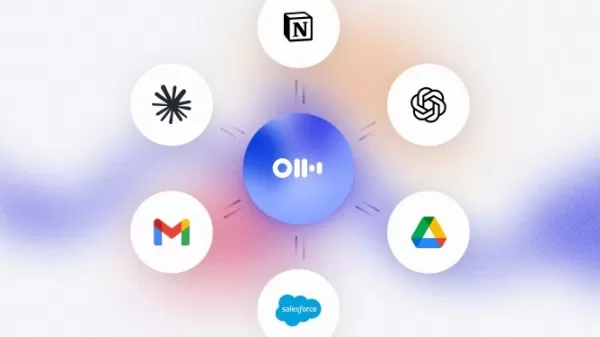
With this launch, users can connect their Gmail, Google Drive, Notion, Jira, and Salesforce accounts to query that data alongside their existing meeting records. The company announced plans to soon enable connections with Microsoft Outlook, Teams, SharePoint, and Slack. Users will not only be able to search across these tools but also push meeting summaries to Notion or draft emails in Gmail.
The company also redesigned its AI assistant to be consistently available across the entire interface, allowing users to ask questions at any time. The assistant can understand the context of what's on screen—whether it's a specific meeting or a channel—and provide relevant answers.
Meanwhile, following a trend popularized by Granola, most notetakers are now supporting botless meeting capture—recording meetings using a device's system audio instead of having a bot join the call. Otter brought this feature to its Mac app late last year and is now launching a Windows app with similar functionality.
There has been ongoing debate about whether meeting notes should be taken by bots that join the call or through botless methods. Otter CEO Sam Liang stated that the company's enterprise customers generally prefer having a notetaker join the meeting.
"When we talk to enterprise customers, most actually prefer the notetaker to join the Zoom meeting because it provides transparency. They also prefer the meeting notes to be shared with all attendees, so the notes aren't limited to just one person," he explained to TechCrunch during a call.
Otter mentioned it has a deduplication feature to prevent multiple bots from joining the same meeting simultaneously, avoiding situations where bots outnumber human participants on a call.
Last year, the company reported having 25 million users and $100 million in annual recurring revenue. While it didn't provide updated financial figures, Otter stated that its platform now serves 35 million users.
Related article
 Otter.ai Secures $320 Million Growth Funding From General Catalyst for Meeting Tool
On Tuesday, Otter.ai, a meeting note-taking platform, announced a $320 million investment from General Catalyst’s Customer Value Fund (CVF). This fund supports startups without requiring equity dilution, instead seeking returns based on marketing per
Stripe to Acquire OpenRouter as AI Model Routing Gains Momentum
Stripe has agreed to acquire OpenRouter, an AI model-routing platform that gives developers access to hundreds of models through a single interface. The deal adds model selection and routing to Stripe’s existing work around AI usage and token-based b
Former OpenAI Researcher Barrett Zoph Returns to Google to Support Gemini Development
Barret Zoph, who previously abruptly left and joined OpenAI due to a disagreement with Thinking Machines Lab CEO Miriam Mularati, has once again changed employers. Alphabet's Google announced that Zoph will return as Vice President of Research, bring
Related Special Topic Recommendations
Design & Art
Otter.ai Secures $320 Million Growth Funding From General Catalyst for Meeting Tool
On Tuesday, Otter.ai, a meeting note-taking platform, announced a $320 million investment from General Catalyst’s Customer Value Fund (CVF). This fund supports startups without requiring equity dilution, instead seeking returns based on marketing per
Stripe to Acquire OpenRouter as AI Model Routing Gains Momentum
Stripe has agreed to acquire OpenRouter, an AI model-routing platform that gives developers access to hundreds of models through a single interface. The deal adds model selection and routing to Stripe’s existing work around AI usage and token-based b
Former OpenAI Researcher Barrett Zoph Returns to Google to Support Gemini Development
Barret Zoph, who previously abruptly left and joined OpenAI due to a disagreement with Thinking Machines Lab CEO Miriam Mularati, has once again changed employers. Alphabet's Google announced that Zoph will return as Vice President of Research, bring
Related Special Topic Recommendations
Design & Art
 Top AI Illustration Tools: Create Editorial Scenes and Cover Art Faster
2026 Latest Top-rated AI Illustration Tools: Our curated list features the best powerfully designed tools for creating stunning editorial scenes and eye-catching cover art quickly. Each option has gone through rigorous real-world tests, offering a free vs paid comparison to help you find the perfect match for your workflow. Try these must-try solutions today to unlock your AI edge and boost your creative productivity. Explore now at XIX.AI.
 10 tools
 xix.ai
Education and Learning
Top AI Tutors for Exam Prep: Practice Math, Science, and English
xix.ai
Education and Learning
Top AI Tutors for Exam Prep: Practice Math, Science, and English
2026 Latest Top-Rated Best AI Tutors for Exam Prep are here on XIX.AI! Our curated list features powerful game-changing tools that offer free vs paid comparison, real-world tests, and weekly updated rankings. They help boost your writing efficiency, simplify complex topic learning, and unlock your academic potential. Explore now to Discover your perfect exam prep tool and Start creating today to Unlock your AI edge!
10 tools
xix.ai
Finance
AI Budget Planning Tools for Personal Money Management
2026 Latest Best Top-Rated AI Budget Planning Tools for Personal Money Management are here on XIX.AI! This curated collection features powerful, game-changing solutions that help you conduct real-world tests, understand spending habits, and create personalized plans to boost productivity. Enjoy a free vs paid comparison along with detailed rankings. Must-try tools designed to simplify money management and unlock your AI edge. Explore now!
11 tools
xix.ai
Health & Wellness
AI Sleep Tracking Assistants: Improve Recovery with Better Bedtime Habits
2026 Latest Best Top-Rated AI Sleep Tracking Assistants curated for ultimate recovery. This fully updated weekly guide features powerful tools that deliver real-world tests, free vs paid comparison, and detailed rankings to help you find the must-try solution that boosts sleep quality and supports better bedtime habits. Explore now at XIX.AI to Unlock your AI edge.
10 tools
xix.ai
Data Analysis
AI SQL Copilots for Product and Revenue Analytics
2026 Latest Best Top-Rated AI SQL Copilots for Product and Revenue Analytics! XIX.AI has curated a powerful, game-changing collection of must-try tools that undergo real-world tests through weekly updated rankings. These tools help users boost productivity significantly by accelerating data analysis, streamlining complex queries, and generating accurate insights to drive smarter business decisions. Explore now to Discover your perfect tool for unlocking your AI edge!
14 tools
xix.ai
Education and Learning
Best AI Homework Helpers That Teach: Learn Concepts, Not Just Answers
2026 Latest Best Top-Rated AI Homework Helpers That Teach Core Concepts Not Just Answers Powerful Tools for Students Must-Try Curated List Weekly Updated Free vs Paid Comparison Real-World Tests Accurate Rankings to Help You Unlock Your Full Learning Potential Explore now to Discover your perfect tool for smarter studying.
10 tools
xix.ai

 Comments (1)
0/500
Comments (1)
0/500
![BillyLewis]()
Otter's new search feature is a game-changer for enterprise workflows! Finally, no more jumping between apps to find what you said last week. The integration of data sources makes it so much smoother. Curious if this will eat into competitors' market share soon, but for now, I'm just happy to save time on manual note-syncing. 🚀
AI meeting notetaker apps have realized that simply transcribing conversations and providing summaries isn't enough to sustain their business models and valuations. They are now evolving into comprehensive workspaces where users can integrate data from various sources, search across everything, and make informed business decisions. Following the lead of notetakers like Read AI, Fireflies.ai, and Fathom, Otter is launching an enterprise search feature by becoming a Model Context Protocol (MCP) client. This allows it to connect to and pull data from external applications and services using a common standard that is gaining rapid adoption among AI tools.
Otter has been operating for nearly a decade, but it has actively shifted toward becoming an enterprise productivity tool in recent months. Last October, the company introduced a way for organizations to build custom MCPs to access Otter data outside the app. Its latest move focuses on bringing external data into the Otter platform.
With this launch, users can connect their Gmail, Google Drive, Notion, Jira, and Salesforce accounts to query that data alongside their existing meeting records. The company announced plans to soon enable connections with Microsoft Outlook, Teams, SharePoint, and Slack. Users will not only be able to search across these tools but also push meeting summaries to Notion or draft emails in Gmail.
The company also redesigned its AI assistant to be consistently available across the entire interface, allowing users to ask questions at any time. The assistant can understand the context of what's on screen—whether it's a specific meeting or a channel—and provide relevant answers.
Meanwhile, following a trend popularized by Granola, most notetakers are now supporting botless meeting capture—recording meetings using a device's system audio instead of having a bot join the call. Otter brought this feature to its Mac app late last year and is now launching a Windows app with similar functionality.
There has been ongoing debate about whether meeting notes should be taken by bots that join the call or through botless methods. Otter CEO Sam Liang stated that the company's enterprise customers generally prefer having a notetaker join the meeting.
"When we talk to enterprise customers, most actually prefer the notetaker to join the Zoom meeting because it provides transparency. They also prefer the meeting notes to be shared with all attendees, so the notes aren't limited to just one person," he explained to TechCrunch during a call.
Otter mentioned it has a deduplication feature to prevent multiple bots from joining the same meeting simultaneously, avoiding situations where bots outnumber human participants on a call.
Last year, the company reported having 25 million users and $100 million in annual recurring revenue. While it didn't provide updated financial figures, Otter stated that its platform now serves 35 million users.








 Otter.ai Secures $320 Million Growth Funding From General Catalyst for Meeting Tool
On Tuesday, Otter.ai, a meeting note-taking platform, announced a $320 million investment from General Catalyst’s Customer Value Fund (CVF). This fund supports startups without requiring equity dilution, instead seeking returns based on marketing per
Otter.ai Secures $320 Million Growth Funding From General Catalyst for Meeting Tool
On Tuesday, Otter.ai, a meeting note-taking platform, announced a $320 million investment from General Catalyst’s Customer Value Fund (CVF). This fund supports startups without requiring equity dilution, instead seeking returns based on marketing per
 Stripe to Acquire OpenRouter as AI Model Routing Gains Momentum
Stripe has agreed to acquire OpenRouter, an AI model-routing platform that gives developers access to hundreds of models through a single interface. The deal adds model selection and routing to Stripe’s existing work around AI usage and token-based b
Stripe to Acquire OpenRouter as AI Model Routing Gains Momentum
Stripe has agreed to acquire OpenRouter, an AI model-routing platform that gives developers access to hundreds of models through a single interface. The deal adds model selection and routing to Stripe’s existing work around AI usage and token-based b
 Former OpenAI Researcher Barrett Zoph Returns to Google to Support Gemini Development
Barret Zoph, who previously abruptly left and joined OpenAI due to a disagreement with Thinking Machines Lab CEO Miriam Mularati, has once again changed employers. Alphabet's Google announced that Zoph will return as Vice President of Research, bring
Former OpenAI Researcher Barrett Zoph Returns to Google to Support Gemini Development
Barret Zoph, who previously abruptly left and joined OpenAI due to a disagreement with Thinking Machines Lab CEO Miriam Mularati, has once again changed employers. Alphabet's Google announced that Zoph will return as Vice President of Research, bring

2026 Latest Top-rated AI Illustration Tools: Our curated list features the best powerfully designed tools for creating stunning editorial scenes and eye-catching cover art quickly. Each option has gone through rigorous real-world tests, offering a free vs paid comparison to help you find the perfect match for your workflow. Try these must-try solutions today to unlock your AI edge and boost your creative productivity. Explore now at XIX.AI.
10 tools
xix.ai

2026 Latest Top-Rated Best AI Tutors for Exam Prep are here on XIX.AI! Our curated list features powerful game-changing tools that offer free vs paid comparison, real-world tests, and weekly updated rankings. They help boost your writing efficiency, simplify complex topic learning, and unlock your academic potential. Explore now to Discover your perfect exam prep tool and Start creating today to Unlock your AI edge!
10 tools
xix.ai

2026 Latest Best Top-Rated AI Budget Planning Tools for Personal Money Management are here on XIX.AI! This curated collection features powerful, game-changing solutions that help you conduct real-world tests, understand spending habits, and create personalized plans to boost productivity. Enjoy a free vs paid comparison along with detailed rankings. Must-try tools designed to simplify money management and unlock your AI edge. Explore now!
11 tools
xix.ai

2026 Latest Best Top-Rated AI Sleep Tracking Assistants curated for ultimate recovery. This fully updated weekly guide features powerful tools that deliver real-world tests, free vs paid comparison, and detailed rankings to help you find the must-try solution that boosts sleep quality and supports better bedtime habits. Explore now at XIX.AI to Unlock your AI edge.
10 tools
xix.ai

2026 Latest Best Top-Rated AI SQL Copilots for Product and Revenue Analytics! XIX.AI has curated a powerful, game-changing collection of must-try tools that undergo real-world tests through weekly updated rankings. These tools help users boost productivity significantly by accelerating data analysis, streamlining complex queries, and generating accurate insights to drive smarter business decisions. Explore now to Discover your perfect tool for unlocking your AI edge!
14 tools
xix.ai

2026 Latest Best Top-Rated AI Homework Helpers That Teach Core Concepts Not Just Answers Powerful Tools for Students Must-Try Curated List Weekly Updated Free vs Paid Comparison Real-World Tests Accurate Rankings to Help You Unlock Your Full Learning Potential Explore now to Discover your perfect tool for smarter studying.
10 tools
xix.ai

Otter's new search feature is a game-changer for enterprise workflows! Finally, no more jumping between apps to find what you said last week. The integration of data sources makes it so much smoother. Curious if this will eat into competitors' market share soon, but for now, I'm just happy to save time on manual note-syncing. 🚀












