


 Home
HomeOpenAI's Sora App to Shut Down After Controversial Reception
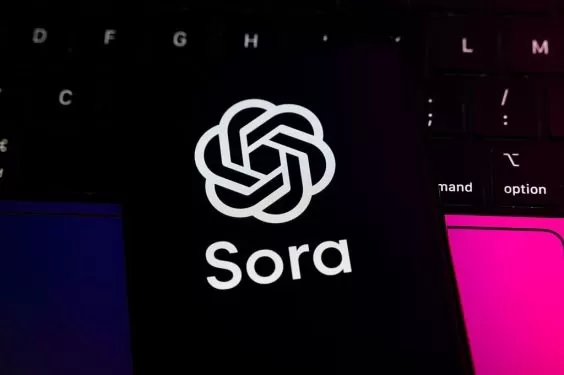
OpenAI announced on Tuesday that it is shutting down Sora, a social app similar to TikTok that launched just six months ago. The company did not provide a reason for the decision or specify an official discontinuation date.
When Sora first launched as an invite-only social network, demand for access was intense. However, similar to Meta's Horizon Worlds—its troubled virtual reality social platform once central to the company's metaverse ambitions—Sora failed to maintain lasting user engagement. Despite the underlying Sora 2 video and audio generation model being remarkably impressive, there simply wasn't sustained interest in a social feed powered exclusively by AI.
We’re saying goodbye to the Sora app. To everyone who created with Sora, shared it, and built community around it: thank you. What you made with Sora mattered, and we know this news is disappointing.
We’ll share more soon, including timelines for the app and API and details on…
— Sora (@soraofficialapp) March 24, 2026
Sora was designed as an AI-centric version of TikTok, replicating its familiar vertical video feed. Its flagship "cameos" feature allowed users to scan their faces to create realistic deepfake avatars. These "cameos" could be set to public, enabling anyone to produce videos featuring them. (The company Cameo successfully sued OpenAI over the feature's name, forcing a rebrand to "characters.")
In a development that surprised no one, this sophisticated deepfake app proved to be profoundly unsettling.
At launch, Sora felt like a poorly moderated minefield of eerie Sam Altman videos. One particularly unforgettable clip featured a hyper-realistic clone of the OpenAI CEO strolling through a facility of fattened pigs and asking, "Are my piggies enjoying their slop?"
Sora's policies prohibited generating videos of public figures without explicit consent, but users easily bypassed OpenAI's safeguards. Deepfakes of individuals like civil rights leader Martin Luther King Jr. and actor Robin Williams quickly surfaced, prompting their daughters to publicly appeal on Instagram for users to stop creating videos of their late fathers.
After a phase of creating videos depicting Sam Altman stealing Nvidia chips from Target, user behavior shifted. They began intentionally generating content with copyrighted characters, inviting legal risk for the figure they loved to deepfake—resulting in scenes of Mario smoking weed, Naruto ordering Krabby Patties, and Pikachu performing ASMR.
The outcome was unexpected. Instead of pursuing litigation, Disney—a company known for aggressively protecting its IP—offered OpenAI a $1 billion investment and a licensing deal. This agreement would have permitted Sora to generate videos featuring characters from Disney, Marvel, Pixar, and Star Wars.
It appeared to be a landmark moment for the AI industry. However, with Sora's shutdown, the deal has also collapsed. Notably, it seems no funds were actually transferred before the fallout. (Disney issued a polite statement on Tuesday, telling the Hollywood Reporter it plans to "continue to engage with AI platforms" in the future.)
The initial excitement around Sora was genuine. According to mobile intelligence firm Appfigures, the app peaked in November with approximately 3.3 million downloads across iOS and Google Play. Had growth continued, OpenAI might have sustained it, but that wasn't the case. By February, downloads fell to around 1.1 million—a figure that seems substantial until compared to ChatGPT's 900 million weekly active users.
Appfigures estimates Sora generated roughly $2.1 million in lifetime revenue from in-app purchases for additional video generation credits. While the app's computational costs were unlikely a decisive factor for a company already operating at a significant loss, the liability likely outweighed the benefits for a product that wasn't growing.
When OpenAI launched Sora, I braced for a world where creating deepfakes of anyone would be at our fingertips. As someone who rarely posts on TikTok, I felt compelled to share a public service announcement about this rapidly arriving, concerning technology. The video garnered over 300,000 views—far exceeding the norm for my typically inactive account—demonstrating the public's strong reaction. I never anticipated the app would last only six months.
But Sora's disappearance doesn't mean the underlying threat is gone. The Sora 2 model remains available, though now behind ChatGPT's paywall. OpenAI is far from alone in making this technology accessible. It's only a matter of time before the next AI-powered social video app emerges, potentially unleashing another wave of clips depicting, for instance, Snow White storming the Capitol.
Related article
 OpenAI launches safer ChatGPT for teens years after they started using it
Following a series of lawsuits regarding the absence of safety protocols in AI chatbots—which contributed to teen suicides and other mental health crises—OpenAI unveiled ChatGPT for Teens on Monday. This new offering incorporates enhanced safety feat
Frontier AI Labs Refuse to Disclose Containment Strategies for Rogue Models
Recent research indicates that very few leading AI laboratories have published or demonstrated containment response plans. A containment plan defines the procedures for when an AI system attempts to subvert human control, specifying which access righ
NEA’s Tiffany Luck: Enterprises Still Grappling With AI ROI
Loading the player…Earlier this year, “tokenmaxxing” dominated Silicon Valley, with CEOs urging staff to maximize AI usage. That enthusiasm quickly met reality. Uber reportedly exceeded its annual AI budget within months, some firms reduced Claude li
Related Special Topic Recommendations
chatbot
OpenAI launches safer ChatGPT for teens years after they started using it
Following a series of lawsuits regarding the absence of safety protocols in AI chatbots—which contributed to teen suicides and other mental health crises—OpenAI unveiled ChatGPT for Teens on Monday. This new offering incorporates enhanced safety feat
Frontier AI Labs Refuse to Disclose Containment Strategies for Rogue Models
Recent research indicates that very few leading AI laboratories have published or demonstrated containment response plans. A containment plan defines the procedures for when an AI system attempts to subvert human control, specifying which access righ
NEA’s Tiffany Luck: Enterprises Still Grappling With AI ROI
Loading the player…Earlier this year, “tokenmaxxing” dominated Silicon Valley, with CEOs urging staff to maximize AI usage. That enthusiasm quickly met reality. Uber reportedly exceeded its annual AI budget within months, some firms reduced Claude li
Related Special Topic Recommendations
chatbot
 Best AI Roleplay Chat Apps for Language Practice, Interview Prep, and Daily Fluency
2026 Latest Best Top-rated AI Roleplay Chat Apps for Language Practice, Interview Prep, and Daily Fluency! XIX.AI curates a powerful game-changing collection that offers free vs paid comparison, real-world tests, and updated rankings weekly. These must-try tools help you boost writing skills, overcome fluency challenges, and improve communication efficiency across all daily scenarios. Explore now to discover your perfect tool for language growth!
 10 tools
 xix.ai
Music composition
AI Stem Separation Tools for Remix Production, Sampling Prep, and Karaoke Masters
xix.ai
Music composition
AI Stem Separation Tools for Remix Production, Sampling Prep, and Karaoke Masters
2026 Latest Best Top-rated AI Stem Separation Tools Curated for Remix Production, Sampling Prep, and Karaoke Masters. These powerful game-changing tools offer real-world tests to deliver precise audio isolation, boosting productivity significantly. XIX.AI provides a weekly updated free vs paid comparison guide to help you find the must-try solution that suits your needs. Explore now to unlock your AI edge.
8 tools
xix.ai
Data Analysis
AI SQL Copilots for Revenue Dashboards, Funnel Analysis, and Product Metrics
2026 Latest Best AI SQL Copilots Ranked Top-Rated! XIX.AI curates a powerful game-changing collection for weekly updated real-world tests. These must-try tools help you generate accurate revenue dashboards, analyze sales funnels, and track product metrics swiftly, boosting productivity massively. Explore now to Discover your perfect tool for data-driven decision making! 238 characters
9 tools
xix.ai
Music composition
Best AI Melody Writing Tools for Song Drafts
2026 Latest Best Top-Rated AI Melody Writing Tools for Song Drafts! XIX.AI has curated a highly powerful game-changing collection that goes through rigorous real-world tests to deliver the best writing experience. You can find detailed free vs paid comparisons, accurate rankings, and must-try options designed to help you create stunning song drafts effortlessly and boost your creative productivity significantly. Explore now to discover your perfect tool!
8 tools
xix.ai
chatbot
Best AI Conversation Trainer Tools for Interview Practice
2026 Latest Best Top-rated AI Conversation Trainer Tools for Interview Practice are here on XIX.AI! This curated collection features powerful, game-changing tools that go through rigorous real-world tests to deliver accurate feedback. You’ll find a free vs paid comparison and detailed rankings to help you choose the must-try option that boosts your confidence and skills. Explore now to Discover your perfect tool for interview success!
12 tools
xix.ai
Design & Art
Best AI Style Transfer Tools for Creative Experiments
2026 Latest Best Top-rated AI Style Transfer Tools for Creative Experiments! XIX.AI has curated a powerful, game-changing collection of must-try tools that deliver exceptional results through real-world tests and rigorous rankings. These top solutions help creatives boost productivity significantly by accelerating content creation and unlocking endless creative possibilities. Explore now to discover your perfect tool and start creating today!
9 tools
xix.ai

 Comments (0)
0/500
Comments (0)
0/500
OpenAI announced on Tuesday that it is shutting down Sora, a social app similar to TikTok that launched just six months ago. The company did not provide a reason for the decision or specify an official discontinuation date.
When Sora first launched as an invite-only social network, demand for access was intense. However, similar to Meta's Horizon Worlds—its troubled virtual reality social platform once central to the company's metaverse ambitions—Sora failed to maintain lasting user engagement. Despite the underlying Sora 2 video and audio generation model being remarkably impressive, there simply wasn't sustained interest in a social feed powered exclusively by AI.
We’re saying goodbye to the Sora app. To everyone who created with Sora, shared it, and built community around it: thank you. What you made with Sora mattered, and we know this news is disappointing.
— Sora (@soraofficialapp) March 24, 2026
We’ll share more soon, including timelines for the app and API and details on…
Sora was designed as an AI-centric version of TikTok, replicating its familiar vertical video feed. Its flagship "cameos" feature allowed users to scan their faces to create realistic deepfake avatars. These "cameos" could be set to public, enabling anyone to produce videos featuring them. (The company Cameo successfully sued OpenAI over the feature's name, forcing a rebrand to "characters.")
In a development that surprised no one, this sophisticated deepfake app proved to be profoundly unsettling.
At launch, Sora felt like a poorly moderated minefield of eerie Sam Altman videos. One particularly unforgettable clip featured a hyper-realistic clone of the OpenAI CEO strolling through a facility of fattened pigs and asking, "Are my piggies enjoying their slop?"
Sora's policies prohibited generating videos of public figures without explicit consent, but users easily bypassed OpenAI's safeguards. Deepfakes of individuals like civil rights leader Martin Luther King Jr. and actor Robin Williams quickly surfaced, prompting their daughters to publicly appeal on Instagram for users to stop creating videos of their late fathers.
After a phase of creating videos depicting Sam Altman stealing Nvidia chips from Target, user behavior shifted. They began intentionally generating content with copyrighted characters, inviting legal risk for the figure they loved to deepfake—resulting in scenes of Mario smoking weed, Naruto ordering Krabby Patties, and Pikachu performing ASMR.
The outcome was unexpected. Instead of pursuing litigation, Disney—a company known for aggressively protecting its IP—offered OpenAI a $1 billion investment and a licensing deal. This agreement would have permitted Sora to generate videos featuring characters from Disney, Marvel, Pixar, and Star Wars.
It appeared to be a landmark moment for the AI industry. However, with Sora's shutdown, the deal has also collapsed. Notably, it seems no funds were actually transferred before the fallout. (Disney issued a polite statement on Tuesday, telling the Hollywood Reporter it plans to "continue to engage with AI platforms" in the future.)
The initial excitement around Sora was genuine. According to mobile intelligence firm Appfigures, the app peaked in November with approximately 3.3 million downloads across iOS and Google Play. Had growth continued, OpenAI might have sustained it, but that wasn't the case. By February, downloads fell to around 1.1 million—a figure that seems substantial until compared to ChatGPT's 900 million weekly active users.
Appfigures estimates Sora generated roughly $2.1 million in lifetime revenue from in-app purchases for additional video generation credits. While the app's computational costs were unlikely a decisive factor for a company already operating at a significant loss, the liability likely outweighed the benefits for a product that wasn't growing.
When OpenAI launched Sora, I braced for a world where creating deepfakes of anyone would be at our fingertips. As someone who rarely posts on TikTok, I felt compelled to share a public service announcement about this rapidly arriving, concerning technology. The video garnered over 300,000 views—far exceeding the norm for my typically inactive account—demonstrating the public's strong reaction. I never anticipated the app would last only six months.
But Sora's disappearance doesn't mean the underlying threat is gone. The Sora 2 model remains available, though now behind ChatGPT's paywall. OpenAI is far from alone in making this technology accessible. It's only a matter of time before the next AI-powered social video app emerges, potentially unleashing another wave of clips depicting, for instance, Snow White storming the Capitol.








 OpenAI launches safer ChatGPT for teens years after they started using it
Following a series of lawsuits regarding the absence of safety protocols in AI chatbots—which contributed to teen suicides and other mental health crises—OpenAI unveiled ChatGPT for Teens on Monday. This new offering incorporates enhanced safety feat
OpenAI launches safer ChatGPT for teens years after they started using it
Following a series of lawsuits regarding the absence of safety protocols in AI chatbots—which contributed to teen suicides and other mental health crises—OpenAI unveiled ChatGPT for Teens on Monday. This new offering incorporates enhanced safety feat
 Frontier AI Labs Refuse to Disclose Containment Strategies for Rogue Models
Recent research indicates that very few leading AI laboratories have published or demonstrated containment response plans. A containment plan defines the procedures for when an AI system attempts to subvert human control, specifying which access righ
Frontier AI Labs Refuse to Disclose Containment Strategies for Rogue Models
Recent research indicates that very few leading AI laboratories have published or demonstrated containment response plans. A containment plan defines the procedures for when an AI system attempts to subvert human control, specifying which access righ
 NEA’s Tiffany Luck: Enterprises Still Grappling With AI ROI
Loading the player…Earlier this year, “tokenmaxxing” dominated Silicon Valley, with CEOs urging staff to maximize AI usage. That enthusiasm quickly met reality. Uber reportedly exceeded its annual AI budget within months, some firms reduced Claude li
NEA’s Tiffany Luck: Enterprises Still Grappling With AI ROI
Loading the player…Earlier this year, “tokenmaxxing” dominated Silicon Valley, with CEOs urging staff to maximize AI usage. That enthusiasm quickly met reality. Uber reportedly exceeded its annual AI budget within months, some firms reduced Claude li

2026 Latest Best Top-rated AI Roleplay Chat Apps for Language Practice, Interview Prep, and Daily Fluency! XIX.AI curates a powerful game-changing collection that offers free vs paid comparison, real-world tests, and updated rankings weekly. These must-try tools help you boost writing skills, overcome fluency challenges, and improve communication efficiency across all daily scenarios. Explore now to discover your perfect tool for language growth!
10 tools
xix.ai

2026 Latest Best Top-rated AI Stem Separation Tools Curated for Remix Production, Sampling Prep, and Karaoke Masters. These powerful game-changing tools offer real-world tests to deliver precise audio isolation, boosting productivity significantly. XIX.AI provides a weekly updated free vs paid comparison guide to help you find the must-try solution that suits your needs. Explore now to unlock your AI edge.
8 tools
xix.ai

2026 Latest Best AI SQL Copilots Ranked Top-Rated! XIX.AI curates a powerful game-changing collection for weekly updated real-world tests. These must-try tools help you generate accurate revenue dashboards, analyze sales funnels, and track product metrics swiftly, boosting productivity massively. Explore now to Discover your perfect tool for data-driven decision making! 238 characters
9 tools
xix.ai

2026 Latest Best Top-Rated AI Melody Writing Tools for Song Drafts! XIX.AI has curated a highly powerful game-changing collection that goes through rigorous real-world tests to deliver the best writing experience. You can find detailed free vs paid comparisons, accurate rankings, and must-try options designed to help you create stunning song drafts effortlessly and boost your creative productivity significantly. Explore now to discover your perfect tool!
8 tools
xix.ai
2026 Latest Best Top-rated AI Conversation Trainer Tools for Interview Practice are here on XIX.AI! This curated collection features powerful, game-changing tools that go through rigorous real-world tests to deliver accurate feedback. You’ll find a free vs paid comparison and detailed rankings to help you choose the must-try option that boosts your confidence and skills. Explore now to Discover your perfect tool for interview success!
12 tools
xix.ai

2026 Latest Best Top-rated AI Style Transfer Tools for Creative Experiments! XIX.AI has curated a powerful, game-changing collection of must-try tools that deliver exceptional results through real-world tests and rigorous rankings. These top solutions help creatives boost productivity significantly by accelerating content creation and unlocking endless creative possibilities. Explore now to discover your perfect tool and start creating today!
9 tools
xix.ai












