


 Home
HomeNvidia unveils next-generation Rubin AI chip platform
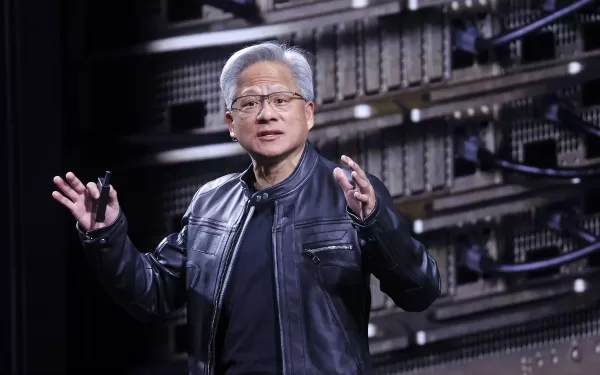
At the Consumer Electronics Show today, Nvidia CEO Jensen Huang introduced the company's new Rubin computing architecture, calling it the pinnacle of AI hardware technology. The architecture is already in production and is set to scale up significantly in the latter half of the year.
"Vera Rubin was created to tackle a core challenge we're facing: the explosive growth in computational power required for AI," Huang told attendees. "I'm pleased to announce that Vera Rubin is now in full production."
First unveiled in 2024, the Rubin architecture represents the latest achievement in Nvidia's accelerated hardware development, which has propelled the company to become the world's most valuable corporation. Rubin succeeds the Blackwell architecture, which itself replaced the earlier Hopper and Lovelace designs.
Rubin chips have already been adopted by nearly every major cloud provider, including through Nvidia's prominent partnerships with Anthropic, OpenAI, and Amazon Web Services. Rubin systems will also power HPE's Blue Lion supercomputer and the forthcoming Doudna supercomputer at Lawrence Berkeley National Laboratory.
Named after astronomer Vera Florence Cooper Rubin, the architecture comprises six specialized chips engineered to work together. While the Rubin GPU serves as the centerpiece, the architecture also tackles increasing storage and interconnection bottlenecks through enhancements to Bluefield and NVLink systems. It also introduces the new Vera CPU, optimized for agentic reasoning tasks.
Nvidia's senior director of AI infrastructure solutions, Dion Harris, highlighted the advantages of the new storage system by pointing to the growing memory demands of modern AI systems related to caching.
"Emerging workflows like agentic AI and long-term tasks place significant pressure on your KV cache," Harris explained to journalists, referring to the memory system AI models use to compress inputs. "We've introduced an external storage tier that connects to the compute device, enabling much more efficient scaling of your storage capacity."
Techcrunch event Join the Disrupt 2026 Waitlist
Secure your spot on the Disrupt 2026 waitlist for priority access when Early Bird tickets become available. Previous Disrupt events have featured industry giants like Google Cloud, Netflix, Microsoft, Box, Phia, a16z, ElevenLabs, Wayve, Hugging Face, Elad Gil, and Vinod Khosla among 250+ leaders delivering 200+ sessions designed to accelerate your growth and competitive advantage. You'll also connect with hundreds of startups driving innovation across all industries.
Join the Disrupt 2026 Waitlist
Secure your spot on the Disrupt 2026 waitlist for priority access when Early Bird tickets become available. Previous Disrupt events have featured industry giants like Google Cloud, Netflix, Microsoft, Box, Phia, a16z, ElevenLabs, Wayve, Hugging Face, Elad Gil, and Vinod Khosla among 250+ leaders delivering 200+ sessions designed to accelerate your growth and competitive advantage. You'll also connect with hundreds of startups driving innovation across all industries.
San Francisco | October 13-15, 2026 WAITLIST NOW As anticipated, the new architecture delivers substantial gains in both speed and power efficiency. Nvidia's testing shows Rubin operates 3.5 times faster than Blackwell for model training and five times faster for inference tasks, achieving up to 50 petaflops. The platform also delivers eight times more inference compute per watt.
These advancements arrive during intense competition to build AI infrastructure, with both AI labs and cloud providers racing to secure Nvidia chips and the facilities needed to support them. During an October 2025 earnings call, Huang projected that $3 trillion to $4 trillion will be invested in AI infrastructure over the next five years.
Stay updated with all of TechCrunch's coverage of the annual CES conference here.
Watch Nvidia CEO Jensen Huang unveil what he described as the state of the art in AI hardware: the new Rubin computing architecture.
“Vera Rubin is designed to address this fundamental challenge that we have: The amount of computation necessary for AI is skyrocketing.” Huang… pic.twitter.com/MhGVqytX04
— TechCrunch (@TechCrunch) January 5, 2026
Related article
 DeepMind CEO Hassabis: I sleep six hours a day, usually feel energetic around 1 a.m.
Fortune recently featured an interview with Demis Hassabis, CEO of Google DeepMind, revealing his unconventional approach to rest and productivity. Hassabis disclosed that he sleeps very little, structuring his waking hours into two distinct work blo
OpenAI, Anthropic Vie for Market Share Despite Revenue Shortfalls
Despite recent reports suggesting OpenAI missed revenue targets, creating pressure on tech stocks this Tuesday, private AI lab investors remain resilient. Seasoned backers have confirmed they will not reduce investment despite negative media coverage
California AV Compliance: A New Era of Tickets, Geofences, and 1M Miles
Guident operates an AuveTech shuttle in South Florida, managing a four-mile route in West Palm Beach and a one-mile route in Boca Raton using its remote monitoring technology. | Credit: GuidentCalifornia is redefining the regulatory landscape for dri
Related Special Topic Recommendations
chatbot
DeepMind CEO Hassabis: I sleep six hours a day, usually feel energetic around 1 a.m.
Fortune recently featured an interview with Demis Hassabis, CEO of Google DeepMind, revealing his unconventional approach to rest and productivity. Hassabis disclosed that he sleeps very little, structuring his waking hours into two distinct work blo
OpenAI, Anthropic Vie for Market Share Despite Revenue Shortfalls
Despite recent reports suggesting OpenAI missed revenue targets, creating pressure on tech stocks this Tuesday, private AI lab investors remain resilient. Seasoned backers have confirmed they will not reduce investment despite negative media coverage
California AV Compliance: A New Era of Tickets, Geofences, and 1M Miles
Guident operates an AuveTech shuttle in South Florida, managing a four-mile route in West Palm Beach and a one-mile route in Boca Raton using its remote monitoring technology. | Credit: GuidentCalifornia is redefining the regulatory landscape for dri
Related Special Topic Recommendations
chatbot
 Best AI Roleplay Chat Apps for Language Practice, Interview Prep, and Daily Fluency
2026 Latest Best Top-rated AI Roleplay Chat Apps for Language Practice, Interview Prep, and Daily Fluency! XIX.AI curates a powerful game-changing collection that offers free vs paid comparison, real-world tests, and updated rankings weekly. These must-try tools help you boost writing skills, overcome fluency challenges, and improve communication efficiency across all daily scenarios. Explore now to discover your perfect tool for language growth!
 10 tools
 xix.ai
Music composition
AI Stem Separation Tools for Remix Production, Sampling Prep, and Karaoke Masters
xix.ai
Music composition
AI Stem Separation Tools for Remix Production, Sampling Prep, and Karaoke Masters
2026 Latest Best Top-rated AI Stem Separation Tools Curated for Remix Production, Sampling Prep, and Karaoke Masters. These powerful game-changing tools offer real-world tests to deliver precise audio isolation, boosting productivity significantly. XIX.AI provides a weekly updated free vs paid comparison guide to help you find the must-try solution that suits your needs. Explore now to unlock your AI edge.
8 tools
xix.ai
Data Analysis
AI SQL Copilots for Revenue Dashboards, Funnel Analysis, and Product Metrics
2026 Latest Best AI SQL Copilots Ranked Top-Rated! XIX.AI curates a powerful game-changing collection for weekly updated real-world tests. These must-try tools help you generate accurate revenue dashboards, analyze sales funnels, and track product metrics swiftly, boosting productivity massively. Explore now to Discover your perfect tool for data-driven decision making! 238 characters
9 tools
xix.ai
Music composition
Best AI Melody Writing Tools for Song Drafts
2026 Latest Best Top-Rated AI Melody Writing Tools for Song Drafts! XIX.AI has curated a highly powerful game-changing collection that goes through rigorous real-world tests to deliver the best writing experience. You can find detailed free vs paid comparisons, accurate rankings, and must-try options designed to help you create stunning song drafts effortlessly and boost your creative productivity significantly. Explore now to discover your perfect tool!
8 tools
xix.ai
chatbot
Best AI Conversation Trainer Tools for Interview Practice
2026 Latest Best Top-rated AI Conversation Trainer Tools for Interview Practice are here on XIX.AI! This curated collection features powerful, game-changing tools that go through rigorous real-world tests to deliver accurate feedback. You’ll find a free vs paid comparison and detailed rankings to help you choose the must-try option that boosts your confidence and skills. Explore now to Discover your perfect tool for interview success!
12 tools
xix.ai
Design & Art
Best AI Style Transfer Tools for Creative Experiments
2026 Latest Best Top-rated AI Style Transfer Tools for Creative Experiments! XIX.AI has curated a powerful, game-changing collection of must-try tools that deliver exceptional results through real-world tests and rigorous rankings. These top solutions help creatives boost productivity significantly by accelerating content creation and unlocking endless creative possibilities. Explore now to discover your perfect tool and start creating today!
9 tools
xix.ai

 Comments (1)
0/500
Comments (1)
0/500
![AlbertGarcía]()
Also die Rubin-Plattform soll der Gipfel der KI-Hardware sein? Klingt beeindruckend, aber ich frage mich, wie lange es dauert, bis es für den Normalverbraucher tatsächlich etwas bringt 🧐 Wird das wieder nur für die großen Cloud-Anbieter erschwinglich sein und uns Endnutzern nur indirekt über teure Abos zugutekommen? Die Tempo bei Nvidia ist ja echt krass – gerade erst Blackwell und schon der nächste große Wurf. Spannend wäre mal ein Vergleich, was AMD und Intel jetzt dazu sagen.
At the Consumer Electronics Show today, Nvidia CEO Jensen Huang introduced the company's new Rubin computing architecture, calling it the pinnacle of AI hardware technology. The architecture is already in production and is set to scale up significantly in the latter half of the year.
"Vera Rubin was created to tackle a core challenge we're facing: the explosive growth in computational power required for AI," Huang told attendees. "I'm pleased to announce that Vera Rubin is now in full production."
First unveiled in 2024, the Rubin architecture represents the latest achievement in Nvidia's accelerated hardware development, which has propelled the company to become the world's most valuable corporation. Rubin succeeds the Blackwell architecture, which itself replaced the earlier Hopper and Lovelace designs.
Rubin chips have already been adopted by nearly every major cloud provider, including through Nvidia's prominent partnerships with Anthropic, OpenAI, and Amazon Web Services. Rubin systems will also power HPE's Blue Lion supercomputer and the forthcoming Doudna supercomputer at Lawrence Berkeley National Laboratory.
Named after astronomer Vera Florence Cooper Rubin, the architecture comprises six specialized chips engineered to work together. While the Rubin GPU serves as the centerpiece, the architecture also tackles increasing storage and interconnection bottlenecks through enhancements to Bluefield and NVLink systems. It also introduces the new Vera CPU, optimized for agentic reasoning tasks.
Nvidia's senior director of AI infrastructure solutions, Dion Harris, highlighted the advantages of the new storage system by pointing to the growing memory demands of modern AI systems related to caching.
"Emerging workflows like agentic AI and long-term tasks place significant pressure on your KV cache," Harris explained to journalists, referring to the memory system AI models use to compress inputs. "We've introduced an external storage tier that connects to the compute device, enabling much more efficient scaling of your storage capacity."
Techcrunch eventJoin the Disrupt 2026 Waitlist
Secure your spot on the Disrupt 2026 waitlist for priority access when Early Bird tickets become available. Previous Disrupt events have featured industry giants like Google Cloud, Netflix, Microsoft, Box, Phia, a16z, ElevenLabs, Wayve, Hugging Face, Elad Gil, and Vinod Khosla among 250+ leaders delivering 200+ sessions designed to accelerate your growth and competitive advantage. You'll also connect with hundreds of startups driving innovation across all industries.
Join the Disrupt 2026 Waitlist
Secure your spot on the Disrupt 2026 waitlist for priority access when Early Bird tickets become available. Previous Disrupt events have featured industry giants like Google Cloud, Netflix, Microsoft, Box, Phia, a16z, ElevenLabs, Wayve, Hugging Face, Elad Gil, and Vinod Khosla among 250+ leaders delivering 200+ sessions designed to accelerate your growth and competitive advantage. You'll also connect with hundreds of startups driving innovation across all industries.
San Francisco | October 13-15, 2026 WAITLIST NOWAs anticipated, the new architecture delivers substantial gains in both speed and power efficiency. Nvidia's testing shows Rubin operates 3.5 times faster than Blackwell for model training and five times faster for inference tasks, achieving up to 50 petaflops. The platform also delivers eight times more inference compute per watt.
These advancements arrive during intense competition to build AI infrastructure, with both AI labs and cloud providers racing to secure Nvidia chips and the facilities needed to support them. During an October 2025 earnings call, Huang projected that $3 trillion to $4 trillion will be invested in AI infrastructure over the next five years.
Stay updated with all of TechCrunch's coverage of the annual CES conference here.
Watch Nvidia CEO Jensen Huang unveil what he described as the state of the art in AI hardware: the new Rubin computing architecture.
— TechCrunch (@TechCrunch) January 5, 2026
“Vera Rubin is designed to address this fundamental challenge that we have: The amount of computation necessary for AI is skyrocketing.” Huang… pic.twitter.com/MhGVqytX04








 DeepMind CEO Hassabis: I sleep six hours a day, usually feel energetic around 1 a.m.
Fortune recently featured an interview with Demis Hassabis, CEO of Google DeepMind, revealing his unconventional approach to rest and productivity. Hassabis disclosed that he sleeps very little, structuring his waking hours into two distinct work blo
DeepMind CEO Hassabis: I sleep six hours a day, usually feel energetic around 1 a.m.
Fortune recently featured an interview with Demis Hassabis, CEO of Google DeepMind, revealing his unconventional approach to rest and productivity. Hassabis disclosed that he sleeps very little, structuring his waking hours into two distinct work blo
 OpenAI, Anthropic Vie for Market Share Despite Revenue Shortfalls
Despite recent reports suggesting OpenAI missed revenue targets, creating pressure on tech stocks this Tuesday, private AI lab investors remain resilient. Seasoned backers have confirmed they will not reduce investment despite negative media coverage
California AV Compliance: A New Era of Tickets, Geofences, and 1M Miles
Guident operates an AuveTech shuttle in South Florida, managing a four-mile route in West Palm Beach and a one-mile route in Boca Raton using its remote monitoring technology. | Credit: GuidentCalifornia is redefining the regulatory landscape for dri
OpenAI, Anthropic Vie for Market Share Despite Revenue Shortfalls
Despite recent reports suggesting OpenAI missed revenue targets, creating pressure on tech stocks this Tuesday, private AI lab investors remain resilient. Seasoned backers have confirmed they will not reduce investment despite negative media coverage
California AV Compliance: A New Era of Tickets, Geofences, and 1M Miles
Guident operates an AuveTech shuttle in South Florida, managing a four-mile route in West Palm Beach and a one-mile route in Boca Raton using its remote monitoring technology. | Credit: GuidentCalifornia is redefining the regulatory landscape for dri

2026 Latest Best Top-rated AI Roleplay Chat Apps for Language Practice, Interview Prep, and Daily Fluency! XIX.AI curates a powerful game-changing collection that offers free vs paid comparison, real-world tests, and updated rankings weekly. These must-try tools help you boost writing skills, overcome fluency challenges, and improve communication efficiency across all daily scenarios. Explore now to discover your perfect tool for language growth!
10 tools
xix.ai

2026 Latest Best Top-rated AI Stem Separation Tools Curated for Remix Production, Sampling Prep, and Karaoke Masters. These powerful game-changing tools offer real-world tests to deliver precise audio isolation, boosting productivity significantly. XIX.AI provides a weekly updated free vs paid comparison guide to help you find the must-try solution that suits your needs. Explore now to unlock your AI edge.
8 tools
xix.ai

2026 Latest Best AI SQL Copilots Ranked Top-Rated! XIX.AI curates a powerful game-changing collection for weekly updated real-world tests. These must-try tools help you generate accurate revenue dashboards, analyze sales funnels, and track product metrics swiftly, boosting productivity massively. Explore now to Discover your perfect tool for data-driven decision making! 238 characters
9 tools
xix.ai

2026 Latest Best Top-Rated AI Melody Writing Tools for Song Drafts! XIX.AI has curated a highly powerful game-changing collection that goes through rigorous real-world tests to deliver the best writing experience. You can find detailed free vs paid comparisons, accurate rankings, and must-try options designed to help you create stunning song drafts effortlessly and boost your creative productivity significantly. Explore now to discover your perfect tool!
8 tools
xix.ai

2026 Latest Best Top-rated AI Conversation Trainer Tools for Interview Practice are here on XIX.AI! This curated collection features powerful, game-changing tools that go through rigorous real-world tests to deliver accurate feedback. You’ll find a free vs paid comparison and detailed rankings to help you choose the must-try option that boosts your confidence and skills. Explore now to Discover your perfect tool for interview success!
12 tools
xix.ai

2026 Latest Best Top-rated AI Style Transfer Tools for Creative Experiments! XIX.AI has curated a powerful, game-changing collection of must-try tools that deliver exceptional results through real-world tests and rigorous rankings. These top solutions help creatives boost productivity significantly by accelerating content creation and unlocking endless creative possibilities. Explore now to discover your perfect tool and start creating today!
9 tools
xix.ai

Also die Rubin-Plattform soll der Gipfel der KI-Hardware sein? Klingt beeindruckend, aber ich frage mich, wie lange es dauert, bis es für den Normalverbraucher tatsächlich etwas bringt 🧐 Wird das wieder nur für die großen Cloud-Anbieter erschwinglich sein und uns Endnutzern nur indirekt über teure Abos zugutekommen? Die Tempo bei Nvidia ist ja echt krass – gerade erst Blackwell und schon der nächste große Wurf. Spannend wäre mal ein Vergleich, was AMD und Intel jetzt dazu sagen.












