


 Home
HomeMcKinsey and General Catalyst Leaders Declare End of 'Learn Once, Work Forever'
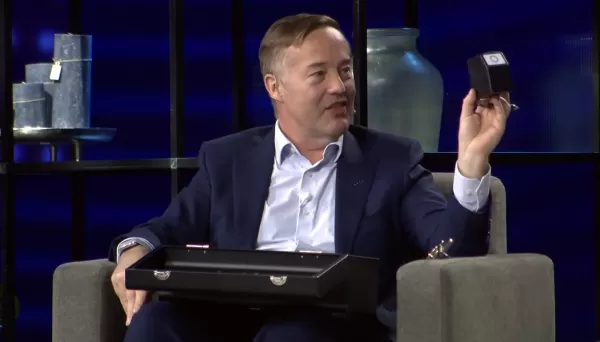
If one idea united the keynote speakers at CES 2026, it's that artificial intelligence is transforming technology at a pace and magnitude unmatched by any prior revolution.
During a live recording of the All-In podcast on Tuesday, co-host Jason Calacanis spoke with McKinsey & Company's Global Managing Partner Bob Sternfels and General Catalyst CEO Hemant Taneja. Their conversation explored AI's profound impact on investment approaches and the future of work.
"The landscape is fundamentally different," Taneja remarked, reflecting on the explosive rise of AI firms. He pointed out that while Stripe needed roughly 12 years to achieve a $100 billion valuation, Anthropic—another General Catalyst portfolio company—jumped from $60 billion last year to "a couple hundred billion dollars" this year.
Taneja is convinced we are approaching a new era of trillion-dollar corporations. "This isn't a far-fetched notion when you consider Anthropic, OpenAI, and a few others," he stated.
Calacanis pressed the experts on the catalyst for this meteoric growth. Sternfels of McKinsey observed that while many firms are piloting AI tools, non-technology businesses are still hesitant to fully commit. He noted a common dilemma McKinsey consultants hear from CEOs: "Should I follow my CFO's advice or my CIO's right now?"
Sternfels explained that CFOs, observing minimal ROI, often advocate for postponing adoption. In contrast, CIOs warn it would be "reckless" not to embrace AI, fearing inevitable disruption.
A major point of discussion was AI's effect on employment. "Many people view AI with apprehension," Calacanis said, highlighting worries that AI might displace entry-level positions typically held by new graduates. He sought guidance from Sternfels and Taneja on how young professionals can navigate this shifting terrain.
Techcrunch event Join the Disrupt 2026 Waitlist
Secure your spot on the Disrupt 2026 waitlist for priority access to Early Bird tickets. Previous Disrupt events have featured industry giants like Google Cloud, Netflix, Microsoft, Box, Phia, a16z, ElevenLabs, Wayve, Hugging Face, Elad Gil, and Vinod Khosla. They're among over 250 leaders who have driven 200+ sessions designed to accelerate your growth and competitive advantage. You'll also connect with hundreds of pioneering startups across all industries.
Join the Disrupt 2026 Waitlist
Secure your spot on the Disrupt 2026 waitlist for priority access to Early Bird tickets. Previous Disrupt events have featured industry giants like Google Cloud, Netflix, Microsoft, Box, Phia, a16z, ElevenLabs, Wayve, Hugging Face, Elad Gil, and Vinod Khosla. They're among over 250 leaders who have driven 200+ sessions designed to accelerate your growth and competitive advantage. You'll also connect with hundreds of pioneering startups across all industries.
San Francisco | October 13-15, 2026 WAITLIST NOW Sternfels emphasized that while AI models can execute numerous functions, human success in an AI-driven world will still hinge on sound judgment and creative thinking.
Taneja added that individuals must accept that continuous "skilling and re-skilling" is now a lifelong necessity. "The old model of learning for 22 years and then working for 40 is obsolete," he asserted.
Calacanis concurred, noting that in an era where developing an AI agent might be quicker than training a new hire, staying relevant is crucial. "To differentiate yourself, you'll need to demonstrate initiative, determination, and genuine passion," he advised.
Sternfels offered a preview of this future. He anticipates McKinsey will deploy as many personalized AI agents as it has employees by late 2026, but he clarified that overall headcount may not shrink. Instead, the firm is realigning its workforce, increasing client-facing roles by 25% while reducing equivalent back-office positions.
Related article
 DeepMind CEO Hassabis: I sleep six hours a day, usually feel energetic around 1 a.m.
Fortune recently featured an interview with Demis Hassabis, CEO of Google DeepMind, revealing his unconventional approach to rest and productivity. Hassabis disclosed that he sleeps very little, structuring his waking hours into two distinct work blo
OpenAI, Anthropic Vie for Market Share Despite Revenue Shortfalls
Despite recent reports suggesting OpenAI missed revenue targets, creating pressure on tech stocks this Tuesday, private AI lab investors remain resilient. Seasoned backers have confirmed they will not reduce investment despite negative media coverage
California AV Compliance: A New Era of Tickets, Geofences, and 1M Miles
Guident operates an AuveTech shuttle in South Florida, managing a four-mile route in West Palm Beach and a one-mile route in Boca Raton using its remote monitoring technology. | Credit: GuidentCalifornia is redefining the regulatory landscape for dri
Related Special Topic Recommendations
Video creation
DeepMind CEO Hassabis: I sleep six hours a day, usually feel energetic around 1 a.m.
Fortune recently featured an interview with Demis Hassabis, CEO of Google DeepMind, revealing his unconventional approach to rest and productivity. Hassabis disclosed that he sleeps very little, structuring his waking hours into two distinct work blo
OpenAI, Anthropic Vie for Market Share Despite Revenue Shortfalls
Despite recent reports suggesting OpenAI missed revenue targets, creating pressure on tech stocks this Tuesday, private AI lab investors remain resilient. Seasoned backers have confirmed they will not reduce investment despite negative media coverage
California AV Compliance: A New Era of Tickets, Geofences, and 1M Miles
Guident operates an AuveTech shuttle in South Florida, managing a four-mile route in West Palm Beach and a one-mile route in Boca Raton using its remote monitoring technology. | Credit: GuidentCalifornia is redefining the regulatory landscape for dri
Related Special Topic Recommendations
Video creation
 AI Short-Form Video Hook Generators for Reels, Shorts, and Product Launch Campaigns
2026 Latest Best AI Short-Form Video Hook Generators for Reels Shorts and Product Launch Campaigns! XIX.AI curates top-rated powerful game-changing tools that deliver must-try results through real-world tests. This weekly updated page offers free vs paid comparison rankings to help you find the perfect solution for boosting content creativity and productivity. Explore now to Unlock your AI edge!
 11 tools
 xix.ai
writing
AI Article Outline Tools for Long Form Writing
xix.ai
writing
AI Article Outline Tools for Long Form Writing
2026 Latest Best Top-Rated AI Article Outline Tools for Long Form Writing! This curated collection features powerful, game-changing tools that deliver accurate, structured outlines with real-world tests to boost writing efficiency significantly. XIX.AI is part of this elite selection. Get a free vs paid comparison to help you choose the perfect tool. Explore now and Unlock your AI edge!
9 tools
xix.ai
chatbot
Best AI Roleplay Chat Apps for Language Practice, Interview Prep, and Daily Fluency
2026 Latest Best Top-rated AI Roleplay Chat Apps for Language Practice, Interview Prep, and Daily Fluency! XIX.AI curates a powerful game-changing collection that offers free vs paid comparison, real-world tests, and updated rankings weekly. These must-try tools help you boost writing skills, overcome fluency challenges, and improve communication efficiency across all daily scenarios. Explore now to discover your perfect tool for language growth!
10 tools
xix.ai
Music composition
AI Stem Separation Tools for Remix Production, Sampling Prep, and Karaoke Masters
2026 Latest Best Top-rated AI Stem Separation Tools Curated for Remix Production, Sampling Prep, and Karaoke Masters. These powerful game-changing tools offer real-world tests to deliver precise audio isolation, boosting productivity significantly. XIX.AI provides a weekly updated free vs paid comparison guide to help you find the must-try solution that suits your needs. Explore now to unlock your AI edge.
8 tools
xix.ai
Data Analysis
AI SQL Copilots for Revenue Dashboards, Funnel Analysis, and Product Metrics
2026 Latest Best AI SQL Copilots Ranked Top-Rated! XIX.AI curates a powerful game-changing collection for weekly updated real-world tests. These must-try tools help you generate accurate revenue dashboards, analyze sales funnels, and track product metrics swiftly, boosting productivity massively. Explore now to Discover your perfect tool for data-driven decision making! 238 characters
9 tools
xix.ai
Music composition
Best AI Melody Writing Tools for Song Drafts
2026 Latest Best Top-Rated AI Melody Writing Tools for Song Drafts! XIX.AI has curated a highly powerful game-changing collection that goes through rigorous real-world tests to deliver the best writing experience. You can find detailed free vs paid comparisons, accurate rankings, and must-try options designed to help you create stunning song drafts effortlessly and boost your creative productivity significantly. Explore now to discover your perfect tool!
8 tools
xix.ai

 Comments (0)
0/500
Comments (0)
0/500
If one idea united the keynote speakers at CES 2026, it's that artificial intelligence is transforming technology at a pace and magnitude unmatched by any prior revolution.
During a live recording of the All-In podcast on Tuesday, co-host Jason Calacanis spoke with McKinsey & Company's Global Managing Partner Bob Sternfels and General Catalyst CEO Hemant Taneja. Their conversation explored AI's profound impact on investment approaches and the future of work.
"The landscape is fundamentally different," Taneja remarked, reflecting on the explosive rise of AI firms. He pointed out that while Stripe needed roughly 12 years to achieve a $100 billion valuation, Anthropic—another General Catalyst portfolio company—jumped from $60 billion last year to "a couple hundred billion dollars" this year.
Taneja is convinced we are approaching a new era of trillion-dollar corporations. "This isn't a far-fetched notion when you consider Anthropic, OpenAI, and a few others," he stated.
Calacanis pressed the experts on the catalyst for this meteoric growth. Sternfels of McKinsey observed that while many firms are piloting AI tools, non-technology businesses are still hesitant to fully commit. He noted a common dilemma McKinsey consultants hear from CEOs: "Should I follow my CFO's advice or my CIO's right now?"
Sternfels explained that CFOs, observing minimal ROI, often advocate for postponing adoption. In contrast, CIOs warn it would be "reckless" not to embrace AI, fearing inevitable disruption.
A major point of discussion was AI's effect on employment. "Many people view AI with apprehension," Calacanis said, highlighting worries that AI might displace entry-level positions typically held by new graduates. He sought guidance from Sternfels and Taneja on how young professionals can navigate this shifting terrain.
Techcrunch eventJoin the Disrupt 2026 Waitlist
Secure your spot on the Disrupt 2026 waitlist for priority access to Early Bird tickets. Previous Disrupt events have featured industry giants like Google Cloud, Netflix, Microsoft, Box, Phia, a16z, ElevenLabs, Wayve, Hugging Face, Elad Gil, and Vinod Khosla. They're among over 250 leaders who have driven 200+ sessions designed to accelerate your growth and competitive advantage. You'll also connect with hundreds of pioneering startups across all industries.
Join the Disrupt 2026 Waitlist
Secure your spot on the Disrupt 2026 waitlist for priority access to Early Bird tickets. Previous Disrupt events have featured industry giants like Google Cloud, Netflix, Microsoft, Box, Phia, a16z, ElevenLabs, Wayve, Hugging Face, Elad Gil, and Vinod Khosla. They're among over 250 leaders who have driven 200+ sessions designed to accelerate your growth and competitive advantage. You'll also connect with hundreds of pioneering startups across all industries.
San Francisco | October 13-15, 2026 WAITLIST NOWSternfels emphasized that while AI models can execute numerous functions, human success in an AI-driven world will still hinge on sound judgment and creative thinking.
Taneja added that individuals must accept that continuous "skilling and re-skilling" is now a lifelong necessity. "The old model of learning for 22 years and then working for 40 is obsolete," he asserted.
Calacanis concurred, noting that in an era where developing an AI agent might be quicker than training a new hire, staying relevant is crucial. "To differentiate yourself, you'll need to demonstrate initiative, determination, and genuine passion," he advised.
Sternfels offered a preview of this future. He anticipates McKinsey will deploy as many personalized AI agents as it has employees by late 2026, but he clarified that overall headcount may not shrink. Instead, the firm is realigning its workforce, increasing client-facing roles by 25% while reducing equivalent back-office positions.








 DeepMind CEO Hassabis: I sleep six hours a day, usually feel energetic around 1 a.m.
Fortune recently featured an interview with Demis Hassabis, CEO of Google DeepMind, revealing his unconventional approach to rest and productivity. Hassabis disclosed that he sleeps very little, structuring his waking hours into two distinct work blo
DeepMind CEO Hassabis: I sleep six hours a day, usually feel energetic around 1 a.m.
Fortune recently featured an interview with Demis Hassabis, CEO of Google DeepMind, revealing his unconventional approach to rest and productivity. Hassabis disclosed that he sleeps very little, structuring his waking hours into two distinct work blo
 OpenAI, Anthropic Vie for Market Share Despite Revenue Shortfalls
Despite recent reports suggesting OpenAI missed revenue targets, creating pressure on tech stocks this Tuesday, private AI lab investors remain resilient. Seasoned backers have confirmed they will not reduce investment despite negative media coverage
California AV Compliance: A New Era of Tickets, Geofences, and 1M Miles
Guident operates an AuveTech shuttle in South Florida, managing a four-mile route in West Palm Beach and a one-mile route in Boca Raton using its remote monitoring technology. | Credit: GuidentCalifornia is redefining the regulatory landscape for dri
OpenAI, Anthropic Vie for Market Share Despite Revenue Shortfalls
Despite recent reports suggesting OpenAI missed revenue targets, creating pressure on tech stocks this Tuesday, private AI lab investors remain resilient. Seasoned backers have confirmed they will not reduce investment despite negative media coverage
California AV Compliance: A New Era of Tickets, Geofences, and 1M Miles
Guident operates an AuveTech shuttle in South Florida, managing a four-mile route in West Palm Beach and a one-mile route in Boca Raton using its remote monitoring technology. | Credit: GuidentCalifornia is redefining the regulatory landscape for dri

2026 Latest Best AI Short-Form Video Hook Generators for Reels Shorts and Product Launch Campaigns! XIX.AI curates top-rated powerful game-changing tools that deliver must-try results through real-world tests. This weekly updated page offers free vs paid comparison rankings to help you find the perfect solution for boosting content creativity and productivity. Explore now to Unlock your AI edge!
11 tools
xix.ai

2026 Latest Best Top-Rated AI Article Outline Tools for Long Form Writing! This curated collection features powerful, game-changing tools that deliver accurate, structured outlines with real-world tests to boost writing efficiency significantly. XIX.AI is part of this elite selection. Get a free vs paid comparison to help you choose the perfect tool. Explore now and Unlock your AI edge!
9 tools
xix.ai

2026 Latest Best Top-rated AI Roleplay Chat Apps for Language Practice, Interview Prep, and Daily Fluency! XIX.AI curates a powerful game-changing collection that offers free vs paid comparison, real-world tests, and updated rankings weekly. These must-try tools help you boost writing skills, overcome fluency challenges, and improve communication efficiency across all daily scenarios. Explore now to discover your perfect tool for language growth!
10 tools
xix.ai

2026 Latest Best Top-rated AI Stem Separation Tools Curated for Remix Production, Sampling Prep, and Karaoke Masters. These powerful game-changing tools offer real-world tests to deliver precise audio isolation, boosting productivity significantly. XIX.AI provides a weekly updated free vs paid comparison guide to help you find the must-try solution that suits your needs. Explore now to unlock your AI edge.
8 tools
xix.ai

2026 Latest Best AI SQL Copilots Ranked Top-Rated! XIX.AI curates a powerful game-changing collection for weekly updated real-world tests. These must-try tools help you generate accurate revenue dashboards, analyze sales funnels, and track product metrics swiftly, boosting productivity massively. Explore now to Discover your perfect tool for data-driven decision making! 238 characters
9 tools
xix.ai

2026 Latest Best Top-Rated AI Melody Writing Tools for Song Drafts! XIX.AI has curated a highly powerful game-changing collection that goes through rigorous real-world tests to deliver the best writing experience. You can find detailed free vs paid comparisons, accurate rankings, and must-try options designed to help you create stunning song drafts effortlessly and boost your creative productivity significantly. Explore now to discover your perfect tool!
8 tools
xix.ai












