


 Home
HomeJersey Mike’s IPO reveals AI hype’s absurdity
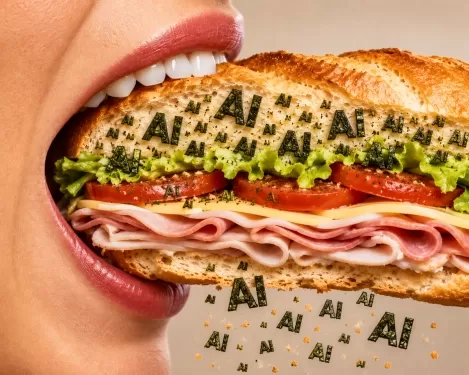
I can't pinpoint the exact moment when genuine excitement about a new technology turns into hype and then into an oh, come on moment—but I'm pretty sure that when a sandwich shop with Danny DeVito as its public face mentions AI in its IPO documents, we're getting close.
That's exactly the case with Jersey Mike's.
Given investors' insatiable appetite for anything AI these days, I understand why tech companies feel compelled to sprinkle AI buzzwords all over their pitches. This applies equally to non-AI startups raising venture capital and to Bending Spoons' public debut—a company that buys aging, "not-AI" tech companies to rehabilitate.
Just for fun, I looked at Jersey Mike's IPO documents to see how far this compulsion might go. Surely a sandwich shop wouldn't need to mention AI in its S-1. But lo and behold!
The term "artificial intelligence" and its acronym "AI" appeared 22 times. In this case, the company can't claim to be selling AI software. It sells submarine sandwiches. AI products are what investors are truly hungry for (terrible pun intended).
Still, it managed to mention AI in its investor risk warnings. That might be even funnier. It doesn't explain what it's using AI for that could pose a risk to investors, beyond a vague phrase: "We are beginning to use AI Technologies in our business."
To be fair, as a company that operates franchisees, it does rely on software (mentioned 52 times) and data (112 mentions), like any business. Its AI risk warning was boilerplate language, perhaps even necessary, given that similar disasters have already occurred in other food businesses—such as the half-baked AI inventory tool Starbucks launched, which couldn't count and was recently scrapped.
Still, I'll go out on a limb and predict that the risk of an AI disaster for a company making real sandwiches—not AI slop—is roughly the same as a franchise shop getting struck by lightning. That actually happened to a shop in Texas in 2021, by the way. Yet weather was mentioned only five times in the S-1. And lightning? Not once.
Related article
 SK hynix Considers Major US IPO to Alleviate Memory Chip Shortage
SK hynix, a South Korean memory chip leader already traded on the KOSPI, is preparing for a potential U.S. stock listing that could reportedly raise between $10 billion and $14 billion.The company announced this week it has confidentially submitted a
Analysts See AI Concerns Dampening Fractal Analytics' IPO Opening
As India's first AI company to go public, Fractal Analytics had a disappointing first trading day, as excitement for the technology met with nervous investors still reeling from a major sell-off in Indian software shares.Fractal began trading at ₹876
Crypto-Mining GPUs in Closet Spark $1.5B IPO: CoreWeave Co-Founder Reveals Journey
CoreWeave's stock market debut on Friday was more of a gentle nod than a triumphant shout. Priced at $40 on Thursday, the shares fell short of the anticipated $47 to $50 range. The company also scaled back the number of shares it offered.In total, CoreWeave managed to raise $1.5 billion, securing a
Related Special Topic Recommendations
chatbot
SK hynix Considers Major US IPO to Alleviate Memory Chip Shortage
SK hynix, a South Korean memory chip leader already traded on the KOSPI, is preparing for a potential U.S. stock listing that could reportedly raise between $10 billion and $14 billion.The company announced this week it has confidentially submitted a
Analysts See AI Concerns Dampening Fractal Analytics' IPO Opening
As India's first AI company to go public, Fractal Analytics had a disappointing first trading day, as excitement for the technology met with nervous investors still reeling from a major sell-off in Indian software shares.Fractal began trading at ₹876
Crypto-Mining GPUs in Closet Spark $1.5B IPO: CoreWeave Co-Founder Reveals Journey
CoreWeave's stock market debut on Friday was more of a gentle nod than a triumphant shout. Priced at $40 on Thursday, the shares fell short of the anticipated $47 to $50 range. The company also scaled back the number of shares it offered.In total, CoreWeave managed to raise $1.5 billion, securing a
Related Special Topic Recommendations
chatbot
 Best AI Roleplay Chat Apps for Language Practice, Interview Prep, and Daily Fluency
2026 Latest Best Top-rated AI Roleplay Chat Apps for Language Practice, Interview Prep, and Daily Fluency! XIX.AI curates a powerful game-changing collection that offers free vs paid comparison, real-world tests, and updated rankings weekly. These must-try tools help you boost writing skills, overcome fluency challenges, and improve communication efficiency across all daily scenarios. Explore now to discover your perfect tool for language growth!
 10 tools
 xix.ai
Music composition
AI Stem Separation Tools for Remix Production, Sampling Prep, and Karaoke Masters
xix.ai
Music composition
AI Stem Separation Tools for Remix Production, Sampling Prep, and Karaoke Masters
2026 Latest Best Top-rated AI Stem Separation Tools Curated for Remix Production, Sampling Prep, and Karaoke Masters. These powerful game-changing tools offer real-world tests to deliver precise audio isolation, boosting productivity significantly. XIX.AI provides a weekly updated free vs paid comparison guide to help you find the must-try solution that suits your needs. Explore now to unlock your AI edge.
8 tools
xix.ai
Data Analysis
AI SQL Copilots for Revenue Dashboards, Funnel Analysis, and Product Metrics
2026 Latest Best AI SQL Copilots Ranked Top-Rated! XIX.AI curates a powerful game-changing collection for weekly updated real-world tests. These must-try tools help you generate accurate revenue dashboards, analyze sales funnels, and track product metrics swiftly, boosting productivity massively. Explore now to Discover your perfect tool for data-driven decision making! 238 characters
9 tools
xix.ai
Music composition
Best AI Melody Writing Tools for Song Drafts
2026 Latest Best Top-Rated AI Melody Writing Tools for Song Drafts! XIX.AI has curated a highly powerful game-changing collection that goes through rigorous real-world tests to deliver the best writing experience. You can find detailed free vs paid comparisons, accurate rankings, and must-try options designed to help you create stunning song drafts effortlessly and boost your creative productivity significantly. Explore now to discover your perfect tool!
8 tools
xix.ai
chatbot
Best AI Conversation Trainer Tools for Interview Practice
2026 Latest Best Top-rated AI Conversation Trainer Tools for Interview Practice are here on XIX.AI! This curated collection features powerful, game-changing tools that go through rigorous real-world tests to deliver accurate feedback. You’ll find a free vs paid comparison and detailed rankings to help you choose the must-try option that boosts your confidence and skills. Explore now to Discover your perfect tool for interview success!
12 tools
xix.ai
Design & Art
Best AI Style Transfer Tools for Creative Experiments
2026 Latest Best Top-rated AI Style Transfer Tools for Creative Experiments! XIX.AI has curated a powerful, game-changing collection of must-try tools that deliver exceptional results through real-world tests and rigorous rankings. These top solutions help creatives boost productivity significantly by accelerating content creation and unlocking endless creative possibilities. Explore now to discover your perfect tool and start creating today!
9 tools
xix.ai

 Comments (0)
0/500
Comments (0)
0/500
I can't pinpoint the exact moment when genuine excitement about a new technology turns into hype and then into an oh, come on moment—but I'm pretty sure that when a sandwich shop with Danny DeVito as its public face mentions AI in its IPO documents, we're getting close.
That's exactly the case with Jersey Mike's.
Given investors' insatiable appetite for anything AI these days, I understand why tech companies feel compelled to sprinkle AI buzzwords all over their pitches. This applies equally to non-AI startups raising venture capital and to Bending Spoons' public debut—a company that buys aging, "not-AI" tech companies to rehabilitate.
Just for fun, I looked at Jersey Mike's IPO documents to see how far this compulsion might go. Surely a sandwich shop wouldn't need to mention AI in its S-1. But lo and behold!
The term "artificial intelligence" and its acronym "AI" appeared 22 times. In this case, the company can't claim to be selling AI software. It sells submarine sandwiches. AI products are what investors are truly hungry for (terrible pun intended).
Still, it managed to mention AI in its investor risk warnings. That might be even funnier. It doesn't explain what it's using AI for that could pose a risk to investors, beyond a vague phrase: "We are beginning to use AI Technologies in our business."
To be fair, as a company that operates franchisees, it does rely on software (mentioned 52 times) and data (112 mentions), like any business. Its AI risk warning was boilerplate language, perhaps even necessary, given that similar disasters have already occurred in other food businesses—such as the half-baked AI inventory tool Starbucks launched, which couldn't count and was recently scrapped.
Still, I'll go out on a limb and predict that the risk of an AI disaster for a company making real sandwiches—not AI slop—is roughly the same as a franchise shop getting struck by lightning. That actually happened to a shop in Texas in 2021, by the way. Yet weather was mentioned only five times in the S-1. And lightning? Not once.








 SK hynix Considers Major US IPO to Alleviate Memory Chip Shortage
SK hynix, a South Korean memory chip leader already traded on the KOSPI, is preparing for a potential U.S. stock listing that could reportedly raise between $10 billion and $14 billion.The company announced this week it has confidentially submitted a
SK hynix Considers Major US IPO to Alleviate Memory Chip Shortage
SK hynix, a South Korean memory chip leader already traded on the KOSPI, is preparing for a potential U.S. stock listing that could reportedly raise between $10 billion and $14 billion.The company announced this week it has confidentially submitted a
 Analysts See AI Concerns Dampening Fractal Analytics' IPO Opening
As India's first AI company to go public, Fractal Analytics had a disappointing first trading day, as excitement for the technology met with nervous investors still reeling from a major sell-off in Indian software shares.Fractal began trading at ₹876
Analysts See AI Concerns Dampening Fractal Analytics' IPO Opening
As India's first AI company to go public, Fractal Analytics had a disappointing first trading day, as excitement for the technology met with nervous investors still reeling from a major sell-off in Indian software shares.Fractal began trading at ₹876
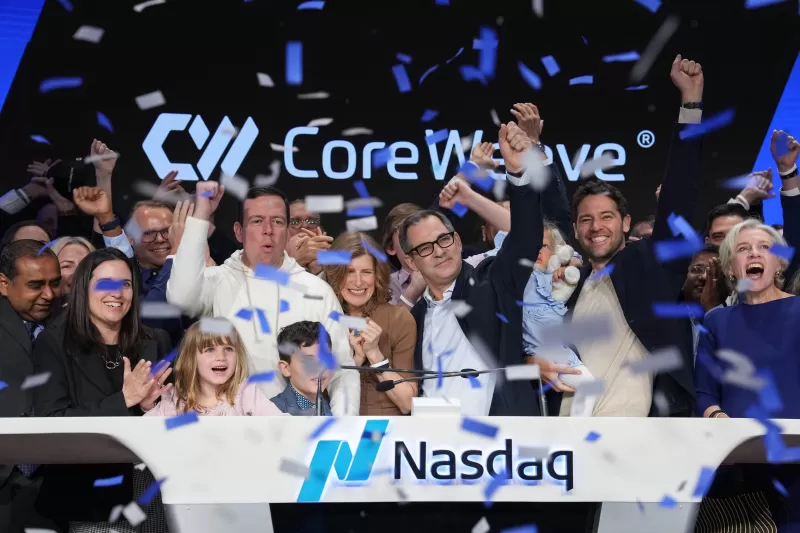 Crypto-Mining GPUs in Closet Spark $1.5B IPO: CoreWeave Co-Founder Reveals Journey
CoreWeave's stock market debut on Friday was more of a gentle nod than a triumphant shout. Priced at $40 on Thursday, the shares fell short of the anticipated $47 to $50 range. The company also scaled back the number of shares it offered.In total, CoreWeave managed to raise $1.5 billion, securing a
Crypto-Mining GPUs in Closet Spark $1.5B IPO: CoreWeave Co-Founder Reveals Journey
CoreWeave's stock market debut on Friday was more of a gentle nod than a triumphant shout. Priced at $40 on Thursday, the shares fell short of the anticipated $47 to $50 range. The company also scaled back the number of shares it offered.In total, CoreWeave managed to raise $1.5 billion, securing a

2026 Latest Best Top-rated AI Roleplay Chat Apps for Language Practice, Interview Prep, and Daily Fluency! XIX.AI curates a powerful game-changing collection that offers free vs paid comparison, real-world tests, and updated rankings weekly. These must-try tools help you boost writing skills, overcome fluency challenges, and improve communication efficiency across all daily scenarios. Explore now to discover your perfect tool for language growth!
10 tools
xix.ai

2026 Latest Best Top-rated AI Stem Separation Tools Curated for Remix Production, Sampling Prep, and Karaoke Masters. These powerful game-changing tools offer real-world tests to deliver precise audio isolation, boosting productivity significantly. XIX.AI provides a weekly updated free vs paid comparison guide to help you find the must-try solution that suits your needs. Explore now to unlock your AI edge.
8 tools
xix.ai

2026 Latest Best AI SQL Copilots Ranked Top-Rated! XIX.AI curates a powerful game-changing collection for weekly updated real-world tests. These must-try tools help you generate accurate revenue dashboards, analyze sales funnels, and track product metrics swiftly, boosting productivity massively. Explore now to Discover your perfect tool for data-driven decision making! 238 characters
9 tools
xix.ai

2026 Latest Best Top-Rated AI Melody Writing Tools for Song Drafts! XIX.AI has curated a highly powerful game-changing collection that goes through rigorous real-world tests to deliver the best writing experience. You can find detailed free vs paid comparisons, accurate rankings, and must-try options designed to help you create stunning song drafts effortlessly and boost your creative productivity significantly. Explore now to discover your perfect tool!
8 tools
xix.ai

2026 Latest Best Top-rated AI Conversation Trainer Tools for Interview Practice are here on XIX.AI! This curated collection features powerful, game-changing tools that go through rigorous real-world tests to deliver accurate feedback. You’ll find a free vs paid comparison and detailed rankings to help you choose the must-try option that boosts your confidence and skills. Explore now to Discover your perfect tool for interview success!
12 tools
xix.ai

2026 Latest Best Top-rated AI Style Transfer Tools for Creative Experiments! XIX.AI has curated a powerful, game-changing collection of must-try tools that deliver exceptional results through real-world tests and rigorous rankings. These top solutions help creatives boost productivity significantly by accelerating content creation and unlocking endless creative possibilities. Explore now to discover your perfect tool and start creating today!
9 tools
xix.ai












