


 Home
HomeCrypto-Mining GPUs in Closet Spark $1.5B IPO: CoreWeave Co-Founder Reveals Journey
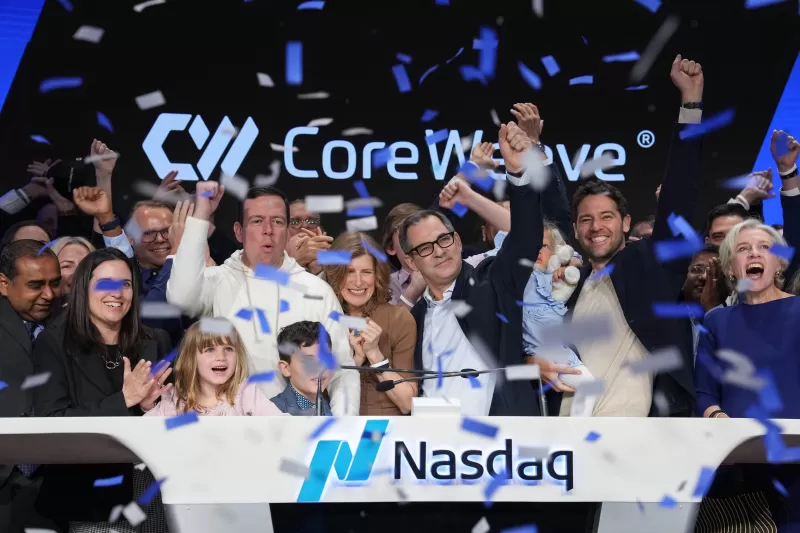
CoreWeave's stock market debut on Friday was more of a gentle nod than a triumphant shout. Priced at $40 on Thursday, the shares fell short of the anticipated $47 to $50 range. The company also scaled back the number of shares it offered.
In total, CoreWeave managed to raise $1.5 billion, securing a $14 billion market cap on its first day. This was less than the hoped-for $3 billion+ and a higher valuation they had aimed for. Shares started trading at $39 (yikes!) and ended the day at $40. The reception was, well, lukewarm at best.
Despite this, CoreWeave's IPO stands out as the largest AI-related listing so far and the biggest U.S. tech IPO since the bustling days of 2021.
In a plain white hoodie, sitting in an unremarkable conference room, and speaking with a noticeable Jersey accent, chief strategy officer Brian Venturo shared with TechCrunch that he feels incredibly fortunate.
It all started when he and his hedge fund buddies found themselves with time on their hands after their previous venture fizzled out.
Venturo had been a portfolio manager at Hudson Ridge Asset Management, an energy industry hedge fund founded by CoreWeave co-founder and CEO Michael Intrator. They developed a machine learning model to guide their investment choices in the data-heavy energy sector. There, they crossed paths with their other co-founder, Brannin McBee, who was running the data firm they utilized.
But as the U.S. entered its fracking boom, they shut down Hudson Ridge, leaving them, as Venturo puts it, "with a lot of time on our hands."
Their next venture? Crypto. They were keen to dive in but first wanted to grasp the commodity aspect, so they kicked off mining operations right on the pool table in their Manhattan office.
Thousands of GPUs in a warehouse
It's like the old saying about potato chips—one GPU led to ten, and ten led to a thousand. The rigs migrated from the pool table to a closet.
"Before we knew it, we were in the most cliché spot imaginable—my grandfather’s garage in New Jersey," Venturo chuckled. As their finance buddies got interested, they ramped up their operations.
"We were the world's largest Ethereum miner for about two and a half years," he said. "At one point, we had 50,000 Nvidia consumer GPUs."
These were chips designed for gaming on consumer PCs, not for running 24/7 in "a warehouse with no air-conditioning or ventilation," he explained. So, the co-founders engineered "crazy automation and health-checking systems" to manage these low-grade GPUs in tough conditions.
The team knew they wanted to repurpose their GPU empire for other ventures, like AI training. But they needed to learn how.
They reached out to EleutherAI, an open-source group developing a large language model. CoreWeave offered GPU access in exchange for insights into AI training, and they formalized a partnership in 2022.
"We thought we were just going to learn how the infrastructure worked," Venturo said. But EleutherAI connected them with hundreds of AI startup builders, sparking a major turning point for CoreWeave.
The goodwill from working with EleutherAI turned these startups into paying customers. It was "total luck that started the training business," Venturo noted.
Stability AI caught wind of CoreWeave through EleutherAI and became a client. The founders needed more capital to enhance their infrastructure.
Over a dinner with Magnetar investors, Venturo "was literally pounding on the dinner table," convincing them of AI's future. He said Magnetar ended up writing them a $100 million check.
Open source paves the way
OpenAI discovered CoreWeave through its open-source community involvement. Microsoft learned about the company through OpenAI, and subsequently became its biggest customer, being OpenAI’s largest investor and sole cloud provider at the time.
That's changed now. OpenAI recently inked a $12 billion deal with CoreWeave, knocking Microsoft off its perch as the top customer.
Today, CoreWeave boasts 32 data centers and 250,000 GPUs, including Nvidia’s hard-to-get Blackwell chips, which support AI reasoning, according to the company.
Venturo admits that CoreWeave's staggering $7.6 billion in debt, much of which is due within two years, has been a hot topic, as reported by the Financial Times. Against CoreWeave’s $1.9 billion in revenue (and $15 billion under contract), this debt is a major reason for investor caution.
However, Venturo insists that CoreWeave has structured each customer deal to cover the debt used to purchase the necessary GPUs. More than that, he recognizes that three hedge fund guys turned crypto miners, now running a pivotal AI training infrastructure, have been on a rollercoaster journey.
"There’s so many pieces of luck along the way, it’s crazy," he said.
Related article
 Jersey Mike’s IPO reveals AI hype’s absurdity
I can't pinpoint the exact moment when genuine excitement about a new technology turns into hype and then into an oh, come on moment—but I'm pretty sure that when a sandwich shop with Danny DeVito as its public face mentions AI in its IPO documents,
SK hynix Considers Major US IPO to Alleviate Memory Chip Shortage
SK hynix, a South Korean memory chip leader already traded on the KOSPI, is preparing for a potential U.S. stock listing that could reportedly raise between $10 billion and $14 billion.The company announced this week it has confidentially submitted a
Analysts See AI Concerns Dampening Fractal Analytics' IPO Opening
As India's first AI company to go public, Fractal Analytics had a disappointing first trading day, as excitement for the technology met with nervous investors still reeling from a major sell-off in Indian software shares.Fractal began trading at ₹876
Related Special Topic Recommendations
Design & Art
Jersey Mike’s IPO reveals AI hype’s absurdity
I can't pinpoint the exact moment when genuine excitement about a new technology turns into hype and then into an oh, come on moment—but I'm pretty sure that when a sandwich shop with Danny DeVito as its public face mentions AI in its IPO documents,
SK hynix Considers Major US IPO to Alleviate Memory Chip Shortage
SK hynix, a South Korean memory chip leader already traded on the KOSPI, is preparing for a potential U.S. stock listing that could reportedly raise between $10 billion and $14 billion.The company announced this week it has confidentially submitted a
Analysts See AI Concerns Dampening Fractal Analytics' IPO Opening
As India's first AI company to go public, Fractal Analytics had a disappointing first trading day, as excitement for the technology met with nervous investors still reeling from a major sell-off in Indian software shares.Fractal began trading at ₹876
Related Special Topic Recommendations
Design & Art
 Top AI Illustration Tools: Create Editorial Scenes and Cover Art Faster
2026 Latest Top-rated AI Illustration Tools: Our curated list features the best powerfully designed tools for creating stunning editorial scenes and eye-catching cover art quickly. Each option has gone through rigorous real-world tests, offering a free vs paid comparison to help you find the perfect match for your workflow. Try these must-try solutions today to unlock your AI edge and boost your creative productivity. Explore now at XIX.AI.
 10 tools
 xix.ai
Education and Learning
Top AI Tutors for Exam Prep: Practice Math, Science, and English
xix.ai
Education and Learning
Top AI Tutors for Exam Prep: Practice Math, Science, and English
2026 Latest Top-Rated Best AI Tutors for Exam Prep are here on XIX.AI! Our curated list features powerful game-changing tools that offer free vs paid comparison, real-world tests, and weekly updated rankings. They help boost your writing efficiency, simplify complex topic learning, and unlock your academic potential. Explore now to Discover your perfect exam prep tool and Start creating today to Unlock your AI edge!
10 tools
xix.ai
Finance
AI Budget Planning Tools for Personal Money Management
2026 Latest Best Top-Rated AI Budget Planning Tools for Personal Money Management are here on XIX.AI! This curated collection features powerful, game-changing solutions that help you conduct real-world tests, understand spending habits, and create personalized plans to boost productivity. Enjoy a free vs paid comparison along with detailed rankings. Must-try tools designed to simplify money management and unlock your AI edge. Explore now!
11 tools
xix.ai
Health & Wellness
AI Sleep Tracking Assistants: Improve Recovery with Better Bedtime Habits
2026 Latest Best Top-Rated AI Sleep Tracking Assistants curated for ultimate recovery. This fully updated weekly guide features powerful tools that deliver real-world tests, free vs paid comparison, and detailed rankings to help you find the must-try solution that boosts sleep quality and supports better bedtime habits. Explore now at XIX.AI to Unlock your AI edge.
10 tools
xix.ai
Data Analysis
AI SQL Copilots for Product and Revenue Analytics
2026 Latest Best Top-Rated AI SQL Copilots for Product and Revenue Analytics! XIX.AI has curated a powerful, game-changing collection of must-try tools that undergo real-world tests through weekly updated rankings. These tools help users boost productivity significantly by accelerating data analysis, streamlining complex queries, and generating accurate insights to drive smarter business decisions. Explore now to Discover your perfect tool for unlocking your AI edge!
14 tools
xix.ai
Education and Learning
Best AI Homework Helpers That Teach: Learn Concepts, Not Just Answers
2026 Latest Best Top-Rated AI Homework Helpers That Teach Core Concepts Not Just Answers Powerful Tools for Students Must-Try Curated List Weekly Updated Free vs Paid Comparison Real-World Tests Accurate Rankings to Help You Unlock Your Full Learning Potential Explore now to Discover your perfect tool for smarter studying.
10 tools
xix.ai

 Comments (31)
0/500
Comments (31)
0/500
![JosephWalker]()
这家公司用藏在衣柜里的GPU挖矿起家,如今竟估值千亿上市?😂 不过IPO定价才40美元,连预期下限都没达到,还缩减了发行规模... 感觉资本市场对加密货币相关企业还是持保留态度啊。会不会是AI算力泡沫的前兆?
![WyattHill]()
O IPO da CoreWeave foi um pouco decepcionante, hein? Esperava mais entusiasmo com aquele levantamento de $1,5 bilhão. As ações não atingiram a meta, mas, ei, agora eles estão no jogo. É legal que começaram de um closet! Talvez da próxima vez eles voem mais alto? 💸📈
![JonathanJackson]()
The story behind CoreWeave's IPO is pretty wild! From mining GPUs in a closet to a $1.5B IPO, it's inspiring but also a bit disappointing that the stock didn't meet expectations. Still, it's a cool journey. Maybe they'll bounce back stronger! 🚀
![TerryHernández]()
Die Geschichte hinter dem IPO von CoreWeave ist ziemlich verrückt! Von GPUs in einem Schrank zu minen bis zu einem IPO von 1,5 Milliarden Dollar, es ist inspirierend, aber auch ein bisschen enttäuschend, dass die Aktie die Erwartungen nicht erfüllt hat. Trotzdem ist es eine coole Reise. Vielleicht kommen sie stärker zurück! 🚀
![HarryLewis]()
코어위브의 IPO 이야기는 정말 놀랍네요! 옷장에서 GPU를 채굴하다가 1.5억 달러의 IPO까지, 영감을 주지만 주식이 기대에 미치지 못한 점은 좀 실망스럽네요. 그래도 멋진 여정이에요. 어쩌면 더 강하게 회복할지 몰라요! 🚀
![MatthewYoung]()
Câu chuyện đằng sau IPO của CoreWeave thật điên rồ! Từ việc khai thác GPU trong tủ quần áo đến IPO 1,5 tỷ đô la, thật là truyền cảm hứng nhưng cũng hơi thất vọng khi cổ phiếu không đáp ứng kỳ vọng. Tuy nhiên, đó là một hành trình tuyệt vời. Có lẽ họ sẽ trở lại mạnh mẽ hơn! 🚀
CoreWeave's stock market debut on Friday was more of a gentle nod than a triumphant shout. Priced at $40 on Thursday, the shares fell short of the anticipated $47 to $50 range. The company also scaled back the number of shares it offered.
In total, CoreWeave managed to raise $1.5 billion, securing a $14 billion market cap on its first day. This was less than the hoped-for $3 billion+ and a higher valuation they had aimed for. Shares started trading at $39 (yikes!) and ended the day at $40. The reception was, well, lukewarm at best.
Despite this, CoreWeave's IPO stands out as the largest AI-related listing so far and the biggest U.S. tech IPO since the bustling days of 2021.
In a plain white hoodie, sitting in an unremarkable conference room, and speaking with a noticeable Jersey accent, chief strategy officer Brian Venturo shared with TechCrunch that he feels incredibly fortunate.
It all started when he and his hedge fund buddies found themselves with time on their hands after their previous venture fizzled out.
Venturo had been a portfolio manager at Hudson Ridge Asset Management, an energy industry hedge fund founded by CoreWeave co-founder and CEO Michael Intrator. They developed a machine learning model to guide their investment choices in the data-heavy energy sector. There, they crossed paths with their other co-founder, Brannin McBee, who was running the data firm they utilized.
But as the U.S. entered its fracking boom, they shut down Hudson Ridge, leaving them, as Venturo puts it, "with a lot of time on our hands."
Their next venture? Crypto. They were keen to dive in but first wanted to grasp the commodity aspect, so they kicked off mining operations right on the pool table in their Manhattan office.
Thousands of GPUs in a warehouse
It's like the old saying about potato chips—one GPU led to ten, and ten led to a thousand. The rigs migrated from the pool table to a closet.
"Before we knew it, we were in the most cliché spot imaginable—my grandfather’s garage in New Jersey," Venturo chuckled. As their finance buddies got interested, they ramped up their operations.
"We were the world's largest Ethereum miner for about two and a half years," he said. "At one point, we had 50,000 Nvidia consumer GPUs."
These were chips designed for gaming on consumer PCs, not for running 24/7 in "a warehouse with no air-conditioning or ventilation," he explained. So, the co-founders engineered "crazy automation and health-checking systems" to manage these low-grade GPUs in tough conditions.
The team knew they wanted to repurpose their GPU empire for other ventures, like AI training. But they needed to learn how.
They reached out to EleutherAI, an open-source group developing a large language model. CoreWeave offered GPU access in exchange for insights into AI training, and they formalized a partnership in 2022.
"We thought we were just going to learn how the infrastructure worked," Venturo said. But EleutherAI connected them with hundreds of AI startup builders, sparking a major turning point for CoreWeave.
The goodwill from working with EleutherAI turned these startups into paying customers. It was "total luck that started the training business," Venturo noted.
Stability AI caught wind of CoreWeave through EleutherAI and became a client. The founders needed more capital to enhance their infrastructure.
Over a dinner with Magnetar investors, Venturo "was literally pounding on the dinner table," convincing them of AI's future. He said Magnetar ended up writing them a $100 million check.
Open source paves the way
OpenAI discovered CoreWeave through its open-source community involvement. Microsoft learned about the company through OpenAI, and subsequently became its biggest customer, being OpenAI’s largest investor and sole cloud provider at the time.
That's changed now. OpenAI recently inked a $12 billion deal with CoreWeave, knocking Microsoft off its perch as the top customer.
Today, CoreWeave boasts 32 data centers and 250,000 GPUs, including Nvidia’s hard-to-get Blackwell chips, which support AI reasoning, according to the company.
Venturo admits that CoreWeave's staggering $7.6 billion in debt, much of which is due within two years, has been a hot topic, as reported by the Financial Times. Against CoreWeave’s $1.9 billion in revenue (and $15 billion under contract), this debt is a major reason for investor caution.
However, Venturo insists that CoreWeave has structured each customer deal to cover the debt used to purchase the necessary GPUs. More than that, he recognizes that three hedge fund guys turned crypto miners, now running a pivotal AI training infrastructure, have been on a rollercoaster journey.
"There’s so many pieces of luck along the way, it’s crazy," he said.








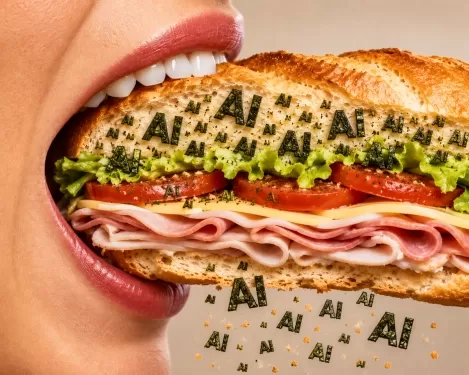 Jersey Mike’s IPO reveals AI hype’s absurdity
I can't pinpoint the exact moment when genuine excitement about a new technology turns into hype and then into an oh, come on moment—but I'm pretty sure that when a sandwich shop with Danny DeVito as its public face mentions AI in its IPO documents,
Jersey Mike’s IPO reveals AI hype’s absurdity
I can't pinpoint the exact moment when genuine excitement about a new technology turns into hype and then into an oh, come on moment—but I'm pretty sure that when a sandwich shop with Danny DeVito as its public face mentions AI in its IPO documents,
 SK hynix Considers Major US IPO to Alleviate Memory Chip Shortage
SK hynix, a South Korean memory chip leader already traded on the KOSPI, is preparing for a potential U.S. stock listing that could reportedly raise between $10 billion and $14 billion.The company announced this week it has confidentially submitted a
SK hynix Considers Major US IPO to Alleviate Memory Chip Shortage
SK hynix, a South Korean memory chip leader already traded on the KOSPI, is preparing for a potential U.S. stock listing that could reportedly raise between $10 billion and $14 billion.The company announced this week it has confidentially submitted a
 Analysts See AI Concerns Dampening Fractal Analytics' IPO Opening
As India's first AI company to go public, Fractal Analytics had a disappointing first trading day, as excitement for the technology met with nervous investors still reeling from a major sell-off in Indian software shares.Fractal began trading at ₹876
Analysts See AI Concerns Dampening Fractal Analytics' IPO Opening
As India's first AI company to go public, Fractal Analytics had a disappointing first trading day, as excitement for the technology met with nervous investors still reeling from a major sell-off in Indian software shares.Fractal began trading at ₹876

2026 Latest Top-rated AI Illustration Tools: Our curated list features the best powerfully designed tools for creating stunning editorial scenes and eye-catching cover art quickly. Each option has gone through rigorous real-world tests, offering a free vs paid comparison to help you find the perfect match for your workflow. Try these must-try solutions today to unlock your AI edge and boost your creative productivity. Explore now at XIX.AI.
10 tools
xix.ai

2026 Latest Top-Rated Best AI Tutors for Exam Prep are here on XIX.AI! Our curated list features powerful game-changing tools that offer free vs paid comparison, real-world tests, and weekly updated rankings. They help boost your writing efficiency, simplify complex topic learning, and unlock your academic potential. Explore now to Discover your perfect exam prep tool and Start creating today to Unlock your AI edge!
10 tools
xix.ai

2026 Latest Best Top-Rated AI Budget Planning Tools for Personal Money Management are here on XIX.AI! This curated collection features powerful, game-changing solutions that help you conduct real-world tests, understand spending habits, and create personalized plans to boost productivity. Enjoy a free vs paid comparison along with detailed rankings. Must-try tools designed to simplify money management and unlock your AI edge. Explore now!
11 tools
xix.ai

2026 Latest Best Top-Rated AI Sleep Tracking Assistants curated for ultimate recovery. This fully updated weekly guide features powerful tools that deliver real-world tests, free vs paid comparison, and detailed rankings to help you find the must-try solution that boosts sleep quality and supports better bedtime habits. Explore now at XIX.AI to Unlock your AI edge.
10 tools
xix.ai

2026 Latest Best Top-Rated AI SQL Copilots for Product and Revenue Analytics! XIX.AI has curated a powerful, game-changing collection of must-try tools that undergo real-world tests through weekly updated rankings. These tools help users boost productivity significantly by accelerating data analysis, streamlining complex queries, and generating accurate insights to drive smarter business decisions. Explore now to Discover your perfect tool for unlocking your AI edge!
14 tools
xix.ai

2026 Latest Best Top-Rated AI Homework Helpers That Teach Core Concepts Not Just Answers Powerful Tools for Students Must-Try Curated List Weekly Updated Free vs Paid Comparison Real-World Tests Accurate Rankings to Help You Unlock Your Full Learning Potential Explore now to Discover your perfect tool for smarter studying.
10 tools
xix.ai

这家公司用藏在衣柜里的GPU挖矿起家,如今竟估值千亿上市?😂 不过IPO定价才40美元,连预期下限都没达到,还缩减了发行规模... 感觉资本市场对加密货币相关企业还是持保留态度啊。会不会是AI算力泡沫的前兆?
O IPO da CoreWeave foi um pouco decepcionante, hein? Esperava mais entusiasmo com aquele levantamento de $1,5 bilhão. As ações não atingiram a meta, mas, ei, agora eles estão no jogo. É legal que começaram de um closet! Talvez da próxima vez eles voem mais alto? 💸📈
The story behind CoreWeave's IPO is pretty wild! From mining GPUs in a closet to a $1.5B IPO, it's inspiring but also a bit disappointing that the stock didn't meet expectations. Still, it's a cool journey. Maybe they'll bounce back stronger! 🚀
Die Geschichte hinter dem IPO von CoreWeave ist ziemlich verrückt! Von GPUs in einem Schrank zu minen bis zu einem IPO von 1,5 Milliarden Dollar, es ist inspirierend, aber auch ein bisschen enttäuschend, dass die Aktie die Erwartungen nicht erfüllt hat. Trotzdem ist es eine coole Reise. Vielleicht kommen sie stärker zurück! 🚀
코어위브의 IPO 이야기는 정말 놀랍네요! 옷장에서 GPU를 채굴하다가 1.5억 달러의 IPO까지, 영감을 주지만 주식이 기대에 미치지 못한 점은 좀 실망스럽네요. 그래도 멋진 여정이에요. 어쩌면 더 강하게 회복할지 몰라요! 🚀
Câu chuyện đằng sau IPO của CoreWeave thật điên rồ! Từ việc khai thác GPU trong tủ quần áo đến IPO 1,5 tỷ đô la, thật là truyền cảm hứng nhưng cũng hơi thất vọng khi cổ phiếu không đáp ứng kỳ vọng. Tuy nhiên, đó là một hành trình tuyệt vời. Có lẽ họ sẽ trở lại mạnh mẽ hơn! 🚀












