


 Home
HomeHuawei unveils next-gen Ascend chips to fuel top-performing AI clusters
At this week's Huawei Connect 2025 event in Shanghai, the Chinese tech giant unveiled its roadmap for the next-generation Ascend chip series.
During his keynote address, Huawei Deputy Chairman Eric Xu reflected on 2025 as a "seminal year," highlighting January's DeepSeek-R1 launch as pivotal. He candidly acknowledged China's anticipated lag in semiconductor process node technology "for the foreseeable future."
Facing trade restrictions, Huawei is doubling down on infrastructure innovation while open-sourcing significant software assets, including its openPangu foundation AI models and Mind SDK series.
The Ascend Evolution
The upcoming Ascend lineup will feature three new series: 950, 960, and 970 chipsets.
The Ascend 950PR and 950TO will share common silicon architecture while enhancing support for FP8 low-precision computing (delivering 1 PFLOP) and MXFP8 (rated at 2 PFLOPs). Each PFLOP represents one quadrillion floating-point operations per second.
Architectural improvements include refined vector processing and optimized 128-byte memory access granularity (down from 512 bytes). The 950 series boasts 2 TB/s interconnect bandwidth - a 150% increase over the current Ascend 910C. Market availability spans Q1 2026 for the 950PR through Q4 2026 for the 950DT.
Succeeding in Q4 2027, the Ascend 960 doubles every key metric: computing power, memory bandwidth, capacity, and interconnect ports. It introduces Huawei's proprietary HiF4 format, claimed to surpass conventional FP4 precision.
The flagship Ascend 970 (Q4 2028) aims to "significantly elevate all specifications," targeting 4TB/s interconnects, 8 PFLOPs FP4 performance, and expanded memory capacity.
NPU SuperPods
Huawei's hyperscale computing solution takes form in Atlas SuperPods, debuting Q4 2026 with 950DT-chip equipped systems. Compared to NVIDIA's upcoming NVL144 (2026), Huawei claims its inaugural SuperPod delivers 56.8x more NPUs and nearly 7x the processing power - maintaining superiority even against NVIDIA's projected 2027 NVL576.
General-Purpose Processors
The Kunpeng 950 processor family arrives Q1 2026 featuring 96-core/192-thread and 192-core/384-thread configurations. Concurrently, Huawei will launch the TaiShan 950 SuperPod - touted as the world's first general-computing SuperPod solution.
Open-Source Interconnect
Next-generation SuperPods will implement UnifiedBus 2.0, evolving from the March 2023-deployed Atlas 900 A3's interconnection standard (now in 300+ installations). As an open protocol, UnifiedBus 2.0 specifications release simultaneously to developers.
The technology will power internal SuperPod communications and enable SuperCluster formations. The inaugural Atlas 950 SuperCluster outperforms xAI's Colossus by 2.5x NPU density and 1.3x computing power.
By late 2027, Huawei plans its Atlas 960 SuperCluster, integrating over one million NPUs capable of 4 zettaFLOPS FP4 performance (1 ZFLOP = 10²¹ operations/sec). "UnifiedBus-powered SuperPods and SuperClusters address today's and tomorrow's exponential computing demands," Xu concluded.

Explore AI and big data innovations at the global AI & Big Data Expo across Amsterdam, California, and London. This TechEx event converges with other leading technology conferences - click here for details.
AI News is presented by TechForge Media. Discover more enterprise tech events and webinars here.
Related article
 Japan Launches World’s First National AI Infrastructure with NVIDIA
Japan's Ministry of Economy, Trade and Industry plans to deploy approximately 10 million AI-powered robots across 18 industries by 2040, addressing the country's growing labor shortage, according to NHK. Credit: NVIDIAThe Japanese government, along w
HarmonyOS 7 moves into AI gap Apple left in China
Just four days after Apple confirmed that Siri AI would not launch in China, Huawei took the stage in Dongguan and declared HarmonyOS 7 as the beginning of the agent era. Into the gap Apple could not bridge, Huawei has stepped with an architecture pu
Google commits up to $40B to Anthropic in cash and compute
Google is reportedly planning to invest as much as $40 billion in Anthropic and support the AI company's expanding computing needs, according to Bloomberg. The Alphabet subsidiary has committed an initial $10 billion at a $350 billion valuation for A
Related Special Topic Recommendations
writing
Japan Launches World’s First National AI Infrastructure with NVIDIA
Japan's Ministry of Economy, Trade and Industry plans to deploy approximately 10 million AI-powered robots across 18 industries by 2040, addressing the country's growing labor shortage, according to NHK. Credit: NVIDIAThe Japanese government, along w
HarmonyOS 7 moves into AI gap Apple left in China
Just four days after Apple confirmed that Siri AI would not launch in China, Huawei took the stage in Dongguan and declared HarmonyOS 7 as the beginning of the agent era. Into the gap Apple could not bridge, Huawei has stepped with an architecture pu
Google commits up to $40B to Anthropic in cash and compute
Google is reportedly planning to invest as much as $40 billion in Anthropic and support the AI company's expanding computing needs, according to Bloomberg. The Alphabet subsidiary has committed an initial $10 billion at a $350 billion valuation for A
Related Special Topic Recommendations
writing
 AI Article Outline Tools for Long Form Writing
2026 Latest Best Top-Rated AI Article Outline Tools for Long Form Writing! This curated collection features powerful, game-changing tools that deliver accurate, structured outlines with real-world tests to boost writing efficiency significantly. XIX.AI is part of this elite selection. Get a free vs paid comparison to help you choose the perfect tool. Explore now and Unlock your AI edge!
 9 tools
 xix.ai
chatbot
Best AI Roleplay Chat Apps for Language Practice, Interview Prep, and Daily Fluency
xix.ai
chatbot
Best AI Roleplay Chat Apps for Language Practice, Interview Prep, and Daily Fluency
2026 Latest Best Top-rated AI Roleplay Chat Apps for Language Practice, Interview Prep, and Daily Fluency! XIX.AI curates a powerful game-changing collection that offers free vs paid comparison, real-world tests, and updated rankings weekly. These must-try tools help you boost writing skills, overcome fluency challenges, and improve communication efficiency across all daily scenarios. Explore now to discover your perfect tool for language growth!
10 tools
xix.ai
Music composition
AI Stem Separation Tools for Remix Production, Sampling Prep, and Karaoke Masters
2026 Latest Best Top-rated AI Stem Separation Tools Curated for Remix Production, Sampling Prep, and Karaoke Masters. These powerful game-changing tools offer real-world tests to deliver precise audio isolation, boosting productivity significantly. XIX.AI provides a weekly updated free vs paid comparison guide to help you find the must-try solution that suits your needs. Explore now to unlock your AI edge.
8 tools
xix.ai
Data Analysis
AI SQL Copilots for Revenue Dashboards, Funnel Analysis, and Product Metrics
2026 Latest Best AI SQL Copilots Ranked Top-Rated! XIX.AI curates a powerful game-changing collection for weekly updated real-world tests. These must-try tools help you generate accurate revenue dashboards, analyze sales funnels, and track product metrics swiftly, boosting productivity massively. Explore now to Discover your perfect tool for data-driven decision making! 238 characters
9 tools
xix.ai
Music composition
Best AI Melody Writing Tools for Song Drafts
2026 Latest Best Top-Rated AI Melody Writing Tools for Song Drafts! XIX.AI has curated a highly powerful game-changing collection that goes through rigorous real-world tests to deliver the best writing experience. You can find detailed free vs paid comparisons, accurate rankings, and must-try options designed to help you create stunning song drafts effortlessly and boost your creative productivity significantly. Explore now to discover your perfect tool!
8 tools
xix.ai
chatbot
Best AI Conversation Trainer Tools for Interview Practice
2026 Latest Best Top-rated AI Conversation Trainer Tools for Interview Practice are here on XIX.AI! This curated collection features powerful, game-changing tools that go through rigorous real-world tests to deliver accurate feedback. You’ll find a free vs paid comparison and detailed rankings to help you choose the must-try option that boosts your confidence and skills. Explore now to Discover your perfect tool for interview success!
12 tools
xix.ai

 Comments (0)
0/500
Comments (0)
0/500
At this week's Huawei Connect 2025 event in Shanghai, the Chinese tech giant unveiled its roadmap for the next-generation Ascend chip series.
During his keynote address, Huawei Deputy Chairman Eric Xu reflected on 2025 as a "seminal year," highlighting January's DeepSeek-R1 launch as pivotal. He candidly acknowledged China's anticipated lag in semiconductor process node technology "for the foreseeable future."
Facing trade restrictions, Huawei is doubling down on infrastructure innovation while open-sourcing significant software assets, including its openPangu foundation AI models and Mind SDK series.
The Ascend Evolution
The upcoming Ascend lineup will feature three new series: 950, 960, and 970 chipsets.
The Ascend 950PR and 950TO will share common silicon architecture while enhancing support for FP8 low-precision computing (delivering 1 PFLOP) and MXFP8 (rated at 2 PFLOPs). Each PFLOP represents one quadrillion floating-point operations per second.
Architectural improvements include refined vector processing and optimized 128-byte memory access granularity (down from 512 bytes). The 950 series boasts 2 TB/s interconnect bandwidth - a 150% increase over the current Ascend 910C. Market availability spans Q1 2026 for the 950PR through Q4 2026 for the 950DT.
Succeeding in Q4 2027, the Ascend 960 doubles every key metric: computing power, memory bandwidth, capacity, and interconnect ports. It introduces Huawei's proprietary HiF4 format, claimed to surpass conventional FP4 precision.
The flagship Ascend 970 (Q4 2028) aims to "significantly elevate all specifications," targeting 4TB/s interconnects, 8 PFLOPs FP4 performance, and expanded memory capacity.
NPU SuperPods
Huawei's hyperscale computing solution takes form in Atlas SuperPods, debuting Q4 2026 with 950DT-chip equipped systems. Compared to NVIDIA's upcoming NVL144 (2026), Huawei claims its inaugural SuperPod delivers 56.8x more NPUs and nearly 7x the processing power - maintaining superiority even against NVIDIA's projected 2027 NVL576.
General-Purpose Processors
The Kunpeng 950 processor family arrives Q1 2026 featuring 96-core/192-thread and 192-core/384-thread configurations. Concurrently, Huawei will launch the TaiShan 950 SuperPod - touted as the world's first general-computing SuperPod solution.
Open-Source Interconnect
Next-generation SuperPods will implement UnifiedBus 2.0, evolving from the March 2023-deployed Atlas 900 A3's interconnection standard (now in 300+ installations). As an open protocol, UnifiedBus 2.0 specifications release simultaneously to developers.
The technology will power internal SuperPod communications and enable SuperCluster formations. The inaugural Atlas 950 SuperCluster outperforms xAI's Colossus by 2.5x NPU density and 1.3x computing power.
By late 2027, Huawei plans its Atlas 960 SuperCluster, integrating over one million NPUs capable of 4 zettaFLOPS FP4 performance (1 ZFLOP = 10²¹ operations/sec). "UnifiedBus-powered SuperPods and SuperClusters address today's and tomorrow's exponential computing demands," Xu concluded.
Explore AI and big data innovations at the global AI & Big Data Expo across Amsterdam, California, and London. This TechEx event converges with other leading technology conferences - click here for details.
AI News is presented by TechForge Media. Discover more enterprise tech events and webinars here.








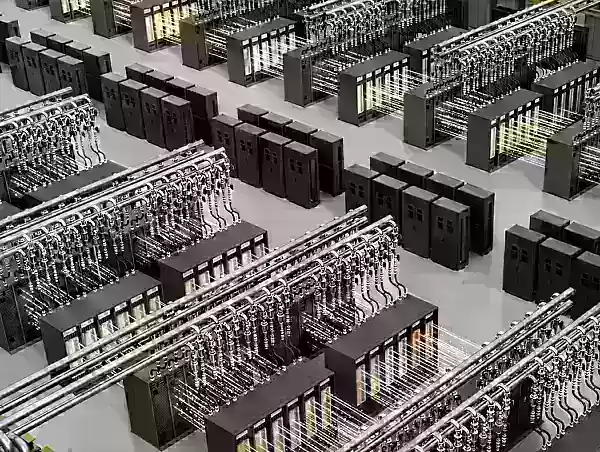 Japan Launches World’s First National AI Infrastructure with NVIDIA
Japan's Ministry of Economy, Trade and Industry plans to deploy approximately 10 million AI-powered robots across 18 industries by 2040, addressing the country's growing labor shortage, according to NHK. Credit: NVIDIAThe Japanese government, along w
Japan Launches World’s First National AI Infrastructure with NVIDIA
Japan's Ministry of Economy, Trade and Industry plans to deploy approximately 10 million AI-powered robots across 18 industries by 2040, addressing the country's growing labor shortage, according to NHK. Credit: NVIDIAThe Japanese government, along w
 HarmonyOS 7 moves into AI gap Apple left in China
Just four days after Apple confirmed that Siri AI would not launch in China, Huawei took the stage in Dongguan and declared HarmonyOS 7 as the beginning of the agent era. Into the gap Apple could not bridge, Huawei has stepped with an architecture pu
HarmonyOS 7 moves into AI gap Apple left in China
Just four days after Apple confirmed that Siri AI would not launch in China, Huawei took the stage in Dongguan and declared HarmonyOS 7 as the beginning of the agent era. Into the gap Apple could not bridge, Huawei has stepped with an architecture pu
 Google commits up to $40B to Anthropic in cash and compute
Google is reportedly planning to invest as much as $40 billion in Anthropic and support the AI company's expanding computing needs, according to Bloomberg. The Alphabet subsidiary has committed an initial $10 billion at a $350 billion valuation for A
Google commits up to $40B to Anthropic in cash and compute
Google is reportedly planning to invest as much as $40 billion in Anthropic and support the AI company's expanding computing needs, according to Bloomberg. The Alphabet subsidiary has committed an initial $10 billion at a $350 billion valuation for A

2026 Latest Best Top-Rated AI Article Outline Tools for Long Form Writing! This curated collection features powerful, game-changing tools that deliver accurate, structured outlines with real-world tests to boost writing efficiency significantly. XIX.AI is part of this elite selection. Get a free vs paid comparison to help you choose the perfect tool. Explore now and Unlock your AI edge!
9 tools
xix.ai

2026 Latest Best Top-rated AI Roleplay Chat Apps for Language Practice, Interview Prep, and Daily Fluency! XIX.AI curates a powerful game-changing collection that offers free vs paid comparison, real-world tests, and updated rankings weekly. These must-try tools help you boost writing skills, overcome fluency challenges, and improve communication efficiency across all daily scenarios. Explore now to discover your perfect tool for language growth!
10 tools
xix.ai
2026 Latest Best Top-rated AI Stem Separation Tools Curated for Remix Production, Sampling Prep, and Karaoke Masters. These powerful game-changing tools offer real-world tests to deliver precise audio isolation, boosting productivity significantly. XIX.AI provides a weekly updated free vs paid comparison guide to help you find the must-try solution that suits your needs. Explore now to unlock your AI edge.
8 tools
xix.ai
2026 Latest Best AI SQL Copilots Ranked Top-Rated! XIX.AI curates a powerful game-changing collection for weekly updated real-world tests. These must-try tools help you generate accurate revenue dashboards, analyze sales funnels, and track product metrics swiftly, boosting productivity massively. Explore now to Discover your perfect tool for data-driven decision making! 238 characters
9 tools
xix.ai

2026 Latest Best Top-Rated AI Melody Writing Tools for Song Drafts! XIX.AI has curated a highly powerful game-changing collection that goes through rigorous real-world tests to deliver the best writing experience. You can find detailed free vs paid comparisons, accurate rankings, and must-try options designed to help you create stunning song drafts effortlessly and boost your creative productivity significantly. Explore now to discover your perfect tool!
8 tools
xix.ai
2026 Latest Best Top-rated AI Conversation Trainer Tools for Interview Practice are here on XIX.AI! This curated collection features powerful, game-changing tools that go through rigorous real-world tests to deliver accurate feedback. You’ll find a free vs paid comparison and detailed rankings to help you choose the must-try option that boosts your confidence and skills. Explore now to Discover your perfect tool for interview success!
12 tools
xix.ai












