


 Home
HomeGecko Robotics Wins Major US Navy Contract for Robotic Systems
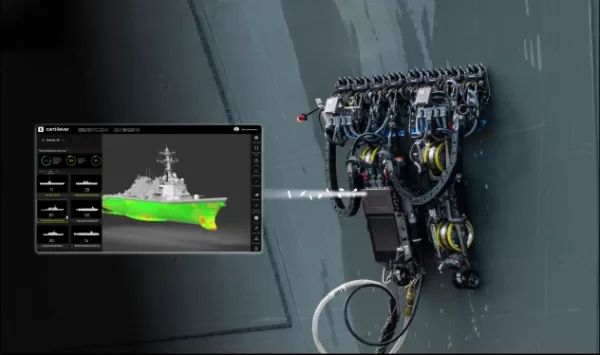
The U.S. Navy has signed its largest robotics contract to date, aiming to employ robots for enhanced fleet maintenance.
Gecko Robotics, a Pittsburgh-based firm specializing in robots and sensors for inspecting major industrial infrastructure, announced a five-year indefinite delivery, indefinite quantity (IDIQ) agreement with the U.S. Navy and the General Services Administration (GSA) on Tuesday. The contract begins with an initial $54 million award and carries a ceiling value of $71 million.
The Navy will utilize Gecko's robots and sensors to track the condition and operational status of its assets and ship fleets, beginning with 18 vessels in the U.S. Pacific Fleet.
Gecko founder and CEO Jake Loosararian explained to TechCrunch that the company's robots will meticulously crawl through every compartment of the ships to generate a precise digital replica—often termed a "digital twin"—of each vessel. The accompanying software will assist the Navy in monitoring these assets and prescribing maintenance, aiming to proactively address issues, shorten maintenance durations, and lower costs.
"Once you build that digital model using robotic systems to capture the health and condition of these assets, along with digitizing their environment, you can dramatically speed up decision-making and repairs," Loosararian said. "The goal is to create a dynamic, living model that helps reduce the future days these assets must spend out of service."
This contract supports the Navy's objective of achieving 80% fleet readiness by 2027. Currently, approximately 40% of the Navy's fleet is unavailable at any given time due to lengthy maintenance cycles.
"We're talking about $13 to $20 billion in annual maintenance costs," noted Loosararian. "When every available asset is crucial, this is a critical issue. These assets are also aging, which adds to the challenge."
Gecko has collaborated with the U.S. Navy for four years. The partnership began after a port engineer in Japan contacted the company for more information, leading to an evaluation and a proposed preventative maintenance plan. The Navy's positive response fostered a growing relationship, culminating in Tuesday's agreement.
"We are helping to ensure our critical assets remain operational for their maximum lifespan and avoid unexpected downtime," Loosararian stated. "I envision a future where ships don't undergo prolonged maintenance cycles because we continuously diagnose and address issues while they are deployed. That's the future I see, whether for military assets or industrial facilities like power plants."
Related article
 Khosla-backed Genesis AI Unveils Full-Stack Robotics Solution
Genesis AI, a startup that secured a $105 million seed round to develop foundational AI for robotics, has launched its inaugural model, GENE-26.5, featuring unexpectedly dexterous hands. In a demonstration video, the company highlighted various advan
How US$900m Funding Will Shape XPENG’s Robotics Vision
XPENG’s robotics division secures over US$900 million in funding, achieving a post-money valuation exceeding US$6.3 billion and accelerating the deployment of physical AI. Credit: XPENGSven De Smet, Head of Brand & Marketing at XPENG Europe, describe
Japan Launches World’s First National AI Infrastructure with NVIDIA
Japan's Ministry of Economy, Trade and Industry plans to deploy approximately 10 million AI-powered robots across 18 industries by 2040, addressing the country's growing labor shortage, according to NHK. Credit: NVIDIAThe Japanese government, along w
Related Special Topic Recommendations
writing
Khosla-backed Genesis AI Unveils Full-Stack Robotics Solution
Genesis AI, a startup that secured a $105 million seed round to develop foundational AI for robotics, has launched its inaugural model, GENE-26.5, featuring unexpectedly dexterous hands. In a demonstration video, the company highlighted various advan
How US$900m Funding Will Shape XPENG’s Robotics Vision
XPENG’s robotics division secures over US$900 million in funding, achieving a post-money valuation exceeding US$6.3 billion and accelerating the deployment of physical AI. Credit: XPENGSven De Smet, Head of Brand & Marketing at XPENG Europe, describe
Japan Launches World’s First National AI Infrastructure with NVIDIA
Japan's Ministry of Economy, Trade and Industry plans to deploy approximately 10 million AI-powered robots across 18 industries by 2040, addressing the country's growing labor shortage, according to NHK. Credit: NVIDIAThe Japanese government, along w
Related Special Topic Recommendations
writing
 AI Article Outline Tools for Long Form Writing
2026 Latest Best Top-Rated AI Article Outline Tools for Long Form Writing! This curated collection features powerful, game-changing tools that deliver accurate, structured outlines with real-world tests to boost writing efficiency significantly. XIX.AI is part of this elite selection. Get a free vs paid comparison to help you choose the perfect tool. Explore now and Unlock your AI edge!
 9 tools
 xix.ai
chatbot
Best AI Roleplay Chat Apps for Language Practice, Interview Prep, and Daily Fluency
xix.ai
chatbot
Best AI Roleplay Chat Apps for Language Practice, Interview Prep, and Daily Fluency
2026 Latest Best Top-rated AI Roleplay Chat Apps for Language Practice, Interview Prep, and Daily Fluency! XIX.AI curates a powerful game-changing collection that offers free vs paid comparison, real-world tests, and updated rankings weekly. These must-try tools help you boost writing skills, overcome fluency challenges, and improve communication efficiency across all daily scenarios. Explore now to discover your perfect tool for language growth!
10 tools
xix.ai
Music composition
AI Stem Separation Tools for Remix Production, Sampling Prep, and Karaoke Masters
2026 Latest Best Top-rated AI Stem Separation Tools Curated for Remix Production, Sampling Prep, and Karaoke Masters. These powerful game-changing tools offer real-world tests to deliver precise audio isolation, boosting productivity significantly. XIX.AI provides a weekly updated free vs paid comparison guide to help you find the must-try solution that suits your needs. Explore now to unlock your AI edge.
8 tools
xix.ai
Data Analysis
AI SQL Copilots for Revenue Dashboards, Funnel Analysis, and Product Metrics
2026 Latest Best AI SQL Copilots Ranked Top-Rated! XIX.AI curates a powerful game-changing collection for weekly updated real-world tests. These must-try tools help you generate accurate revenue dashboards, analyze sales funnels, and track product metrics swiftly, boosting productivity massively. Explore now to Discover your perfect tool for data-driven decision making! 238 characters
9 tools
xix.ai
Music composition
Best AI Melody Writing Tools for Song Drafts
2026 Latest Best Top-Rated AI Melody Writing Tools for Song Drafts! XIX.AI has curated a highly powerful game-changing collection that goes through rigorous real-world tests to deliver the best writing experience. You can find detailed free vs paid comparisons, accurate rankings, and must-try options designed to help you create stunning song drafts effortlessly and boost your creative productivity significantly. Explore now to discover your perfect tool!
8 tools
xix.ai
chatbot
Best AI Conversation Trainer Tools for Interview Practice
2026 Latest Best Top-rated AI Conversation Trainer Tools for Interview Practice are here on XIX.AI! This curated collection features powerful, game-changing tools that go through rigorous real-world tests to deliver accurate feedback. You’ll find a free vs paid comparison and detailed rankings to help you choose the must-try option that boosts your confidence and skills. Explore now to Discover your perfect tool for interview success!
12 tools
xix.ai

 Comments (1)
0/500
Comments (1)
0/500
![RaymondNelson]()
This is a massive step forward for naval maintenance. Gecko’s tech seems perfect for inspecting those hard-to-reach spots on ships. But I wonder how the current crew feels about robots taking over their inspection jobs? 😅 Still, if it keeps the fleet safer and saves money, I’m all for it. Let’s see if they can deliver on such a big contract without hiccups.
The U.S. Navy has signed its largest robotics contract to date, aiming to employ robots for enhanced fleet maintenance.
Gecko Robotics, a Pittsburgh-based firm specializing in robots and sensors for inspecting major industrial infrastructure, announced a five-year indefinite delivery, indefinite quantity (IDIQ) agreement with the U.S. Navy and the General Services Administration (GSA) on Tuesday. The contract begins with an initial $54 million award and carries a ceiling value of $71 million.
The Navy will utilize Gecko's robots and sensors to track the condition and operational status of its assets and ship fleets, beginning with 18 vessels in the U.S. Pacific Fleet.
Gecko founder and CEO Jake Loosararian explained to TechCrunch that the company's robots will meticulously crawl through every compartment of the ships to generate a precise digital replica—often termed a "digital twin"—of each vessel. The accompanying software will assist the Navy in monitoring these assets and prescribing maintenance, aiming to proactively address issues, shorten maintenance durations, and lower costs.
"Once you build that digital model using robotic systems to capture the health and condition of these assets, along with digitizing their environment, you can dramatically speed up decision-making and repairs," Loosararian said. "The goal is to create a dynamic, living model that helps reduce the future days these assets must spend out of service."
This contract supports the Navy's objective of achieving 80% fleet readiness by 2027. Currently, approximately 40% of the Navy's fleet is unavailable at any given time due to lengthy maintenance cycles.
"We're talking about $13 to $20 billion in annual maintenance costs," noted Loosararian. "When every available asset is crucial, this is a critical issue. These assets are also aging, which adds to the challenge."
Gecko has collaborated with the U.S. Navy for four years. The partnership began after a port engineer in Japan contacted the company for more information, leading to an evaluation and a proposed preventative maintenance plan. The Navy's positive response fostered a growing relationship, culminating in Tuesday's agreement.
"We are helping to ensure our critical assets remain operational for their maximum lifespan and avoid unexpected downtime," Loosararian stated. "I envision a future where ships don't undergo prolonged maintenance cycles because we continuously diagnose and address issues while they are deployed. That's the future I see, whether for military assets or industrial facilities like power plants."








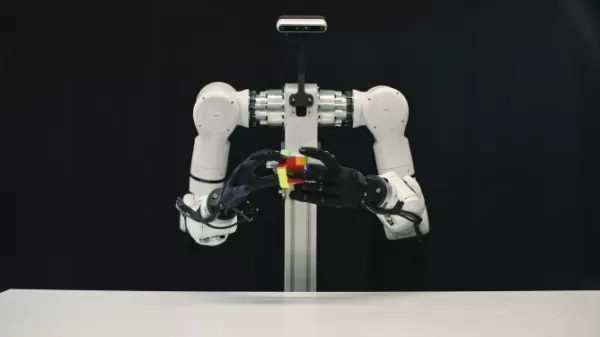 Khosla-backed Genesis AI Unveils Full-Stack Robotics Solution
Genesis AI, a startup that secured a $105 million seed round to develop foundational AI for robotics, has launched its inaugural model, GENE-26.5, featuring unexpectedly dexterous hands. In a demonstration video, the company highlighted various advan
Khosla-backed Genesis AI Unveils Full-Stack Robotics Solution
Genesis AI, a startup that secured a $105 million seed round to develop foundational AI for robotics, has launched its inaugural model, GENE-26.5, featuring unexpectedly dexterous hands. In a demonstration video, the company highlighted various advan
 How US$900m Funding Will Shape XPENG’s Robotics Vision
XPENG’s robotics division secures over US$900 million in funding, achieving a post-money valuation exceeding US$6.3 billion and accelerating the deployment of physical AI. Credit: XPENGSven De Smet, Head of Brand & Marketing at XPENG Europe, describe
How US$900m Funding Will Shape XPENG’s Robotics Vision
XPENG’s robotics division secures over US$900 million in funding, achieving a post-money valuation exceeding US$6.3 billion and accelerating the deployment of physical AI. Credit: XPENGSven De Smet, Head of Brand & Marketing at XPENG Europe, describe
 Japan Launches World’s First National AI Infrastructure with NVIDIA
Japan's Ministry of Economy, Trade and Industry plans to deploy approximately 10 million AI-powered robots across 18 industries by 2040, addressing the country's growing labor shortage, according to NHK. Credit: NVIDIAThe Japanese government, along w
Japan Launches World’s First National AI Infrastructure with NVIDIA
Japan's Ministry of Economy, Trade and Industry plans to deploy approximately 10 million AI-powered robots across 18 industries by 2040, addressing the country's growing labor shortage, according to NHK. Credit: NVIDIAThe Japanese government, along w

2026 Latest Best Top-Rated AI Article Outline Tools for Long Form Writing! This curated collection features powerful, game-changing tools that deliver accurate, structured outlines with real-world tests to boost writing efficiency significantly. XIX.AI is part of this elite selection. Get a free vs paid comparison to help you choose the perfect tool. Explore now and Unlock your AI edge!
9 tools
xix.ai

2026 Latest Best Top-rated AI Roleplay Chat Apps for Language Practice, Interview Prep, and Daily Fluency! XIX.AI curates a powerful game-changing collection that offers free vs paid comparison, real-world tests, and updated rankings weekly. These must-try tools help you boost writing skills, overcome fluency challenges, and improve communication efficiency across all daily scenarios. Explore now to discover your perfect tool for language growth!
10 tools
xix.ai

2026 Latest Best Top-rated AI Stem Separation Tools Curated for Remix Production, Sampling Prep, and Karaoke Masters. These powerful game-changing tools offer real-world tests to deliver precise audio isolation, boosting productivity significantly. XIX.AI provides a weekly updated free vs paid comparison guide to help you find the must-try solution that suits your needs. Explore now to unlock your AI edge.
8 tools
xix.ai

2026 Latest Best AI SQL Copilots Ranked Top-Rated! XIX.AI curates a powerful game-changing collection for weekly updated real-world tests. These must-try tools help you generate accurate revenue dashboards, analyze sales funnels, and track product metrics swiftly, boosting productivity massively. Explore now to Discover your perfect tool for data-driven decision making! 238 characters
9 tools
xix.ai

2026 Latest Best Top-Rated AI Melody Writing Tools for Song Drafts! XIX.AI has curated a highly powerful game-changing collection that goes through rigorous real-world tests to deliver the best writing experience. You can find detailed free vs paid comparisons, accurate rankings, and must-try options designed to help you create stunning song drafts effortlessly and boost your creative productivity significantly. Explore now to discover your perfect tool!
8 tools
xix.ai

2026 Latest Best Top-rated AI Conversation Trainer Tools for Interview Practice are here on XIX.AI! This curated collection features powerful, game-changing tools that go through rigorous real-world tests to deliver accurate feedback. You’ll find a free vs paid comparison and detailed rankings to help you choose the must-try option that boosts your confidence and skills. Explore now to Discover your perfect tool for interview success!
12 tools
xix.ai

This is a massive step forward for naval maintenance. Gecko’s tech seems perfect for inspecting those hard-to-reach spots on ships. But I wonder how the current crew feels about robots taking over their inspection jobs? 😅 Still, if it keeps the fleet safer and saves money, I’m all for it. Let’s see if they can deliver on such a big contract without hiccups.












