


 Home
Fidji Simo Steps Down From OpenAI’s No. 2 Role

Fidji Simo, OpenAI’s second-in-command, is stepping down from her full-time position, according to the Wall Street Journal.
In a staff memo released Thursday, Simo explained that her medical leave has extended beyond initial expectations and proven more challenging than anticipated. She will transition to a part-time advisory role rather than continuing in her previous capacity. Simo joined OpenAI’s board of directors in 2024 and officially joined the company in May 2025 as CEO of Applications. This newly created position reported directly to Sam Altman, consolidating the company’s business and product operations under her leadership.
This organizational change was part of a broader reporting structure shift: COO Brad Lightcap, CFO Sarah Friar, and CPO Kevin Weil all began reporting to Simo, while Altman stepped back to focus on research, compute infrastructure, and safety initiatives.
Simo first revealed her health challenges in April, announcing she was taking medical leave due to a relapse of a neuroimmune condition. That same memo disclosed that Lightcap had moved into a new “special projects” role, while CMO Kate Rouch departed the company to focus on cancer recovery. Kevin Weil has since left the organization as well.
Before joining OpenAI, Simo served as CEO of Instacart from 2021, leading the company through its 2023 IPO. Prior to that, she spent over a decade at Meta, including leading the Facebook app team.
Simo’s permanent departure leaves Altman searching for a successor at a critical juncture: OpenAI is eyeing a possible IPO and racing to close the enterprise gap with Anthropic. She was widely viewed as a likely candidate to assume greater responsibility once the company went public, creating a significant leadership vacuum.
Simo primarily focused on expanding OpenAI’s consumer business. However, ChatGPT’s growth slowed late last year, missing internal revenue targets. This prompted the company to pivot more heavily toward coding tools, an area where it currently trails Anthropic.
TechCrunch has reached out to OpenAI for additional comment.
OpenAI’s executive team appears lean for a company recently valued at $852 billion. Beyond Altman, Lightcap, Friar, and co-founder Greg Brockman (who also serves as president and oversaw product strategy during Simo’s absence), the leadership bench includes Denise Dresser. She joined in December as chief revenue officer, overseeing “global revenue strategy across enterprise and customer success,” according to a press release at the time.
It would not be surprising to see Dresser take on a broader role, given her previous experience as CEO of Slack for two years and 14 years at Salesforce, Slack’s parent company.
Simo’s departure occurs against another significant backdrop: OpenAI’s evolving approach to employee equity. In April of last year, the same month Simo joined, the company shortened its vesting cliff—the waiting period before new hires’ stock grants begin vesting—from the industry-standard 12 months to 6 months. Then, in December, OpenAI eliminated the cliff entirely for new hires, allowing equity to start vesting from day one.
Described internally by Simo as a way to empower employees to “take risks” without fear of losing equity if terminated early, this move came amid an escalating AI talent war. It reflects OpenAI’s aggressive spending to retain staff, with projected stock-based compensation reaching $6 billion in 2025 alone.
None of the aforementioned departures appear linked to compensation issues. Senior executives’ equity packages are typically negotiated individually and may have entirely different vesting terms.
Related article
 Stripe to Acquire OpenRouter as AI Model Routing Gains Momentum
Stripe has agreed to acquire OpenRouter, an AI model-routing platform that gives developers access to hundreds of models through a single interface. The deal adds model selection and routing to Stripe’s existing work around AI usage and token-based b
Former OpenAI Researcher Barrett Zoph Returns to Google to Support Gemini Development
Barret Zoph, who previously abruptly left and joined OpenAI due to a disagreement with Thinking Machines Lab CEO Miriam Mularati, has once again changed employers. Alphabet's Google announced that Zoph will return as Vice President of Research, bring
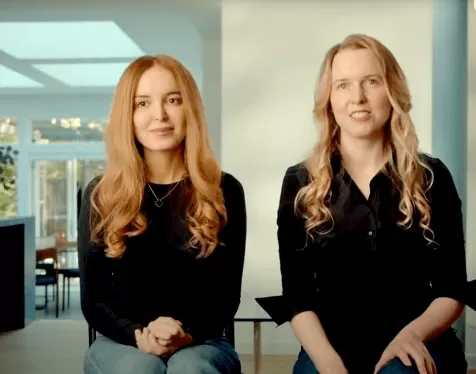
How Recursive Intelligence Raised $335M at $4B Valuation in 4 Months
The co-founders of startup Ricursive Intelligence seemed destined to be co-founders.Anna Goldie, CEO, and Azalia Mirhoseini, CTO, are so well-known in the AI community that they were among those AI engineers who “got those weird emails from Zuckerber
Related Special Topic Recommendations
Design & Art
 Top AI Illustration Tools: Create Editorial Scenes and Cover Art Faster
2026 Latest Top-rated AI Illustration Tools: Our curated list features the best powerfully designed tools for creating stunning editorial scenes and eye-catching cover art quickly. Each option has gone through rigorous real-world tests, offering a free vs paid comparison to help you find the perfect match for your workflow. Try these must-try solutions today to unlock your AI edge and boost your creative productivity. Explore now at XIX.AI.
 10 tools
 xix.ai
Education and Learning
Top AI Tutors for Exam Prep: Practice Math, Science, and English
2026 Latest Top-Rated Best AI Tutors for Exam Prep are here on XIX.AI! Our curated list features powerful game-changing tools that offer free vs paid comparison, real-world tests, and weekly updated rankings. They help boost your writing efficiency, simplify complex topic learning, and unlock your academic potential. Explore now to Discover your perfect exam prep tool and Start creating today to Unlock your AI edge!
10 tools
xix.ai
Finance
AI Budget Planning Tools for Personal Money Management
2026 Latest Best Top-Rated AI Budget Planning Tools for Personal Money Management are here on XIX.AI! This curated collection features powerful, game-changing solutions that help you conduct real-world tests, understand spending habits, and create personalized plans to boost productivity. Enjoy a free vs paid comparison along with detailed rankings. Must-try tools designed to simplify money management and unlock your AI edge. Explore now!
11 tools
xix.ai
Health & Wellness
AI Sleep Tracking Assistants: Improve Recovery with Better Bedtime Habits
2026 Latest Best Top-Rated AI Sleep Tracking Assistants curated for ultimate recovery. This fully updated weekly guide features powerful tools that deliver real-world tests, free vs paid comparison, and detailed rankings to help you find the must-try solution that boosts sleep quality and supports better bedtime habits. Explore now at XIX.AI to Unlock your AI edge.
10 tools
xix.ai
Data Analysis
AI SQL Copilots for Product and Revenue Analytics
2026 Latest Best Top-Rated AI SQL Copilots for Product and Revenue Analytics! XIX.AI has curated a powerful, game-changing collection of must-try tools that undergo real-world tests through weekly updated rankings. These tools help users boost productivity significantly by accelerating data analysis, streamlining complex queries, and generating accurate insights to drive smarter business decisions. Explore now to Discover your perfect tool for unlocking your AI edge!
14 tools
xix.ai
Education and Learning
Best AI Homework Helpers That Teach: Learn Concepts, Not Just Answers
2026 Latest Best Top-Rated AI Homework Helpers That Teach Core Concepts Not Just Answers Powerful Tools for Students Must-Try Curated List Weekly Updated Free vs Paid Comparison Real-World Tests Accurate Rankings to Help You Unlock Your Full Learning Potential Explore now to Discover your perfect tool for smarter studying.
10 tools
xix.ai

 Comments (0)
0/500
Fidji Simo, OpenAI’s second-in-command, is stepping down from her full-time position, according to the Wall Street Journal.
In a staff memo released Thursday, Simo explained that her medical leave has extended beyond initial expectations and proven more challenging than anticipated. She will transition to a part-time advisory role rather than continuing in her previous capacity. Simo joined OpenAI’s board of directors in 2024 and officially joined the company in May 2025 as CEO of Applications. This newly created position reported directly to Sam Altman, consolidating the company’s business and product operations under her leadership.
This organizational change was part of a broader reporting structure shift: COO Brad Lightcap, CFO Sarah Friar, and CPO Kevin Weil all began reporting to Simo, while Altman stepped back to focus on research, compute infrastructure, and safety initiatives.
Simo first revealed her health challenges in April, announcing she was taking medical leave due to a relapse of a neuroimmune condition. That same memo disclosed that Lightcap had moved into a new “special projects” role, while CMO Kate Rouch departed the company to focus on cancer recovery. Kevin Weil has since left the organization as well.
Before joining OpenAI, Simo served as CEO of Instacart from 2021, leading the company through its 2023 IPO. Prior to that, she spent over a decade at Meta, including leading the Facebook app team.
Simo’s permanent departure leaves Altman searching for a successor at a critical juncture: OpenAI is eyeing a possible IPO and racing to close the enterprise gap with Anthropic. She was widely viewed as a likely candidate to assume greater responsibility once the company went public, creating a significant leadership vacuum.
Simo primarily focused on expanding OpenAI’s consumer business. However, ChatGPT’s growth slowed late last year, missing internal revenue targets. This prompted the company to pivot more heavily toward coding tools, an area where it currently trails Anthropic.
TechCrunch has reached out to OpenAI for additional comment.
OpenAI’s executive team appears lean for a company recently valued at $852 billion. Beyond Altman, Lightcap, Friar, and co-founder Greg Brockman (who also serves as president and oversaw product strategy during Simo’s absence), the leadership bench includes Denise Dresser. She joined in December as chief revenue officer, overseeing “global revenue strategy across enterprise and customer success,” according to a press release at the time.
It would not be surprising to see Dresser take on a broader role, given her previous experience as CEO of Slack for two years and 14 years at Salesforce, Slack’s parent company.
Simo’s departure occurs against another significant backdrop: OpenAI’s evolving approach to employee equity. In April of last year, the same month Simo joined, the company shortened its vesting cliff—the waiting period before new hires’ stock grants begin vesting—from the industry-standard 12 months to 6 months. Then, in December, OpenAI eliminated the cliff entirely for new hires, allowing equity to start vesting from day one.
Described internally by Simo as a way to empower employees to “take risks” without fear of losing equity if terminated early, this move came amid an escalating AI talent war. It reflects OpenAI’s aggressive spending to retain staff, with projected stock-based compensation reaching $6 billion in 2025 alone.
None of the aforementioned departures appear linked to compensation issues. Senior executives’ equity packages are typically negotiated individually and may have entirely different vesting terms.








 Stripe to Acquire OpenRouter as AI Model Routing Gains Momentum
Stripe has agreed to acquire OpenRouter, an AI model-routing platform that gives developers access to hundreds of models through a single interface. The deal adds model selection and routing to Stripe’s existing work around AI usage and token-based b
 Former OpenAI Researcher Barrett Zoph Returns to Google to Support Gemini Development
Barret Zoph, who previously abruptly left and joined OpenAI due to a disagreement with Thinking Machines Lab CEO Miriam Mularati, has once again changed employers. Alphabet's Google announced that Zoph will return as Vice President of Research, bring
 How Recursive Intelligence Raised $335M at $4B Valuation in 4 Months
The co-founders of startup Ricursive Intelligence seemed destined to be co-founders.Anna Goldie, CEO, and Azalia Mirhoseini, CTO, are so well-known in the AI community that they were among those AI engineers who “got those weird emails from Zuckerber

2026 Latest Top-rated AI Illustration Tools: Our curated list features the best powerfully designed tools for creating stunning editorial scenes and eye-catching cover art quickly. Each option has gone through rigorous real-world tests, offering a free vs paid comparison to help you find the perfect match for your workflow. Try these must-try solutions today to unlock your AI edge and boost your creative productivity. Explore now at XIX.AI.
10 tools
xix.ai

2026 Latest Top-Rated Best AI Tutors for Exam Prep are here on XIX.AI! Our curated list features powerful game-changing tools that offer free vs paid comparison, real-world tests, and weekly updated rankings. They help boost your writing efficiency, simplify complex topic learning, and unlock your academic potential. Explore now to Discover your perfect exam prep tool and Start creating today to Unlock your AI edge!
10 tools
xix.ai

2026 Latest Best Top-Rated AI Budget Planning Tools for Personal Money Management are here on XIX.AI! This curated collection features powerful, game-changing solutions that help you conduct real-world tests, understand spending habits, and create personalized plans to boost productivity. Enjoy a free vs paid comparison along with detailed rankings. Must-try tools designed to simplify money management and unlock your AI edge. Explore now!
11 tools
xix.ai

2026 Latest Best Top-Rated AI Sleep Tracking Assistants curated for ultimate recovery. This fully updated weekly guide features powerful tools that deliver real-world tests, free vs paid comparison, and detailed rankings to help you find the must-try solution that boosts sleep quality and supports better bedtime habits. Explore now at XIX.AI to Unlock your AI edge.
10 tools
xix.ai

2026 Latest Best Top-Rated AI SQL Copilots for Product and Revenue Analytics! XIX.AI has curated a powerful, game-changing collection of must-try tools that undergo real-world tests through weekly updated rankings. These tools help users boost productivity significantly by accelerating data analysis, streamlining complex queries, and generating accurate insights to drive smarter business decisions. Explore now to Discover your perfect tool for unlocking your AI edge!
14 tools
xix.ai

2026 Latest Best Top-Rated AI Homework Helpers That Teach Core Concepts Not Just Answers Powerful Tools for Students Must-Try Curated List Weekly Updated Free vs Paid Comparison Real-World Tests Accurate Rankings to Help You Unlock Your Full Learning Potential Explore now to Discover your perfect tool for smarter studying.
10 tools
xix.ai












