


 Home
HomeEra raises $11M to develop a software platform for AI gadgets

In early April, Era hosted a meetup in New York for artists who had received its developer kit. These artists showcased the mini gadgets they had built, such as a souvenir that shares facts and jokes about France, a phone-like device that monitors your stock portfolio and tells you if today is the day you can quit your job, and a device that provides air quality information.
Although these devices are experimental, they share a common thread: Era's platform, which enables hardware makers to build AI agents and orchestrations for AI devices. The company does not want to create devices itself; instead, it aims to empower others by providing a software layer that handles tasks like custom voice creation or adding intelligence to classic devices such as headphones.
Era has raised $11 million in funding so far, including a $9 million seed round led by Abstract Ventures and BoxGroup, with participation from Collaborative Fund and Mozilla Ventures. Previously, the company had raised $2 million in pre-seed funding from Topology Ventures and Betaworks.
Individual angel investors include Caterina Fake, co-founder of Flickr; Ken Kocienda, creator of the iPhone keyboard; Tony Wang, founder of OAS; Daniel Kuntz, co-founder of Little Guy; Mina Fahmi, co-founder of Sandbar; ShaoBoZ, former CPO of Rabbit; and Kelin Zhang, creator of the Poetry Camera.
Era was founded last year by CEO Liz Dorman, CTO Alex Ollman, and CPO Megan Gole. Dorman previously worked at Humane on AI orchestration and moved to HP as part of the acquisition. Ollman worked at HP on enterprise agentic frameworks. Gole worked on the Jony Ive and Sam Altman's io project at Sutter Hill Ventures, and later joined Era.
Casey Caruso, an investor in Era and founder and managing partner at Topology Ventures, noted that the startup's orchestration platform stands out due to its dynamic routing across models and its ability to manage real-world constraints such as connectivity.
Dorman stated that the core idea behind Era was to create a platform that could power the next generation of devices, potentially moving away from the app model.
"I think one of the incredible things we can do with today's AI models is replace the app layer. So we're building an intelligence layer that allows anyone to create intelligent objects and devices. We truly believe that the future of tech should not be made by people in San Francisco — people in their high fortresses, out of touch with reality, making devices and forcing them on everyone. I want to have a choice over my devices again," Dorman said.
Currently, Era offers over 130 large language models from more than 14 providers, supporting various AI gadget form factors like glasses, jewelry, and home speakers.
Era believes that as more form factors emerge, hardware makers will need a software layer capable of handling multimodal inputs and inference to power intelligent functions.
"You can imagine this intelligence layer extending to many different types of hardware. We believe it won't be just glasses, rings, or bracelets. We're going to see a Cambrian explosion of possibilities, and that's because technology is becoming commoditized," she said.
Dorman noted that the platform is designed to scale across millions of devices. It can also support custom AI device experiments that brands may conduct to appeal to specific user groups.
Era's vision is that as more users adopt AI gadgets, it wants to give users the ability to choose their own memory and model providers in a privacy-preserving manner. Just as it held a showcase with artists, it plans to make its platform available to the open-source and maker communities to demonstrate how it can power a variety of devices.
A major challenge in the AI hardware space is that no company has yet established a proven success model. Humane was acquired by HP, and Rabbit has been quiet. Plaud has found some success in the meeting note-taking space, while startups like Sandbar and Taya are still early-stage. However, Era believes that as users encounter more use cases for AI devices, some will become habitual.
Related article
 Japan Launches World’s First National AI Infrastructure with NVIDIA
Japan's Ministry of Economy, Trade and Industry plans to deploy approximately 10 million AI-powered robots across 18 industries by 2040, addressing the country's growing labor shortage, according to NHK. Credit: NVIDIAThe Japanese government, along w
Dessn secures $6M for its production-focused design tool
In recent years, AI has boosted the popularity of new design tools like Visual Electric (owned by Perplexity), Weavy (owned by Figma), Flora, and Krea. These tools promise that product teams with designers can quickly iterate through variations using
Arm offers startups flexible access to its edge AI platform
Arm has announced that its most powerful edge AI platform, Armv9, is now available to startups through its Flexible Access programme.Essentially a 'try before you buy' model for chip designers, Flexible Access provides companies with low-cost or no-c
Related Special Topic Recommendations
chatbot
Japan Launches World’s First National AI Infrastructure with NVIDIA
Japan's Ministry of Economy, Trade and Industry plans to deploy approximately 10 million AI-powered robots across 18 industries by 2040, addressing the country's growing labor shortage, according to NHK. Credit: NVIDIAThe Japanese government, along w
Dessn secures $6M for its production-focused design tool
In recent years, AI has boosted the popularity of new design tools like Visual Electric (owned by Perplexity), Weavy (owned by Figma), Flora, and Krea. These tools promise that product teams with designers can quickly iterate through variations using
Arm offers startups flexible access to its edge AI platform
Arm has announced that its most powerful edge AI platform, Armv9, is now available to startups through its Flexible Access programme.Essentially a 'try before you buy' model for chip designers, Flexible Access provides companies with low-cost or no-c
Related Special Topic Recommendations
chatbot
 Best AI Conversation Trainer Tools for Interview Practice
2026 Latest Best Top-rated AI Conversation Trainer Tools for Interview Practice are here on XIX.AI! This curated collection features powerful, game-changing tools that go through rigorous real-world tests to deliver accurate feedback. You’ll find a free vs paid comparison and detailed rankings to help you choose the must-try option that boosts your confidence and skills. Explore now to Discover your perfect tool for interview success!
 12 tools
 xix.ai
Design & Art
Best AI Style Transfer Tools for Creative Experiments
xix.ai
Design & Art
Best AI Style Transfer Tools for Creative Experiments
2026 Latest Best Top-rated AI Style Transfer Tools for Creative Experiments! XIX.AI has curated a powerful, game-changing collection of must-try tools that deliver exceptional results through real-world tests and rigorous rankings. These top solutions help creatives boost productivity significantly by accelerating content creation and unlocking endless creative possibilities. Explore now to discover your perfect tool and start creating today!
9 tools
xix.ai
Comic Creation
Best AI Dialogue Bubble Tools for Visual Storytelling
2026 Latest Best Top-Rated AI Dialogue Bubble Tools for Visual Storytelling are here on XIX.AI! This curated collection features powerful, game-changing tools that help creators boost productivity and overcome creative bottlenecks. Get a free vs paid comparison, see real-world tests, and check the latest rankings to find the must-try solutions perfect for crafting engaging visual narratives. Explore now to discover your ideal tool!
10 tools
xix.ai
Meeting Assistant
Top AI Meeting Summary Tools: Track Decisions and Follow-Ups Clearly
2026 Latest Top-Rated Best AI Meeting Summary Tools for Clear Decision Tracking and Effortless Follow-Ups. This curated list showcases powerful, game-changing solutions that boost productivity dramatically by automating meeting notes, identifying key action items, and streamlining team coordination across all projects. Get a free vs paid comparison along with real-world tests and weekly updated rankings to help you find the perfect tool. Explore now to unlock your AI edge!
9 tools
xix.ai
Data Analysis
Best AI Data Cleaning Tools: Fix Missing Values and Duplicates Fast
2026 Latest Best Top-rated AI Data Cleaning Tools for quick fixing of missing values and duplicates. This curated list showcases powerful, game-changing solutions that boost productivity significantly. Each option has undergone rigorous real-world tests to ensure reliability. Get a free vs paid comparison and discover the must-try tool that fits your needs best. Explore now at XIX.AI to Unlock your AI edge.
11 tools
xix.ai
Design & Art
Best AI Creative Ideation Tools for Artists: Break Through Visual Blocks
2026 Latest Best Top-Rated AI Creative Ideation Tools for Artists are curated by XIX.AI to help creators break through visual blocks and boost creativity instantly. These powerful game-changing tools offer real-world tests, detailed free vs paid comparison, and weekly updated rankings. Discover your perfect tool to accelerate content creation and unlock your AI edge today. Explore now!
14 tools
xix.ai

 Comments (0)
0/500
Comments (0)
0/500
In early April, Era hosted a meetup in New York for artists who had received its developer kit. These artists showcased the mini gadgets they had built, such as a souvenir that shares facts and jokes about France, a phone-like device that monitors your stock portfolio and tells you if today is the day you can quit your job, and a device that provides air quality information.
Although these devices are experimental, they share a common thread: Era's platform, which enables hardware makers to build AI agents and orchestrations for AI devices. The company does not want to create devices itself; instead, it aims to empower others by providing a software layer that handles tasks like custom voice creation or adding intelligence to classic devices such as headphones.
Era has raised $11 million in funding so far, including a $9 million seed round led by Abstract Ventures and BoxGroup, with participation from Collaborative Fund and Mozilla Ventures. Previously, the company had raised $2 million in pre-seed funding from Topology Ventures and Betaworks.
Individual angel investors include Caterina Fake, co-founder of Flickr; Ken Kocienda, creator of the iPhone keyboard; Tony Wang, founder of OAS; Daniel Kuntz, co-founder of Little Guy; Mina Fahmi, co-founder of Sandbar; ShaoBoZ, former CPO of Rabbit; and Kelin Zhang, creator of the Poetry Camera.
Era was founded last year by CEO Liz Dorman, CTO Alex Ollman, and CPO Megan Gole. Dorman previously worked at Humane on AI orchestration and moved to HP as part of the acquisition. Ollman worked at HP on enterprise agentic frameworks. Gole worked on the Jony Ive and Sam Altman's io project at Sutter Hill Ventures, and later joined Era.
Casey Caruso, an investor in Era and founder and managing partner at Topology Ventures, noted that the startup's orchestration platform stands out due to its dynamic routing across models and its ability to manage real-world constraints such as connectivity.
Dorman stated that the core idea behind Era was to create a platform that could power the next generation of devices, potentially moving away from the app model.
"I think one of the incredible things we can do with today's AI models is replace the app layer. So we're building an intelligence layer that allows anyone to create intelligent objects and devices. We truly believe that the future of tech should not be made by people in San Francisco — people in their high fortresses, out of touch with reality, making devices and forcing them on everyone. I want to have a choice over my devices again," Dorman said.
Currently, Era offers over 130 large language models from more than 14 providers, supporting various AI gadget form factors like glasses, jewelry, and home speakers.
Era believes that as more form factors emerge, hardware makers will need a software layer capable of handling multimodal inputs and inference to power intelligent functions.
"You can imagine this intelligence layer extending to many different types of hardware. We believe it won't be just glasses, rings, or bracelets. We're going to see a Cambrian explosion of possibilities, and that's because technology is becoming commoditized," she said.
Dorman noted that the platform is designed to scale across millions of devices. It can also support custom AI device experiments that brands may conduct to appeal to specific user groups.
Era's vision is that as more users adopt AI gadgets, it wants to give users the ability to choose their own memory and model providers in a privacy-preserving manner. Just as it held a showcase with artists, it plans to make its platform available to the open-source and maker communities to demonstrate how it can power a variety of devices.
A major challenge in the AI hardware space is that no company has yet established a proven success model. Humane was acquired by HP, and Rabbit has been quiet. Plaud has found some success in the meeting note-taking space, while startups like Sandbar and Taya are still early-stage. However, Era believes that as users encounter more use cases for AI devices, some will become habitual.








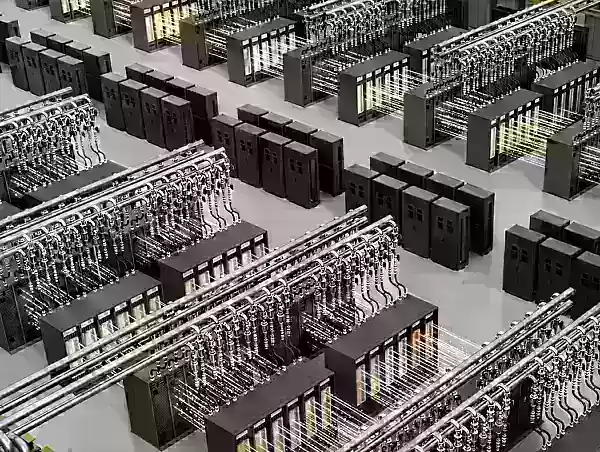 Japan Launches World’s First National AI Infrastructure with NVIDIA
Japan's Ministry of Economy, Trade and Industry plans to deploy approximately 10 million AI-powered robots across 18 industries by 2040, addressing the country's growing labor shortage, according to NHK. Credit: NVIDIAThe Japanese government, along w
Japan Launches World’s First National AI Infrastructure with NVIDIA
Japan's Ministry of Economy, Trade and Industry plans to deploy approximately 10 million AI-powered robots across 18 industries by 2040, addressing the country's growing labor shortage, according to NHK. Credit: NVIDIAThe Japanese government, along w
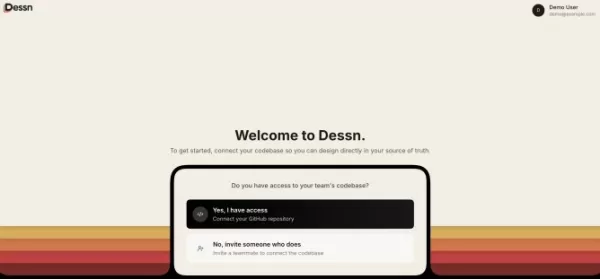 Dessn secures $6M for its production-focused design tool
In recent years, AI has boosted the popularity of new design tools like Visual Electric (owned by Perplexity), Weavy (owned by Figma), Flora, and Krea. These tools promise that product teams with designers can quickly iterate through variations using
Dessn secures $6M for its production-focused design tool
In recent years, AI has boosted the popularity of new design tools like Visual Electric (owned by Perplexity), Weavy (owned by Figma), Flora, and Krea. These tools promise that product teams with designers can quickly iterate through variations using
 Arm offers startups flexible access to its edge AI platform
Arm has announced that its most powerful edge AI platform, Armv9, is now available to startups through its Flexible Access programme.Essentially a 'try before you buy' model for chip designers, Flexible Access provides companies with low-cost or no-c
Arm offers startups flexible access to its edge AI platform
Arm has announced that its most powerful edge AI platform, Armv9, is now available to startups through its Flexible Access programme.Essentially a 'try before you buy' model for chip designers, Flexible Access provides companies with low-cost or no-c

2026 Latest Best Top-rated AI Conversation Trainer Tools for Interview Practice are here on XIX.AI! This curated collection features powerful, game-changing tools that go through rigorous real-world tests to deliver accurate feedback. You’ll find a free vs paid comparison and detailed rankings to help you choose the must-try option that boosts your confidence and skills. Explore now to Discover your perfect tool for interview success!
12 tools
xix.ai

2026 Latest Best Top-rated AI Style Transfer Tools for Creative Experiments! XIX.AI has curated a powerful, game-changing collection of must-try tools that deliver exceptional results through real-world tests and rigorous rankings. These top solutions help creatives boost productivity significantly by accelerating content creation and unlocking endless creative possibilities. Explore now to discover your perfect tool and start creating today!
9 tools
xix.ai

2026 Latest Best Top-Rated AI Dialogue Bubble Tools for Visual Storytelling are here on XIX.AI! This curated collection features powerful, game-changing tools that help creators boost productivity and overcome creative bottlenecks. Get a free vs paid comparison, see real-world tests, and check the latest rankings to find the must-try solutions perfect for crafting engaging visual narratives. Explore now to discover your ideal tool!
10 tools
xix.ai

2026 Latest Top-Rated Best AI Meeting Summary Tools for Clear Decision Tracking and Effortless Follow-Ups. This curated list showcases powerful, game-changing solutions that boost productivity dramatically by automating meeting notes, identifying key action items, and streamlining team coordination across all projects. Get a free vs paid comparison along with real-world tests and weekly updated rankings to help you find the perfect tool. Explore now to unlock your AI edge!
9 tools
xix.ai

2026 Latest Best Top-rated AI Data Cleaning Tools for quick fixing of missing values and duplicates. This curated list showcases powerful, game-changing solutions that boost productivity significantly. Each option has undergone rigorous real-world tests to ensure reliability. Get a free vs paid comparison and discover the must-try tool that fits your needs best. Explore now at XIX.AI to Unlock your AI edge.
11 tools
xix.ai

2026 Latest Best Top-Rated AI Creative Ideation Tools for Artists are curated by XIX.AI to help creators break through visual blocks and boost creativity instantly. These powerful game-changing tools offer real-world tests, detailed free vs paid comparison, and weekly updated rankings. Discover your perfect tool to accelerate content creation and unlock your AI edge today. Explore now!
14 tools
xix.ai












