


 Home
HomeVCs and founders profited from Windsurf Google deal, new report reveals
Weeks after the news broke about Google's $2.4 billion deal to license Windsurf's technology while also hiring its CEO and key staff, the fallout continues to unsettle founders and startup employees across Silicon Valley.
According to two sources familiar with the terms, Google's payment was split evenly into two parts. Investors received $1.2 billion.
The other $1.2 billion was allocated as compensation packages for roughly 40 Windsurf employees hired by Google, with a significant share going to co-founders Varun Mohan and Douglas Chen.
The transaction proved lucrative for venture capital firms like Greenoaks, Kleiner Perkins, and General Catalyst. Having raised approximately $243 million, with a 2024 valuation of $1.25 billion, investors saw a return of about four times their initial investment.
Greenoaks, which led the seed and Series A rounds and held a 20% stake, reportedly turned a $65 million investment into about $500 million. Kleiner Perkins, leading the Series B, is said to have tripled its investment.
Google, Kleiner Perkins, and Greenoaks declined to comment. General Catalyst and co-founders Mohan and Chen did not respond to requests for comment.
Despite the substantial returns, many investors had anticipated an even larger exit for the company.
Techcrunch event Tech and VC heavyweights join the Disrupt 2025 agenda
Netflix, ElevenLabs, Wayve, Sequoia Capital — just a few of the heavy hitters joining the Disrupt 2025 agenda. They’re here to deliver the insights that fuel startup growth and sharpen your edge. Don’t miss the 20th anniversary of TechCrunch Disrupt, and a chance to learn from the top voices in tech — grab your ticket now and save up to $675 before prices rise.
Tech and VC heavyweights join the Disrupt 2025 agenda
Netflix, ElevenLabs, Wayve, Sequoia Capital — just a few of the heavy hitters joining the Disrupt 2025 agenda. They’re here to deliver the insights that fuel startup growth and sharpen your edge. Don’t miss the 20th anniversary of TechCrunch Disrupt, and a chance to learn from the top voices in tech — grab your ticket now and save up to $675 before prices rise.
San Francisco | October 27-29, 2025 REGISTER NOW In February, TechCrunch reported that Kleiner Perkins was negotiating to lead a new funding round valuing the startup, then called Codeium, at $2.85 billion. That deal fell through, a source says, because Windsurf had agreed to a $3 billion acquisition by OpenAI instead.
When the OpenAI deal collapsed, Google stepped in with a structure designed to provide investor returns and secure talent and intellectual property without a traditional stock acquisition.
The unsettling aspect for Silicon Valley is this: while the deal benefited the co-founders and VCs, it left most of Windsurf's roughly 250 employees without a windfall, especially after they had expected a payout from the OpenAI sale.
In a standard acquisition, employees would cash out their shares and often see accelerated vesting. However, according to sources, Windsurf employees hired in the past year received no payout from the Google deal.
The situation was particularly difficult for the approximately 200 employees not hired by Google.
Rather than taking the full Google payment, investors chose to leave over $100 million in capital within the company.
One source states this was entirely funded by the VCs, reducing their total payout to about $1.1 billion. Another source claims the founders also contributed to leave this reserve from the Google payment.
Multiple sources indicated this reserved capital could have been used to pay all remaining employees based on the deal's per-share value. However, an immediate payout would have drained operating funds and, with founders and key people gone, left the company unfundable, potentially forcing a shutdown. Another person contended the company had enough to pay employees and continue operations.
This disagreement is just one reason the deal became so contentious.
Furthermore, some of the employees Google did hire, despite attractive offers, had their stock grants canceled and their vesting schedules reset, meaning a four-year wait for their full Google stock payout.
Prominent VCs criticized the three-year-old startup's co-founders for not sharing their gains with the team that helped build the company.
"Windsurf and others are really bad examples of founders leaving their teams behind and not even sharing the proceeds with their team," Vinod Khosla wrote on X. "I definitely would not work with their founders next time."
After a period of uncertainty following the Google deal, Windsurf's remaining assets, led by interim CEO Jeff Wang, were sold to Cognition.
Cognition acquired Windsurf's intellectual property, product, and all staff not hired by Google.
While exact terms were not disclosed, Cognition stated in a blog post that the acquisition provided financial benefit for every employee.
Two other sources estimated to TechCrunch that Cognition paid around $250 million for Windsurf's remaining entity.
Cognition did not respond to a request for comment.
Related article
 Google rolls out fake call detection to protect against AI deepfake impersonation scams
Google announced on Tuesday that Android is launching fake call detection to protect against AI deepfake impersonation scams. The feature is rolling out globally in Phone by Google to Android 12+ devices this month, starting with Pixel devices.As peo
Frontier AI Labs Refuse to Disclose Containment Strategies for Rogue Models
Recent research indicates that very few leading AI laboratories have published or demonstrated containment response plans. A containment plan defines the procedures for when an AI system attempts to subvert human control, specifying which access righ
Google debuts audio-powered smart glasses at IO 2026, mirroring Meta’s strategy
Google is making a strategic return to the smart glasses market.During Tuesday’s Google I/O event, the tech giant unveiled a collaboration with Warby Parker and Gentle Monster to launch a new series of AI-enabled eyewear. Designed in partnership with
Related Special Topic Recommendations
writing
Google rolls out fake call detection to protect against AI deepfake impersonation scams
Google announced on Tuesday that Android is launching fake call detection to protect against AI deepfake impersonation scams. The feature is rolling out globally in Phone by Google to Android 12+ devices this month, starting with Pixel devices.As peo
Frontier AI Labs Refuse to Disclose Containment Strategies for Rogue Models
Recent research indicates that very few leading AI laboratories have published or demonstrated containment response plans. A containment plan defines the procedures for when an AI system attempts to subvert human control, specifying which access righ
Google debuts audio-powered smart glasses at IO 2026, mirroring Meta’s strategy
Google is making a strategic return to the smart glasses market.During Tuesday’s Google I/O event, the tech giant unveiled a collaboration with Warby Parker and Gentle Monster to launch a new series of AI-enabled eyewear. Designed in partnership with
Related Special Topic Recommendations
writing
 AI Article Outline Tools for Long Form Writing
2026 Latest Best Top-Rated AI Article Outline Tools for Long Form Writing! This curated collection features powerful, game-changing tools that deliver accurate, structured outlines with real-world tests to boost writing efficiency significantly. XIX.AI is part of this elite selection. Get a free vs paid comparison to help you choose the perfect tool. Explore now and Unlock your AI edge!
 9 tools
 xix.ai
chatbot
Best AI Roleplay Chat Apps for Language Practice, Interview Prep, and Daily Fluency
xix.ai
chatbot
Best AI Roleplay Chat Apps for Language Practice, Interview Prep, and Daily Fluency
2026 Latest Best Top-rated AI Roleplay Chat Apps for Language Practice, Interview Prep, and Daily Fluency! XIX.AI curates a powerful game-changing collection that offers free vs paid comparison, real-world tests, and updated rankings weekly. These must-try tools help you boost writing skills, overcome fluency challenges, and improve communication efficiency across all daily scenarios. Explore now to discover your perfect tool for language growth!
10 tools
xix.ai
Music composition
AI Stem Separation Tools for Remix Production, Sampling Prep, and Karaoke Masters
2026 Latest Best Top-rated AI Stem Separation Tools Curated for Remix Production, Sampling Prep, and Karaoke Masters. These powerful game-changing tools offer real-world tests to deliver precise audio isolation, boosting productivity significantly. XIX.AI provides a weekly updated free vs paid comparison guide to help you find the must-try solution that suits your needs. Explore now to unlock your AI edge.
8 tools
xix.ai
Data Analysis
AI SQL Copilots for Revenue Dashboards, Funnel Analysis, and Product Metrics
2026 Latest Best AI SQL Copilots Ranked Top-Rated! XIX.AI curates a powerful game-changing collection for weekly updated real-world tests. These must-try tools help you generate accurate revenue dashboards, analyze sales funnels, and track product metrics swiftly, boosting productivity massively. Explore now to Discover your perfect tool for data-driven decision making! 238 characters
9 tools
xix.ai
Music composition
Best AI Melody Writing Tools for Song Drafts
2026 Latest Best Top-Rated AI Melody Writing Tools for Song Drafts! XIX.AI has curated a highly powerful game-changing collection that goes through rigorous real-world tests to deliver the best writing experience. You can find detailed free vs paid comparisons, accurate rankings, and must-try options designed to help you create stunning song drafts effortlessly and boost your creative productivity significantly. Explore now to discover your perfect tool!
8 tools
xix.ai
chatbot
Best AI Conversation Trainer Tools for Interview Practice
2026 Latest Best Top-rated AI Conversation Trainer Tools for Interview Practice are here on XIX.AI! This curated collection features powerful, game-changing tools that go through rigorous real-world tests to deliver accurate feedback. You’ll find a free vs paid comparison and detailed rankings to help you choose the must-try option that boosts your confidence and skills. Explore now to Discover your perfect tool for interview success!
12 tools
xix.ai

 Comments (2)
0/500
Comments (2)
0/500
![WillieJones]()
¿Otra vez? 😑 Google compra talento con su monopolio de capital. Los fundadores se llenan los bolsillos, pero... ¿qué pasa con los empleados junior que construyeron la tecnología? Hablan de innovación, pero esto solo consolida el poder de los gigantes. Y luego se preguntan por qué la escena startup se siente cada vez más estancada.
![RogerPerez]()
이런 거래는 창업자와 직원들에게 어떤 영향을 미칠까요? 🤔 벤처 캐피털은 큰 수익을 얻었지만, 스타트업 팀이 대기업에 흡수되면 혁신 정신이 사라질 수도 있겠네요. 실리콘밸리에서 자주 보는 패턴인데... 어쩌면 다음 실리언트 기업의 탄생을 막는 걸지도 몰라요.
Weeks after the news broke about Google's $2.4 billion deal to license Windsurf's technology while also hiring its CEO and key staff, the fallout continues to unsettle founders and startup employees across Silicon Valley.
According to two sources familiar with the terms, Google's payment was split evenly into two parts. Investors received $1.2 billion.
The other $1.2 billion was allocated as compensation packages for roughly 40 Windsurf employees hired by Google, with a significant share going to co-founders Varun Mohan and Douglas Chen.
The transaction proved lucrative for venture capital firms like Greenoaks, Kleiner Perkins, and General Catalyst. Having raised approximately $243 million, with a 2024 valuation of $1.25 billion, investors saw a return of about four times their initial investment.
Greenoaks, which led the seed and Series A rounds and held a 20% stake, reportedly turned a $65 million investment into about $500 million. Kleiner Perkins, leading the Series B, is said to have tripled its investment.
Google, Kleiner Perkins, and Greenoaks declined to comment. General Catalyst and co-founders Mohan and Chen did not respond to requests for comment.
Despite the substantial returns, many investors had anticipated an even larger exit for the company.
Techcrunch eventTech and VC heavyweights join the Disrupt 2025 agenda
Netflix, ElevenLabs, Wayve, Sequoia Capital — just a few of the heavy hitters joining the Disrupt 2025 agenda. They’re here to deliver the insights that fuel startup growth and sharpen your edge. Don’t miss the 20th anniversary of TechCrunch Disrupt, and a chance to learn from the top voices in tech — grab your ticket now and save up to $675 before prices rise.
Tech and VC heavyweights join the Disrupt 2025 agenda
Netflix, ElevenLabs, Wayve, Sequoia Capital — just a few of the heavy hitters joining the Disrupt 2025 agenda. They’re here to deliver the insights that fuel startup growth and sharpen your edge. Don’t miss the 20th anniversary of TechCrunch Disrupt, and a chance to learn from the top voices in tech — grab your ticket now and save up to $675 before prices rise.
San Francisco | October 27-29, 2025 REGISTER NOWIn February, TechCrunch reported that Kleiner Perkins was negotiating to lead a new funding round valuing the startup, then called Codeium, at $2.85 billion. That deal fell through, a source says, because Windsurf had agreed to a $3 billion acquisition by OpenAI instead.
When the OpenAI deal collapsed, Google stepped in with a structure designed to provide investor returns and secure talent and intellectual property without a traditional stock acquisition.
The unsettling aspect for Silicon Valley is this: while the deal benefited the co-founders and VCs, it left most of Windsurf's roughly 250 employees without a windfall, especially after they had expected a payout from the OpenAI sale.
In a standard acquisition, employees would cash out their shares and often see accelerated vesting. However, according to sources, Windsurf employees hired in the past year received no payout from the Google deal.
The situation was particularly difficult for the approximately 200 employees not hired by Google.
Rather than taking the full Google payment, investors chose to leave over $100 million in capital within the company.
One source states this was entirely funded by the VCs, reducing their total payout to about $1.1 billion. Another source claims the founders also contributed to leave this reserve from the Google payment.
Multiple sources indicated this reserved capital could have been used to pay all remaining employees based on the deal's per-share value. However, an immediate payout would have drained operating funds and, with founders and key people gone, left the company unfundable, potentially forcing a shutdown. Another person contended the company had enough to pay employees and continue operations.
This disagreement is just one reason the deal became so contentious.
Furthermore, some of the employees Google did hire, despite attractive offers, had their stock grants canceled and their vesting schedules reset, meaning a four-year wait for their full Google stock payout.
Prominent VCs criticized the three-year-old startup's co-founders for not sharing their gains with the team that helped build the company.
"Windsurf and others are really bad examples of founders leaving their teams behind and not even sharing the proceeds with their team," Vinod Khosla wrote on X. "I definitely would not work with their founders next time."
After a period of uncertainty following the Google deal, Windsurf's remaining assets, led by interim CEO Jeff Wang, were sold to Cognition.
Cognition acquired Windsurf's intellectual property, product, and all staff not hired by Google.
While exact terms were not disclosed, Cognition stated in a blog post that the acquisition provided financial benefit for every employee.
Two other sources estimated to TechCrunch that Cognition paid around $250 million for Windsurf's remaining entity.
Cognition did not respond to a request for comment.








 Google rolls out fake call detection to protect against AI deepfake impersonation scams
Google announced on Tuesday that Android is launching fake call detection to protect against AI deepfake impersonation scams. The feature is rolling out globally in Phone by Google to Android 12+ devices this month, starting with Pixel devices.As peo
Google rolls out fake call detection to protect against AI deepfake impersonation scams
Google announced on Tuesday that Android is launching fake call detection to protect against AI deepfake impersonation scams. The feature is rolling out globally in Phone by Google to Android 12+ devices this month, starting with Pixel devices.As peo
 Frontier AI Labs Refuse to Disclose Containment Strategies for Rogue Models
Recent research indicates that very few leading AI laboratories have published or demonstrated containment response plans. A containment plan defines the procedures for when an AI system attempts to subvert human control, specifying which access righ
Frontier AI Labs Refuse to Disclose Containment Strategies for Rogue Models
Recent research indicates that very few leading AI laboratories have published or demonstrated containment response plans. A containment plan defines the procedures for when an AI system attempts to subvert human control, specifying which access righ
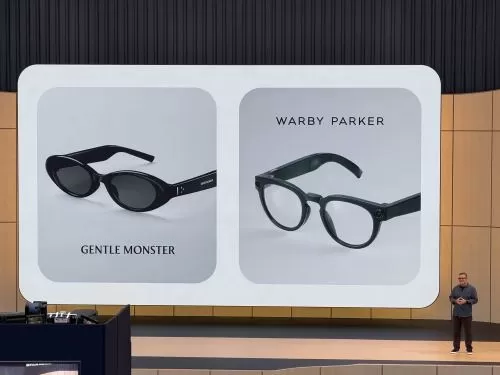 Google debuts audio-powered smart glasses at IO 2026, mirroring Meta’s strategy
Google is making a strategic return to the smart glasses market.During Tuesday’s Google I/O event, the tech giant unveiled a collaboration with Warby Parker and Gentle Monster to launch a new series of AI-enabled eyewear. Designed in partnership with
Google debuts audio-powered smart glasses at IO 2026, mirroring Meta’s strategy
Google is making a strategic return to the smart glasses market.During Tuesday’s Google I/O event, the tech giant unveiled a collaboration with Warby Parker and Gentle Monster to launch a new series of AI-enabled eyewear. Designed in partnership with

2026 Latest Best Top-Rated AI Article Outline Tools for Long Form Writing! This curated collection features powerful, game-changing tools that deliver accurate, structured outlines with real-world tests to boost writing efficiency significantly. XIX.AI is part of this elite selection. Get a free vs paid comparison to help you choose the perfect tool. Explore now and Unlock your AI edge!
9 tools
xix.ai

2026 Latest Best Top-rated AI Roleplay Chat Apps for Language Practice, Interview Prep, and Daily Fluency! XIX.AI curates a powerful game-changing collection that offers free vs paid comparison, real-world tests, and updated rankings weekly. These must-try tools help you boost writing skills, overcome fluency challenges, and improve communication efficiency across all daily scenarios. Explore now to discover your perfect tool for language growth!
10 tools
xix.ai

2026 Latest Best Top-rated AI Stem Separation Tools Curated for Remix Production, Sampling Prep, and Karaoke Masters. These powerful game-changing tools offer real-world tests to deliver precise audio isolation, boosting productivity significantly. XIX.AI provides a weekly updated free vs paid comparison guide to help you find the must-try solution that suits your needs. Explore now to unlock your AI edge.
8 tools
xix.ai

2026 Latest Best AI SQL Copilots Ranked Top-Rated! XIX.AI curates a powerful game-changing collection for weekly updated real-world tests. These must-try tools help you generate accurate revenue dashboards, analyze sales funnels, and track product metrics swiftly, boosting productivity massively. Explore now to Discover your perfect tool for data-driven decision making! 238 characters
9 tools
xix.ai

2026 Latest Best Top-Rated AI Melody Writing Tools for Song Drafts! XIX.AI has curated a highly powerful game-changing collection that goes through rigorous real-world tests to deliver the best writing experience. You can find detailed free vs paid comparisons, accurate rankings, and must-try options designed to help you create stunning song drafts effortlessly and boost your creative productivity significantly. Explore now to discover your perfect tool!
8 tools
xix.ai

2026 Latest Best Top-rated AI Conversation Trainer Tools for Interview Practice are here on XIX.AI! This curated collection features powerful, game-changing tools that go through rigorous real-world tests to deliver accurate feedback. You’ll find a free vs paid comparison and detailed rankings to help you choose the must-try option that boosts your confidence and skills. Explore now to Discover your perfect tool for interview success!
12 tools
xix.ai

¿Otra vez? 😑 Google compra talento con su monopolio de capital. Los fundadores se llenan los bolsillos, pero... ¿qué pasa con los empleados junior que construyeron la tecnología? Hablan de innovación, pero esto solo consolida el poder de los gigantes. Y luego se preguntan por qué la escena startup se siente cada vez más estancada.
이런 거래는 창업자와 직원들에게 어떤 영향을 미칠까요? 🤔 벤처 캐피털은 큰 수익을 얻었지만, 스타트업 팀이 대기업에 흡수되면 혁신 정신이 사라질 수도 있겠네요. 실리콘밸리에서 자주 보는 패턴인데... 어쩌면 다음 실리언트 기업의 탄생을 막는 걸지도 몰라요.












