


 Home
HomeBuzzFeed unveils AI content apps to generate new revenue
BuzzFeed, the U.S.-based media company known for its quizzes, listicles, and a brief Pulitzer-winning journalism division, is repositioning itself for the AI era. At least, that is the narrative.
At the SXSW conference in Austin, BuzzFeed co-founder and CEO Jonah Peretti unveiled the company's latest media venture: a spin-off named Branch Office, focused on leveraging artificial intelligence in consumer apps built for creativity and connection.
Peretti explained that the new company extends the AI experiments BuzzFeed has conducted for years. The presentation was halting, starting with slideshow glitches, followed by app demos that drew silence or polite chuckles.
“We’ve been working on this in secret for over a year, and the BuzzFeed platform has taught us a lot about what’s coming with new AI formats,” Peretti said. “Using AI is about connecting people and building community around culture, taste, and shared interests.”
Bill Shouldis, BuzzFeed’s director of product and founder of Branch Office, showcased two new apps: BF Island and Conjure.
The first app, BF Island, is a group chat platform that lets users edit and transform photos with AI. In itself, this isn't groundbreaking technology, but that's not the intended focus.

Image credit: SXSW (opens in a new window)
The standout feature isn't the AI toolset itself, but an in-app library of online trends and memes curated by an editorial team. This library aims to inspire users to create AI photos referencing fleeting trends—like the McDonald’s CEO taste-testing a burger or the “frame-mogging” drama. (If those references are unfamiliar, you’re likely not the “very online” target audience.)

Image credit: SXSW (opens in a new window)
Another app, Conjure, resembles BeReal—a once-daily ephemeral photo app—but guides users to capture daily photos of subjects other than themselves. (As a reminder, BeReal failed to maintain traction and was eventually acquired by Voodoo.) In the demo, a prompt like “What lies between the trees and the moon?” led users to photograph the night sky. A series of eerie images flashed on screen, followed by a whisper: “What will you conjure?”

Image credit: SXSW (opens in a new window)
We didn’t grasp the concept, and the audience clearly didn’t either. After the demo, a solitary cough broke the silence, followed by uneasy laughter.
Shouldis then noted that Conjure also incorporates AI, with the app featuring “an AI spirit for a CEO.” (Again, what does that mean?)
Peretti also introduced Quiz Party, a social app that enables users to take BuzzFeed quizzes with friends and share results.
BuzzFeed’s lackluster presentation came just days after the media company disclosed “substantial doubt” about its ability to continue as a going concern and revealed it was in strategic discussions to address liquidity issues. The company, which posted a net loss of $57.3 million last year, stated it would concentrate this year on its Studio IP and new AI apps, such as those unveiled.
Yet even the tech-savvy audience at SXSW remained unconvinced.
As one audience member noted during the Q&A session, BeReal struggled to retain users once the novelty faded. What would an app like Conjure do to address a similar retention challenge?
Shouldis responded that the app would evolve, “and have different types of things happening and not just be exactly what it is today.” He mentioned the potential to integrate video, audio, and prototyping with Claude Code to foster community.
The underlying premise of these new apps is not unreasonable: AI enables faster software development, allowing companies to iterate more quickly and maintain user engagement.
“In a way, software is the new content,” Peretti noted.
Of course, before iteration comes user acquisition. With these new apps, BuzzFeed appears to have focused more on what AI can accomplish than on what users actually want to do with it—an approach that is not a recipe for success.
Related article
 Meta's Muse outpaces ChatGPT in early mobile launch
New data suggests Meta’s latest AI app, Muse, could become the social giant’s next major success. According to recent estimates from Appfigures, Muse has been downloaded on mobile devices more times in its first twelve days than ChatGPT did in the tw
Gemini faces branding challenges, as does the wider AI industry
Google’s Wednesday announcement regarding new Gemini Live voice features makes a valid point: “You shouldn’t have to guess whether a task requires Spark, a Daily Brief, or a quick inbox search.” While Google presents this as a commitment to handling
Rival AI agents Instinct and Meta’s Muse now support calling features
The market for text-based AI assistants is fiercely competitive, with Instinct, Wajo, Town, Ollie, and Meta’s newly launched Muse agent all vying for user attention and task management. Based in San Francisco, Instinct has emerged as a leading conten
Related Special Topic Recommendations
Design & Art
Meta's Muse outpaces ChatGPT in early mobile launch
New data suggests Meta’s latest AI app, Muse, could become the social giant’s next major success. According to recent estimates from Appfigures, Muse has been downloaded on mobile devices more times in its first twelve days than ChatGPT did in the tw
Gemini faces branding challenges, as does the wider AI industry
Google’s Wednesday announcement regarding new Gemini Live voice features makes a valid point: “You shouldn’t have to guess whether a task requires Spark, a Daily Brief, or a quick inbox search.” While Google presents this as a commitment to handling
Rival AI agents Instinct and Meta’s Muse now support calling features
The market for text-based AI assistants is fiercely competitive, with Instinct, Wajo, Town, Ollie, and Meta’s newly launched Muse agent all vying for user attention and task management. Based in San Francisco, Instinct has emerged as a leading conten
Related Special Topic Recommendations
Design & Art
 Top AI Illustration Tools: Create Editorial Scenes and Cover Art Faster
2026 Latest Top-rated AI Illustration Tools: Our curated list features the best powerfully designed tools for creating stunning editorial scenes and eye-catching cover art quickly. Each option has gone through rigorous real-world tests, offering a free vs paid comparison to help you find the perfect match for your workflow. Try these must-try solutions today to unlock your AI edge and boost your creative productivity. Explore now at XIX.AI.
 10 tools
 xix.ai
Education and Learning
Top AI Tutors for Exam Prep: Practice Math, Science, and English
xix.ai
Education and Learning
Top AI Tutors for Exam Prep: Practice Math, Science, and English
2026 Latest Top-Rated Best AI Tutors for Exam Prep are here on XIX.AI! Our curated list features powerful game-changing tools that offer free vs paid comparison, real-world tests, and weekly updated rankings. They help boost your writing efficiency, simplify complex topic learning, and unlock your academic potential. Explore now to Discover your perfect exam prep tool and Start creating today to Unlock your AI edge!
10 tools
xix.ai
Finance
AI Budget Planning Tools for Personal Money Management
2026 Latest Best Top-Rated AI Budget Planning Tools for Personal Money Management are here on XIX.AI! This curated collection features powerful, game-changing solutions that help you conduct real-world tests, understand spending habits, and create personalized plans to boost productivity. Enjoy a free vs paid comparison along with detailed rankings. Must-try tools designed to simplify money management and unlock your AI edge. Explore now!
11 tools
xix.ai
Health & Wellness
AI Sleep Tracking Assistants: Improve Recovery with Better Bedtime Habits
2026 Latest Best Top-Rated AI Sleep Tracking Assistants curated for ultimate recovery. This fully updated weekly guide features powerful tools that deliver real-world tests, free vs paid comparison, and detailed rankings to help you find the must-try solution that boosts sleep quality and supports better bedtime habits. Explore now at XIX.AI to Unlock your AI edge.
10 tools
xix.ai
Data Analysis
AI SQL Copilots for Product and Revenue Analytics
2026 Latest Best Top-Rated AI SQL Copilots for Product and Revenue Analytics! XIX.AI has curated a powerful, game-changing collection of must-try tools that undergo real-world tests through weekly updated rankings. These tools help users boost productivity significantly by accelerating data analysis, streamlining complex queries, and generating accurate insights to drive smarter business decisions. Explore now to Discover your perfect tool for unlocking your AI edge!
14 tools
xix.ai
Education and Learning
Best AI Homework Helpers That Teach: Learn Concepts, Not Just Answers
2026 Latest Best Top-Rated AI Homework Helpers That Teach Core Concepts Not Just Answers Powerful Tools for Students Must-Try Curated List Weekly Updated Free vs Paid Comparison Real-World Tests Accurate Rankings to Help You Unlock Your Full Learning Potential Explore now to Discover your perfect tool for smarter studying.
10 tools
xix.ai

 Comments (0)
0/500
Comments (0)
0/500
BuzzFeed, the U.S.-based media company known for its quizzes, listicles, and a brief Pulitzer-winning journalism division, is repositioning itself for the AI era. At least, that is the narrative.
At the SXSW conference in Austin, BuzzFeed co-founder and CEO Jonah Peretti unveiled the company's latest media venture: a spin-off named Branch Office, focused on leveraging artificial intelligence in consumer apps built for creativity and connection.
Peretti explained that the new company extends the AI experiments BuzzFeed has conducted for years. The presentation was halting, starting with slideshow glitches, followed by app demos that drew silence or polite chuckles.
“We’ve been working on this in secret for over a year, and the BuzzFeed platform has taught us a lot about what’s coming with new AI formats,” Peretti said. “Using AI is about connecting people and building community around culture, taste, and shared interests.”
Bill Shouldis, BuzzFeed’s director of product and founder of Branch Office, showcased two new apps: BF Island and Conjure.
The first app, BF Island, is a group chat platform that lets users edit and transform photos with AI. In itself, this isn't groundbreaking technology, but that's not the intended focus.
Image credit: SXSW (opens in a new window)
The standout feature isn't the AI toolset itself, but an in-app library of online trends and memes curated by an editorial team. This library aims to inspire users to create AI photos referencing fleeting trends—like the McDonald’s CEO taste-testing a burger or the “frame-mogging” drama. (If those references are unfamiliar, you’re likely not the “very online” target audience.)
Image credit: SXSW (opens in a new window)
Another app, Conjure, resembles BeReal—a once-daily ephemeral photo app—but guides users to capture daily photos of subjects other than themselves. (As a reminder, BeReal failed to maintain traction and was eventually acquired by Voodoo.) In the demo, a prompt like “What lies between the trees and the moon?” led users to photograph the night sky. A series of eerie images flashed on screen, followed by a whisper: “What will you conjure?”
Image credit: SXSW (opens in a new window)
We didn’t grasp the concept, and the audience clearly didn’t either. After the demo, a solitary cough broke the silence, followed by uneasy laughter.
Shouldis then noted that Conjure also incorporates AI, with the app featuring “an AI spirit for a CEO.” (Again, what does that mean?)
Peretti also introduced Quiz Party, a social app that enables users to take BuzzFeed quizzes with friends and share results.
BuzzFeed’s lackluster presentation came just days after the media company disclosed “substantial doubt” about its ability to continue as a going concern and revealed it was in strategic discussions to address liquidity issues. The company, which posted a net loss of $57.3 million last year, stated it would concentrate this year on its Studio IP and new AI apps, such as those unveiled.
Yet even the tech-savvy audience at SXSW remained unconvinced.
As one audience member noted during the Q&A session, BeReal struggled to retain users once the novelty faded. What would an app like Conjure do to address a similar retention challenge?
Shouldis responded that the app would evolve, “and have different types of things happening and not just be exactly what it is today.” He mentioned the potential to integrate video, audio, and prototyping with Claude Code to foster community.
The underlying premise of these new apps is not unreasonable: AI enables faster software development, allowing companies to iterate more quickly and maintain user engagement.
“In a way, software is the new content,” Peretti noted.
Of course, before iteration comes user acquisition. With these new apps, BuzzFeed appears to have focused more on what AI can accomplish than on what users actually want to do with it—an approach that is not a recipe for success.








 Meta's Muse outpaces ChatGPT in early mobile launch
New data suggests Meta’s latest AI app, Muse, could become the social giant’s next major success. According to recent estimates from Appfigures, Muse has been downloaded on mobile devices more times in its first twelve days than ChatGPT did in the tw
Meta's Muse outpaces ChatGPT in early mobile launch
New data suggests Meta’s latest AI app, Muse, could become the social giant’s next major success. According to recent estimates from Appfigures, Muse has been downloaded on mobile devices more times in its first twelve days than ChatGPT did in the tw
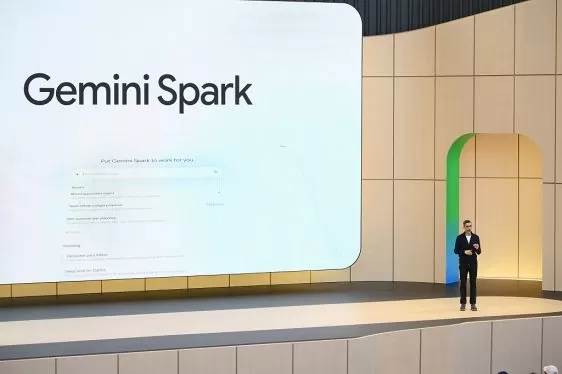 Gemini faces branding challenges, as does the wider AI industry
Google’s Wednesday announcement regarding new Gemini Live voice features makes a valid point: “You shouldn’t have to guess whether a task requires Spark, a Daily Brief, or a quick inbox search.” While Google presents this as a commitment to handling
Gemini faces branding challenges, as does the wider AI industry
Google’s Wednesday announcement regarding new Gemini Live voice features makes a valid point: “You shouldn’t have to guess whether a task requires Spark, a Daily Brief, or a quick inbox search.” While Google presents this as a commitment to handling
 Rival AI agents Instinct and Meta’s Muse now support calling features
The market for text-based AI assistants is fiercely competitive, with Instinct, Wajo, Town, Ollie, and Meta’s newly launched Muse agent all vying for user attention and task management. Based in San Francisco, Instinct has emerged as a leading conten
Rival AI agents Instinct and Meta’s Muse now support calling features
The market for text-based AI assistants is fiercely competitive, with Instinct, Wajo, Town, Ollie, and Meta’s newly launched Muse agent all vying for user attention and task management. Based in San Francisco, Instinct has emerged as a leading conten

2026 Latest Top-rated AI Illustration Tools: Our curated list features the best powerfully designed tools for creating stunning editorial scenes and eye-catching cover art quickly. Each option has gone through rigorous real-world tests, offering a free vs paid comparison to help you find the perfect match for your workflow. Try these must-try solutions today to unlock your AI edge and boost your creative productivity. Explore now at XIX.AI.
10 tools
xix.ai

2026 Latest Top-Rated Best AI Tutors for Exam Prep are here on XIX.AI! Our curated list features powerful game-changing tools that offer free vs paid comparison, real-world tests, and weekly updated rankings. They help boost your writing efficiency, simplify complex topic learning, and unlock your academic potential. Explore now to Discover your perfect exam prep tool and Start creating today to Unlock your AI edge!
10 tools
xix.ai

2026 Latest Best Top-Rated AI Budget Planning Tools for Personal Money Management are here on XIX.AI! This curated collection features powerful, game-changing solutions that help you conduct real-world tests, understand spending habits, and create personalized plans to boost productivity. Enjoy a free vs paid comparison along with detailed rankings. Must-try tools designed to simplify money management and unlock your AI edge. Explore now!
11 tools
xix.ai

2026 Latest Best Top-Rated AI Sleep Tracking Assistants curated for ultimate recovery. This fully updated weekly guide features powerful tools that deliver real-world tests, free vs paid comparison, and detailed rankings to help you find the must-try solution that boosts sleep quality and supports better bedtime habits. Explore now at XIX.AI to Unlock your AI edge.
10 tools
xix.ai

2026 Latest Best Top-Rated AI SQL Copilots for Product and Revenue Analytics! XIX.AI has curated a powerful, game-changing collection of must-try tools that undergo real-world tests through weekly updated rankings. These tools help users boost productivity significantly by accelerating data analysis, streamlining complex queries, and generating accurate insights to drive smarter business decisions. Explore now to Discover your perfect tool for unlocking your AI edge!
14 tools
xix.ai

2026 Latest Best Top-Rated AI Homework Helpers That Teach Core Concepts Not Just Answers Powerful Tools for Students Must-Try Curated List Weekly Updated Free vs Paid Comparison Real-World Tests Accurate Rankings to Help You Unlock Your Full Learning Potential Explore now to Discover your perfect tool for smarter studying.
10 tools
xix.ai












