Home
HomeBioticsAI Founder on FDA Approval, Funding, and Healthcare Startup Realities
Founders operating in the healthcare sector cannot simply prioritize speed over safety. Timelines are inherently longer, the stakes are significantly higher, and success depends on navigating systems that reward meticulous rigor, not reckless haste.
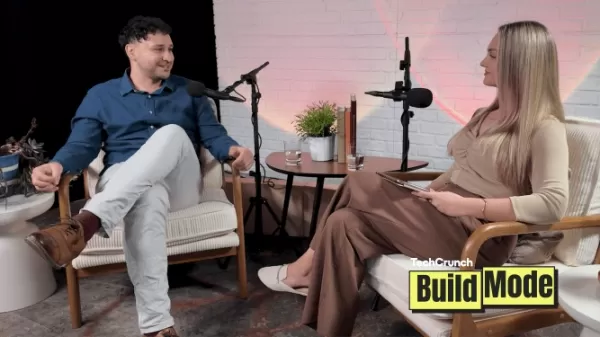
This is the precise reality that Robhy Bustami, co-founder and CEO of BioticsAI, has been operating within. His company is developing an AI copilot for ultrasound technology designed to help detect fetal abnormalities, an area where rates of misdiagnosis remain alarmingly high. Bustami joined Isabelle Johannessen on Build Mode to discuss how his company has navigated this heavily regulated environment and maintained team morale while working through complex bureaucratic processes.
BioticsAI began with a scrappy, resourceful approach. The team developed an early, functional prototype of their product for under $100,000—a feat nearly unheard of in the medical device industry. That prototype was instrumental in their victory at TechCrunch Startup Battlefield in 2023, providing crucial early visibility and credibility. In January, they achieved FDA approval, a milestone that allows them to begin deployment in hospitals and scale the business at an accelerated pace.
From the very beginning, the team designed their product development process with FDA clearance as a core objective. Rather than building first and addressing regulations later, they integrated clinical validation, regulatory strategy, and product development into a single, cohesive workflow. This involved close collaboration with clinicians, the collection of large-scale datasets, and the execution of structured clinical studies long before the formal regulatory submission stage.
The FDA approval process is often perceived as an opaque "black box," but Bustami stresses that founders are not required to navigate it blindly. Proactive early engagement with regulators, through pre-submission meetings, was key to aligning on study design and regulatory expectations. Nonetheless, risk is an ever-present factor. For many investors, the paramount concern remains: What happens if the FDA ultimately rejects the application?
Internally, these extended timelines present a distinct challenge: sustaining team motivation when the most significant milestone may be years away. At BioticsAI, addressing this meant fostering a culture of shared purpose across engineers, clinicians, and researchers, ensuring every team member could see and celebrate the incremental progress and victories along the way.
“It's about ensuring complete alignment across the team, even on aspects outside their immediate technical scope,” Bustami explained, “and consistently highlighting wins on the R&D front,” from successful clinical studies to forging new partnerships within the healthcare ecosystem.
Now, with FDA clearance secured, BioticsAI is entering a new phase of growth: deployment. The company has begun rolling out its technology in hospital settings, with strategic plans to expand its applications beyond obstetrics into broader areas of reproductive health.
Loading the player…
Building a company in healthcare is a long-term endeavor. It demands patience, disciplined execution, and a capacity to operate effectively amidst uncertainty. For founders committed to this path, the ultimate reward extends beyond commercial success—it is the opportunity to create something that meaningfully improves how healthcare is delivered.
Subscribe to Build Mode on Apple Podcasts, Spotify, or your preferred podcast platform. Watch full episode videos on YouTube. Isabelle Johannessen is our host. Build Mode is produced and edited by Maggie Nye. Audience Development is led by Morgan Little. Special thanks to the Foundry and Cheddar video production teams.
Apply to Startup Battlefield: We are seeking early-stage companies with a Minimum Viable Product (MVP). We encourage you to nominate a founder (or yourself). Please mention that you heard about Startup Battlefield from the Build Mode podcast. Apply here.
TechCrunch Disrupt 2026: Join us for TechCrunch Disrupt from October 13th to 15th in San Francisco, where the Startup Battlefield 200 will take the stage. Whether you want to support the competitors or connect with thousands of fellow founders, investors, and tech enthusiasts, secure your tickets now.
Use code buildmode15 for 15% off any ticket type.
Related article
 Maintaining Team Morale Amid Uncertain FDA Approval
Loading the player…Enduring the lengthy path to FDA approval involves more than creating groundbreaking technology. It's about sustaining your team's drive, identifying supportive investors, and adapting to operate effectively despite unpredictable s
Apple removes Cal AI app for unauthorized in-app purchases and manipulative billing
Apple’s recent removal of Cal AI, a popular AI-powered food tracking app within MyFitnessPal, underscores its strict enforcement of App Store policies on external payments and subscriptions. The app, which generates $50 million in annual recurring re
Github Copilot's token-based billing sparks developer outrage
The golden era of Microsoft's GitHub Copilot may be ending, especially for individual users. The company is shifting from a flat subscription fee to a token-based billing model, which could significantly increase costs. While larger enterprises might
Related Special Topic Recommendations
Image editing
Maintaining Team Morale Amid Uncertain FDA Approval
Loading the player…Enduring the lengthy path to FDA approval involves more than creating groundbreaking technology. It's about sustaining your team's drive, identifying supportive investors, and adapting to operate effectively despite unpredictable s
Apple removes Cal AI app for unauthorized in-app purchases and manipulative billing
Apple’s recent removal of Cal AI, a popular AI-powered food tracking app within MyFitnessPal, underscores its strict enforcement of App Store policies on external payments and subscriptions. The app, which generates $50 million in annual recurring re
Github Copilot's token-based billing sparks developer outrage
The golden era of Microsoft's GitHub Copilot may be ending, especially for individual users. The company is shifting from a flat subscription fee to a token-based billing model, which could significantly increase costs. While larger enterprises might
Related Special Topic Recommendations
Image editing
 Free AI Fashion Model Generators: Create Realistic Clothing Mockups & On-Model Photos
Discover the 2026 best free AI fashion model generators on XIX.AI. Our curated list features top-rated, game-changing tools for creating realistic clothing mockups and on-model photos. Compare free vs paid options with weekly updated rankings and real-world tests. Unlock your design edge today!
 10 tools
 xix.ai
writing
Best AI Continuity Editors for Fiction: Detect Plot Holes & Timeline Inconsistencies Automatically
xix.ai
writing
Best AI Continuity Editors for Fiction: Detect Plot Holes & Timeline Inconsistencies Automatically
Discover the 2026 best AI continuity editors for fiction writers. Our top-rated, curated list features powerful tools that automatically detect plot holes and timeline inconsistencies. Compare free vs paid options with real-world tests and weekly updated rankings. Find your perfect writing assistant to ensure flawless narratives. Explore the top picks now at XIX.AI.
10 tools
xix.ai
Animation Creation
Top AI Storyboard Generators: Convert Movie Scripts into Cinematic Animatics Automatically
Discover the 2026 best AI storyboard generators at XIX.AI. Our curated, top-rated tools automatically convert scripts into cinematic animatics, saving you time and boosting pre-production. Explore free vs paid options with real-world tests and weekly updated rankings. Find your perfect creative partner today!
10 tools
xix.ai
SEO
Best AI Redirect & Broken Link Finders: Automatically Repair Crawl Errors to Save Crawl Budget
Discover the 2026 best AI redirect and broken link finders on XIX.AI. Our top-rated, curated list features powerful tools that automatically repair crawl errors to save your crawl budget. Compare free vs paid options with real-world tests and weekly updated rankings. Find your perfect SEO solution now!
10 tools
xix.ai
Video creation
Top AI Video Creators for Podcasters: Convert Audio Waves into Engaging Talking-Head Videos
Discover the 2026 best AI video creators for podcasters at XIX.AI. Our curated, top-rated list features powerful tools that convert your audio into engaging talking-head videos effortlessly. Compare free vs paid options with real-world tests and weekly updated rankings. Unlock your visual storytelling edge now.
10 tools
xix.ai
chatbot
Create Your Own AI Love Story with These Roleplay Tools
Discover the 2026 latest top-rated AI roleplay tools for crafting immersive narratives. XIX.AI's curated list features powerful, game-changing assistants to unlock creative storytelling and emotional depth. Compare free vs paid options with real-world tests. Start your unique journey today.
10 tools
xix.ai

 Comments (0)
0/500
Comments (0)
0/500
Founders operating in the healthcare sector cannot simply prioritize speed over safety. Timelines are inherently longer, the stakes are significantly higher, and success depends on navigating systems that reward meticulous rigor, not reckless haste.
This is the precise reality that Robhy Bustami, co-founder and CEO of BioticsAI, has been operating within. His company is developing an AI copilot for ultrasound technology designed to help detect fetal abnormalities, an area where rates of misdiagnosis remain alarmingly high. Bustami joined Isabelle Johannessen on Build Mode to discuss how his company has navigated this heavily regulated environment and maintained team morale while working through complex bureaucratic processes.
BioticsAI began with a scrappy, resourceful approach. The team developed an early, functional prototype of their product for under $100,000—a feat nearly unheard of in the medical device industry. That prototype was instrumental in their victory at TechCrunch Startup Battlefield in 2023, providing crucial early visibility and credibility. In January, they achieved FDA approval, a milestone that allows them to begin deployment in hospitals and scale the business at an accelerated pace.
From the very beginning, the team designed their product development process with FDA clearance as a core objective. Rather than building first and addressing regulations later, they integrated clinical validation, regulatory strategy, and product development into a single, cohesive workflow. This involved close collaboration with clinicians, the collection of large-scale datasets, and the execution of structured clinical studies long before the formal regulatory submission stage.
The FDA approval process is often perceived as an opaque "black box," but Bustami stresses that founders are not required to navigate it blindly. Proactive early engagement with regulators, through pre-submission meetings, was key to aligning on study design and regulatory expectations. Nonetheless, risk is an ever-present factor. For many investors, the paramount concern remains: What happens if the FDA ultimately rejects the application?
Internally, these extended timelines present a distinct challenge: sustaining team motivation when the most significant milestone may be years away. At BioticsAI, addressing this meant fostering a culture of shared purpose across engineers, clinicians, and researchers, ensuring every team member could see and celebrate the incremental progress and victories along the way.
“It's about ensuring complete alignment across the team, even on aspects outside their immediate technical scope,” Bustami explained, “and consistently highlighting wins on the R&D front,” from successful clinical studies to forging new partnerships within the healthcare ecosystem.
Now, with FDA clearance secured, BioticsAI is entering a new phase of growth: deployment. The company has begun rolling out its technology in hospital settings, with strategic plans to expand its applications beyond obstetrics into broader areas of reproductive health.
Loading the player…
Building a company in healthcare is a long-term endeavor. It demands patience, disciplined execution, and a capacity to operate effectively amidst uncertainty. For founders committed to this path, the ultimate reward extends beyond commercial success—it is the opportunity to create something that meaningfully improves how healthcare is delivered.
Subscribe to Build Mode on Apple Podcasts, Spotify, or your preferred podcast platform. Watch full episode videos on YouTube. Isabelle Johannessen is our host. Build Mode is produced and edited by Maggie Nye. Audience Development is led by Morgan Little. Special thanks to the Foundry and Cheddar video production teams.
Apply to Startup Battlefield: We are seeking early-stage companies with a Minimum Viable Product (MVP). We encourage you to nominate a founder (or yourself). Please mention that you heard about Startup Battlefield from the Build Mode podcast. Apply here.
TechCrunch Disrupt 2026: Join us for TechCrunch Disrupt from October 13th to 15th in San Francisco, where the Startup Battlefield 200 will take the stage. Whether you want to support the competitors or connect with thousands of fellow founders, investors, and tech enthusiasts, secure your tickets now.
Use code buildmode15 for 15% off any ticket type.








 Maintaining Team Morale Amid Uncertain FDA Approval
Loading the player…Enduring the lengthy path to FDA approval involves more than creating groundbreaking technology. It's about sustaining your team's drive, identifying supportive investors, and adapting to operate effectively despite unpredictable s
Maintaining Team Morale Amid Uncertain FDA Approval
Loading the player…Enduring the lengthy path to FDA approval involves more than creating groundbreaking technology. It's about sustaining your team's drive, identifying supportive investors, and adapting to operate effectively despite unpredictable s
 Apple removes Cal AI app for unauthorized in-app purchases and manipulative billing
Apple’s recent removal of Cal AI, a popular AI-powered food tracking app within MyFitnessPal, underscores its strict enforcement of App Store policies on external payments and subscriptions. The app, which generates $50 million in annual recurring re
Apple removes Cal AI app for unauthorized in-app purchases and manipulative billing
Apple’s recent removal of Cal AI, a popular AI-powered food tracking app within MyFitnessPal, underscores its strict enforcement of App Store policies on external payments and subscriptions. The app, which generates $50 million in annual recurring re
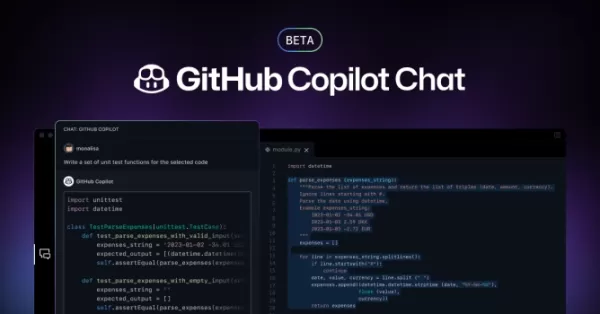 Github Copilot's token-based billing sparks developer outrage
The golden era of Microsoft's GitHub Copilot may be ending, especially for individual users. The company is shifting from a flat subscription fee to a token-based billing model, which could significantly increase costs. While larger enterprises might
Github Copilot's token-based billing sparks developer outrage
The golden era of Microsoft's GitHub Copilot may be ending, especially for individual users. The company is shifting from a flat subscription fee to a token-based billing model, which could significantly increase costs. While larger enterprises might

Discover the 2026 best free AI fashion model generators on XIX.AI. Our curated list features top-rated, game-changing tools for creating realistic clothing mockups and on-model photos. Compare free vs paid options with weekly updated rankings and real-world tests. Unlock your design edge today!
10 tools
xix.ai

Discover the 2026 best AI continuity editors for fiction writers. Our top-rated, curated list features powerful tools that automatically detect plot holes and timeline inconsistencies. Compare free vs paid options with real-world tests and weekly updated rankings. Find your perfect writing assistant to ensure flawless narratives. Explore the top picks now at XIX.AI.
10 tools
xix.ai

Discover the 2026 best AI storyboard generators at XIX.AI. Our curated, top-rated tools automatically convert scripts into cinematic animatics, saving you time and boosting pre-production. Explore free vs paid options with real-world tests and weekly updated rankings. Find your perfect creative partner today!
10 tools
xix.ai

Discover the 2026 best AI redirect and broken link finders on XIX.AI. Our top-rated, curated list features powerful tools that automatically repair crawl errors to save your crawl budget. Compare free vs paid options with real-world tests and weekly updated rankings. Find your perfect SEO solution now!
10 tools
xix.ai

Discover the 2026 best AI video creators for podcasters at XIX.AI. Our curated, top-rated list features powerful tools that convert your audio into engaging talking-head videos effortlessly. Compare free vs paid options with real-world tests and weekly updated rankings. Unlock your visual storytelling edge now.
10 tools
xix.ai

Discover the 2026 latest top-rated AI roleplay tools for crafting immersive narratives. XIX.AI's curated list features powerful, game-changing assistants to unlock creative storytelling and emotional depth. Compare free vs paid options with real-world tests. Start your unique journey today.
10 tools
xix.ai