


 Home
HomeBill Gates, Altair 8800, and BASIC: My Launch into the PC Revolution
My Early Days with Bill Gates and the Dawn of Personal Computing
Let me share a tale from the early days of personal computing, when I first crossed paths with Bill Gates. It's important to note that Bill is older than me. Back in 1975, as Bill was leaving Harvard to start Microsoft, I was skipping my final year of high school and diving straight into college. I was the youngest student in my engineering school that year, and both Bill and I were tinkering with the same technology: the Altair 8800 and the Digital Equipment PDP-10.
My high school computing experience was as formative as Bill's, but my aspirations were different. While I dabbled in computing, my true passion was building nuclear reactors. Yet, life had other plans for me, steering me away from nukes and towards PCs.
From Nukes to PCs
It all started with a teletype in my high school's computer "lab." When I pressed the Return key and it responded with "READY," it was a game-changer. In the 1970s, machines weren't interactive like they are today with tools like ChatGPT. That simple "READY" rewired my brain, showing me a new way to interact with technology.
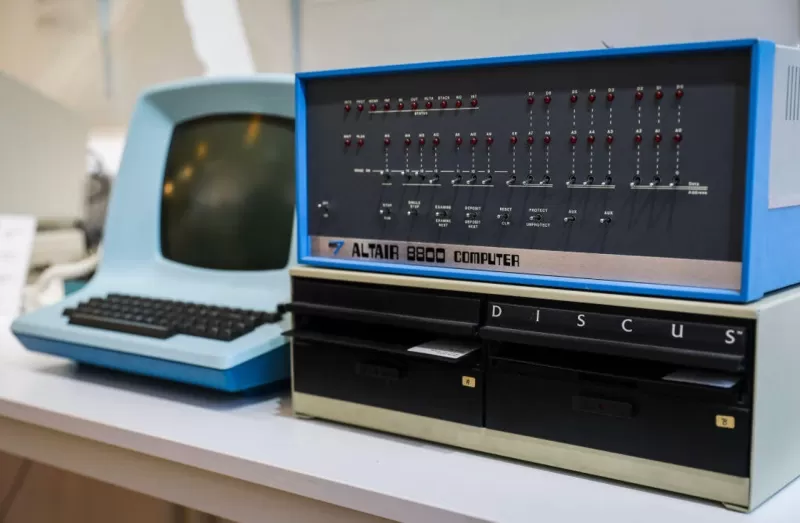
Meanwhile, Bill Gates and Paul Allen were laying the groundwork for Microsoft. The Altair 8800, introduced by Ed Roberts in 1974 via an article in Popular Electronics, was a game-changer. It was the first commercially successful personal computing device, a far cry from the room-sized computers of the past. Initially, the Altair didn't come with software, but Gates and Allen saw an opportunity. They pitched a BASIC interpreter to Roberts, even though they hadn't written a single line of code at the time.
Building My Own Altair 8800
I couldn't afford the original $1,500 price tag for a fully assembled Altair 8800, which would be over $7,000 today. So, I waited until I could buy parts at swap meets and horse-trade my way to a complete set. Over a summer at my parents' home, I meticulously built the machine, hand-soldered the wires to the front panel, and toggled in a bootloader to load BASIC.
It took a week to enter all the code, but my dad accidentally cut the power, and I had to start over. Eventually, I got it working, and it was exhilarating.
The Brilliance of Altair BASIC
Microsoft's BASIC language was revolutionary. It was a higher-level language, making programming more accessible and less tedious than machine or assembly language. Without BASIC for the Altair and later Apple machines, personal computing might not have taken off as it did. It was fun, creative, and empowering.
Bill Gates recently released the original Altair BASIC source code, a testament to the impressive work he and Paul Allen did. It's a nostalgic trip to see the care they put into making it functional and maintainable.
Meeting Bill Gates
I met Bill only once, about a dozen years after Microsoft's founding, at a dinner where he was the guest speaker for Silicon Valley's Software Entrepreneurs' Forum. I was on the board of directors and made it a point to sit across from him. When I asked for advice for my new software startup, he surprised me by emphasizing the importance of cash flow. "Cash flow is everything," he said. I took that advice to heart, and it served me well in my business ventures.
The Impact of BASIC on My Career
Looking back, Microsoft's Altair BASIC played a significant role in my career shift from nuclear engineering to computer science. While in engineering school, I exhausted the computing curriculum and started teaching graduate courses. My academic advisor encouraged me to switch fully to computer science, seeing my passion for PCs and my Altair build. Without Microsoft's BASIC, I might have been stuck underground as a nuclear engineer, a path I wasn't particularly suited for.
BASIC was my gateway into programming, and though it's no longer popular, it holds a special place in my heart. It sparked my imagination and led me to excel in operating system design, language design, and computer science.
A Toast to the Pioneers
So, here's to Bill Gates, Paul Allen, Ed Roberts, and all the early pioneers who brought personal computing to the masses. Whether you started with BASIC on an Altair or a PDP-10, or discovered personal computing later, I'd love to hear your story. How did you first get hooked on programming, and what role did Microsoft's early software play in your journey?
Follow my project updates on social media, subscribe to my weekly newsletter, and connect with me on Twitter/X at @DavidGewirtz, on Facebook at Facebook.com/DavidGewirtz, on Instagram at Instagram.com/DavidGewirtz, on Bluesky at @DavidGewirtz.com, and on YouTube at YouTube.com/DavidGewirtzTV. Stay updated with the biggest tech stories every Friday by subscribing to ZDNET's Week in Review newsletter.
Related article
 Stripe to Acquire OpenRouter as AI Model Routing Gains Momentum
Stripe has agreed to acquire OpenRouter, an AI model-routing platform that gives developers access to hundreds of models through a single interface. The deal adds model selection and routing to Stripe’s existing work around AI usage and token-based b
Former OpenAI Researcher Barrett Zoph Returns to Google to Support Gemini Development
Barret Zoph, who previously abruptly left and joined OpenAI due to a disagreement with Thinking Machines Lab CEO Miriam Mularati, has once again changed employers. Alphabet's Google announced that Zoph will return as Vice President of Research, bring
How Recursive Intelligence Raised $335M at $4B Valuation in 4 Months
The co-founders of startup Ricursive Intelligence seemed destined to be co-founders.Anna Goldie, CEO, and Azalia Mirhoseini, CTO, are so well-known in the AI community that they were among those AI engineers who “got those weird emails from Zuckerber
Related Special Topic Recommendations
Design & Art
Stripe to Acquire OpenRouter as AI Model Routing Gains Momentum
Stripe has agreed to acquire OpenRouter, an AI model-routing platform that gives developers access to hundreds of models through a single interface. The deal adds model selection and routing to Stripe’s existing work around AI usage and token-based b
Former OpenAI Researcher Barrett Zoph Returns to Google to Support Gemini Development
Barret Zoph, who previously abruptly left and joined OpenAI due to a disagreement with Thinking Machines Lab CEO Miriam Mularati, has once again changed employers. Alphabet's Google announced that Zoph will return as Vice President of Research, bring
How Recursive Intelligence Raised $335M at $4B Valuation in 4 Months
The co-founders of startup Ricursive Intelligence seemed destined to be co-founders.Anna Goldie, CEO, and Azalia Mirhoseini, CTO, are so well-known in the AI community that they were among those AI engineers who “got those weird emails from Zuckerber
Related Special Topic Recommendations
Design & Art
 Top AI Illustration Tools: Create Editorial Scenes and Cover Art Faster
2026 Latest Top-rated AI Illustration Tools: Our curated list features the best powerfully designed tools for creating stunning editorial scenes and eye-catching cover art quickly. Each option has gone through rigorous real-world tests, offering a free vs paid comparison to help you find the perfect match for your workflow. Try these must-try solutions today to unlock your AI edge and boost your creative productivity. Explore now at XIX.AI.
 10 tools
 xix.ai
Education and Learning
Top AI Tutors for Exam Prep: Practice Math, Science, and English
xix.ai
Education and Learning
Top AI Tutors for Exam Prep: Practice Math, Science, and English
2026 Latest Top-Rated Best AI Tutors for Exam Prep are here on XIX.AI! Our curated list features powerful game-changing tools that offer free vs paid comparison, real-world tests, and weekly updated rankings. They help boost your writing efficiency, simplify complex topic learning, and unlock your academic potential. Explore now to Discover your perfect exam prep tool and Start creating today to Unlock your AI edge!
10 tools
xix.ai
Finance
AI Budget Planning Tools for Personal Money Management
2026 Latest Best Top-Rated AI Budget Planning Tools for Personal Money Management are here on XIX.AI! This curated collection features powerful, game-changing solutions that help you conduct real-world tests, understand spending habits, and create personalized plans to boost productivity. Enjoy a free vs paid comparison along with detailed rankings. Must-try tools designed to simplify money management and unlock your AI edge. Explore now!
11 tools
xix.ai
Health & Wellness
AI Sleep Tracking Assistants: Improve Recovery with Better Bedtime Habits
2026 Latest Best Top-Rated AI Sleep Tracking Assistants curated for ultimate recovery. This fully updated weekly guide features powerful tools that deliver real-world tests, free vs paid comparison, and detailed rankings to help you find the must-try solution that boosts sleep quality and supports better bedtime habits. Explore now at XIX.AI to Unlock your AI edge.
10 tools
xix.ai
Data Analysis
AI SQL Copilots for Product and Revenue Analytics
2026 Latest Best Top-Rated AI SQL Copilots for Product and Revenue Analytics! XIX.AI has curated a powerful, game-changing collection of must-try tools that undergo real-world tests through weekly updated rankings. These tools help users boost productivity significantly by accelerating data analysis, streamlining complex queries, and generating accurate insights to drive smarter business decisions. Explore now to Discover your perfect tool for unlocking your AI edge!
14 tools
xix.ai
Education and Learning
Best AI Homework Helpers That Teach: Learn Concepts, Not Just Answers
2026 Latest Best Top-Rated AI Homework Helpers That Teach Core Concepts Not Just Answers Powerful Tools for Students Must-Try Curated List Weekly Updated Free vs Paid Comparison Real-World Tests Accurate Rankings to Help You Unlock Your Full Learning Potential Explore now to Discover your perfect tool for smarter studying.
10 tools
xix.ai

 Comments (20)
0/500
Comments (20)
0/500
![GaryRoberts]()
I was totally shocked when I read about how young the author was when he met Gates in 1975 — that’s barely older than my high school senior year! It feels like reading a scene from a retro tech movie, full of youthful ambition and wild possibilities. 😲
![CarlPerez]()
I remember reading about this era – it's wild to think how a tiny BASIC interpreter sparked the whole PC revolution. Makes you wonder what today's garage startups will become.
![RalphSanchez]()
Interesting read! I wonder how different the world would be if Bill hadn't skipped Harvard? 😄 Or if I had been the one to meet him? Anyway, the Altair 8800 looks like a beast. Makes me appreciate my laptop.
![KeithYoung]()
The gap between him leaving Harvard for Microsoft and me just beginning programming as a teen really puts the PC revolution in perspective. It’s wild how foundational moments like Altair 8800 & BASIC were happening while most of us were oblivious.
![TerryAdams]()
J'ai toujours trouvé fascinant comment Gates a quitté Harvard pour se lancer dans l'informatique personnelle à cette époque. Aujourd'hui, on voit des startups tenter de reproduire ce genre de parcours, mais l'audace de l'époque était vraiment unique ! 😄
![CharlesThomas]()
看完這篇突然覺得好懷舊喔~比爾蓋茲真的是PC革命的先驅者耶!現在的年輕人可能很難想像當初連BASIC都是黑科技吧😂 不過那個時代的創業精神跟現在的startup文化差好多,現在動不動就要融資幾千萬美金,以前真的是車庫裡幾個人就改變世界了...
My Early Days with Bill Gates and the Dawn of Personal Computing
Let me share a tale from the early days of personal computing, when I first crossed paths with Bill Gates. It's important to note that Bill is older than me. Back in 1975, as Bill was leaving Harvard to start Microsoft, I was skipping my final year of high school and diving straight into college. I was the youngest student in my engineering school that year, and both Bill and I were tinkering with the same technology: the Altair 8800 and the Digital Equipment PDP-10.
My high school computing experience was as formative as Bill's, but my aspirations were different. While I dabbled in computing, my true passion was building nuclear reactors. Yet, life had other plans for me, steering me away from nukes and towards PCs.
From Nukes to PCs
It all started with a teletype in my high school's computer "lab." When I pressed the Return key and it responded with "READY," it was a game-changer. In the 1970s, machines weren't interactive like they are today with tools like ChatGPT. That simple "READY" rewired my brain, showing me a new way to interact with technology.
Meanwhile, Bill Gates and Paul Allen were laying the groundwork for Microsoft. The Altair 8800, introduced by Ed Roberts in 1974 via an article in Popular Electronics, was a game-changer. It was the first commercially successful personal computing device, a far cry from the room-sized computers of the past. Initially, the Altair didn't come with software, but Gates and Allen saw an opportunity. They pitched a BASIC interpreter to Roberts, even though they hadn't written a single line of code at the time.
Building My Own Altair 8800
I couldn't afford the original $1,500 price tag for a fully assembled Altair 8800, which would be over $7,000 today. So, I waited until I could buy parts at swap meets and horse-trade my way to a complete set. Over a summer at my parents' home, I meticulously built the machine, hand-soldered the wires to the front panel, and toggled in a bootloader to load BASIC.
It took a week to enter all the code, but my dad accidentally cut the power, and I had to start over. Eventually, I got it working, and it was exhilarating.
The Brilliance of Altair BASIC
Microsoft's BASIC language was revolutionary. It was a higher-level language, making programming more accessible and less tedious than machine or assembly language. Without BASIC for the Altair and later Apple machines, personal computing might not have taken off as it did. It was fun, creative, and empowering.
Bill Gates recently released the original Altair BASIC source code, a testament to the impressive work he and Paul Allen did. It's a nostalgic trip to see the care they put into making it functional and maintainable.
Meeting Bill Gates
I met Bill only once, about a dozen years after Microsoft's founding, at a dinner where he was the guest speaker for Silicon Valley's Software Entrepreneurs' Forum. I was on the board of directors and made it a point to sit across from him. When I asked for advice for my new software startup, he surprised me by emphasizing the importance of cash flow. "Cash flow is everything," he said. I took that advice to heart, and it served me well in my business ventures.
The Impact of BASIC on My Career
Looking back, Microsoft's Altair BASIC played a significant role in my career shift from nuclear engineering to computer science. While in engineering school, I exhausted the computing curriculum and started teaching graduate courses. My academic advisor encouraged me to switch fully to computer science, seeing my passion for PCs and my Altair build. Without Microsoft's BASIC, I might have been stuck underground as a nuclear engineer, a path I wasn't particularly suited for.
BASIC was my gateway into programming, and though it's no longer popular, it holds a special place in my heart. It sparked my imagination and led me to excel in operating system design, language design, and computer science.
A Toast to the Pioneers
So, here's to Bill Gates, Paul Allen, Ed Roberts, and all the early pioneers who brought personal computing to the masses. Whether you started with BASIC on an Altair or a PDP-10, or discovered personal computing later, I'd love to hear your story. How did you first get hooked on programming, and what role did Microsoft's early software play in your journey?
Follow my project updates on social media, subscribe to my weekly newsletter, and connect with me on Twitter/X at @DavidGewirtz, on Facebook at Facebook.com/DavidGewirtz, on Instagram at Instagram.com/DavidGewirtz, on Bluesky at @DavidGewirtz.com, and on YouTube at YouTube.com/DavidGewirtzTV. Stay updated with the biggest tech stories every Friday by subscribing to ZDNET's Week in Review newsletter.








 Stripe to Acquire OpenRouter as AI Model Routing Gains Momentum
Stripe has agreed to acquire OpenRouter, an AI model-routing platform that gives developers access to hundreds of models through a single interface. The deal adds model selection and routing to Stripe’s existing work around AI usage and token-based b
Stripe to Acquire OpenRouter as AI Model Routing Gains Momentum
Stripe has agreed to acquire OpenRouter, an AI model-routing platform that gives developers access to hundreds of models through a single interface. The deal adds model selection and routing to Stripe’s existing work around AI usage and token-based b
 Former OpenAI Researcher Barrett Zoph Returns to Google to Support Gemini Development
Barret Zoph, who previously abruptly left and joined OpenAI due to a disagreement with Thinking Machines Lab CEO Miriam Mularati, has once again changed employers. Alphabet's Google announced that Zoph will return as Vice President of Research, bring
Former OpenAI Researcher Barrett Zoph Returns to Google to Support Gemini Development
Barret Zoph, who previously abruptly left and joined OpenAI due to a disagreement with Thinking Machines Lab CEO Miriam Mularati, has once again changed employers. Alphabet's Google announced that Zoph will return as Vice President of Research, bring
 How Recursive Intelligence Raised $335M at $4B Valuation in 4 Months
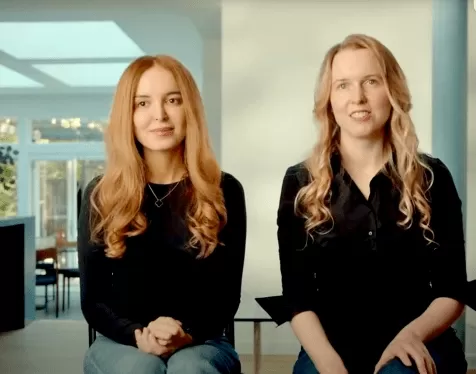
The co-founders of startup Ricursive Intelligence seemed destined to be co-founders.Anna Goldie, CEO, and Azalia Mirhoseini, CTO, are so well-known in the AI community that they were among those AI engineers who “got those weird emails from Zuckerber
How Recursive Intelligence Raised $335M at $4B Valuation in 4 Months
The co-founders of startup Ricursive Intelligence seemed destined to be co-founders.Anna Goldie, CEO, and Azalia Mirhoseini, CTO, are so well-known in the AI community that they were among those AI engineers who “got those weird emails from Zuckerber
2026 Latest Top-rated AI Illustration Tools: Our curated list features the best powerfully designed tools for creating stunning editorial scenes and eye-catching cover art quickly. Each option has gone through rigorous real-world tests, offering a free vs paid comparison to help you find the perfect match for your workflow. Try these must-try solutions today to unlock your AI edge and boost your creative productivity. Explore now at XIX.AI.
10 tools
xix.ai
2026 Latest Top-Rated Best AI Tutors for Exam Prep are here on XIX.AI! Our curated list features powerful game-changing tools that offer free vs paid comparison, real-world tests, and weekly updated rankings. They help boost your writing efficiency, simplify complex topic learning, and unlock your academic potential. Explore now to Discover your perfect exam prep tool and Start creating today to Unlock your AI edge!
10 tools
xix.ai

2026 Latest Best Top-Rated AI Budget Planning Tools for Personal Money Management are here on XIX.AI! This curated collection features powerful, game-changing solutions that help you conduct real-world tests, understand spending habits, and create personalized plans to boost productivity. Enjoy a free vs paid comparison along with detailed rankings. Must-try tools designed to simplify money management and unlock your AI edge. Explore now!
11 tools
xix.ai
2026 Latest Best Top-Rated AI Sleep Tracking Assistants curated for ultimate recovery. This fully updated weekly guide features powerful tools that deliver real-world tests, free vs paid comparison, and detailed rankings to help you find the must-try solution that boosts sleep quality and supports better bedtime habits. Explore now at XIX.AI to Unlock your AI edge.
10 tools
xix.ai
2026 Latest Best Top-Rated AI SQL Copilots for Product and Revenue Analytics! XIX.AI has curated a powerful, game-changing collection of must-try tools that undergo real-world tests through weekly updated rankings. These tools help users boost productivity significantly by accelerating data analysis, streamlining complex queries, and generating accurate insights to drive smarter business decisions. Explore now to Discover your perfect tool for unlocking your AI edge!
14 tools
xix.ai

2026 Latest Best Top-Rated AI Homework Helpers That Teach Core Concepts Not Just Answers Powerful Tools for Students Must-Try Curated List Weekly Updated Free vs Paid Comparison Real-World Tests Accurate Rankings to Help You Unlock Your Full Learning Potential Explore now to Discover your perfect tool for smarter studying.
10 tools
xix.ai

I was totally shocked when I read about how young the author was when he met Gates in 1975 — that’s barely older than my high school senior year! It feels like reading a scene from a retro tech movie, full of youthful ambition and wild possibilities. 😲
I remember reading about this era – it's wild to think how a tiny BASIC interpreter sparked the whole PC revolution. Makes you wonder what today's garage startups will become.
Interesting read! I wonder how different the world would be if Bill hadn't skipped Harvard? 😄 Or if I had been the one to meet him? Anyway, the Altair 8800 looks like a beast. Makes me appreciate my laptop.
The gap between him leaving Harvard for Microsoft and me just beginning programming as a teen really puts the PC revolution in perspective. It’s wild how foundational moments like Altair 8800 & BASIC were happening while most of us were oblivious.
J'ai toujours trouvé fascinant comment Gates a quitté Harvard pour se lancer dans l'informatique personnelle à cette époque. Aujourd'hui, on voit des startups tenter de reproduire ce genre de parcours, mais l'audace de l'époque était vraiment unique ! 😄
看完這篇突然覺得好懷舊喔~比爾蓋茲真的是PC革命的先驅者耶!現在的年輕人可能很難想像當初連BASIC都是黑科技吧😂 不過那個時代的創業精神跟現在的startup文化差好多,現在動不動就要融資幾千萬美金,以前真的是車庫裡幾個人就改變世界了...












