


 Home
HomeAutodesk CTO Urges Diversity in AI Development Teams
To shine a light on the remarkable contributions of women in AI, TechCrunch has been featuring a series of interviews with these trailblazers.
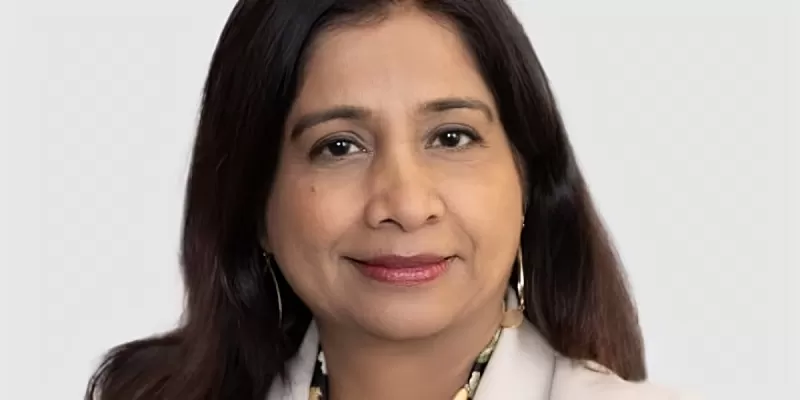
Raji Arasu, the CTO of Autodesk, shared that she's been harnessing the power of AI for "multiple decades" to tackle software challenges.
"When traditional software development methods hit a wall with complex issues, I've often turned to AI, especially for dealing with unstructured data," Arasu explained to TechCrunch.
Arasu's journey in tech began in 1993 at Oracle, where she started as an engineering technical lead. She then moved to eBay as a senior manager, eventually rising to the position of VP of technology. After stints at StubHub and Intuit, she joined Autodesk four years ago.
She credits much of her success to a robust professional network. In return, Arasu has been a vocal advocate for women in tech and has pushed for diversity, equity, and inclusion (DEI) initiatives, especially on boards of directors.
"Early on, I was lucky to have a diverse group of mentors who helped build my confidence, encouraged me to speak up, and ensured I had a place at the decision-making table," Arasu said. "It's crucial that women, people of color, and those from varied backgrounds are involved in strategic decisions."
Throughout her career, Arasu has witnessed firsthand the rapid evolution of AI. At Autodesk, she's led the R&D team, exploring AI's potential in construction automation, 3D modeling, and engineering design.
"The leaps in computing power, generative AI, and the fine-tuning of large models have broken down the walls of research labs, bringing these technologies into everyday use," she noted. "The pace at which AI is set to revolutionize industries is truly exhilarating."
However, Arasu recognizes the risks associated with AI, such as biases inherited from their creators and concerns over data privacy, transparency, and practices.
She advocates for "close collaboration" between industry and government to develop "well-informed" AI policies that tackle these risks. Yet, she emphasizes that effective policy requires input from diverse, multidisciplinary teams.
"Unlike previous revolutions, there's a growing understanding that inclusive participation, particularly by women, is vital for achieving more equitable and innovative results in AI and other emerging technologies," Arasu stated. "As AI transforms sectors like healthcare, education, and finance, women's involvement ensures the technology captures a wider range of human experiences."
Beyond regulation, Arasu believes companies must build AI responsibly by being transparent about how their systems work, so users can trust the decisions made. This involves understanding customer data concerns, implementing safeguards for proprietary and personal information, and adhering to global policies.
"Ethical design should be at the heart of the development process," Arasu said, "integrating diverse viewpoints and establishing governance to minimize bias and manage risks. Ongoing monitoring and accountability are key to ensuring AI systems function as intended and to address any issues swiftly. Lastly, fostering cross-disciplinary collaboration focused on the customer helps ensure AI benefits society, navigating risks and maximizing its positive impact."
Related article
 Autodesk Invests $200M in World Labs to Integrate World Models into 3D Workflows
Fei-Fei Li's World Labs has secured a $200 million investment from Autodesk, a leading software design company. The collaboration will explore how World Labs' world models—AI systems capable of generating and reasoning about immersive 3D environments
DeepMind CEO Hassabis: I sleep six hours a day, usually feel energetic around 1 a.m.
Fortune recently featured an interview with Demis Hassabis, CEO of Google DeepMind, revealing his unconventional approach to rest and productivity. Hassabis disclosed that he sleeps very little, structuring his waking hours into two distinct work blo
OpenAI, Anthropic Vie for Market Share Despite Revenue Shortfalls
Despite recent reports suggesting OpenAI missed revenue targets, creating pressure on tech stocks this Tuesday, private AI lab investors remain resilient. Seasoned backers have confirmed they will not reduce investment despite negative media coverage
Related Special Topic Recommendations
chatbot
Autodesk Invests $200M in World Labs to Integrate World Models into 3D Workflows
Fei-Fei Li's World Labs has secured a $200 million investment from Autodesk, a leading software design company. The collaboration will explore how World Labs' world models—AI systems capable of generating and reasoning about immersive 3D environments
DeepMind CEO Hassabis: I sleep six hours a day, usually feel energetic around 1 a.m.
Fortune recently featured an interview with Demis Hassabis, CEO of Google DeepMind, revealing his unconventional approach to rest and productivity. Hassabis disclosed that he sleeps very little, structuring his waking hours into two distinct work blo
OpenAI, Anthropic Vie for Market Share Despite Revenue Shortfalls
Despite recent reports suggesting OpenAI missed revenue targets, creating pressure on tech stocks this Tuesday, private AI lab investors remain resilient. Seasoned backers have confirmed they will not reduce investment despite negative media coverage
Related Special Topic Recommendations
chatbot
 Best AI Roleplay Chat Apps for Language Practice, Interview Prep, and Daily Fluency
2026 Latest Best Top-rated AI Roleplay Chat Apps for Language Practice, Interview Prep, and Daily Fluency! XIX.AI curates a powerful game-changing collection that offers free vs paid comparison, real-world tests, and updated rankings weekly. These must-try tools help you boost writing skills, overcome fluency challenges, and improve communication efficiency across all daily scenarios. Explore now to discover your perfect tool for language growth!
 10 tools
 xix.ai
Music composition
AI Stem Separation Tools for Remix Production, Sampling Prep, and Karaoke Masters
xix.ai
Music composition
AI Stem Separation Tools for Remix Production, Sampling Prep, and Karaoke Masters
2026 Latest Best Top-rated AI Stem Separation Tools Curated for Remix Production, Sampling Prep, and Karaoke Masters. These powerful game-changing tools offer real-world tests to deliver precise audio isolation, boosting productivity significantly. XIX.AI provides a weekly updated free vs paid comparison guide to help you find the must-try solution that suits your needs. Explore now to unlock your AI edge.
8 tools
xix.ai
Data Analysis
AI SQL Copilots for Revenue Dashboards, Funnel Analysis, and Product Metrics
2026 Latest Best AI SQL Copilots Ranked Top-Rated! XIX.AI curates a powerful game-changing collection for weekly updated real-world tests. These must-try tools help you generate accurate revenue dashboards, analyze sales funnels, and track product metrics swiftly, boosting productivity massively. Explore now to Discover your perfect tool for data-driven decision making! 238 characters
9 tools
xix.ai
Music composition
Best AI Melody Writing Tools for Song Drafts
2026 Latest Best Top-Rated AI Melody Writing Tools for Song Drafts! XIX.AI has curated a highly powerful game-changing collection that goes through rigorous real-world tests to deliver the best writing experience. You can find detailed free vs paid comparisons, accurate rankings, and must-try options designed to help you create stunning song drafts effortlessly and boost your creative productivity significantly. Explore now to discover your perfect tool!
8 tools
xix.ai
chatbot
Best AI Conversation Trainer Tools for Interview Practice
2026 Latest Best Top-rated AI Conversation Trainer Tools for Interview Practice are here on XIX.AI! This curated collection features powerful, game-changing tools that go through rigorous real-world tests to deliver accurate feedback. You’ll find a free vs paid comparison and detailed rankings to help you choose the must-try option that boosts your confidence and skills. Explore now to Discover your perfect tool for interview success!
12 tools
xix.ai
Design & Art
Best AI Style Transfer Tools for Creative Experiments
2026 Latest Best Top-rated AI Style Transfer Tools for Creative Experiments! XIX.AI has curated a powerful, game-changing collection of must-try tools that deliver exceptional results through real-world tests and rigorous rankings. These top solutions help creatives boost productivity significantly by accelerating content creation and unlocking endless creative possibilities. Explore now to discover your perfect tool and start creating today!
9 tools
xix.ai

 Comments (36)
0/500
Comments (36)
0/500
![ThomasAllen]()
Autodesk CTO 的觀點很中肯!團隊多元化確實能帶來更多創意火花,避免AI發展陷入單一思維。不過業界實際執行起來還是有難度吧?🤔 看到女性在科技領域持續發光真的很鼓舞人心~
![StephenHernández]()
Interesting read! It's great to see Autodesk's CTO emphasizing diversity in AI teams. Diverse perspectives are crucial for building responsible and innovative AI systems. Hope more companies follow this lead! 👍
![JackLewis]()
Interesting read! It's refreshing to see a CTO with decades of AI experience emphasizing team diversity. Makes you wonder how many innovative solutions we've missed due to homogeneous teams in tech. 🤔 The 'multiple decades' part really puts today's AI hype into perspective—some folks were quietly solving real problems long before it became trendy.
![LawrenceRodriguez]()
Raji Arasu's work at Autodesk sounds incredible! Using AI for decades to solve software challenges is mind-blowing. More diversity in AI teams is a must—different perspectives spark real innovation. 🚀
![FrankLewis]()
Raji Arasu's work at Autodesk sounds incredible! Using AI for decades to solve software challenges is no small feat. I wonder how diverse teams can shape AI’s future—more perspectives could really spark some wild innovations. 🌟
![SophiaCampbell]()
Raji Arasu's work at Autodesk sounds incredible! Decades of AI experience? That's wild. I wonder how diverse teams could shape AI's future—more perspectives might mean fewer biases, right? 😄
To shine a light on the remarkable contributions of women in AI, TechCrunch has been featuring a series of interviews with these trailblazers.
Raji Arasu, the CTO of Autodesk, shared that she's been harnessing the power of AI for "multiple decades" to tackle software challenges.
"When traditional software development methods hit a wall with complex issues, I've often turned to AI, especially for dealing with unstructured data," Arasu explained to TechCrunch.
Arasu's journey in tech began in 1993 at Oracle, where she started as an engineering technical lead. She then moved to eBay as a senior manager, eventually rising to the position of VP of technology. After stints at StubHub and Intuit, she joined Autodesk four years ago.
She credits much of her success to a robust professional network. In return, Arasu has been a vocal advocate for women in tech and has pushed for diversity, equity, and inclusion (DEI) initiatives, especially on boards of directors.
"Early on, I was lucky to have a diverse group of mentors who helped build my confidence, encouraged me to speak up, and ensured I had a place at the decision-making table," Arasu said. "It's crucial that women, people of color, and those from varied backgrounds are involved in strategic decisions."
Throughout her career, Arasu has witnessed firsthand the rapid evolution of AI. At Autodesk, she's led the R&D team, exploring AI's potential in construction automation, 3D modeling, and engineering design.
"The leaps in computing power, generative AI, and the fine-tuning of large models have broken down the walls of research labs, bringing these technologies into everyday use," she noted. "The pace at which AI is set to revolutionize industries is truly exhilarating."
However, Arasu recognizes the risks associated with AI, such as biases inherited from their creators and concerns over data privacy, transparency, and practices.
She advocates for "close collaboration" between industry and government to develop "well-informed" AI policies that tackle these risks. Yet, she emphasizes that effective policy requires input from diverse, multidisciplinary teams.
"Unlike previous revolutions, there's a growing understanding that inclusive participation, particularly by women, is vital for achieving more equitable and innovative results in AI and other emerging technologies," Arasu stated. "As AI transforms sectors like healthcare, education, and finance, women's involvement ensures the technology captures a wider range of human experiences."
Beyond regulation, Arasu believes companies must build AI responsibly by being transparent about how their systems work, so users can trust the decisions made. This involves understanding customer data concerns, implementing safeguards for proprietary and personal information, and adhering to global policies.
"Ethical design should be at the heart of the development process," Arasu said, "integrating diverse viewpoints and establishing governance to minimize bias and manage risks. Ongoing monitoring and accountability are key to ensuring AI systems function as intended and to address any issues swiftly. Lastly, fostering cross-disciplinary collaboration focused on the customer helps ensure AI benefits society, navigating risks and maximizing its positive impact."








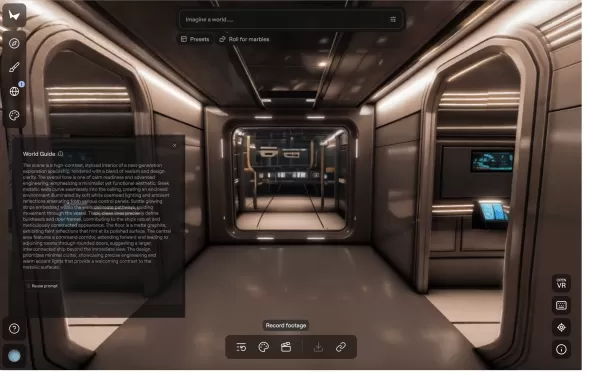 Autodesk Invests $200M in World Labs to Integrate World Models into 3D Workflows
Fei-Fei Li's World Labs has secured a $200 million investment from Autodesk, a leading software design company. The collaboration will explore how World Labs' world models—AI systems capable of generating and reasoning about immersive 3D environments
Autodesk Invests $200M in World Labs to Integrate World Models into 3D Workflows
Fei-Fei Li's World Labs has secured a $200 million investment from Autodesk, a leading software design company. The collaboration will explore how World Labs' world models—AI systems capable of generating and reasoning about immersive 3D environments
 DeepMind CEO Hassabis: I sleep six hours a day, usually feel energetic around 1 a.m.
Fortune recently featured an interview with Demis Hassabis, CEO of Google DeepMind, revealing his unconventional approach to rest and productivity. Hassabis disclosed that he sleeps very little, structuring his waking hours into two distinct work blo
DeepMind CEO Hassabis: I sleep six hours a day, usually feel energetic around 1 a.m.
Fortune recently featured an interview with Demis Hassabis, CEO of Google DeepMind, revealing his unconventional approach to rest and productivity. Hassabis disclosed that he sleeps very little, structuring his waking hours into two distinct work blo
 OpenAI, Anthropic Vie for Market Share Despite Revenue Shortfalls
Despite recent reports suggesting OpenAI missed revenue targets, creating pressure on tech stocks this Tuesday, private AI lab investors remain resilient. Seasoned backers have confirmed they will not reduce investment despite negative media coverage
OpenAI, Anthropic Vie for Market Share Despite Revenue Shortfalls
Despite recent reports suggesting OpenAI missed revenue targets, creating pressure on tech stocks this Tuesday, private AI lab investors remain resilient. Seasoned backers have confirmed they will not reduce investment despite negative media coverage

2026 Latest Best Top-rated AI Roleplay Chat Apps for Language Practice, Interview Prep, and Daily Fluency! XIX.AI curates a powerful game-changing collection that offers free vs paid comparison, real-world tests, and updated rankings weekly. These must-try tools help you boost writing skills, overcome fluency challenges, and improve communication efficiency across all daily scenarios. Explore now to discover your perfect tool for language growth!
10 tools
xix.ai

2026 Latest Best Top-rated AI Stem Separation Tools Curated for Remix Production, Sampling Prep, and Karaoke Masters. These powerful game-changing tools offer real-world tests to deliver precise audio isolation, boosting productivity significantly. XIX.AI provides a weekly updated free vs paid comparison guide to help you find the must-try solution that suits your needs. Explore now to unlock your AI edge.
8 tools
xix.ai

2026 Latest Best AI SQL Copilots Ranked Top-Rated! XIX.AI curates a powerful game-changing collection for weekly updated real-world tests. These must-try tools help you generate accurate revenue dashboards, analyze sales funnels, and track product metrics swiftly, boosting productivity massively. Explore now to Discover your perfect tool for data-driven decision making! 238 characters
9 tools
xix.ai

2026 Latest Best Top-Rated AI Melody Writing Tools for Song Drafts! XIX.AI has curated a highly powerful game-changing collection that goes through rigorous real-world tests to deliver the best writing experience. You can find detailed free vs paid comparisons, accurate rankings, and must-try options designed to help you create stunning song drafts effortlessly and boost your creative productivity significantly. Explore now to discover your perfect tool!
8 tools
xix.ai

2026 Latest Best Top-rated AI Conversation Trainer Tools for Interview Practice are here on XIX.AI! This curated collection features powerful, game-changing tools that go through rigorous real-world tests to deliver accurate feedback. You’ll find a free vs paid comparison and detailed rankings to help you choose the must-try option that boosts your confidence and skills. Explore now to Discover your perfect tool for interview success!
12 tools
xix.ai

2026 Latest Best Top-rated AI Style Transfer Tools for Creative Experiments! XIX.AI has curated a powerful, game-changing collection of must-try tools that deliver exceptional results through real-world tests and rigorous rankings. These top solutions help creatives boost productivity significantly by accelerating content creation and unlocking endless creative possibilities. Explore now to discover your perfect tool and start creating today!
9 tools
xix.ai

Autodesk CTO 的觀點很中肯!團隊多元化確實能帶來更多創意火花,避免AI發展陷入單一思維。不過業界實際執行起來還是有難度吧?🤔 看到女性在科技領域持續發光真的很鼓舞人心~
Interesting read! It's great to see Autodesk's CTO emphasizing diversity in AI teams. Diverse perspectives are crucial for building responsible and innovative AI systems. Hope more companies follow this lead! 👍
Interesting read! It's refreshing to see a CTO with decades of AI experience emphasizing team diversity. Makes you wonder how many innovative solutions we've missed due to homogeneous teams in tech. 🤔 The 'multiple decades' part really puts today's AI hype into perspective—some folks were quietly solving real problems long before it became trendy.
Raji Arasu's work at Autodesk sounds incredible! Using AI for decades to solve software challenges is mind-blowing. More diversity in AI teams is a must—different perspectives spark real innovation. 🚀
Raji Arasu's work at Autodesk sounds incredible! Using AI for decades to solve software challenges is no small feat. I wonder how diverse teams can shape AI’s future—more perspectives could really spark some wild innovations. 🌟
Raji Arasu's work at Autodesk sounds incredible! Decades of AI experience? That's wild. I wonder how diverse teams could shape AI's future—more perspectives might mean fewer biases, right? 😄












