


 Home
HomeSeoul AI Startup Datumo Secures $15.5M from Salesforce to Rival Scale AI
A recent McKinsey report reveals that most organizations feel underprepared to implement generative AI safely and responsibly. A key concern is explainability—understanding the rationale behind AI decisions. Although 40% of respondents see this as a major risk, only 17% are taking concrete steps to mitigate it.
Datumo, a Seoul-based startup that began as an AI data labeling firm, is now helping businesses develop safer AI. It provides tools and data for testing, monitoring, and refining AI models, designed to be accessible without deep technical knowledge. The company recently raised $15.5 million, bringing its total funding to around $28 million. Investors include Salesforce Ventures, KB Investment, ACVC Partners, and SBI Investment.
CEO David Kim, a former AI researcher at Korea's Agency for Defence Development, grew frustrated with the slow pace of data labeling. He conceived a reward-based app that lets people label data in their spare time for pay. The concept was validated at a KAIST startup competition, leading Kim and five KAIST alumni to co-found Datumo (formerly SelectStar) in 2018.
Even before the app's full launch, Datumo secured tens of thousands in pre-contract sales during the competition's customer discovery phase, primarily from KAIST alumni-led ventures.
In its first year, revenue exceeded $1 million with several key contracts. Current clients include major Korean corporations like Samsung, Samsung SDS, LG Electronics, LG CNS, Hyundai, Naver, and SK Telecom. As client demands evolved beyond basic labeling, the seven-year-old startup expanded its services. Today, it serves over 300 clients in South Korea and generated approximately $6 million in revenue in 2024.
"Clients began asking us to score their AI model outputs or compare them with alternatives," co-founder Michael Hwang told TechCrunch. "That's when we realized we were already performing AI model evaluation—we just didn't have a name for it." The company deepened its focus in this area, releasing Korea's first benchmark dataset for AI trust and safety, Hwang added.
"We started with data annotation, then moved into pretraining datasets and evaluation as the large language model ecosystem grew," Kim explained to TechCrunch.
Techcrunch event Tech and VC heavyweights join the Disrupt 2025 agenda
Netflix, ElevenLabs, Wayve, Sequoia Capital, Elad Gil — just a few of the heavy hitters joining the Disrupt 2025 agenda. They’re here to deliver the insights that fuel startup growth and sharpen your edge. Don’t miss the 20th anniversary of TechCrunch Disrupt, and a chance to learn from the top voices in tech — grab your ticket now and save up to $600+ before prices rise.
Tech and VC heavyweights join the Disrupt 2025 agenda
Netflix, ElevenLabs, Wayve, Sequoia Capital — just a few of the heavy hitters joining the Disrupt 2025 agenda. They’re here to deliver the insights that fuel startup growth and sharpen your edge. Don’t miss the 20th anniversary of TechCrunch Disrupt, and a chance to learn from the top voices in tech — grab your ticket now and save up to $675 before prices rise.
San Francisco | October 27-29, 2025 REGISTER NOW 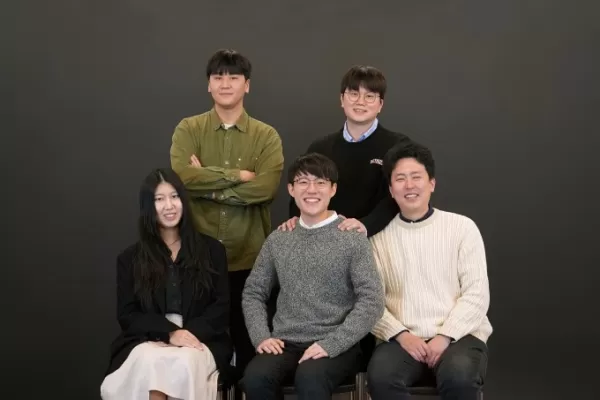
image credits: datumo (co-founders of datumo) Meta's recent $14.3 billion strategic investment in data-labeling firm Scale AI underscores the market's significance. Shortly after, AI model maker OpenAI, a Meta competitor, ended its use of Scale AI's services. This move highlights the growing competition for quality AI training data.
Datumo overlaps with companies like Scale AI in providing pretraining datasets, and with Galileo and Arize AI in AI evaluation and monitoring. Its key differentiator is its licensed datasets, which include content crawled from published books. CEO Kim notes this data offers rich, structured human reasoning but is challenging to clean.
Datumo also offers Datumo Eval, a full-stack evaluation platform that automatically generates test data and assessments to identify unsafe, biased, or incorrect AI responses without manual coding. This flagship no-code tool is built for non-developers, such as policy, trust and safety, and compliance teams.
Regarding attracting investors like Salesforce Ventures, Kim recounted hosting a fireside chat with DeepLearning.AI founder Andrew Ng in South Korea. After Kim shared the event on LinkedIn, Salesforce Ventures took notice. A series of meetings and Zoom calls led to a soft commitment, with the full funding process taking about eight months, according to Hwang.
The new capital will accelerate R&D, particularly for automated enterprise AI evaluation tools, and expand global go-to-market efforts in South Korea, Japan, and the U.S. The 150-person Seoul-based team established a Silicon Valley presence in March.
Related article
 DeepMind CEO Hassabis: I sleep six hours a day, usually feel energetic around 1 a.m.
Fortune recently featured an interview with Demis Hassabis, CEO of Google DeepMind, revealing his unconventional approach to rest and productivity. Hassabis disclosed that he sleeps very little, structuring his waking hours into two distinct work blo
OpenAI, Anthropic Vie for Market Share Despite Revenue Shortfalls
Despite recent reports suggesting OpenAI missed revenue targets, creating pressure on tech stocks this Tuesday, private AI lab investors remain resilient. Seasoned backers have confirmed they will not reduce investment despite negative media coverage
California AV Compliance: A New Era of Tickets, Geofences, and 1M Miles
Guident operates an AuveTech shuttle in South Florida, managing a four-mile route in West Palm Beach and a one-mile route in Boca Raton using its remote monitoring technology. | Credit: GuidentCalifornia is redefining the regulatory landscape for dri
Related Special Topic Recommendations
Music composition
DeepMind CEO Hassabis: I sleep six hours a day, usually feel energetic around 1 a.m.
Fortune recently featured an interview with Demis Hassabis, CEO of Google DeepMind, revealing his unconventional approach to rest and productivity. Hassabis disclosed that he sleeps very little, structuring his waking hours into two distinct work blo
OpenAI, Anthropic Vie for Market Share Despite Revenue Shortfalls
Despite recent reports suggesting OpenAI missed revenue targets, creating pressure on tech stocks this Tuesday, private AI lab investors remain resilient. Seasoned backers have confirmed they will not reduce investment despite negative media coverage
California AV Compliance: A New Era of Tickets, Geofences, and 1M Miles
Guident operates an AuveTech shuttle in South Florida, managing a four-mile route in West Palm Beach and a one-mile route in Boca Raton using its remote monitoring technology. | Credit: GuidentCalifornia is redefining the regulatory landscape for dri
Related Special Topic Recommendations
Music composition
 AI Stem Separation Tools for Remix Production, Sampling Prep, and Karaoke Masters
2026 Latest Best Top-rated AI Stem Separation Tools Curated for Remix Production, Sampling Prep, and Karaoke Masters. These powerful game-changing tools offer real-world tests to deliver precise audio isolation, boosting productivity significantly. XIX.AI provides a weekly updated free vs paid comparison guide to help you find the must-try solution that suits your needs. Explore now to unlock your AI edge.
 8 tools
 xix.ai
Data Analysis
AI SQL Copilots for Revenue Dashboards, Funnel Analysis, and Product Metrics
xix.ai
Data Analysis
AI SQL Copilots for Revenue Dashboards, Funnel Analysis, and Product Metrics
2026 Latest Best AI SQL Copilots Ranked Top-Rated! XIX.AI curates a powerful game-changing collection for weekly updated real-world tests. These must-try tools help you generate accurate revenue dashboards, analyze sales funnels, and track product metrics swiftly, boosting productivity massively. Explore now to Discover your perfect tool for data-driven decision making! 238 characters
9 tools
xix.ai
Music composition
Best AI Melody Writing Tools for Song Drafts
2026 Latest Best Top-Rated AI Melody Writing Tools for Song Drafts! XIX.AI has curated a highly powerful game-changing collection that goes through rigorous real-world tests to deliver the best writing experience. You can find detailed free vs paid comparisons, accurate rankings, and must-try options designed to help you create stunning song drafts effortlessly and boost your creative productivity significantly. Explore now to discover your perfect tool!
8 tools
xix.ai
chatbot
Best AI Conversation Trainer Tools for Interview Practice
2026 Latest Best Top-rated AI Conversation Trainer Tools for Interview Practice are here on XIX.AI! This curated collection features powerful, game-changing tools that go through rigorous real-world tests to deliver accurate feedback. You’ll find a free vs paid comparison and detailed rankings to help you choose the must-try option that boosts your confidence and skills. Explore now to Discover your perfect tool for interview success!
12 tools
xix.ai
Design & Art
Best AI Style Transfer Tools for Creative Experiments
2026 Latest Best Top-rated AI Style Transfer Tools for Creative Experiments! XIX.AI has curated a powerful, game-changing collection of must-try tools that deliver exceptional results through real-world tests and rigorous rankings. These top solutions help creatives boost productivity significantly by accelerating content creation and unlocking endless creative possibilities. Explore now to discover your perfect tool and start creating today!
9 tools
xix.ai
Comic Creation
Best AI Dialogue Bubble Tools for Visual Storytelling
2026 Latest Best Top-Rated AI Dialogue Bubble Tools for Visual Storytelling are here on XIX.AI! This curated collection features powerful, game-changing tools that help creators boost productivity and overcome creative bottlenecks. Get a free vs paid comparison, see real-world tests, and check the latest rankings to find the must-try solutions perfect for crafting engaging visual narratives. Explore now to discover your ideal tool!
10 tools
xix.ai

 Comments (3)
0/500
Comments (3)
0/500
![JohnRamirez]()
Interesting read! The explainability issue is so real—it's like trusting a black box with crucial decisions. If even big companies struggle, how can smaller startups ensure ethical AI? Also, Datumo getting funding from Salesforce shows the race to compete with Scale AI is heating up. Exciting times, but hope they prioritize transparency over just scaling fast. 🤔
![FrankRoberts]()
Interessant, dass Salesforce hier investiert – zeigt, wie heiß der Markt für Trainingsdaten und LLM-Infrastruktur ist. Aber die 'Erklärbarkeit' aus dem Artikel ist wirklich der Knackpunkt. Wenn selbst große Unternehmen unsicher sind, wie sollen dann normale Nutzer Vertrauen fassen? 🤔 Vielleicht sollte Datumo da mehr Fokus drauflegen, statt nur auf Skalierung zu setzen.
![JuanMartínez]()
As someone working in data annotation, this funding news hits close to home! Scale AI has dominated for a while; it’s exciting to see a serious contender emerge from Seoul. If Datumo can deliver on explainability for GenAI, they'll fill a massive market gap. Hope this drives innovation forward, not just more VC hype. 🚀
A recent McKinsey report reveals that most organizations feel underprepared to implement generative AI safely and responsibly. A key concern is explainability—understanding the rationale behind AI decisions. Although 40% of respondents see this as a major risk, only 17% are taking concrete steps to mitigate it.
Datumo, a Seoul-based startup that began as an AI data labeling firm, is now helping businesses develop safer AI. It provides tools and data for testing, monitoring, and refining AI models, designed to be accessible without deep technical knowledge. The company recently raised $15.5 million, bringing its total funding to around $28 million. Investors include Salesforce Ventures, KB Investment, ACVC Partners, and SBI Investment.
CEO David Kim, a former AI researcher at Korea's Agency for Defence Development, grew frustrated with the slow pace of data labeling. He conceived a reward-based app that lets people label data in their spare time for pay. The concept was validated at a KAIST startup competition, leading Kim and five KAIST alumni to co-found Datumo (formerly SelectStar) in 2018.
Even before the app's full launch, Datumo secured tens of thousands in pre-contract sales during the competition's customer discovery phase, primarily from KAIST alumni-led ventures.
In its first year, revenue exceeded $1 million with several key contracts. Current clients include major Korean corporations like Samsung, Samsung SDS, LG Electronics, LG CNS, Hyundai, Naver, and SK Telecom. As client demands evolved beyond basic labeling, the seven-year-old startup expanded its services. Today, it serves over 300 clients in South Korea and generated approximately $6 million in revenue in 2024.
"Clients began asking us to score their AI model outputs or compare them with alternatives," co-founder Michael Hwang told TechCrunch. "That's when we realized we were already performing AI model evaluation—we just didn't have a name for it." The company deepened its focus in this area, releasing Korea's first benchmark dataset for AI trust and safety, Hwang added.
"We started with data annotation, then moved into pretraining datasets and evaluation as the large language model ecosystem grew," Kim explained to TechCrunch.
Techcrunch eventTech and VC heavyweights join the Disrupt 2025 agenda
Netflix, ElevenLabs, Wayve, Sequoia Capital, Elad Gil — just a few of the heavy hitters joining the Disrupt 2025 agenda. They’re here to deliver the insights that fuel startup growth and sharpen your edge. Don’t miss the 20th anniversary of TechCrunch Disrupt, and a chance to learn from the top voices in tech — grab your ticket now and save up to $600+ before prices rise.
Tech and VC heavyweights join the Disrupt 2025 agenda
Netflix, ElevenLabs, Wayve, Sequoia Capital — just a few of the heavy hitters joining the Disrupt 2025 agenda. They’re here to deliver the insights that fuel startup growth and sharpen your edge. Don’t miss the 20th anniversary of TechCrunch Disrupt, and a chance to learn from the top voices in tech — grab your ticket now and save up to $675 before prices rise.
San Francisco | October 27-29, 2025 REGISTER NOWMeta's recent $14.3 billion strategic investment in data-labeling firm Scale AI underscores the market's significance. Shortly after, AI model maker OpenAI, a Meta competitor, ended its use of Scale AI's services. This move highlights the growing competition for quality AI training data.
Datumo overlaps with companies like Scale AI in providing pretraining datasets, and with Galileo and Arize AI in AI evaluation and monitoring. Its key differentiator is its licensed datasets, which include content crawled from published books. CEO Kim notes this data offers rich, structured human reasoning but is challenging to clean.
Datumo also offers Datumo Eval, a full-stack evaluation platform that automatically generates test data and assessments to identify unsafe, biased, or incorrect AI responses without manual coding. This flagship no-code tool is built for non-developers, such as policy, trust and safety, and compliance teams.
Regarding attracting investors like Salesforce Ventures, Kim recounted hosting a fireside chat with DeepLearning.AI founder Andrew Ng in South Korea. After Kim shared the event on LinkedIn, Salesforce Ventures took notice. A series of meetings and Zoom calls led to a soft commitment, with the full funding process taking about eight months, according to Hwang.
The new capital will accelerate R&D, particularly for automated enterprise AI evaluation tools, and expand global go-to-market efforts in South Korea, Japan, and the U.S. The 150-person Seoul-based team established a Silicon Valley presence in March.








 DeepMind CEO Hassabis: I sleep six hours a day, usually feel energetic around 1 a.m.
Fortune recently featured an interview with Demis Hassabis, CEO of Google DeepMind, revealing his unconventional approach to rest and productivity. Hassabis disclosed that he sleeps very little, structuring his waking hours into two distinct work blo
DeepMind CEO Hassabis: I sleep six hours a day, usually feel energetic around 1 a.m.
Fortune recently featured an interview with Demis Hassabis, CEO of Google DeepMind, revealing his unconventional approach to rest and productivity. Hassabis disclosed that he sleeps very little, structuring his waking hours into two distinct work blo
 OpenAI, Anthropic Vie for Market Share Despite Revenue Shortfalls
Despite recent reports suggesting OpenAI missed revenue targets, creating pressure on tech stocks this Tuesday, private AI lab investors remain resilient. Seasoned backers have confirmed they will not reduce investment despite negative media coverage
California AV Compliance: A New Era of Tickets, Geofences, and 1M Miles
Guident operates an AuveTech shuttle in South Florida, managing a four-mile route in West Palm Beach and a one-mile route in Boca Raton using its remote monitoring technology. | Credit: GuidentCalifornia is redefining the regulatory landscape for dri
OpenAI, Anthropic Vie for Market Share Despite Revenue Shortfalls
Despite recent reports suggesting OpenAI missed revenue targets, creating pressure on tech stocks this Tuesday, private AI lab investors remain resilient. Seasoned backers have confirmed they will not reduce investment despite negative media coverage
California AV Compliance: A New Era of Tickets, Geofences, and 1M Miles
Guident operates an AuveTech shuttle in South Florida, managing a four-mile route in West Palm Beach and a one-mile route in Boca Raton using its remote monitoring technology. | Credit: GuidentCalifornia is redefining the regulatory landscape for dri

2026 Latest Best Top-rated AI Stem Separation Tools Curated for Remix Production, Sampling Prep, and Karaoke Masters. These powerful game-changing tools offer real-world tests to deliver precise audio isolation, boosting productivity significantly. XIX.AI provides a weekly updated free vs paid comparison guide to help you find the must-try solution that suits your needs. Explore now to unlock your AI edge.
8 tools
xix.ai

2026 Latest Best AI SQL Copilots Ranked Top-Rated! XIX.AI curates a powerful game-changing collection for weekly updated real-world tests. These must-try tools help you generate accurate revenue dashboards, analyze sales funnels, and track product metrics swiftly, boosting productivity massively. Explore now to Discover your perfect tool for data-driven decision making! 238 characters
9 tools
xix.ai

2026 Latest Best Top-Rated AI Melody Writing Tools for Song Drafts! XIX.AI has curated a highly powerful game-changing collection that goes through rigorous real-world tests to deliver the best writing experience. You can find detailed free vs paid comparisons, accurate rankings, and must-try options designed to help you create stunning song drafts effortlessly and boost your creative productivity significantly. Explore now to discover your perfect tool!
8 tools
xix.ai

2026 Latest Best Top-rated AI Conversation Trainer Tools for Interview Practice are here on XIX.AI! This curated collection features powerful, game-changing tools that go through rigorous real-world tests to deliver accurate feedback. You’ll find a free vs paid comparison and detailed rankings to help you choose the must-try option that boosts your confidence and skills. Explore now to Discover your perfect tool for interview success!
12 tools
xix.ai

2026 Latest Best Top-rated AI Style Transfer Tools for Creative Experiments! XIX.AI has curated a powerful, game-changing collection of must-try tools that deliver exceptional results through real-world tests and rigorous rankings. These top solutions help creatives boost productivity significantly by accelerating content creation and unlocking endless creative possibilities. Explore now to discover your perfect tool and start creating today!
9 tools
xix.ai

2026 Latest Best Top-Rated AI Dialogue Bubble Tools for Visual Storytelling are here on XIX.AI! This curated collection features powerful, game-changing tools that help creators boost productivity and overcome creative bottlenecks. Get a free vs paid comparison, see real-world tests, and check the latest rankings to find the must-try solutions perfect for crafting engaging visual narratives. Explore now to discover your ideal tool!
10 tools
xix.ai

Interesting read! The explainability issue is so real—it's like trusting a black box with crucial decisions. If even big companies struggle, how can smaller startups ensure ethical AI? Also, Datumo getting funding from Salesforce shows the race to compete with Scale AI is heating up. Exciting times, but hope they prioritize transparency over just scaling fast. 🤔
Interessant, dass Salesforce hier investiert – zeigt, wie heiß der Markt für Trainingsdaten und LLM-Infrastruktur ist. Aber die 'Erklärbarkeit' aus dem Artikel ist wirklich der Knackpunkt. Wenn selbst große Unternehmen unsicher sind, wie sollen dann normale Nutzer Vertrauen fassen? 🤔 Vielleicht sollte Datumo da mehr Fokus drauflegen, statt nur auf Skalierung zu setzen.
As someone working in data annotation, this funding news hits close to home! Scale AI has dominated for a while; it’s exciting to see a serious contender emerge from Seoul. If Datumo can deliver on explainability for GenAI, they'll fill a massive market gap. Hope this drives innovation forward, not just more VC hype. 🚀












