


 Home
HomeScale AI’s Alexandr Wang Poised to Recharge Meta’s AI Ambitions

Meta is reportedly making a nearly $15 billion investment in the data-labeling company Scale AI, acquiring a 49% stake and bringing on CEO Alexandr Wang to help lead a new internal "superintelligence" lab.
This massive deal echoes Meta’s history of bold, high-stakes investments, like its $19 billion WhatsApp acquisition and $1 billion Instagram purchase. Each of those deals was initially criticized as an overpayment, and the reaction to the Scale AI news has followed a similar pattern, leaving many investors and founders puzzled.
Ultimately, WhatsApp and Instagram became cornerstones of Mark Zuckerberg’s empire. The critical question now is whether the Scale AI investment will prove equally strategic, showcasing Zuckerberg’s foresight once more, or if it represents a desperate attempt to keep pace with AI leaders like OpenAI, Google, and Anthropic.
This time, Meta’s bet isn't on a trendy social app, but on the foundational data used to train cutting-edge AI models. For years, top AI labs, including OpenAI, have depended on Scale AI for data production and annotation. Recently, Scale AI and its rivals have begun hiring highly qualified personnel, such as PhD scientists and senior engineers, to create premium data for frontier AI research.
A close partnership with a data provider like Scale could be advantageous for Meta. Sources indicate that Meta’s leadership has expressed concerns about a lack of data innovation within its core AI teams.
Earlier this year, Meta’s generative AI unit released the Llama 4 model family, which failed to match the performance of Chinese lab DeepSeek’s models and was widely seen as underwhelming. Compounding these challenges, Meta is facing a brain drain, having lost 4.3% of its top talent to rival AI labs in 2024, according to SignalFire data.
Meta’s strategy to revitalize its AI efforts hinges not only on Scale AI but also on CEO Alexandr Wang leading the new superintelligence team. The 28-year-old founder has built a strong reputation in Silicon Valley as an ambitious, well-connected, and persuasive leader. Recently, he has engaged with global leaders to discuss AI's societal implications.
Techcrunch event Save $200+ on your TechCrunch All Stage pass
Build smarter. Scale faster. Connect deeper. Join visionaries from Precursor Ventures, NEA, Index Ventures, Underscore VC, and beyond for a day packed with strategies, workshops, and meaningful connections.
Save $200+ on your TechCrunch All Stage pass
Build smarter. Scale faster. Connect deeper. Join visionaries from Precursor Ventures, NEA, Index Ventures, Underscore VC, and beyond for a day packed with strategies, workshops, and meaningful connections.
Boston, MA | July 15 REGISTER NOW However, Wang lacks prior experience leading an AI research lab and does not share the deep research background of peers like Safe Superintelligence’s Ilya Sutskever or Mistral’s Arthur Mensch. This may explain why Meta is also reportedly recruiting established AI researchers like DeepMind’s Jack Rae for the new group.
Scale AI’s long-term role post-investment is uncertain. The importance of real-world data for AI training is evolving, with some labs bringing data work in-house and others increasingly using synthetic, AI-generated data. In April, The Information reported that Scale AI had missed some revenue targets.
According to Anyscale co-founder Robert Nishihara, several leading AI labs are pioneering new, compute-intensive methods for leveraging and optimizing data.
“Data is a moving target,” Nishihara told TechCrunch. “It’s not just a finite effort to catch up — you have to innovate.”
Meta’s deepened involvement with Scale AI may deter other AI labs that have been its traditional clients. If so, the deal could benefit Scale AI’s competitors, such as Turing, Surge AI, and newer entrants like the recently launched LM Arena.
Turing CEO Jonathan Siddharth told TechCrunch via email that customer interest has risen following rumors of the Meta-Scale AI deal.
“I think there will be some clients who will prefer to work with a partner that’s more neutral,” he said.
Only time will reveal the outcome of Meta’s massive investment. The company has considerable ground to regain in the AI race, and its competitors are not pausing. OpenAI is preparing to launch its next flagship model, GPT-5, along with its first openly available model in years—a direct challenger to Meta's Llama lineup.
Related article
 Stripe to Acquire OpenRouter as AI Model Routing Gains Momentum
Stripe has agreed to acquire OpenRouter, an AI model-routing platform that gives developers access to hundreds of models through a single interface. The deal adds model selection and routing to Stripe’s existing work around AI usage and token-based b
Former OpenAI Researcher Barrett Zoph Returns to Google to Support Gemini Development
Barret Zoph, who previously abruptly left and joined OpenAI due to a disagreement with Thinking Machines Lab CEO Miriam Mularati, has once again changed employers. Alphabet's Google announced that Zoph will return as Vice President of Research, bring
How Recursive Intelligence Raised $335M at $4B Valuation in 4 Months
The co-founders of startup Ricursive Intelligence seemed destined to be co-founders.Anna Goldie, CEO, and Azalia Mirhoseini, CTO, are so well-known in the AI community that they were among those AI engineers who “got those weird emails from Zuckerber
Related Special Topic Recommendations
Design & Art
Stripe to Acquire OpenRouter as AI Model Routing Gains Momentum
Stripe has agreed to acquire OpenRouter, an AI model-routing platform that gives developers access to hundreds of models through a single interface. The deal adds model selection and routing to Stripe’s existing work around AI usage and token-based b
Former OpenAI Researcher Barrett Zoph Returns to Google to Support Gemini Development
Barret Zoph, who previously abruptly left and joined OpenAI due to a disagreement with Thinking Machines Lab CEO Miriam Mularati, has once again changed employers. Alphabet's Google announced that Zoph will return as Vice President of Research, bring
How Recursive Intelligence Raised $335M at $4B Valuation in 4 Months
The co-founders of startup Ricursive Intelligence seemed destined to be co-founders.Anna Goldie, CEO, and Azalia Mirhoseini, CTO, are so well-known in the AI community that they were among those AI engineers who “got those weird emails from Zuckerber
Related Special Topic Recommendations
Design & Art
 Top AI Illustration Tools: Create Editorial Scenes and Cover Art Faster
2026 Latest Top-rated AI Illustration Tools: Our curated list features the best powerfully designed tools for creating stunning editorial scenes and eye-catching cover art quickly. Each option has gone through rigorous real-world tests, offering a free vs paid comparison to help you find the perfect match for your workflow. Try these must-try solutions today to unlock your AI edge and boost your creative productivity. Explore now at XIX.AI.
 10 tools
 xix.ai
Education and Learning
Top AI Tutors for Exam Prep: Practice Math, Science, and English
xix.ai
Education and Learning
Top AI Tutors for Exam Prep: Practice Math, Science, and English
2026 Latest Top-Rated Best AI Tutors for Exam Prep are here on XIX.AI! Our curated list features powerful game-changing tools that offer free vs paid comparison, real-world tests, and weekly updated rankings. They help boost your writing efficiency, simplify complex topic learning, and unlock your academic potential. Explore now to Discover your perfect exam prep tool and Start creating today to Unlock your AI edge!
10 tools
xix.ai
Finance
AI Budget Planning Tools for Personal Money Management
2026 Latest Best Top-Rated AI Budget Planning Tools for Personal Money Management are here on XIX.AI! This curated collection features powerful, game-changing solutions that help you conduct real-world tests, understand spending habits, and create personalized plans to boost productivity. Enjoy a free vs paid comparison along with detailed rankings. Must-try tools designed to simplify money management and unlock your AI edge. Explore now!
11 tools
xix.ai
Health & Wellness
AI Sleep Tracking Assistants: Improve Recovery with Better Bedtime Habits
2026 Latest Best Top-Rated AI Sleep Tracking Assistants curated for ultimate recovery. This fully updated weekly guide features powerful tools that deliver real-world tests, free vs paid comparison, and detailed rankings to help you find the must-try solution that boosts sleep quality and supports better bedtime habits. Explore now at XIX.AI to Unlock your AI edge.
10 tools
xix.ai
Data Analysis
AI SQL Copilots for Product and Revenue Analytics
2026 Latest Best Top-Rated AI SQL Copilots for Product and Revenue Analytics! XIX.AI has curated a powerful, game-changing collection of must-try tools that undergo real-world tests through weekly updated rankings. These tools help users boost productivity significantly by accelerating data analysis, streamlining complex queries, and generating accurate insights to drive smarter business decisions. Explore now to Discover your perfect tool for unlocking your AI edge!
14 tools
xix.ai
Education and Learning
Best AI Homework Helpers That Teach: Learn Concepts, Not Just Answers
2026 Latest Best Top-Rated AI Homework Helpers That Teach Core Concepts Not Just Answers Powerful Tools for Students Must-Try Curated List Weekly Updated Free vs Paid Comparison Real-World Tests Accurate Rankings to Help You Unlock Your Full Learning Potential Explore now to Discover your perfect tool for smarter studying.
10 tools
xix.ai

 Comments (1)
0/500
Comments (1)
0/500
![JonathanMiller]()
49% Anteile für 15 Milliarden? Das ist ja fast wie eine Übernahme ohne die volle Verantwortung. 😅 Interessant, dass Meta jetzt auf Datenlabeling setzt – aber wer kontrolliert eigentlich die Qualität dieser Annotationen? Ich frage mich, ob das wirklich der Schlüssel zur 'Superintelligenz' ist oder nur ein teurer Schritt im Wettlauf gegen OpenAI und Google.
Meta is reportedly making a nearly $15 billion investment in the data-labeling company Scale AI, acquiring a 49% stake and bringing on CEO Alexandr Wang to help lead a new internal "superintelligence" lab.
This massive deal echoes Meta’s history of bold, high-stakes investments, like its $19 billion WhatsApp acquisition and $1 billion Instagram purchase. Each of those deals was initially criticized as an overpayment, and the reaction to the Scale AI news has followed a similar pattern, leaving many investors and founders puzzled.
Ultimately, WhatsApp and Instagram became cornerstones of Mark Zuckerberg’s empire. The critical question now is whether the Scale AI investment will prove equally strategic, showcasing Zuckerberg’s foresight once more, or if it represents a desperate attempt to keep pace with AI leaders like OpenAI, Google, and Anthropic.
This time, Meta’s bet isn't on a trendy social app, but on the foundational data used to train cutting-edge AI models. For years, top AI labs, including OpenAI, have depended on Scale AI for data production and annotation. Recently, Scale AI and its rivals have begun hiring highly qualified personnel, such as PhD scientists and senior engineers, to create premium data for frontier AI research.
A close partnership with a data provider like Scale could be advantageous for Meta. Sources indicate that Meta’s leadership has expressed concerns about a lack of data innovation within its core AI teams.
Earlier this year, Meta’s generative AI unit released the Llama 4 model family, which failed to match the performance of Chinese lab DeepSeek’s models and was widely seen as underwhelming. Compounding these challenges, Meta is facing a brain drain, having lost 4.3% of its top talent to rival AI labs in 2024, according to SignalFire data.
Meta’s strategy to revitalize its AI efforts hinges not only on Scale AI but also on CEO Alexandr Wang leading the new superintelligence team. The 28-year-old founder has built a strong reputation in Silicon Valley as an ambitious, well-connected, and persuasive leader. Recently, he has engaged with global leaders to discuss AI's societal implications.
Techcrunch eventSave $200+ on your TechCrunch All Stage pass
Build smarter. Scale faster. Connect deeper. Join visionaries from Precursor Ventures, NEA, Index Ventures, Underscore VC, and beyond for a day packed with strategies, workshops, and meaningful connections.
Save $200+ on your TechCrunch All Stage pass
Build smarter. Scale faster. Connect deeper. Join visionaries from Precursor Ventures, NEA, Index Ventures, Underscore VC, and beyond for a day packed with strategies, workshops, and meaningful connections.
Boston, MA | July 15 REGISTER NOWHowever, Wang lacks prior experience leading an AI research lab and does not share the deep research background of peers like Safe Superintelligence’s Ilya Sutskever or Mistral’s Arthur Mensch. This may explain why Meta is also reportedly recruiting established AI researchers like DeepMind’s Jack Rae for the new group.
Scale AI’s long-term role post-investment is uncertain. The importance of real-world data for AI training is evolving, with some labs bringing data work in-house and others increasingly using synthetic, AI-generated data. In April, The Information reported that Scale AI had missed some revenue targets.
According to Anyscale co-founder Robert Nishihara, several leading AI labs are pioneering new, compute-intensive methods for leveraging and optimizing data.
“Data is a moving target,” Nishihara told TechCrunch. “It’s not just a finite effort to catch up — you have to innovate.”
Meta’s deepened involvement with Scale AI may deter other AI labs that have been its traditional clients. If so, the deal could benefit Scale AI’s competitors, such as Turing, Surge AI, and newer entrants like the recently launched LM Arena.
Turing CEO Jonathan Siddharth told TechCrunch via email that customer interest has risen following rumors of the Meta-Scale AI deal.
“I think there will be some clients who will prefer to work with a partner that’s more neutral,” he said.
Only time will reveal the outcome of Meta’s massive investment. The company has considerable ground to regain in the AI race, and its competitors are not pausing. OpenAI is preparing to launch its next flagship model, GPT-5, along with its first openly available model in years—a direct challenger to Meta's Llama lineup.








 Stripe to Acquire OpenRouter as AI Model Routing Gains Momentum
Stripe has agreed to acquire OpenRouter, an AI model-routing platform that gives developers access to hundreds of models through a single interface. The deal adds model selection and routing to Stripe’s existing work around AI usage and token-based b
Stripe to Acquire OpenRouter as AI Model Routing Gains Momentum
Stripe has agreed to acquire OpenRouter, an AI model-routing platform that gives developers access to hundreds of models through a single interface. The deal adds model selection and routing to Stripe’s existing work around AI usage and token-based b
 Former OpenAI Researcher Barrett Zoph Returns to Google to Support Gemini Development
Barret Zoph, who previously abruptly left and joined OpenAI due to a disagreement with Thinking Machines Lab CEO Miriam Mularati, has once again changed employers. Alphabet's Google announced that Zoph will return as Vice President of Research, bring
Former OpenAI Researcher Barrett Zoph Returns to Google to Support Gemini Development
Barret Zoph, who previously abruptly left and joined OpenAI due to a disagreement with Thinking Machines Lab CEO Miriam Mularati, has once again changed employers. Alphabet's Google announced that Zoph will return as Vice President of Research, bring
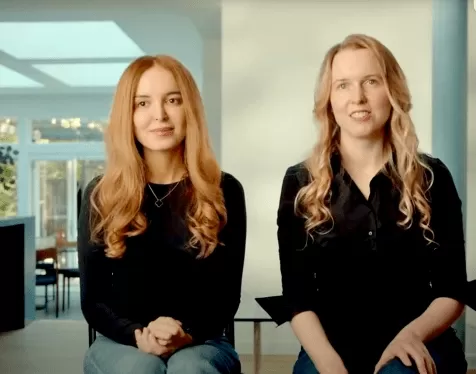 How Recursive Intelligence Raised $335M at $4B Valuation in 4 Months
The co-founders of startup Ricursive Intelligence seemed destined to be co-founders.Anna Goldie, CEO, and Azalia Mirhoseini, CTO, are so well-known in the AI community that they were among those AI engineers who “got those weird emails from Zuckerber
How Recursive Intelligence Raised $335M at $4B Valuation in 4 Months
The co-founders of startup Ricursive Intelligence seemed destined to be co-founders.Anna Goldie, CEO, and Azalia Mirhoseini, CTO, are so well-known in the AI community that they were among those AI engineers who “got those weird emails from Zuckerber

2026 Latest Top-rated AI Illustration Tools: Our curated list features the best powerfully designed tools for creating stunning editorial scenes and eye-catching cover art quickly. Each option has gone through rigorous real-world tests, offering a free vs paid comparison to help you find the perfect match for your workflow. Try these must-try solutions today to unlock your AI edge and boost your creative productivity. Explore now at XIX.AI.
10 tools
xix.ai

2026 Latest Top-Rated Best AI Tutors for Exam Prep are here on XIX.AI! Our curated list features powerful game-changing tools that offer free vs paid comparison, real-world tests, and weekly updated rankings. They help boost your writing efficiency, simplify complex topic learning, and unlock your academic potential. Explore now to Discover your perfect exam prep tool and Start creating today to Unlock your AI edge!
10 tools
xix.ai

2026 Latest Best Top-Rated AI Budget Planning Tools for Personal Money Management are here on XIX.AI! This curated collection features powerful, game-changing solutions that help you conduct real-world tests, understand spending habits, and create personalized plans to boost productivity. Enjoy a free vs paid comparison along with detailed rankings. Must-try tools designed to simplify money management and unlock your AI edge. Explore now!
11 tools
xix.ai

2026 Latest Best Top-Rated AI Sleep Tracking Assistants curated for ultimate recovery. This fully updated weekly guide features powerful tools that deliver real-world tests, free vs paid comparison, and detailed rankings to help you find the must-try solution that boosts sleep quality and supports better bedtime habits. Explore now at XIX.AI to Unlock your AI edge.
10 tools
xix.ai

2026 Latest Best Top-Rated AI SQL Copilots for Product and Revenue Analytics! XIX.AI has curated a powerful, game-changing collection of must-try tools that undergo real-world tests through weekly updated rankings. These tools help users boost productivity significantly by accelerating data analysis, streamlining complex queries, and generating accurate insights to drive smarter business decisions. Explore now to Discover your perfect tool for unlocking your AI edge!
14 tools
xix.ai

2026 Latest Best Top-Rated AI Homework Helpers That Teach Core Concepts Not Just Answers Powerful Tools for Students Must-Try Curated List Weekly Updated Free vs Paid Comparison Real-World Tests Accurate Rankings to Help You Unlock Your Full Learning Potential Explore now to Discover your perfect tool for smarter studying.
10 tools
xix.ai

49% Anteile für 15 Milliarden? Das ist ja fast wie eine Übernahme ohne die volle Verantwortung. 😅 Interessant, dass Meta jetzt auf Datenlabeling setzt – aber wer kontrolliert eigentlich die Qualität dieser Annotationen? Ich frage mich, ob das wirklich der Schlüssel zur 'Superintelligenz' ist oder nur ein teurer Schritt im Wettlauf gegen OpenAI und Google.












