


 Home
HomePentagon Flags Anthropic as Supply Chain Security Threat

The Department of Defense (DoD) has formally informed Anthropic's leadership that the company and its products have been classified as a supply chain risk, according to a Bloomberg report citing a senior department official.
This designation follows weeks of tension between the AI research lab and the Pentagon. Anthropic CEO Dario Amodei has declined to permit military use of its AI systems for mass surveillance of American citizens or for operating fully autonomous weapons where humans are not involved in targeting or engagement decisions. The DoD has countered that its utilization of AI should not be restricted by a private contractor.
Supply chain risk designations are usually applied to foreign adversarial entities. This label mandates that any company or agency working with the Pentagon must certify that it does not utilize Anthropic's AI models.
The Pentagon's decision risks significant disruption for both Anthropic and its own operations. Anthropic has been the sole leading AI lab with systems certified for handling classified information. The U.S. military is currently employing Claude, Anthropic's AI, in its Iran-related campaigns, where American forces use AI tools to rapidly process operational data. According to Bloomberg, Claude is a primary component of Palantir's Maven Smart System, which is relied upon by military operators in the Middle East.
Several critics have described labeling Anthropic a supply chain risk over this policy disagreement as an unprecedented move by the Department. Dean Ball, a former AI advisor in the Trump White House, has called the designation a "death rattle" of the American republic, arguing the government has forsaken strategic clarity and respect for a "thuggish" tribalism that treats domestic innovators more harshly than foreign adversaries.
Hundreds of employees from OpenAI and Google have urged the DoD to rescind its designation and called on Congress to challenge what they see as an improper exertion of authority against a U.S. tech firm. They have also encouraged their own leaders to maintain a united front in refusing the Pentagon's demands to use their AI models for domestic mass surveillance and for "autonomously killing people without human oversight."
TechCrunch has contacted Anthropic for a statement.
Amid this conflict, OpenAI independently reached an agreement with the Department, allowing military use of its AI systems for "all lawful purposes." Some OpenAI staff have raised concerns about the vague wording of this deal, which they fear could enable precisely the kinds of applications Anthropic sought to prevent.
Amodei has characterized the DoD's actions as "retaliatory and punitive," and has reportedly suggested that his refusal to endorse or donate to President Trump influenced the dispute with the Pentagon. In contrast, OpenAI president Greg Brockman has been a strong supporter of Trump, recently contributing $25 million to the MAGA Inc. Super PAC.
Related article
 Anthropic CEO Outlines Plan To Pace The Frontier
AI researchers have issued increasingly urgent warnings about artificial intelligence risks, with OpenAI CEO Sam Altman suggesting it may be time to “pace” development. But what would that actually entail?In a recent blog post, Anthropic CEO Dario Am
Anthropic Unveils Opus 4.6, a Controversial Content Generator
Anthropic’s universal usage standards for Claude prohibit the model from generating sexually explicit content, including depicting or requesting sexual intercourse or sex acts, generating content related to sexual fetishes or fantasies, or engaging i
Anthropic reports workforce seniority rising as meeting time increases
Anthropic’s workforce composition and work patterns have shifted dramatically over the last year, according to a report released by the AI company on Friday.Anthropic suggests its internal trends may signal broader economic shifts in hiring, labor de
Related Special Topic Recommendations
Design & Art
Anthropic CEO Outlines Plan To Pace The Frontier
AI researchers have issued increasingly urgent warnings about artificial intelligence risks, with OpenAI CEO Sam Altman suggesting it may be time to “pace” development. But what would that actually entail?In a recent blog post, Anthropic CEO Dario Am
Anthropic Unveils Opus 4.6, a Controversial Content Generator
Anthropic’s universal usage standards for Claude prohibit the model from generating sexually explicit content, including depicting or requesting sexual intercourse or sex acts, generating content related to sexual fetishes or fantasies, or engaging i
Anthropic reports workforce seniority rising as meeting time increases
Anthropic’s workforce composition and work patterns have shifted dramatically over the last year, according to a report released by the AI company on Friday.Anthropic suggests its internal trends may signal broader economic shifts in hiring, labor de
Related Special Topic Recommendations
Design & Art
 Top AI Illustration Tools: Create Editorial Scenes and Cover Art Faster
2026 Latest Top-rated AI Illustration Tools: Our curated list features the best powerfully designed tools for creating stunning editorial scenes and eye-catching cover art quickly. Each option has gone through rigorous real-world tests, offering a free vs paid comparison to help you find the perfect match for your workflow. Try these must-try solutions today to unlock your AI edge and boost your creative productivity. Explore now at XIX.AI.
 10 tools
 xix.ai
Education and Learning
Top AI Tutors for Exam Prep: Practice Math, Science, and English
xix.ai
Education and Learning
Top AI Tutors for Exam Prep: Practice Math, Science, and English
2026 Latest Top-Rated Best AI Tutors for Exam Prep are here on XIX.AI! Our curated list features powerful game-changing tools that offer free vs paid comparison, real-world tests, and weekly updated rankings. They help boost your writing efficiency, simplify complex topic learning, and unlock your academic potential. Explore now to Discover your perfect exam prep tool and Start creating today to Unlock your AI edge!
10 tools
xix.ai
Finance
AI Budget Planning Tools for Personal Money Management
2026 Latest Best Top-Rated AI Budget Planning Tools for Personal Money Management are here on XIX.AI! This curated collection features powerful, game-changing solutions that help you conduct real-world tests, understand spending habits, and create personalized plans to boost productivity. Enjoy a free vs paid comparison along with detailed rankings. Must-try tools designed to simplify money management and unlock your AI edge. Explore now!
11 tools
xix.ai
Health & Wellness
AI Sleep Tracking Assistants: Improve Recovery with Better Bedtime Habits
2026 Latest Best Top-Rated AI Sleep Tracking Assistants curated for ultimate recovery. This fully updated weekly guide features powerful tools that deliver real-world tests, free vs paid comparison, and detailed rankings to help you find the must-try solution that boosts sleep quality and supports better bedtime habits. Explore now at XIX.AI to Unlock your AI edge.
10 tools
xix.ai
Data Analysis
AI SQL Copilots for Product and Revenue Analytics
2026 Latest Best Top-Rated AI SQL Copilots for Product and Revenue Analytics! XIX.AI has curated a powerful, game-changing collection of must-try tools that undergo real-world tests through weekly updated rankings. These tools help users boost productivity significantly by accelerating data analysis, streamlining complex queries, and generating accurate insights to drive smarter business decisions. Explore now to Discover your perfect tool for unlocking your AI edge!
14 tools
xix.ai
Education and Learning
Best AI Homework Helpers That Teach: Learn Concepts, Not Just Answers
2026 Latest Best Top-Rated AI Homework Helpers That Teach Core Concepts Not Just Answers Powerful Tools for Students Must-Try Curated List Weekly Updated Free vs Paid Comparison Real-World Tests Accurate Rankings to Help You Unlock Your Full Learning Potential Explore now to Discover your perfect tool for smarter studying.
10 tools
xix.ai

 Comments (2)
0/500
Comments (2)
0/500
![LawrenceNelson]()
I was totally surprised to read this news. It feels like the military is stepping in way too deeply into tech companies' daily operations just because of some potential risks, doesn't it? I wonder if other tech firms will face similar pressure soon.
![JasonHill]()
五角大樓把Anthropic列為供應鏈風險?這消息有點意思。AI公司的技術如果被視為潛在威脅,會不會影響到其他科技巨頭的合作?未來各國政府對AI的監管恐怕只會越來越嚴格,開發者也得更小心了。
The Department of Defense (DoD) has formally informed Anthropic's leadership that the company and its products have been classified as a supply chain risk, according to a Bloomberg report citing a senior department official.
This designation follows weeks of tension between the AI research lab and the Pentagon. Anthropic CEO Dario Amodei has declined to permit military use of its AI systems for mass surveillance of American citizens or for operating fully autonomous weapons where humans are not involved in targeting or engagement decisions. The DoD has countered that its utilization of AI should not be restricted by a private contractor.
Supply chain risk designations are usually applied to foreign adversarial entities. This label mandates that any company or agency working with the Pentagon must certify that it does not utilize Anthropic's AI models.
The Pentagon's decision risks significant disruption for both Anthropic and its own operations. Anthropic has been the sole leading AI lab with systems certified for handling classified information. The U.S. military is currently employing Claude, Anthropic's AI, in its Iran-related campaigns, where American forces use AI tools to rapidly process operational data. According to Bloomberg, Claude is a primary component of Palantir's Maven Smart System, which is relied upon by military operators in the Middle East.
Several critics have described labeling Anthropic a supply chain risk over this policy disagreement as an unprecedented move by the Department. Dean Ball, a former AI advisor in the Trump White House, has called the designation a "death rattle" of the American republic, arguing the government has forsaken strategic clarity and respect for a "thuggish" tribalism that treats domestic innovators more harshly than foreign adversaries.
Hundreds of employees from OpenAI and Google have urged the DoD to rescind its designation and called on Congress to challenge what they see as an improper exertion of authority against a U.S. tech firm. They have also encouraged their own leaders to maintain a united front in refusing the Pentagon's demands to use their AI models for domestic mass surveillance and for "autonomously killing people without human oversight."
TechCrunch has contacted Anthropic for a statement.
Amid this conflict, OpenAI independently reached an agreement with the Department, allowing military use of its AI systems for "all lawful purposes." Some OpenAI staff have raised concerns about the vague wording of this deal, which they fear could enable precisely the kinds of applications Anthropic sought to prevent.
Amodei has characterized the DoD's actions as "retaliatory and punitive," and has reportedly suggested that his refusal to endorse or donate to President Trump influenced the dispute with the Pentagon. In contrast, OpenAI president Greg Brockman has been a strong supporter of Trump, recently contributing $25 million to the MAGA Inc. Super PAC.








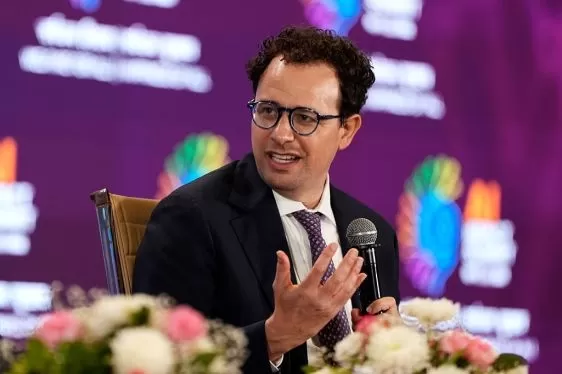 Anthropic CEO Outlines Plan To Pace The Frontier
AI researchers have issued increasingly urgent warnings about artificial intelligence risks, with OpenAI CEO Sam Altman suggesting it may be time to “pace” development. But what would that actually entail?In a recent blog post, Anthropic CEO Dario Am
Anthropic CEO Outlines Plan To Pace The Frontier
AI researchers have issued increasingly urgent warnings about artificial intelligence risks, with OpenAI CEO Sam Altman suggesting it may be time to “pace” development. But what would that actually entail?In a recent blog post, Anthropic CEO Dario Am
 Anthropic Unveils Opus 4.6, a Controversial Content Generator
Anthropic’s universal usage standards for Claude prohibit the model from generating sexually explicit content, including depicting or requesting sexual intercourse or sex acts, generating content related to sexual fetishes or fantasies, or engaging i
Anthropic Unveils Opus 4.6, a Controversial Content Generator
Anthropic’s universal usage standards for Claude prohibit the model from generating sexually explicit content, including depicting or requesting sexual intercourse or sex acts, generating content related to sexual fetishes or fantasies, or engaging i
 Anthropic reports workforce seniority rising as meeting time increases
Anthropic’s workforce composition and work patterns have shifted dramatically over the last year, according to a report released by the AI company on Friday.Anthropic suggests its internal trends may signal broader economic shifts in hiring, labor de
Anthropic reports workforce seniority rising as meeting time increases
Anthropic’s workforce composition and work patterns have shifted dramatically over the last year, according to a report released by the AI company on Friday.Anthropic suggests its internal trends may signal broader economic shifts in hiring, labor de

2026 Latest Top-rated AI Illustration Tools: Our curated list features the best powerfully designed tools for creating stunning editorial scenes and eye-catching cover art quickly. Each option has gone through rigorous real-world tests, offering a free vs paid comparison to help you find the perfect match for your workflow. Try these must-try solutions today to unlock your AI edge and boost your creative productivity. Explore now at XIX.AI.
10 tools
xix.ai

2026 Latest Top-Rated Best AI Tutors for Exam Prep are here on XIX.AI! Our curated list features powerful game-changing tools that offer free vs paid comparison, real-world tests, and weekly updated rankings. They help boost your writing efficiency, simplify complex topic learning, and unlock your academic potential. Explore now to Discover your perfect exam prep tool and Start creating today to Unlock your AI edge!
10 tools
xix.ai

2026 Latest Best Top-Rated AI Budget Planning Tools for Personal Money Management are here on XIX.AI! This curated collection features powerful, game-changing solutions that help you conduct real-world tests, understand spending habits, and create personalized plans to boost productivity. Enjoy a free vs paid comparison along with detailed rankings. Must-try tools designed to simplify money management and unlock your AI edge. Explore now!
11 tools
xix.ai

2026 Latest Best Top-Rated AI Sleep Tracking Assistants curated for ultimate recovery. This fully updated weekly guide features powerful tools that deliver real-world tests, free vs paid comparison, and detailed rankings to help you find the must-try solution that boosts sleep quality and supports better bedtime habits. Explore now at XIX.AI to Unlock your AI edge.
10 tools
xix.ai

2026 Latest Best Top-Rated AI SQL Copilots for Product and Revenue Analytics! XIX.AI has curated a powerful, game-changing collection of must-try tools that undergo real-world tests through weekly updated rankings. These tools help users boost productivity significantly by accelerating data analysis, streamlining complex queries, and generating accurate insights to drive smarter business decisions. Explore now to Discover your perfect tool for unlocking your AI edge!
14 tools
xix.ai

2026 Latest Best Top-Rated AI Homework Helpers That Teach Core Concepts Not Just Answers Powerful Tools for Students Must-Try Curated List Weekly Updated Free vs Paid Comparison Real-World Tests Accurate Rankings to Help You Unlock Your Full Learning Potential Explore now to Discover your perfect tool for smarter studying.
10 tools
xix.ai

I was totally surprised to read this news. It feels like the military is stepping in way too deeply into tech companies' daily operations just because of some potential risks, doesn't it? I wonder if other tech firms will face similar pressure soon.
五角大樓把Anthropic列為供應鏈風險?這消息有點意思。AI公司的技術如果被視為潛在威脅,會不會影響到其他科技巨頭的合作?未來各國政府對AI的監管恐怕只會越來越嚴格,開發者也得更小心了。












