


 Home
HomeIndia mandates caller-ID apps to share spam data with telecom operators

India has expanded its anti-spam regulations to mandate that caller-ID and call-management applications share user spam reports with telecom operators, a move that has led Truecaller, a prominent spam-blocking app provider, to label the policy as anti-competitive.
On Friday, the Telecom Regulatory Authority of India (TRAI), the nation’s telecom regulator, updated rules governing commercial communications. These updates make it compulsory for call-ID and call-management apps that allow users to flag calls as spam or junk to transmit those reports to a blockchain-based platform operated by telecom providers. This platform monitors commercial communications and enforces anti-spam protocols.
According to TRAI, this modification aims to expand the volume of spam reports available for action against spammers, effectively linking reports gathered by apps with the telecom industry’s enforcement infrastructure.
However, Truecaller informed TechCrunch that it views this requirement as a “one-way exchange” that is “anti-competitive,” arguing that it transfers commercially valuable data from call-management apps like itself to telecom operators.
India represents Truecaller’s largest market, accounting for more than 350 million of its over 500 million monthly active users worldwide. The Stockholm-based company utilizes community reports alongside automated detection and other signals to identify and block spam calls.
These rules emerge as India battles spam and fraudulent calls on a massive scale. In its February report, Truecaller stated that users in the country encountered approximately 42 billion spam calls in 2025, including those that were blocked, labeled, or ignored. The company also reported blocking nearly 12 billion spam calls during the year.
This is not the first instance of conflict between Truecaller and the Indian regulator regarding spam call handling. The Swedish company previously objected to restrictions that prevented call-management apps from automatically labeling calls from certain government-designated number ranges as spam. It argued that such exemptions could allow unwanted calls to bypass its filters.
Nevertheless, Friday’s amendments maintain this restriction, barring call-management apps from blanket blocking, filtering, or spam-tagging calls from designated number series used for promotional, service, and transactional communications. Individual users may still choose to block such calls on their own devices, the regulator clarified.
“While our data and user sentiment clearly indicate that spam has surged due to this free pass for spammers, we have been compliant with this since late last year,” a Truecaller spokesperson stated.
Sumeysh Srivastava, a partner at New Delhi-based consulting firm The Quantum Hub, who leads its telecom-regulation policy work, noted that the latest change bridges two distinct layers: telecom operators provide the underlying network and operate the blockchain-based anti-spam system, while caller-ID apps function on top of the network to identify and filter calls.
This raises technical and jurisdictional questions, Srivastava told TechCrunch, including what reporting standards apps must adhere to and how the requirement will be enforced against companies that are not themselves telecom operators.
A March draft (PDF) proposed using India’s IT laws to enforce the requirement. However, Srivastava pointed out that the new announcement did not specify whether this enforcement mechanism was retained in the final rules.
It remains unclear how much information the apps will actually need to provide under the updated regulation. Kazim Rizvi, founding director of New Delhi-based policy think tank The Dialogue, told TechCrunch that requiring an app to transmit a specific spam report made by a user is materially different from requiring it to share broader datasets, reputation signals, or analytical systems used to identify suspicious calls.
The rules require clarity on what information must be transmitted, how users are notified or asked for consent, and how that data can subsequently be retained and used, Rizvi said.
TRAI did not respond to TechCrunch’s questions regarding what information apps would be required to share and whether the rule would also apply to spam-reporting features built into smartphone operating systems and dialers such as Android and iOS.
New rules for AI-powered calls
The amendments also address the increasing use of software and AI voice agents to make calls. Calls made automatically, without a person directly dialing the number, now fall under TRAI’s application-to-person (A2P) framework. This includes robocalls and calls using prerecorded or artificial voices.
Companies using such systems must declare their use and the phone numbers involved to their telecom operators in advance. Undeclared A2P calls will be treated as spam, TRAI stated.
The key test, Srivastava said, is how a call is initiated, rather than simply whether it uses an AI-generated voice, leaving some uncertainty around AI-assisted calls that involve human initiation.
Satya N. Gupta, a former additional secretary at TRAI, told TechCrunch that the new rules do not restrict businesses from using AI or other automated calling technologies, but instead require them to disclose their use to telecom operators.
Telecom operators will also be permitted to levy a termination charge of up to 5 paise (approximately 0.052 cents) per minute on A2P calls. However, calls made using certain designated number ranges will be exempt.
Rizvi told TechCrunch that the new definition could also cover calls made using software even when a person is still involved, such as calls from contact centers and click-to-call services. “Without that distinction, the A2P category risks becoming broader than the regulatory harm it is intended to address,” he said.
Related article
 Truecaller lets you hang up on scammers for your family
Truecaller, the caller identity platform, recently introduced a feature that allows one person to act as an admin for a family group. The admin receives alerts about fraud calls received by other members and can even remotely end a call if they suspe
Reddit Implements Human Verification to Combat Bot Activity
Reddit's potential rival, Digg, recently shut down after failing to control the bots that overran its platform. On Wednesday, Reddit announced it is tackling this challenge head-on.The company will start labeling automated accounts that provide a ser
Qwen AI Platform Expands Model Matrix With Official Launch of GLM-5.3 and DeepSeek-V4-Pro
The Alibaba Cloud Qwen AI platform (MaaS) has recently expanded its model service matrix, integrating Zhipu’s flagship large model GLM-5.3 and the official release of DeepSeek-V4-Pro. The corresponding API services are now publicly available, enablin
Related Special Topic Recommendations
Music composition
Truecaller lets you hang up on scammers for your family
Truecaller, the caller identity platform, recently introduced a feature that allows one person to act as an admin for a family group. The admin receives alerts about fraud calls received by other members and can even remotely end a call if they suspe
Reddit Implements Human Verification to Combat Bot Activity
Reddit's potential rival, Digg, recently shut down after failing to control the bots that overran its platform. On Wednesday, Reddit announced it is tackling this challenge head-on.The company will start labeling automated accounts that provide a ser
Qwen AI Platform Expands Model Matrix With Official Launch of GLM-5.3 and DeepSeek-V4-Pro
The Alibaba Cloud Qwen AI platform (MaaS) has recently expanded its model service matrix, integrating Zhipu’s flagship large model GLM-5.3 and the official release of DeepSeek-V4-Pro. The corresponding API services are now publicly available, enablin
Related Special Topic Recommendations
Music composition
 AI Songwriting Tools for Lyrics and Melody Ideas
2026 Latest Best Top-Rated AI Songwriting Tools for Lyrics and Melody Ideas are here on XIX.AI! This curated collection features powerful, game-changing options that go through rigorous real-world tests to deliver accurate lyric and melody suggestions. Get a free vs paid comparison, see detailed rankings, and discover must-try tools that can boost your creative workflow significantly. Explore now to find the perfect fit for your needs!
 8 tools
 xix.ai
Health & Wellness
ChatGPT Meal Planning Apps for Macro Tracking, Grocery Lists, and Weekly Prep
xix.ai
Health & Wellness
ChatGPT Meal Planning Apps for Macro Tracking, Grocery Lists, and Weekly Prep
2026 Latest Best ChatGPT Meal Planning Apps Top-rated must-try curated powerful game-changing tools for macro tracking grocery lists and weekly prep. XIX.AI delivers weekly updated rankings based on real-world tests, including free vs paid comparison details. Discover your perfect tool to boost productivity and unlock your AI edge today. Explore now!
9 tools
xix.ai
Video creation
AI Video Script Tools for Short Form Content
2026 Latest Best Top-Rated AI Video Script Tools for Short Form Content! XIX.AI has curated a powerful, game-changing collection of must-try tools that go through rigorous real-world tests. You’ll find detailed weekly updated rankings, free vs paid comparison info, and insights to help you boost productivity and unlock your AI edge in creating high-quality short form content. Explore now to discover your perfect tool!
10 tools
xix.ai
Comic Creation
AI Comic Panel Tools for Storyboard Style Narratives
2026 Latest Best AI Comic Panel Tools for Storyboard Style Narratives! This curated top-rated collection features powerful game-changing solutions that help creators boost writing efficiency and overcome creation bottlenecks. You’ll find detailed free vs paid comparison, real-world tests, and official rankings to guide your pick. XIX.AI offers expert insights too. Explore now to Discover your perfect tool for bringing vivid stories to life! 238 characters
9 tools
xix.ai
Video creation
Best AI Video Generation Tools for Short Content
2026 Latest Best Top-rated AI Video Generation Tools for Short Content are here on XIX.AI’s curated collection. These powerful game-changing tools have undergone rigorous real-world tests, featuring a comprehensive free vs paid comparison and detailed rankings to help you find the perfect option. Whether you need to create high-quality short videos fast or boost your productivity across various tasks, these must-try solutions deliver outstanding results. Explore now to discover your ideal tool and unlock your AI edge.
9 tools
xix.ai
Design & Art
Best AI Art Generators: Explore Moodboards, Styles, and Visual Directions
2026 Latest Best AI Art Generators ranking showcases top-rated tools for creating stunning moodboards, exploring diverse styles, and defining visual directions. XIX.AI offers a curated list of powerful, game-changing options that have passed rigorous real-world tests. Get a free vs paid comparison to help you find the perfect fit for boosting your creative workflow. Explore now to Unlock your AI edge in art creation.
10 tools
xix.ai

 Comments (0)
0/500
Comments (0)
0/500
India has expanded its anti-spam regulations to mandate that caller-ID and call-management applications share user spam reports with telecom operators, a move that has led Truecaller, a prominent spam-blocking app provider, to label the policy as anti-competitive.
On Friday, the Telecom Regulatory Authority of India (TRAI), the nation’s telecom regulator, updated rules governing commercial communications. These updates make it compulsory for call-ID and call-management apps that allow users to flag calls as spam or junk to transmit those reports to a blockchain-based platform operated by telecom providers. This platform monitors commercial communications and enforces anti-spam protocols.
According to TRAI, this modification aims to expand the volume of spam reports available for action against spammers, effectively linking reports gathered by apps with the telecom industry’s enforcement infrastructure.
However, Truecaller informed TechCrunch that it views this requirement as a “one-way exchange” that is “anti-competitive,” arguing that it transfers commercially valuable data from call-management apps like itself to telecom operators.
India represents Truecaller’s largest market, accounting for more than 350 million of its over 500 million monthly active users worldwide. The Stockholm-based company utilizes community reports alongside automated detection and other signals to identify and block spam calls.
These rules emerge as India battles spam and fraudulent calls on a massive scale. In its February report, Truecaller stated that users in the country encountered approximately 42 billion spam calls in 2025, including those that were blocked, labeled, or ignored. The company also reported blocking nearly 12 billion spam calls during the year.
This is not the first instance of conflict between Truecaller and the Indian regulator regarding spam call handling. The Swedish company previously objected to restrictions that prevented call-management apps from automatically labeling calls from certain government-designated number ranges as spam. It argued that such exemptions could allow unwanted calls to bypass its filters.
Nevertheless, Friday’s amendments maintain this restriction, barring call-management apps from blanket blocking, filtering, or spam-tagging calls from designated number series used for promotional, service, and transactional communications. Individual users may still choose to block such calls on their own devices, the regulator clarified.
“While our data and user sentiment clearly indicate that spam has surged due to this free pass for spammers, we have been compliant with this since late last year,” a Truecaller spokesperson stated.
Sumeysh Srivastava, a partner at New Delhi-based consulting firm The Quantum Hub, who leads its telecom-regulation policy work, noted that the latest change bridges two distinct layers: telecom operators provide the underlying network and operate the blockchain-based anti-spam system, while caller-ID apps function on top of the network to identify and filter calls.
This raises technical and jurisdictional questions, Srivastava told TechCrunch, including what reporting standards apps must adhere to and how the requirement will be enforced against companies that are not themselves telecom operators.
A March draft (PDF) proposed using India’s IT laws to enforce the requirement. However, Srivastava pointed out that the new announcement did not specify whether this enforcement mechanism was retained in the final rules.
It remains unclear how much information the apps will actually need to provide under the updated regulation. Kazim Rizvi, founding director of New Delhi-based policy think tank The Dialogue, told TechCrunch that requiring an app to transmit a specific spam report made by a user is materially different from requiring it to share broader datasets, reputation signals, or analytical systems used to identify suspicious calls.
The rules require clarity on what information must be transmitted, how users are notified or asked for consent, and how that data can subsequently be retained and used, Rizvi said.
TRAI did not respond to TechCrunch’s questions regarding what information apps would be required to share and whether the rule would also apply to spam-reporting features built into smartphone operating systems and dialers such as Android and iOS.
New rules for AI-powered calls
The amendments also address the increasing use of software and AI voice agents to make calls. Calls made automatically, without a person directly dialing the number, now fall under TRAI’s application-to-person (A2P) framework. This includes robocalls and calls using prerecorded or artificial voices.
Companies using such systems must declare their use and the phone numbers involved to their telecom operators in advance. Undeclared A2P calls will be treated as spam, TRAI stated.
The key test, Srivastava said, is how a call is initiated, rather than simply whether it uses an AI-generated voice, leaving some uncertainty around AI-assisted calls that involve human initiation.
Satya N. Gupta, a former additional secretary at TRAI, told TechCrunch that the new rules do not restrict businesses from using AI or other automated calling technologies, but instead require them to disclose their use to telecom operators.
Telecom operators will also be permitted to levy a termination charge of up to 5 paise (approximately 0.052 cents) per minute on A2P calls. However, calls made using certain designated number ranges will be exempt.
Rizvi told TechCrunch that the new definition could also cover calls made using software even when a person is still involved, such as calls from contact centers and click-to-call services. “Without that distinction, the A2P category risks becoming broader than the regulatory harm it is intended to address,” he said.








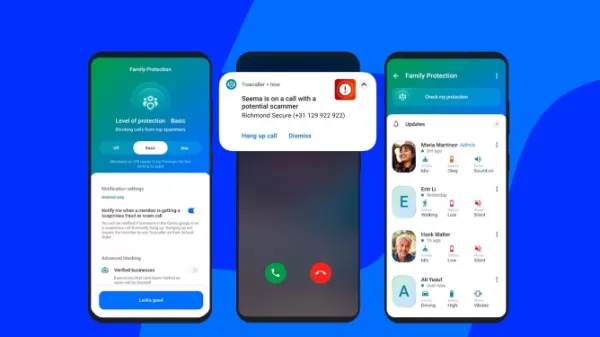 Truecaller lets you hang up on scammers for your family
Truecaller, the caller identity platform, recently introduced a feature that allows one person to act as an admin for a family group. The admin receives alerts about fraud calls received by other members and can even remotely end a call if they suspe
Truecaller lets you hang up on scammers for your family
Truecaller, the caller identity platform, recently introduced a feature that allows one person to act as an admin for a family group. The admin receives alerts about fraud calls received by other members and can even remotely end a call if they suspe
 Reddit Implements Human Verification to Combat Bot Activity
Reddit's potential rival, Digg, recently shut down after failing to control the bots that overran its platform. On Wednesday, Reddit announced it is tackling this challenge head-on.The company will start labeling automated accounts that provide a ser
Reddit Implements Human Verification to Combat Bot Activity
Reddit's potential rival, Digg, recently shut down after failing to control the bots that overran its platform. On Wednesday, Reddit announced it is tackling this challenge head-on.The company will start labeling automated accounts that provide a ser
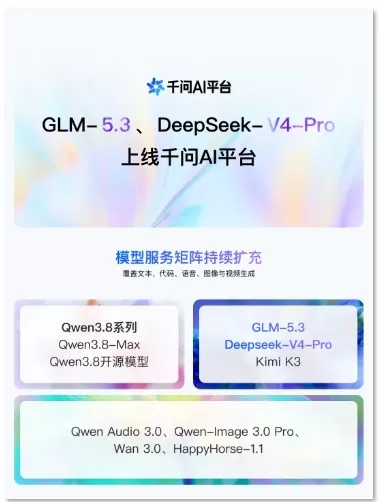 Qwen AI Platform Expands Model Matrix With Official Launch of GLM-5.3 and DeepSeek-V4-Pro
The Alibaba Cloud Qwen AI platform (MaaS) has recently expanded its model service matrix, integrating Zhipu’s flagship large model GLM-5.3 and the official release of DeepSeek-V4-Pro. The corresponding API services are now publicly available, enablin
Qwen AI Platform Expands Model Matrix With Official Launch of GLM-5.3 and DeepSeek-V4-Pro
The Alibaba Cloud Qwen AI platform (MaaS) has recently expanded its model service matrix, integrating Zhipu’s flagship large model GLM-5.3 and the official release of DeepSeek-V4-Pro. The corresponding API services are now publicly available, enablin

2026 Latest Best Top-Rated AI Songwriting Tools for Lyrics and Melody Ideas are here on XIX.AI! This curated collection features powerful, game-changing options that go through rigorous real-world tests to deliver accurate lyric and melody suggestions. Get a free vs paid comparison, see detailed rankings, and discover must-try tools that can boost your creative workflow significantly. Explore now to find the perfect fit for your needs!
8 tools
xix.ai

2026 Latest Best ChatGPT Meal Planning Apps Top-rated must-try curated powerful game-changing tools for macro tracking grocery lists and weekly prep. XIX.AI delivers weekly updated rankings based on real-world tests, including free vs paid comparison details. Discover your perfect tool to boost productivity and unlock your AI edge today. Explore now!
9 tools
xix.ai
2026 Latest Best Top-Rated AI Video Script Tools for Short Form Content! XIX.AI has curated a powerful, game-changing collection of must-try tools that go through rigorous real-world tests. You’ll find detailed weekly updated rankings, free vs paid comparison info, and insights to help you boost productivity and unlock your AI edge in creating high-quality short form content. Explore now to discover your perfect tool!
10 tools
xix.ai

2026 Latest Best AI Comic Panel Tools for Storyboard Style Narratives! This curated top-rated collection features powerful game-changing solutions that help creators boost writing efficiency and overcome creation bottlenecks. You’ll find detailed free vs paid comparison, real-world tests, and official rankings to guide your pick. XIX.AI offers expert insights too. Explore now to Discover your perfect tool for bringing vivid stories to life! 238 characters
9 tools
xix.ai

2026 Latest Best Top-rated AI Video Generation Tools for Short Content are here on XIX.AI’s curated collection. These powerful game-changing tools have undergone rigorous real-world tests, featuring a comprehensive free vs paid comparison and detailed rankings to help you find the perfect option. Whether you need to create high-quality short videos fast or boost your productivity across various tasks, these must-try solutions deliver outstanding results. Explore now to discover your ideal tool and unlock your AI edge.
9 tools
xix.ai

2026 Latest Best AI Art Generators ranking showcases top-rated tools for creating stunning moodboards, exploring diverse styles, and defining visual directions. XIX.AI offers a curated list of powerful, game-changing options that have passed rigorous real-world tests. Get a free vs paid comparison to help you find the perfect fit for boosting your creative workflow. Explore now to Unlock your AI edge in art creation.
10 tools
xix.ai












