


 Home
HomeGoogle Search Enters a New Era
The era of the classic "ten blue links" is officially a thing of the past.
On Tuesday, Google revealed a major AI-driven transformation of its Search engine, centered on a redesigned "intelligent search box." The company calls this the most significant update to this gateway to the web since the search box first appeared over 25 years ago.
Rather than just providing a simple list of links, Google Search will now sometimes immerse users in AI-powered, interactive experiences. Google is also introducing tools that can deploy "information agents" to collect data for users, alongside features that let people build personalized mini-apps suited to their specific needs.
Loading the player…
The resulting experience will bear little resemblance to the traditional Google Search people imagine, which has long been defined by ranked links directing you to websites with the information you need.
With the revamped Search, the new search box simply expands to handle longer, more conversational queries, eliminating the need to choose a specific search mode at the outset. It will also feature a new AI-powered query suggestion system that goes beyond basic autocomplete to help users formulate more complex and nuanced questions, according to Google.
The company also noted that, starting Tuesday, its AI Overviews feature will allow users to ask follow-up questions within AI Mode.
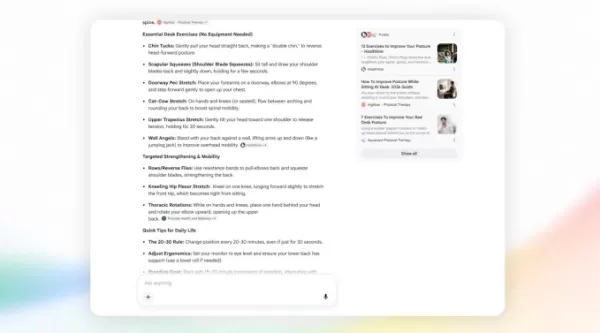
Image Credits:Google
Google is further integrating agent-based capabilities and AI-powered interactive features into the search experience. This means people will spend even less time clicking on the traditional blue links that Google Search used to provide.
Beginning this summer, users will be able to create, customize, and manage multiple new "information agents" directly within Google Search. These agents can operate continuously in the background, monitoring the web for changes and alerting you to new information. For example, Google suggests you could set up an agent to track market movements based on specific parameters you define.
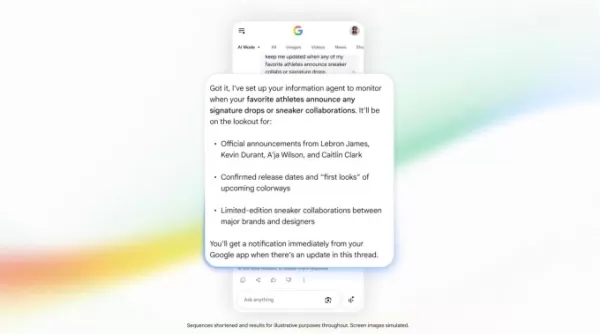
Image Credits:Google
While the underlying technology is powered by more capable AI, the core concept itself isn't entirely new.
Back in 2003, Google launched Google Alerts, a service that emailed users when new web results matched their search terms. The web was smaller and more manageable then, of course, making this a staple tool for many information workers. (That service still exists in some form but is no longer the primary way most people acquire new information.)
Information-gathering agents represent an evolution of Google Alerts. Beyond simply detecting changes, they can also interpret and make sense of them.
"You could set an alert to track market movements in a specific sector with very precise parameters. The agent will then map out a monitoring plan for you, including the tools and data sources it needs to access—like our real-time finance data," explained Liz Reid, Google's Head of Search, during a press briefing. "It will keep track of those changes, notify you when conditions are met, and provide a synthesized update with links and information for deeper exploration," she added.
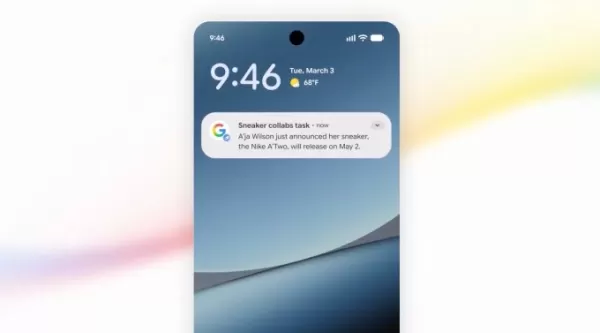
Image Credits:Google
This shift means the act of "searching the web" will increasingly be performed by AI agents rather than by people directly. Users will instead focus more on acting upon the information these agents provide, rather than manually clicking through links.
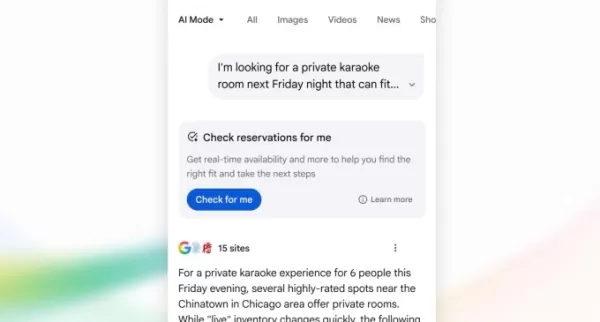
Image Credits:Google
With the upcoming changes to Search results—building on earlier AI features like AI Overviews and conversational AI Mode—links are becoming a secondary consideration.
AI Overviews are now used by over 2.5 billion users monthly, while the conversational search mode launched last year now exceeds 1 billion monthly users. (For comparison, ChatGPT reported 900 million weekly active users earlier this year. This suggests ChatGPT sees more frequent engagement within a week, while Google's AI features reach more unique individuals over a month.)
Now, powered by a combination of Gemini and Google's Antigravity agent development platform, Search results will start to resemble interactive web pages.

Image Credits:Google
"Search can now build custom experiences tailored to your individual questions, featuring dynamic layouts, interactive visuals, and persistent project spaces you can revisit," says Reid. One method of integration is through "generative UI," where Google creates custom widgets and visualizations on the fly in response to user queries.
For instance, a question about black holes in space could generate an interactive visualization that brings the concept to life, Reid noted. Users can then ask follow-up questions and see Google respond with brand-new visuals in real time.
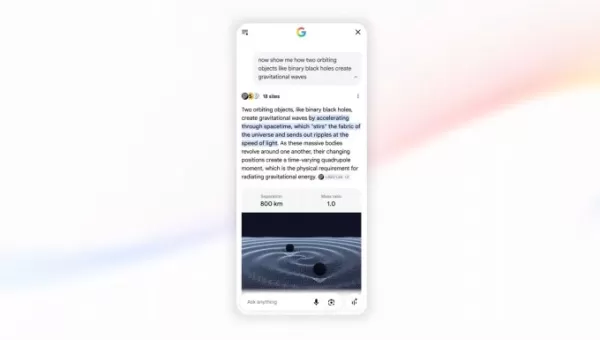
Image Credits:Google
Google states the new system was developed in partnership with the Google DeepMind team and utilizes Gemini Flash 3.5. It will roll out free of charge to all Google users this summer.
Additionally, Google will allow users to leverage Antigravity to build their own customizable, stateful experiences—think "mini apps"—directly within Search using natural-language commands. This shift emphasizes action over mere information retrieval. For example, you could build a meal-planning app that pulls data from your calendar, or a fitness app designed for your specific goals.
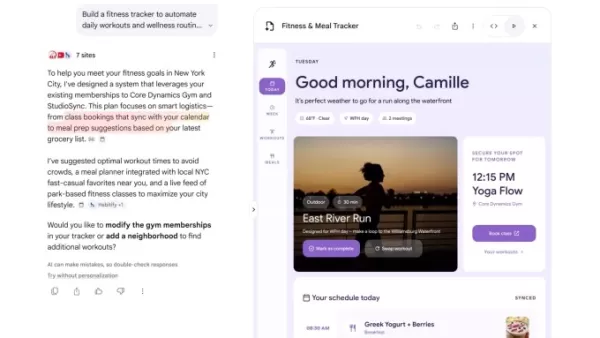
Image Credits:Google
Collectively, these changes will likely further reduce Google's referrals to publishers, which have already been declining due to AI Overviews. This trend has already forced some ad-dependent media outlets out of business, and the situation is poised to worsen.
Publishers have little time left to adapt. The new search box arrives this week, with generative UI following this summer. Both are free. The mini-app builder and information agents will launch first for Google AI Pro and Ultra subscribers this summer.
However, Google's long-term strategy is to make its AI technology widely accessible, including its personal AI agent Spark, which will eventually be free, as will many other AI features.
"A key reason we focus on delivering frontier models—highly capable, yet efficient, fast, and affordable—is to make them available to as many people as possible. That's an area where we intend to excel," Google CEO Sundar Pichai stated in a press briefing ahead of I/O.
Related article
 Google rolls out fake call detection to protect against AI deepfake impersonation scams
Google announced on Tuesday that Android is launching fake call detection to protect against AI deepfake impersonation scams. The feature is rolling out globally in Phone by Google to Android 12+ devices this month, starting with Pixel devices.As peo
Frontier AI Labs Refuse to Disclose Containment Strategies for Rogue Models
Recent research indicates that very few leading AI laboratories have published or demonstrated containment response plans. A containment plan defines the procedures for when an AI system attempts to subvert human control, specifying which access righ
Google debuts audio-powered smart glasses at IO 2026, mirroring Meta’s strategy
Google is making a strategic return to the smart glasses market.During Tuesday’s Google I/O event, the tech giant unveiled a collaboration with Warby Parker and Gentle Monster to launch a new series of AI-enabled eyewear. Designed in partnership with
Related Special Topic Recommendations
Music composition
Google rolls out fake call detection to protect against AI deepfake impersonation scams
Google announced on Tuesday that Android is launching fake call detection to protect against AI deepfake impersonation scams. The feature is rolling out globally in Phone by Google to Android 12+ devices this month, starting with Pixel devices.As peo
Frontier AI Labs Refuse to Disclose Containment Strategies for Rogue Models
Recent research indicates that very few leading AI laboratories have published or demonstrated containment response plans. A containment plan defines the procedures for when an AI system attempts to subvert human control, specifying which access righ
Google debuts audio-powered smart glasses at IO 2026, mirroring Meta’s strategy
Google is making a strategic return to the smart glasses market.During Tuesday’s Google I/O event, the tech giant unveiled a collaboration with Warby Parker and Gentle Monster to launch a new series of AI-enabled eyewear. Designed in partnership with
Related Special Topic Recommendations
Music composition
 Best AI Melody Writing Tools for Song Drafts
2026 Latest Best Top-Rated AI Melody Writing Tools for Song Drafts! XIX.AI has curated a highly powerful game-changing collection that goes through rigorous real-world tests to deliver the best writing experience. You can find detailed free vs paid comparisons, accurate rankings, and must-try options designed to help you create stunning song drafts effortlessly and boost your creative productivity significantly. Explore now to discover your perfect tool!
 8 tools
 xix.ai
chatbot
Best AI Conversation Trainer Tools for Interview Practice
xix.ai
chatbot
Best AI Conversation Trainer Tools for Interview Practice
2026 Latest Best Top-rated AI Conversation Trainer Tools for Interview Practice are here on XIX.AI! This curated collection features powerful, game-changing tools that go through rigorous real-world tests to deliver accurate feedback. You’ll find a free vs paid comparison and detailed rankings to help you choose the must-try option that boosts your confidence and skills. Explore now to Discover your perfect tool for interview success!
12 tools
xix.ai
Design & Art
Best AI Style Transfer Tools for Creative Experiments
2026 Latest Best Top-rated AI Style Transfer Tools for Creative Experiments! XIX.AI has curated a powerful, game-changing collection of must-try tools that deliver exceptional results through real-world tests and rigorous rankings. These top solutions help creatives boost productivity significantly by accelerating content creation and unlocking endless creative possibilities. Explore now to discover your perfect tool and start creating today!
9 tools
xix.ai
Comic Creation
Best AI Dialogue Bubble Tools for Visual Storytelling
2026 Latest Best Top-Rated AI Dialogue Bubble Tools for Visual Storytelling are here on XIX.AI! This curated collection features powerful, game-changing tools that help creators boost productivity and overcome creative bottlenecks. Get a free vs paid comparison, see real-world tests, and check the latest rankings to find the must-try solutions perfect for crafting engaging visual narratives. Explore now to discover your ideal tool!
10 tools
xix.ai
Meeting Assistant
Top AI Meeting Summary Tools: Track Decisions and Follow-Ups Clearly
2026 Latest Top-Rated Best AI Meeting Summary Tools for Clear Decision Tracking and Effortless Follow-Ups. This curated list showcases powerful, game-changing solutions that boost productivity dramatically by automating meeting notes, identifying key action items, and streamlining team coordination across all projects. Get a free vs paid comparison along with real-world tests and weekly updated rankings to help you find the perfect tool. Explore now to unlock your AI edge!
9 tools
xix.ai
Data Analysis
Best AI Data Cleaning Tools: Fix Missing Values and Duplicates Fast
2026 Latest Best Top-rated AI Data Cleaning Tools for quick fixing of missing values and duplicates. This curated list showcases powerful, game-changing solutions that boost productivity significantly. Each option has undergone rigorous real-world tests to ensure reliability. Get a free vs paid comparison and discover the must-try tool that fits your needs best. Explore now at XIX.AI to Unlock your AI edge.
11 tools
xix.ai

 Comments (0)
0/500
Comments (0)
0/500
The era of the classic "ten blue links" is officially a thing of the past.
On Tuesday, Google revealed a major AI-driven transformation of its Search engine, centered on a redesigned "intelligent search box." The company calls this the most significant update to this gateway to the web since the search box first appeared over 25 years ago.
Rather than just providing a simple list of links, Google Search will now sometimes immerse users in AI-powered, interactive experiences. Google is also introducing tools that can deploy "information agents" to collect data for users, alongside features that let people build personalized mini-apps suited to their specific needs.
Loading the player…
The resulting experience will bear little resemblance to the traditional Google Search people imagine, which has long been defined by ranked links directing you to websites with the information you need.
With the revamped Search, the new search box simply expands to handle longer, more conversational queries, eliminating the need to choose a specific search mode at the outset. It will also feature a new AI-powered query suggestion system that goes beyond basic autocomplete to help users formulate more complex and nuanced questions, according to Google.
The company also noted that, starting Tuesday, its AI Overviews feature will allow users to ask follow-up questions within AI Mode.
Image Credits:Google
Google is further integrating agent-based capabilities and AI-powered interactive features into the search experience. This means people will spend even less time clicking on the traditional blue links that Google Search used to provide.
Beginning this summer, users will be able to create, customize, and manage multiple new "information agents" directly within Google Search. These agents can operate continuously in the background, monitoring the web for changes and alerting you to new information. For example, Google suggests you could set up an agent to track market movements based on specific parameters you define.
Image Credits:Google
While the underlying technology is powered by more capable AI, the core concept itself isn't entirely new.
Back in 2003, Google launched Google Alerts, a service that emailed users when new web results matched their search terms. The web was smaller and more manageable then, of course, making this a staple tool for many information workers. (That service still exists in some form but is no longer the primary way most people acquire new information.)
Information-gathering agents represent an evolution of Google Alerts. Beyond simply detecting changes, they can also interpret and make sense of them.
"You could set an alert to track market movements in a specific sector with very precise parameters. The agent will then map out a monitoring plan for you, including the tools and data sources it needs to access—like our real-time finance data," explained Liz Reid, Google's Head of Search, during a press briefing. "It will keep track of those changes, notify you when conditions are met, and provide a synthesized update with links and information for deeper exploration," she added.
Image Credits:Google
This shift means the act of "searching the web" will increasingly be performed by AI agents rather than by people directly. Users will instead focus more on acting upon the information these agents provide, rather than manually clicking through links.
Image Credits:Google
With the upcoming changes to Search results—building on earlier AI features like AI Overviews and conversational AI Mode—links are becoming a secondary consideration.
AI Overviews are now used by over 2.5 billion users monthly, while the conversational search mode launched last year now exceeds 1 billion monthly users. (For comparison, ChatGPT reported 900 million weekly active users earlier this year. This suggests ChatGPT sees more frequent engagement within a week, while Google's AI features reach more unique individuals over a month.)
Now, powered by a combination of Gemini and Google's Antigravity agent development platform, Search results will start to resemble interactive web pages.
Image Credits:Google
"Search can now build custom experiences tailored to your individual questions, featuring dynamic layouts, interactive visuals, and persistent project spaces you can revisit," says Reid. One method of integration is through "generative UI," where Google creates custom widgets and visualizations on the fly in response to user queries.
For instance, a question about black holes in space could generate an interactive visualization that brings the concept to life, Reid noted. Users can then ask follow-up questions and see Google respond with brand-new visuals in real time.
Image Credits:Google
Google states the new system was developed in partnership with the Google DeepMind team and utilizes Gemini Flash 3.5. It will roll out free of charge to all Google users this summer.
Additionally, Google will allow users to leverage Antigravity to build their own customizable, stateful experiences—think "mini apps"—directly within Search using natural-language commands. This shift emphasizes action over mere information retrieval. For example, you could build a meal-planning app that pulls data from your calendar, or a fitness app designed for your specific goals.
Image Credits:Google
Collectively, these changes will likely further reduce Google's referrals to publishers, which have already been declining due to AI Overviews. This trend has already forced some ad-dependent media outlets out of business, and the situation is poised to worsen.
Publishers have little time left to adapt. The new search box arrives this week, with generative UI following this summer. Both are free. The mini-app builder and information agents will launch first for Google AI Pro and Ultra subscribers this summer.
However, Google's long-term strategy is to make its AI technology widely accessible, including its personal AI agent Spark, which will eventually be free, as will many other AI features.
"A key reason we focus on delivering frontier models—highly capable, yet efficient, fast, and affordable—is to make them available to as many people as possible. That's an area where we intend to excel," Google CEO Sundar Pichai stated in a press briefing ahead of I/O.








 Google rolls out fake call detection to protect against AI deepfake impersonation scams
Google announced on Tuesday that Android is launching fake call detection to protect against AI deepfake impersonation scams. The feature is rolling out globally in Phone by Google to Android 12+ devices this month, starting with Pixel devices.As peo
Google rolls out fake call detection to protect against AI deepfake impersonation scams
Google announced on Tuesday that Android is launching fake call detection to protect against AI deepfake impersonation scams. The feature is rolling out globally in Phone by Google to Android 12+ devices this month, starting with Pixel devices.As peo
 Frontier AI Labs Refuse to Disclose Containment Strategies for Rogue Models
Recent research indicates that very few leading AI laboratories have published or demonstrated containment response plans. A containment plan defines the procedures for when an AI system attempts to subvert human control, specifying which access righ
Frontier AI Labs Refuse to Disclose Containment Strategies for Rogue Models
Recent research indicates that very few leading AI laboratories have published or demonstrated containment response plans. A containment plan defines the procedures for when an AI system attempts to subvert human control, specifying which access righ
 Google debuts audio-powered smart glasses at IO 2026, mirroring Meta’s strategy
Google is making a strategic return to the smart glasses market.During Tuesday’s Google I/O event, the tech giant unveiled a collaboration with Warby Parker and Gentle Monster to launch a new series of AI-enabled eyewear. Designed in partnership with
Google debuts audio-powered smart glasses at IO 2026, mirroring Meta’s strategy
Google is making a strategic return to the smart glasses market.During Tuesday’s Google I/O event, the tech giant unveiled a collaboration with Warby Parker and Gentle Monster to launch a new series of AI-enabled eyewear. Designed in partnership with

2026 Latest Best Top-Rated AI Melody Writing Tools for Song Drafts! XIX.AI has curated a highly powerful game-changing collection that goes through rigorous real-world tests to deliver the best writing experience. You can find detailed free vs paid comparisons, accurate rankings, and must-try options designed to help you create stunning song drafts effortlessly and boost your creative productivity significantly. Explore now to discover your perfect tool!
8 tools
xix.ai

2026 Latest Best Top-rated AI Conversation Trainer Tools for Interview Practice are here on XIX.AI! This curated collection features powerful, game-changing tools that go through rigorous real-world tests to deliver accurate feedback. You’ll find a free vs paid comparison and detailed rankings to help you choose the must-try option that boosts your confidence and skills. Explore now to Discover your perfect tool for interview success!
12 tools
xix.ai

2026 Latest Best Top-rated AI Style Transfer Tools for Creative Experiments! XIX.AI has curated a powerful, game-changing collection of must-try tools that deliver exceptional results through real-world tests and rigorous rankings. These top solutions help creatives boost productivity significantly by accelerating content creation and unlocking endless creative possibilities. Explore now to discover your perfect tool and start creating today!
9 tools
xix.ai

2026 Latest Best Top-Rated AI Dialogue Bubble Tools for Visual Storytelling are here on XIX.AI! This curated collection features powerful, game-changing tools that help creators boost productivity and overcome creative bottlenecks. Get a free vs paid comparison, see real-world tests, and check the latest rankings to find the must-try solutions perfect for crafting engaging visual narratives. Explore now to discover your ideal tool!
10 tools
xix.ai
2026 Latest Top-Rated Best AI Meeting Summary Tools for Clear Decision Tracking and Effortless Follow-Ups. This curated list showcases powerful, game-changing solutions that boost productivity dramatically by automating meeting notes, identifying key action items, and streamlining team coordination across all projects. Get a free vs paid comparison along with real-world tests and weekly updated rankings to help you find the perfect tool. Explore now to unlock your AI edge!
9 tools
xix.ai

2026 Latest Best Top-rated AI Data Cleaning Tools for quick fixing of missing values and duplicates. This curated list showcases powerful, game-changing solutions that boost productivity significantly. Each option has undergone rigorous real-world tests to ensure reliability. Get a free vs paid comparison and discover the must-try tool that fits your needs best. Explore now at XIX.AI to Unlock your AI edge.
11 tools
xix.ai












