


 Home
HomeGoogle Cloud unveils two AI chips to rival Nvidia
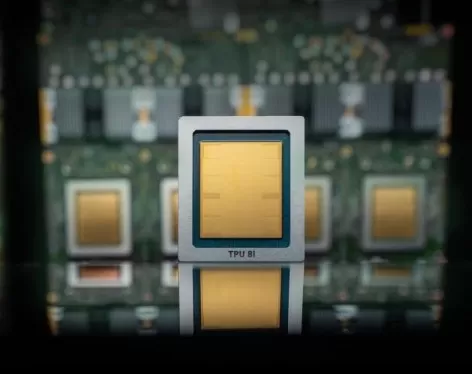
On Wednesday, Google Cloud announced that its eighth generation of custom AI chips, known as tensor processing units (TPUs), would be divided into two types. One chip, the TPU 8t, is designed for model training, while the other, the TPU 8i, targets inference.
Inference refers to the ongoing use of models—essentially what happens after users submit prompts.
Unsurprisingly, Google touts impressive performance improvements for these new TPUs compared to earlier generations: up to 3 times faster AI model training, 80% better performance per dollar, and the ability to connect over one million TPUs in a single cluster. The result should be significantly more computing power with much less energy—and lower costs for customers—than previous versions. These chips are called TPUs rather than GPUs because Google's custom low-power chips were originally named Tensor.
However, Google’s chips are not a full-scale challenge to Nvidia’s future, at least not yet. Like other major cloud providers such as Microsoft and Amazon, Google uses these chips to complement, not completely replace, the Nvidia-based systems it offers in its infrastructure. In fact, Google promises that its cloud will feature Nvidia’s latest chip, Vera Rubin, later this year.
At some point, the hyperscalers building their own AI chips—including Amazon, Microsoft, and Google—may rely less on Nvidia as enterprises migrate their AI workloads to their clouds and adapt their applications to these chips.
Still, betting against Nvidia today is not a profitable strategy. As notable chip market analyst Patrick Moore joked on X, he predicted back in 2016 that Google’s TPU could spell trouble for Nvidia (and Intel) when the search giant launched its first TPU. Nvidia now has a market cap of nearly $5 trillion, meaning that prediction hasn’t exactly stood the test of time.
If Nvidia’s plan holds, Google’s growth as an AI cloud provider could actually generate more business for the chip maker, not less—even if many workloads run on Google’s own chips.
In fact, Google also announced that it has agreed to work with Nvidia on designing computer networking to make Nvidia-based systems even more efficient in its cloud. Specifically, the two tech giants are collaborating to enhance the software-based networking technology called Falcon, which Google created and open-sourced in 2023 under the Open Compute Project, the umbrella organization for open source data center hardware.
Related article
 How Recursive Intelligence Raised $335M at $4B Valuation in 4 Months
The co-founders of startup Ricursive Intelligence seemed destined to be co-founders.Anna Goldie, CEO, and Azalia Mirhoseini, CTO, are so well-known in the AI community that they were among those AI engineers who “got those weird emails from Zuckerber
Google AI Overviews Gain Ground in Search Results
According to Similarweb’s 2026 Generative AI Landscape report, Google’s AI-generated summaries appeared in 43% of US searches, a significant rise from 15% recorded a year prior.While AI Overviews present generated summaries within standard search res
Nvidia H200 China deal survives Trump-Xi summit, but not as expected
President Trump traveled to Beijing with Jensen Huang joining the delegation at the eleventh hour, departing two days later with vague remarks about potential chip export developments. No deal materialized. Since Trump first authorized sales in Decem
Related Special Topic Recommendations
Design & Art
How Recursive Intelligence Raised $335M at $4B Valuation in 4 Months
The co-founders of startup Ricursive Intelligence seemed destined to be co-founders.Anna Goldie, CEO, and Azalia Mirhoseini, CTO, are so well-known in the AI community that they were among those AI engineers who “got those weird emails from Zuckerber
Google AI Overviews Gain Ground in Search Results
According to Similarweb’s 2026 Generative AI Landscape report, Google’s AI-generated summaries appeared in 43% of US searches, a significant rise from 15% recorded a year prior.While AI Overviews present generated summaries within standard search res
Nvidia H200 China deal survives Trump-Xi summit, but not as expected
President Trump traveled to Beijing with Jensen Huang joining the delegation at the eleventh hour, departing two days later with vague remarks about potential chip export developments. No deal materialized. Since Trump first authorized sales in Decem
Related Special Topic Recommendations
Design & Art
 Top AI Illustration Tools: Create Editorial Scenes and Cover Art Faster
2026 Latest Top-rated AI Illustration Tools: Our curated list features the best powerfully designed tools for creating stunning editorial scenes and eye-catching cover art quickly. Each option has gone through rigorous real-world tests, offering a free vs paid comparison to help you find the perfect match for your workflow. Try these must-try solutions today to unlock your AI edge and boost your creative productivity. Explore now at XIX.AI.
 10 tools
 xix.ai
Education and Learning
Top AI Tutors for Exam Prep: Practice Math, Science, and English
xix.ai
Education and Learning
Top AI Tutors for Exam Prep: Practice Math, Science, and English
2026 Latest Top-Rated Best AI Tutors for Exam Prep are here on XIX.AI! Our curated list features powerful game-changing tools that offer free vs paid comparison, real-world tests, and weekly updated rankings. They help boost your writing efficiency, simplify complex topic learning, and unlock your academic potential. Explore now to Discover your perfect exam prep tool and Start creating today to Unlock your AI edge!
10 tools
xix.ai
Finance
AI Budget Planning Tools for Personal Money Management
2026 Latest Best Top-Rated AI Budget Planning Tools for Personal Money Management are here on XIX.AI! This curated collection features powerful, game-changing solutions that help you conduct real-world tests, understand spending habits, and create personalized plans to boost productivity. Enjoy a free vs paid comparison along with detailed rankings. Must-try tools designed to simplify money management and unlock your AI edge. Explore now!
11 tools
xix.ai
Health & Wellness
AI Sleep Tracking Assistants: Improve Recovery with Better Bedtime Habits
2026 Latest Best Top-Rated AI Sleep Tracking Assistants curated for ultimate recovery. This fully updated weekly guide features powerful tools that deliver real-world tests, free vs paid comparison, and detailed rankings to help you find the must-try solution that boosts sleep quality and supports better bedtime habits. Explore now at XIX.AI to Unlock your AI edge.
10 tools
xix.ai
Data Analysis
AI SQL Copilots for Product and Revenue Analytics
2026 Latest Best Top-Rated AI SQL Copilots for Product and Revenue Analytics! XIX.AI has curated a powerful, game-changing collection of must-try tools that undergo real-world tests through weekly updated rankings. These tools help users boost productivity significantly by accelerating data analysis, streamlining complex queries, and generating accurate insights to drive smarter business decisions. Explore now to Discover your perfect tool for unlocking your AI edge!
14 tools
xix.ai
Education and Learning
Best AI Homework Helpers That Teach: Learn Concepts, Not Just Answers
2026 Latest Best Top-Rated AI Homework Helpers That Teach Core Concepts Not Just Answers Powerful Tools for Students Must-Try Curated List Weekly Updated Free vs Paid Comparison Real-World Tests Accurate Rankings to Help You Unlock Your Full Learning Potential Explore now to Discover your perfect tool for smarter studying.
10 tools
xix.ai

 Comments (0)
0/500
Comments (0)
0/500
On Wednesday, Google Cloud announced that its eighth generation of custom AI chips, known as tensor processing units (TPUs), would be divided into two types. One chip, the TPU 8t, is designed for model training, while the other, the TPU 8i, targets inference.
Inference refers to the ongoing use of models—essentially what happens after users submit prompts.
Unsurprisingly, Google touts impressive performance improvements for these new TPUs compared to earlier generations: up to 3 times faster AI model training, 80% better performance per dollar, and the ability to connect over one million TPUs in a single cluster. The result should be significantly more computing power with much less energy—and lower costs for customers—than previous versions. These chips are called TPUs rather than GPUs because Google's custom low-power chips were originally named Tensor.
However, Google’s chips are not a full-scale challenge to Nvidia’s future, at least not yet. Like other major cloud providers such as Microsoft and Amazon, Google uses these chips to complement, not completely replace, the Nvidia-based systems it offers in its infrastructure. In fact, Google promises that its cloud will feature Nvidia’s latest chip, Vera Rubin, later this year.
At some point, the hyperscalers building their own AI chips—including Amazon, Microsoft, and Google—may rely less on Nvidia as enterprises migrate their AI workloads to their clouds and adapt their applications to these chips.
Still, betting against Nvidia today is not a profitable strategy. As notable chip market analyst Patrick Moore joked on X, he predicted back in 2016 that Google’s TPU could spell trouble for Nvidia (and Intel) when the search giant launched its first TPU. Nvidia now has a market cap of nearly $5 trillion, meaning that prediction hasn’t exactly stood the test of time.
If Nvidia’s plan holds, Google’s growth as an AI cloud provider could actually generate more business for the chip maker, not less—even if many workloads run on Google’s own chips.
In fact, Google also announced that it has agreed to work with Nvidia on designing computer networking to make Nvidia-based systems even more efficient in its cloud. Specifically, the two tech giants are collaborating to enhance the software-based networking technology called Falcon, which Google created and open-sourced in 2023 under the Open Compute Project, the umbrella organization for open source data center hardware.








 How Recursive Intelligence Raised $335M at $4B Valuation in 4 Months
The co-founders of startup Ricursive Intelligence seemed destined to be co-founders.Anna Goldie, CEO, and Azalia Mirhoseini, CTO, are so well-known in the AI community that they were among those AI engineers who “got those weird emails from Zuckerber
How Recursive Intelligence Raised $335M at $4B Valuation in 4 Months
The co-founders of startup Ricursive Intelligence seemed destined to be co-founders.Anna Goldie, CEO, and Azalia Mirhoseini, CTO, are so well-known in the AI community that they were among those AI engineers who “got those weird emails from Zuckerber
 Google AI Overviews Gain Ground in Search Results
According to Similarweb’s 2026 Generative AI Landscape report, Google’s AI-generated summaries appeared in 43% of US searches, a significant rise from 15% recorded a year prior.While AI Overviews present generated summaries within standard search res
Google AI Overviews Gain Ground in Search Results
According to Similarweb’s 2026 Generative AI Landscape report, Google’s AI-generated summaries appeared in 43% of US searches, a significant rise from 15% recorded a year prior.While AI Overviews present generated summaries within standard search res
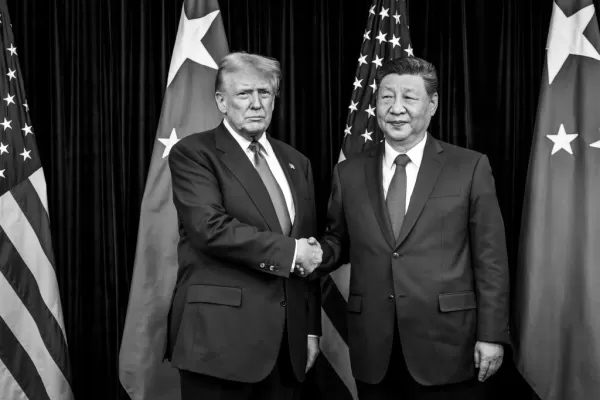 Nvidia H200 China deal survives Trump-Xi summit, but not as expected
President Trump traveled to Beijing with Jensen Huang joining the delegation at the eleventh hour, departing two days later with vague remarks about potential chip export developments. No deal materialized. Since Trump first authorized sales in Decem
Nvidia H200 China deal survives Trump-Xi summit, but not as expected
President Trump traveled to Beijing with Jensen Huang joining the delegation at the eleventh hour, departing two days later with vague remarks about potential chip export developments. No deal materialized. Since Trump first authorized sales in Decem

2026 Latest Top-rated AI Illustration Tools: Our curated list features the best powerfully designed tools for creating stunning editorial scenes and eye-catching cover art quickly. Each option has gone through rigorous real-world tests, offering a free vs paid comparison to help you find the perfect match for your workflow. Try these must-try solutions today to unlock your AI edge and boost your creative productivity. Explore now at XIX.AI.
10 tools
xix.ai

2026 Latest Top-Rated Best AI Tutors for Exam Prep are here on XIX.AI! Our curated list features powerful game-changing tools that offer free vs paid comparison, real-world tests, and weekly updated rankings. They help boost your writing efficiency, simplify complex topic learning, and unlock your academic potential. Explore now to Discover your perfect exam prep tool and Start creating today to Unlock your AI edge!
10 tools
xix.ai

2026 Latest Best Top-Rated AI Budget Planning Tools for Personal Money Management are here on XIX.AI! This curated collection features powerful, game-changing solutions that help you conduct real-world tests, understand spending habits, and create personalized plans to boost productivity. Enjoy a free vs paid comparison along with detailed rankings. Must-try tools designed to simplify money management and unlock your AI edge. Explore now!
11 tools
xix.ai

2026 Latest Best Top-Rated AI Sleep Tracking Assistants curated for ultimate recovery. This fully updated weekly guide features powerful tools that deliver real-world tests, free vs paid comparison, and detailed rankings to help you find the must-try solution that boosts sleep quality and supports better bedtime habits. Explore now at XIX.AI to Unlock your AI edge.
10 tools
xix.ai

2026 Latest Best Top-Rated AI SQL Copilots for Product and Revenue Analytics! XIX.AI has curated a powerful, game-changing collection of must-try tools that undergo real-world tests through weekly updated rankings. These tools help users boost productivity significantly by accelerating data analysis, streamlining complex queries, and generating accurate insights to drive smarter business decisions. Explore now to Discover your perfect tool for unlocking your AI edge!
14 tools
xix.ai

2026 Latest Best Top-Rated AI Homework Helpers That Teach Core Concepts Not Just Answers Powerful Tools for Students Must-Try Curated List Weekly Updated Free vs Paid Comparison Real-World Tests Accurate Rankings to Help You Unlock Your Full Learning Potential Explore now to Discover your perfect tool for smarter studying.
10 tools
xix.ai












