


 Home
Home
Broadcom predicts Anthropic and OpenAI will surpass Google as top AI custom chip customers

During the third quarter of fiscal year 2026, Broadcom President Chen Fuyang delivered a pivotal forecast on the earnings call, noting that intensifying competition among major AI model developers is reshaping Broadcom’s core customer base. He projected that Anthropic and OpenAI will soon surpass Google to become the top two clients in Broadcom’s AI-specific ASIC division. By 2027–2028, Anthropic is poised to take the lead as Broadcom’s largest XPU custom chip customer, with OpenAI rapidly closing the gap as the second-largest.
Broadcom’s AI semiconductor segment demonstrated robust momentum in the recent third quarter, generating $16.7 billion in revenue. This figure reflects a staggering 221% year-over-year increase and a 54% quarter-over-quarter jump. On the delivery front, Broadcom has supplied TPU v7 chips to both Anthropic and Google, along with TPU v8i for Google. Additionally, the company has officially commenced deliveries of its custom “Jalapeño” chip to OpenAI.
Looking ahead to the fourth quarter, Broadcom anticipates further acceleration in operations. Key milestones include expediting TPU v7 deliveries to Anthropic, ramping up production of Google’s TPU v8i, and initiating shipments of the MTIA series accelerators to Meta. Driven by these factors, Broadcom forecasts Q4 AI revenue to climb to $21.7 billion, marking a 236% year-over-year increase. For the full fiscal year 2026, total AI revenue is projected to reach $58 billion, up 186% from the previous year.
Capacity deployment plans are accelerating across the industry. Broadcom and Anthropic intend to deploy 1 GW of TPU v7 in 2026, scaling up to 5 GW of TPU v8i in 2027, and adding another 10 GW in 2028. Meanwhile, OpenAI plans to deploy 1.3 GW of the “Jalapeño” chip in 2027, expanding total deployment to over 5 GW by 2028 (encompassing Jalapeño and its subsequent upgrades). Both companies are also making steady progress on third-generation XPU development. Furthermore, Broadcom aims to deliver three generations of MTIA accelerators to Meta by late 2027, with cumulative deployment expected to hit 3 GW by the end of 2028.
Backed by strong order backlogs and clear capacity strategies, Broadcom remains optimistic about its future market trajectory. The company projects AI semiconductor revenue to surge to approximately $115 billion in 2027 and reach $230 billion by 2028, driven by continuous doubling growth and a well-prepared upstream supply chain.
Related article
 OpenAI Launches GPT-5.6-Cyber, Boosting Zero-Day Detection with AI Automation
OpenAI has expanded its Daybreak cybersecurity initiative, introducing a two-tier access system and launching GPT-5.6-Cyber, a model purpose-built for security operations. This move addresses the growing reality that threat actors are leveraging AI t
DeepSeek Gray Test Image Recognition Mode Achieves Multimodal Image Understanding
DeepSeek has launched a beta testing phase for its latest "Image Recognition Mode." Positioned alongside "Quick Mode" and "Expert Mode," this feature goes beyond basic OCR text extraction, offering advanced multimodal analysis. Users can now upload i
China Unveils First Financial Sector Standard for Intelligent Agent Security
Automated interactions with financial applications are strictly prohibited unless explicitly authorized by the respective financial institutions.On August 27, the Beijing Financial Technology Industry Alliance published the "Security Requirements for
Related Special Topic Recommendations
Prompt
OpenAI Launches GPT-5.6-Cyber, Boosting Zero-Day Detection with AI Automation
OpenAI has expanded its Daybreak cybersecurity initiative, introducing a two-tier access system and launching GPT-5.6-Cyber, a model purpose-built for security operations. This move addresses the growing reality that threat actors are leveraging AI t
DeepSeek Gray Test Image Recognition Mode Achieves Multimodal Image Understanding
DeepSeek has launched a beta testing phase for its latest "Image Recognition Mode." Positioned alongside "Quick Mode" and "Expert Mode," this feature goes beyond basic OCR text extraction, offering advanced multimodal analysis. Users can now upload i
China Unveils First Financial Sector Standard for Intelligent Agent Security
Automated interactions with financial applications are strictly prohibited unless explicitly authorized by the respective financial institutions.On August 27, the Beijing Financial Technology Industry Alliance published the "Security Requirements for
Related Special Topic Recommendations
Prompt
 AI Prompt Versioning Platforms for Reusable Claude and ChatGPT Playbooks
2026 Latest Best Top-rated AI Prompt Versioning Platforms for Reusable Playbooks are here on XIX.AI! Our curated list includes powerful game-changing tools that help you keep track of all prompts, test variations efficiently, and boost productivity across writing, content creation, and more. Get a free vs paid comparison along with real-world tests and updated rankings weekly. Explore now to discover your perfect tool for staying ahead in AI tasks!
 9 tools
 xix.ai
writing
Best AI Writing Assistants for Long Articles: Outline and Draft Faster
xix.ai
writing
Best AI Writing Assistants for Long Articles: Outline and Draft Faster
2026 Latest Best AI Writing Assistants for Long Articles: Outline and Draft Faster. XIX.AI curates the top-rated, must-try tools that offer powerful, game-changing support to boost writing efficiency significantly. You’ll find detailed free vs paid comparison, real-world tests, and updated rankings weekly. Explore now to Discover your perfect tool and Start creating today to Unlock your AI edge.
8 tools
xix.ai
Education and Learning
ChatGPT Study Tools for Exam Revision, Flashcards, and Homework Explanations
2026 Latest Best ChatGPT Study Tools for Exam Revision, Flashcards, and Homework Explanations! XIX.AI has curated a top-rated list of powerful game-changing tools designed to boost your productivity. These must-try solutions offer free vs paid comparison, real-world tests, and detailed rankings to help you find the perfect option for efficient exam preparation and homework support. Explore now to unlock your AI edge!
10 tools
xix.ai
Education and Learning
AI Study Planner Tools for Exam Preparation
2026 Latest Best Top-Rated AI Study Planner Tools for Exam Preparation are here on XIX.AI! This curated collection features powerful, game-changing tools that help you streamline your review process, boost focus, and create personalized study schedules. We conduct real-world tests to determine the top options, offering a free vs paid comparison along with weekly updated rankings. Must-try solutions designed to maximize your productivity and help you ace every exam. Explore now to find your perfect tool!
14 tools
xix.ai
SEO
Best AI Keyword Gap Tools for Organic Growth
2026 Latest Best Top-rated AI Keyword Gap Tools for Organic Growth! XIX.AI has carefully curated a powerful, game-changing collection of the best tools available, featuring weekly updated rankings and real-world tests. You can find a detailed free vs paid comparison to help you choose the perfect option that boosts your content creation efficiency and unlocks your AI edge. Explore now!
8 tools
xix.ai
SEO
AI Internal Link Tools for Better Site Structure
2026 Latest Best Top-Rated AI Internal Link Tools for Better Site Structure are here on XIX.AI! This curated collection features powerful, game-changing solutions that go through real-world tests to deliver superior results. Get a free vs paid comparison, see rankings, and discover must-try options to boost your site’s SEO performance and streamline content organization. Explore now to unlock your AI edge!
11 tools
xix.ai

 Comments (0)
0/500
Comments (0)
0/500
During the third quarter of fiscal year 2026, Broadcom President Chen Fuyang delivered a pivotal forecast on the earnings call, noting that intensifying competition among major AI model developers is reshaping Broadcom’s core customer base. He projected that Anthropic and OpenAI will soon surpass Google to become the top two clients in Broadcom’s AI-specific ASIC division. By 2027–2028, Anthropic is poised to take the lead as Broadcom’s largest XPU custom chip customer, with OpenAI rapidly closing the gap as the second-largest.
Broadcom’s AI semiconductor segment demonstrated robust momentum in the recent third quarter, generating $16.7 billion in revenue. This figure reflects a staggering 221% year-over-year increase and a 54% quarter-over-quarter jump. On the delivery front, Broadcom has supplied TPU v7 chips to both Anthropic and Google, along with TPU v8i for Google. Additionally, the company has officially commenced deliveries of its custom “Jalapeño” chip to OpenAI.
Looking ahead to the fourth quarter, Broadcom anticipates further acceleration in operations. Key milestones include expediting TPU v7 deliveries to Anthropic, ramping up production of Google’s TPU v8i, and initiating shipments of the MTIA series accelerators to Meta. Driven by these factors, Broadcom forecasts Q4 AI revenue to climb to $21.7 billion, marking a 236% year-over-year increase. For the full fiscal year 2026, total AI revenue is projected to reach $58 billion, up 186% from the previous year.
Capacity deployment plans are accelerating across the industry. Broadcom and Anthropic intend to deploy 1 GW of TPU v7 in 2026, scaling up to 5 GW of TPU v8i in 2027, and adding another 10 GW in 2028. Meanwhile, OpenAI plans to deploy 1.3 GW of the “Jalapeño” chip in 2027, expanding total deployment to over 5 GW by 2028 (encompassing Jalapeño and its subsequent upgrades). Both companies are also making steady progress on third-generation XPU development. Furthermore, Broadcom aims to deliver three generations of MTIA accelerators to Meta by late 2027, with cumulative deployment expected to hit 3 GW by the end of 2028.
Backed by strong order backlogs and clear capacity strategies, Broadcom remains optimistic about its future market trajectory. The company projects AI semiconductor revenue to surge to approximately $115 billion in 2027 and reach $230 billion by 2028, driven by continuous doubling growth and a well-prepared upstream supply chain.








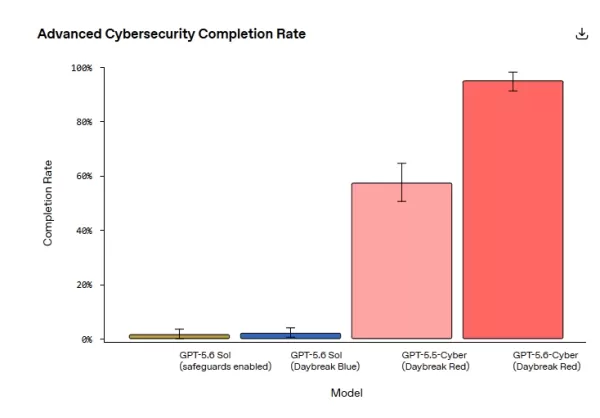 OpenAI Launches GPT-5.6-Cyber, Boosting Zero-Day Detection with AI Automation
OpenAI has expanded its Daybreak cybersecurity initiative, introducing a two-tier access system and launching GPT-5.6-Cyber, a model purpose-built for security operations. This move addresses the growing reality that threat actors are leveraging AI t
OpenAI Launches GPT-5.6-Cyber, Boosting Zero-Day Detection with AI Automation
OpenAI has expanded its Daybreak cybersecurity initiative, introducing a two-tier access system and launching GPT-5.6-Cyber, a model purpose-built for security operations. This move addresses the growing reality that threat actors are leveraging AI t
 DeepSeek Gray Test Image Recognition Mode Achieves Multimodal Image Understanding
DeepSeek has launched a beta testing phase for its latest "Image Recognition Mode." Positioned alongside "Quick Mode" and "Expert Mode," this feature goes beyond basic OCR text extraction, offering advanced multimodal analysis. Users can now upload i
DeepSeek Gray Test Image Recognition Mode Achieves Multimodal Image Understanding
DeepSeek has launched a beta testing phase for its latest "Image Recognition Mode." Positioned alongside "Quick Mode" and "Expert Mode," this feature goes beyond basic OCR text extraction, offering advanced multimodal analysis. Users can now upload i
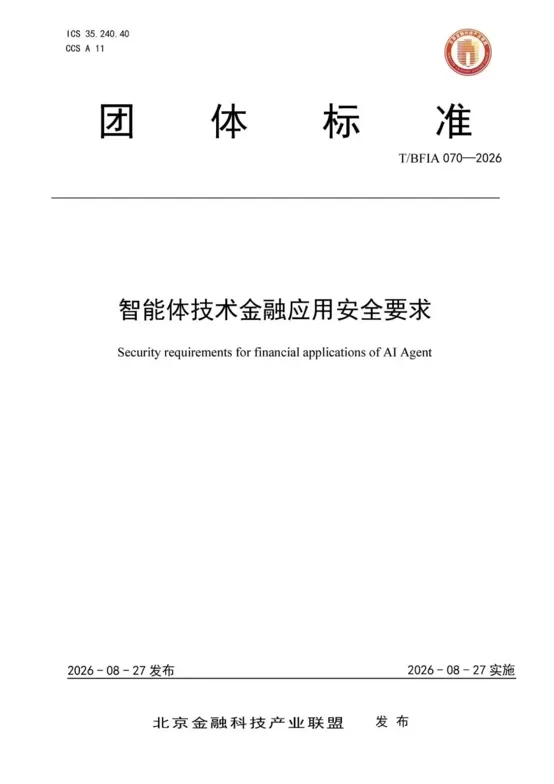 China Unveils First Financial Sector Standard for Intelligent Agent Security
Automated interactions with financial applications are strictly prohibited unless explicitly authorized by the respective financial institutions.On August 27, the Beijing Financial Technology Industry Alliance published the "Security Requirements for
China Unveils First Financial Sector Standard for Intelligent Agent Security
Automated interactions with financial applications are strictly prohibited unless explicitly authorized by the respective financial institutions.On August 27, the Beijing Financial Technology Industry Alliance published the "Security Requirements for

2026 Latest Best Top-rated AI Prompt Versioning Platforms for Reusable Playbooks are here on XIX.AI! Our curated list includes powerful game-changing tools that help you keep track of all prompts, test variations efficiently, and boost productivity across writing, content creation, and more. Get a free vs paid comparison along with real-world tests and updated rankings weekly. Explore now to discover your perfect tool for staying ahead in AI tasks!
9 tools
xix.ai

2026 Latest Best AI Writing Assistants for Long Articles: Outline and Draft Faster. XIX.AI curates the top-rated, must-try tools that offer powerful, game-changing support to boost writing efficiency significantly. You’ll find detailed free vs paid comparison, real-world tests, and updated rankings weekly. Explore now to Discover your perfect tool and Start creating today to Unlock your AI edge.
8 tools
xix.ai

2026 Latest Best ChatGPT Study Tools for Exam Revision, Flashcards, and Homework Explanations! XIX.AI has curated a top-rated list of powerful game-changing tools designed to boost your productivity. These must-try solutions offer free vs paid comparison, real-world tests, and detailed rankings to help you find the perfect option for efficient exam preparation and homework support. Explore now to unlock your AI edge!
10 tools
xix.ai

2026 Latest Best Top-Rated AI Study Planner Tools for Exam Preparation are here on XIX.AI! This curated collection features powerful, game-changing tools that help you streamline your review process, boost focus, and create personalized study schedules. We conduct real-world tests to determine the top options, offering a free vs paid comparison along with weekly updated rankings. Must-try solutions designed to maximize your productivity and help you ace every exam. Explore now to find your perfect tool!
14 tools
xix.ai

2026 Latest Best Top-rated AI Keyword Gap Tools for Organic Growth! XIX.AI has carefully curated a powerful, game-changing collection of the best tools available, featuring weekly updated rankings and real-world tests. You can find a detailed free vs paid comparison to help you choose the perfect option that boosts your content creation efficiency and unlocks your AI edge. Explore now!
8 tools
xix.ai

2026 Latest Best Top-Rated AI Internal Link Tools for Better Site Structure are here on XIX.AI! This curated collection features powerful, game-changing solutions that go through real-world tests to deliver superior results. Get a free vs paid comparison, see rankings, and discover must-try options to boost your site’s SEO performance and streamline content organization. Explore now to unlock your AI edge!
11 tools
xix.ai












