


 Home
HomeAndrew Yang sees next big startup opportunity in lowering cost of living
Loading the player…
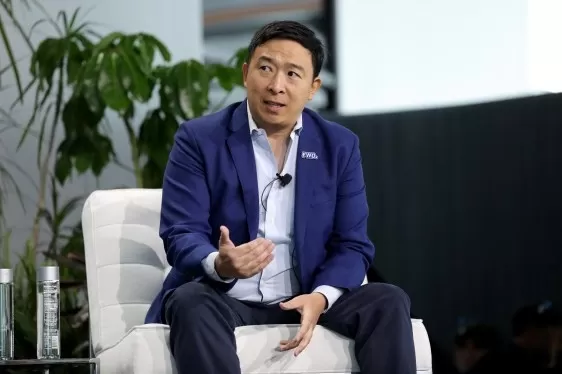
Entrepreneur and former presidential candidate Andrew Yang proposes a new frontier for startup innovation, centered on a question few founders ask: what if the business model focused on returning value rather than extracting it?
Yang draws inspiration from Mark Cuban, not for his wealth or fame, but for Cost Plus Drugs—Cuban’s venture selling pharmaceuticals at cost. Yang compiled a list of essential sectors.
“Housing, education, food, fuel, transportation, media, and wireless,” Yang told TechCrunch on a recent episode of Equity. “These are the categories where we all spend our money.”
He selected wireless and launched Noble Mobile last September, a mobile virtual network operator offering service at a fraction of traditional carrier costs and rewarding customers with cashback for using less data.
As AI threatens to suppress wages and displace workers, Yang identifies a business opportunity in reducing the cost of living. Alongside Cost Plus Drugs, Noble Mobile, dumb phone manufacturers like Light Phone, and online grocery store Misfits Markets, these ventures represent an emerging category where value is returned to the customer through margins.
“AI will absorb significant value and jobs, and Americans will eventually ask, ‘How do I afford basic necessities?’” Yang said. He believes addressing these needs “more affordably” represents “a highly lucrative opportunity.”
This perspective did not emerge in isolation. Yang first entered the public spotlight during his 2020 presidential campaign, advocating for Universal Basic Income to mitigate AI-driven workforce displacement and wealth concentration. Although the campaign was unsuccessful, its core thesis has grown increasingly relevant.
Yang remains a proponent of UBI, arguing that the value generated by AI companies should be redistributed to average Americans. However, he is less certain whether the government will serve as the vehicle for this redistribution or merely use collected wealth to “plug a hole and pursue unproductive initiatives.”
“There is room for a direct connection between money and people,” he said.
This is where the market plays a role. Yang argues that where policy fails, market incentives can intervene. Noble Mobile is his proof of concept. Since its launch last September, the company has grown to “thousands and thousands” of customers and generates “millions in revenue.”
“We are unit profitable per customer, but we share those profits with subscribers, believing that happiness leads to retention and word-of-mouth referrals,” Yang said.
The pitch is straightforward. Yang noted that average monthly savings of $50, invested and compounded over 40 years, could total $24,000—sufficient for a retirement down payment. In today’s economy, who isn’t looking for ways to improve their personal finances?
Whether investors share this enthusiasm remains uncertain. Despite the real opportunity, capital is heavily concentrated in AI, while consumer-facing businesses with thin margins and social missions face significant hurdles.
“I had at least one investor tell me regarding Noble Mobile, ‘Love you, Andrew, want to work with you — if you could just make this an AI company, we’ll invest,’” Yang said.
The landscape may be shifting, however, because even the most wealthy, extractive companies require an economy where consumers have sufficient purchasing power.
“Concentrating value in the hands of a few individuals and firms is detrimental to everyone,” he said. “Some people I know in Silicon Valley are open to this for various reasons…[such as] not wanting to hire private security.”
Yang encourages founders and investors to tackle problems they are passionate about and build valuable enterprises around them.
“Think bigger and broader about solving problems, and don’t succumb to groupthink, as valuable opportunities exist,” he said.
Related article
 Google Unveils Gemini 3.7 Flash, Driving Major Gains in Programming and Development Efficiency
Google officially unveiled the upgraded Gemini Flash model on August 13. The newly released Gemini 3.7 Flash exhibits superior performance in core programming tasks, including code debugging. Compared to the previous generation, it can generate high-
15 People Create Movie in 14 Days: ByteDance’s Seedance 2.0 Showcases AI’s Disruptive Power at Cannes
At the 79th Cannes Film Festival on May 19, 2026, ByteDance’s Volcano Engine unveiled Seedance 2.0, its latest video generation model, signaling a pivotal shift from experimental AI to mainstream adoption in film production.The festival featured eigh
Tencent Pledges $20M to Back AI Prodigy Lin Junyang’s New Lab
Significant activity continues to surge within the AI venture capital sector. Recent reports confirm that Lin Junyang, former head of Alibaba’s Qwen large language model team, has secured initial funding of $20 million from Tencent for his newly laun
Related Special Topic Recommendations
Comic Creation
Google Unveils Gemini 3.7 Flash, Driving Major Gains in Programming and Development Efficiency
Google officially unveiled the upgraded Gemini Flash model on August 13. The newly released Gemini 3.7 Flash exhibits superior performance in core programming tasks, including code debugging. Compared to the previous generation, it can generate high-
15 People Create Movie in 14 Days: ByteDance’s Seedance 2.0 Showcases AI’s Disruptive Power at Cannes
At the 79th Cannes Film Festival on May 19, 2026, ByteDance’s Volcano Engine unveiled Seedance 2.0, its latest video generation model, signaling a pivotal shift from experimental AI to mainstream adoption in film production.The festival featured eigh
Tencent Pledges $20M to Back AI Prodigy Lin Junyang’s New Lab
Significant activity continues to surge within the AI venture capital sector. Recent reports confirm that Lin Junyang, former head of Alibaba’s Qwen large language model team, has secured initial funding of $20 million from Tencent for his newly laun
Related Special Topic Recommendations
Comic Creation
 Best AI Comic Generators for Webtoon Creators
2026 Latest Best AI Comic Generators for Webtoon Creators! XIX.AI has curated a top-rated list of powerful, game-changing tools that help creators boost productivity significantly. You’ll find detailed weekly updated rankings, free vs paid comparison, and real-world tests to help you choose the perfect fit. Must-try options are available to overcome creation bottlenecks and deliver high-quality content faster. Explore now to Discover your perfect tool for smarter comic making!
 9 tools
 xix.ai
Design & Art
AI Illustration Tools for Digital Artists
xix.ai
Design & Art
AI Illustration Tools for Digital Artists
2026 Latest Best Top-rated AI Illustration Tools for Digital Artists! XIX.AI has curated a powerful, game-changing collection of top tools designed to help artists unlock their full creative potential. These best options feature weekly updated rankings, real-world tests, and free vs paid comparison details to help you find the perfect fit for boosting your workflow efficiency. Must-try choices across all skill levels are here—Explore now to Discover your perfect tool!
17 tools
xix.ai
Comic Creation
Best AI Manga Layout Tools for Webtoon Creators
2026 Latest Best Top-Rated AI Manga Layout Tools for Webtoon Creators! XIX.AI has curated a powerful, game-changing collection of must-try tools that go through rigorous real-world tests. You’ll find detailed weekly updated rankings, free vs paid comparison info, and insights on how these tools can boost your workflow, help you create high-quality content faster, and unlock your full creative potential. Explore now to discover your perfect tool!
9 tools
xix.ai
design
AI Dashboard Wireframing Tools for B2B SaaS, Admin Panels, and Data-Heavy Products
2026 Latest Best AI Dashboard Wireframing Tools for B2B SaaS, Admin Panels, and Data-Heavy Products! XIX.AI has curated a top-rated list of powerful game-changing tools that go through rigorous real-world tests to deliver exceptional results. You’ll find detailed free vs paid comparison data, comprehensive rankings, and useful insights to help you choose the perfect solution for boosting productivity and streamlining your workflow. Explore now to unlock your AI edge!
8 tools
xix.ai
Health & Wellness
AI Sleep Insight Tools for Better Recovery Habits
2026 Latest Best AI Sleep Insight Tools for Better Recovery Habits are here on XIX.AI! This curated list features top-rated, powerful solutions that offer real-world tests and weekly updated rankings. You’ll find a free vs paid comparison to help you choose the must-try option that boosts productivity and helps you build consistent recovery habits. Explore now to unlock your AI edge!
7 tools
xix.ai
Academic Research
Best AI Research Assistants: Speed Up Literature Review and Citation Tracking
2026 Latest Best Top-rated AI Research Assistants for Streamlining Literature Reviews and Citation Tracking. XIX.AI curates a powerful game-changing selection, backed by rigorous real-world tests and weekly updated rankings. You’ll find must-try options that boost productivity significantly, helping you overcome research bottlenecks faster. Explore now to discover your perfect tool and unlock your AI edge in academic work.
10 tools
xix.ai

 Comments (0)
0/500
Comments (0)
0/500
Loading the player…
Entrepreneur and former presidential candidate Andrew Yang proposes a new frontier for startup innovation, centered on a question few founders ask: what if the business model focused on returning value rather than extracting it?
Yang draws inspiration from Mark Cuban, not for his wealth or fame, but for Cost Plus Drugs—Cuban’s venture selling pharmaceuticals at cost. Yang compiled a list of essential sectors.
“Housing, education, food, fuel, transportation, media, and wireless,” Yang told TechCrunch on a recent episode of Equity. “These are the categories where we all spend our money.”
He selected wireless and launched Noble Mobile last September, a mobile virtual network operator offering service at a fraction of traditional carrier costs and rewarding customers with cashback for using less data.
As AI threatens to suppress wages and displace workers, Yang identifies a business opportunity in reducing the cost of living. Alongside Cost Plus Drugs, Noble Mobile, dumb phone manufacturers like Light Phone, and online grocery store Misfits Markets, these ventures represent an emerging category where value is returned to the customer through margins.
“AI will absorb significant value and jobs, and Americans will eventually ask, ‘How do I afford basic necessities?’” Yang said. He believes addressing these needs “more affordably” represents “a highly lucrative opportunity.”
This perspective did not emerge in isolation. Yang first entered the public spotlight during his 2020 presidential campaign, advocating for Universal Basic Income to mitigate AI-driven workforce displacement and wealth concentration. Although the campaign was unsuccessful, its core thesis has grown increasingly relevant.
Yang remains a proponent of UBI, arguing that the value generated by AI companies should be redistributed to average Americans. However, he is less certain whether the government will serve as the vehicle for this redistribution or merely use collected wealth to “plug a hole and pursue unproductive initiatives.”
“There is room for a direct connection between money and people,” he said.
This is where the market plays a role. Yang argues that where policy fails, market incentives can intervene. Noble Mobile is his proof of concept. Since its launch last September, the company has grown to “thousands and thousands” of customers and generates “millions in revenue.”
“We are unit profitable per customer, but we share those profits with subscribers, believing that happiness leads to retention and word-of-mouth referrals,” Yang said.
The pitch is straightforward. Yang noted that average monthly savings of $50, invested and compounded over 40 years, could total $24,000—sufficient for a retirement down payment. In today’s economy, who isn’t looking for ways to improve their personal finances?
Whether investors share this enthusiasm remains uncertain. Despite the real opportunity, capital is heavily concentrated in AI, while consumer-facing businesses with thin margins and social missions face significant hurdles.
“I had at least one investor tell me regarding Noble Mobile, ‘Love you, Andrew, want to work with you — if you could just make this an AI company, we’ll invest,’” Yang said.
The landscape may be shifting, however, because even the most wealthy, extractive companies require an economy where consumers have sufficient purchasing power.
“Concentrating value in the hands of a few individuals and firms is detrimental to everyone,” he said. “Some people I know in Silicon Valley are open to this for various reasons…[such as] not wanting to hire private security.”
Yang encourages founders and investors to tackle problems they are passionate about and build valuable enterprises around them.
“Think bigger and broader about solving problems, and don’t succumb to groupthink, as valuable opportunities exist,” he said.








 Google Unveils Gemini 3.7 Flash, Driving Major Gains in Programming and Development Efficiency
Google officially unveiled the upgraded Gemini Flash model on August 13. The newly released Gemini 3.7 Flash exhibits superior performance in core programming tasks, including code debugging. Compared to the previous generation, it can generate high-
Google Unveils Gemini 3.7 Flash, Driving Major Gains in Programming and Development Efficiency
Google officially unveiled the upgraded Gemini Flash model on August 13. The newly released Gemini 3.7 Flash exhibits superior performance in core programming tasks, including code debugging. Compared to the previous generation, it can generate high-
 15 People Create Movie in 14 Days: ByteDance’s Seedance 2.0 Showcases AI’s Disruptive Power at Cannes
At the 79th Cannes Film Festival on May 19, 2026, ByteDance’s Volcano Engine unveiled Seedance 2.0, its latest video generation model, signaling a pivotal shift from experimental AI to mainstream adoption in film production.The festival featured eigh
15 People Create Movie in 14 Days: ByteDance’s Seedance 2.0 Showcases AI’s Disruptive Power at Cannes
At the 79th Cannes Film Festival on May 19, 2026, ByteDance’s Volcano Engine unveiled Seedance 2.0, its latest video generation model, signaling a pivotal shift from experimental AI to mainstream adoption in film production.The festival featured eigh
 Tencent Pledges $20M to Back AI Prodigy Lin Junyang’s New Lab
Significant activity continues to surge within the AI venture capital sector. Recent reports confirm that Lin Junyang, former head of Alibaba’s Qwen large language model team, has secured initial funding of $20 million from Tencent for his newly laun
Tencent Pledges $20M to Back AI Prodigy Lin Junyang’s New Lab
Significant activity continues to surge within the AI venture capital sector. Recent reports confirm that Lin Junyang, former head of Alibaba’s Qwen large language model team, has secured initial funding of $20 million from Tencent for his newly laun

2026 Latest Best AI Comic Generators for Webtoon Creators! XIX.AI has curated a top-rated list of powerful, game-changing tools that help creators boost productivity significantly. You’ll find detailed weekly updated rankings, free vs paid comparison, and real-world tests to help you choose the perfect fit. Must-try options are available to overcome creation bottlenecks and deliver high-quality content faster. Explore now to Discover your perfect tool for smarter comic making!
9 tools
xix.ai
2026 Latest Best Top-rated AI Illustration Tools for Digital Artists! XIX.AI has curated a powerful, game-changing collection of top tools designed to help artists unlock their full creative potential. These best options feature weekly updated rankings, real-world tests, and free vs paid comparison details to help you find the perfect fit for boosting your workflow efficiency. Must-try choices across all skill levels are here—Explore now to Discover your perfect tool!
17 tools
xix.ai

2026 Latest Best Top-Rated AI Manga Layout Tools for Webtoon Creators! XIX.AI has curated a powerful, game-changing collection of must-try tools that go through rigorous real-world tests. You’ll find detailed weekly updated rankings, free vs paid comparison info, and insights on how these tools can boost your workflow, help you create high-quality content faster, and unlock your full creative potential. Explore now to discover your perfect tool!
9 tools
xix.ai

2026 Latest Best AI Dashboard Wireframing Tools for B2B SaaS, Admin Panels, and Data-Heavy Products! XIX.AI has curated a top-rated list of powerful game-changing tools that go through rigorous real-world tests to deliver exceptional results. You’ll find detailed free vs paid comparison data, comprehensive rankings, and useful insights to help you choose the perfect solution for boosting productivity and streamlining your workflow. Explore now to unlock your AI edge!
8 tools
xix.ai

2026 Latest Best AI Sleep Insight Tools for Better Recovery Habits are here on XIX.AI! This curated list features top-rated, powerful solutions that offer real-world tests and weekly updated rankings. You’ll find a free vs paid comparison to help you choose the must-try option that boosts productivity and helps you build consistent recovery habits. Explore now to unlock your AI edge!
7 tools
xix.ai

2026 Latest Best Top-rated AI Research Assistants for Streamlining Literature Reviews and Citation Tracking. XIX.AI curates a powerful game-changing selection, backed by rigorous real-world tests and weekly updated rankings. You’ll find must-try options that boost productivity significantly, helping you overcome research bottlenecks faster. Explore now to discover your perfect tool and unlock your AI edge in academic work.
10 tools
xix.ai












