


 Home
HomeAirtable Launches Superagent AI to Automate Workflows
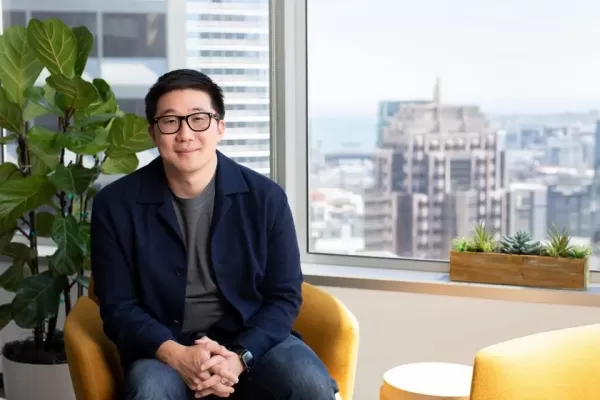
Launching a completely new product line while your core business has lost two-thirds of its market value might seem irrational to some. However, Airtable founder and CEO Howie Liu considers it the most logical decision he could make.
During the zero-interest-rate frenzy of 2021, investors valued the company at $11.7 billion. Now, secondary markets value it at approximately $4 billion. Despite this, Airtable has raised $1.4 billion in total funding, and Liu confirms the company still holds half that amount in reserve while generating positive cash flow. The sharp decline in valuation impacted investor returns and employee stock options but didn't harm the underlying business operations.
Liu's strategic response is Superagent, an AI agent he believes could eventually surpass Airtable in significance. This marks Airtable's first standalone product in thirteen years, reflecting both the company's future direction and the current AI landscape where established software companies are competing to deliver functional AI agents.
What makes this move particularly noteworthy is Airtable's established position as a no-code platform that simplifies application development. Essentially, it's an advanced database enabling users to create custom software for their specific workflows. With over 700 employees and serving more than 500,000 organizations—including 80% of Fortune 100 companies—Airtable isn't a struggling startup but an established business making a strategic bet on a new technological architecture.
Superagent embodies Liu's vision of "multi-agent coordination"—a system where instead of a single AI assistant performing tasks sequentially, a coordinating agent manages specialized agents working simultaneously. "You're not just prompting an AI," Liu clarifies. "You're directing a team."
Here's how it operates: When you ask Superagent about expanding an athleisure brand into Europe (using Liu's example), the system first develops a research plan, identifying investigation areas and uncovering aspects you might have overlooked. It then activates specialized agents simultaneously—one examines financial considerations, another analyzes competitive landscape, while others review management and relevant news. Finally, it consolidates all findings into a comprehensive report.
The result isn't just text. It's an interactive market analysis featuring demographic breakdowns, visual competitive mapping, and customizable expansion timelines. "Imagine if everyone could access New York Times-quality data visualization for every task," Liu explained during our recent Zoom call. "This would have been unimaginable five or ten years ago when you'd only get text output. Now, receiving high-quality, interactive outputs as standard represents a fundamental shift."
Techcrunch event Disrupt 2026 Tickets: Limited Time Offer
Tickets now available! Save up to $680 with current rates, and be among the first 500 registrants to receive 50% off your additional pass. TechCrunch Disrupt features industry leaders from Google Cloud, Netflix, Microsoft, Box, a16z, Hugging Face, and others across 250+ sessions focused on business growth and competitive advantage. Network with innovative startups and participate in curated networking opportunities that generate deals, insights, and inspiration.
Disrupt 2026 Tickets: Limited Time Offer
Tickets now available! Save up to $680 with current rates, and be among the first 500 registrants to receive 50% off your additional pass. TechCrunch Disrupt features industry leaders from Google Cloud, Netflix, Microsoft, Box, a16z, Hugging Face, and others across 250+ sessions focused on business growth and competitive advantage. Network with innovative startups and participate in curated networking opportunities that generate deals, insights, and inspiration.
San Francisco | October 13-15, 2026 REGISTER NOW Liu emphasizes technical distinctions between Superagent and competitors. He identifies Anthropic's Claude and Manus (an AI research platform being acquired by Meta) as the only other products featuring "truly capable, persistent, and intelligent agent architectures." According to Liu, most other so-called agents are essentially "LLM-powered workflows"—predetermined sequences incorporating AI calls rather than truly autonomous agents capable of self-correction and backtracking.
This distinction becomes crucial in a market saturated with AI agent announcements. OpenAI began 2025 by introducing new agent development tools, while Notion, Harvey, and numerous other companies have since incorporated agent capabilities. In this competitive environment, Liu's claims about Superagent's uniqueness must demonstrate practical value.
In his product announcement, Liu provides concrete examples of Superagent's capabilities. Request an evaluation of Google as a three-year investment opportunity, and you receive a structured analysis citing earnings calls, competitive defensibility against OpenAI and Anthropic, and overlooked risk factors. Ask for a briefing on Wells Fargo's AI strategy before a sales pitch, and you get their regulatory position, recent AI investments, and specific challenges your product could address. The system draws from premium data sources including FactSet, Crunchbase, SEC filings, and earnings transcripts.
This launch completes Airtable's transformation into what Liu describes as an "AI-native platform." Last autumn, the company appointed David Azose, former engineering lead for ChatGPT's business products at OpenAI, as CTO. Simultaneously, it acquired DeepSky (previously Gradient), an AI agents startup that had raised $40 million. Superagent will operate with considerable autonomy under the leadership of DeepSky's founding team.
Pricing details were still being finalized last week, but indications suggest standard AI product pricing: $20 monthly per user for entry-level access, scaling to $200 for power users, including generous inference credits. "We're not currently focused on profit margin optimization," Liu states.
Whether Superagent achieves Liu's vision of a trillion-dollar market or becomes an ambitious gamble remains uncertain. Competition is substantial, and the technical distinctions Liu emphasizes between "real agents" and alternatives may not concern customers if competitors deliver satisfactory results more quickly and affordably.
For a CEO whose company has experienced a $7.7 billion valuation decrease while maintaining most operational capital, this move demonstrates commitment to future growth over protecting current status. Liu has reframed the valuation reduction as a recruitment advantage, telling employees they're obtaining "more attractively priced equity compared to the $11 billion valuation" with significant potential upside. The company has sufficient capital for strategic acquisitions and doesn't require additional funding rounds.
When asked if Superagent represents the greater long-term opportunity, Liu acknowledges the possibility. Airtable "will likely remain larger than any new products, including Superagent, in the immediate future," he notes. "But I appreciate having the opportunity to invest in Superagent. Maintaining options is valuable."
This approach represents what Liu terms "wartime" leadership—a concept he initially rejected as unnecessarily aggressive but now considers appropriate. "The ability to adapt quickly," he observes, "is currently the most value-creative operational approach." He adds, "It's also the most exciting way to work."
Related article
 DeepMind CEO Hassabis: I sleep six hours a day, usually feel energetic around 1 a.m.
Fortune recently featured an interview with Demis Hassabis, CEO of Google DeepMind, revealing his unconventional approach to rest and productivity. Hassabis disclosed that he sleeps very little, structuring his waking hours into two distinct work blo
OpenAI, Anthropic Vie for Market Share Despite Revenue Shortfalls
Despite recent reports suggesting OpenAI missed revenue targets, creating pressure on tech stocks this Tuesday, private AI lab investors remain resilient. Seasoned backers have confirmed they will not reduce investment despite negative media coverage
California AV Compliance: A New Era of Tickets, Geofences, and 1M Miles
Guident operates an AuveTech shuttle in South Florida, managing a four-mile route in West Palm Beach and a one-mile route in Boca Raton using its remote monitoring technology. | Credit: GuidentCalifornia is redefining the regulatory landscape for dri
Related Special Topic Recommendations
chatbot
DeepMind CEO Hassabis: I sleep six hours a day, usually feel energetic around 1 a.m.
Fortune recently featured an interview with Demis Hassabis, CEO of Google DeepMind, revealing his unconventional approach to rest and productivity. Hassabis disclosed that he sleeps very little, structuring his waking hours into two distinct work blo
OpenAI, Anthropic Vie for Market Share Despite Revenue Shortfalls
Despite recent reports suggesting OpenAI missed revenue targets, creating pressure on tech stocks this Tuesday, private AI lab investors remain resilient. Seasoned backers have confirmed they will not reduce investment despite negative media coverage
California AV Compliance: A New Era of Tickets, Geofences, and 1M Miles
Guident operates an AuveTech shuttle in South Florida, managing a four-mile route in West Palm Beach and a one-mile route in Boca Raton using its remote monitoring technology. | Credit: GuidentCalifornia is redefining the regulatory landscape for dri
Related Special Topic Recommendations
chatbot
 Best AI Roleplay Chat Apps for Language Practice, Interview Prep, and Daily Fluency
2026 Latest Best Top-rated AI Roleplay Chat Apps for Language Practice, Interview Prep, and Daily Fluency! XIX.AI curates a powerful game-changing collection that offers free vs paid comparison, real-world tests, and updated rankings weekly. These must-try tools help you boost writing skills, overcome fluency challenges, and improve communication efficiency across all daily scenarios. Explore now to discover your perfect tool for language growth!
 10 tools
 xix.ai
Music composition
AI Stem Separation Tools for Remix Production, Sampling Prep, and Karaoke Masters
xix.ai
Music composition
AI Stem Separation Tools for Remix Production, Sampling Prep, and Karaoke Masters
2026 Latest Best Top-rated AI Stem Separation Tools Curated for Remix Production, Sampling Prep, and Karaoke Masters. These powerful game-changing tools offer real-world tests to deliver precise audio isolation, boosting productivity significantly. XIX.AI provides a weekly updated free vs paid comparison guide to help you find the must-try solution that suits your needs. Explore now to unlock your AI edge.
8 tools
xix.ai
Data Analysis
AI SQL Copilots for Revenue Dashboards, Funnel Analysis, and Product Metrics
2026 Latest Best AI SQL Copilots Ranked Top-Rated! XIX.AI curates a powerful game-changing collection for weekly updated real-world tests. These must-try tools help you generate accurate revenue dashboards, analyze sales funnels, and track product metrics swiftly, boosting productivity massively. Explore now to Discover your perfect tool for data-driven decision making! 238 characters
9 tools
xix.ai
Music composition
Best AI Melody Writing Tools for Song Drafts
2026 Latest Best Top-Rated AI Melody Writing Tools for Song Drafts! XIX.AI has curated a highly powerful game-changing collection that goes through rigorous real-world tests to deliver the best writing experience. You can find detailed free vs paid comparisons, accurate rankings, and must-try options designed to help you create stunning song drafts effortlessly and boost your creative productivity significantly. Explore now to discover your perfect tool!
8 tools
xix.ai
chatbot
Best AI Conversation Trainer Tools for Interview Practice
2026 Latest Best Top-rated AI Conversation Trainer Tools for Interview Practice are here on XIX.AI! This curated collection features powerful, game-changing tools that go through rigorous real-world tests to deliver accurate feedback. You’ll find a free vs paid comparison and detailed rankings to help you choose the must-try option that boosts your confidence and skills. Explore now to Discover your perfect tool for interview success!
12 tools
xix.ai
Design & Art
Best AI Style Transfer Tools for Creative Experiments
2026 Latest Best Top-rated AI Style Transfer Tools for Creative Experiments! XIX.AI has curated a powerful, game-changing collection of must-try tools that deliver exceptional results through real-world tests and rigorous rankings. These top solutions help creatives boost productivity significantly by accelerating content creation and unlocking endless creative possibilities. Explore now to discover your perfect tool and start creating today!
9 tools
xix.ai

 Comments (0)
0/500
Comments (0)
0/500
Launching a completely new product line while your core business has lost two-thirds of its market value might seem irrational to some. However, Airtable founder and CEO Howie Liu considers it the most logical decision he could make.
During the zero-interest-rate frenzy of 2021, investors valued the company at $11.7 billion. Now, secondary markets value it at approximately $4 billion. Despite this, Airtable has raised $1.4 billion in total funding, and Liu confirms the company still holds half that amount in reserve while generating positive cash flow. The sharp decline in valuation impacted investor returns and employee stock options but didn't harm the underlying business operations.
Liu's strategic response is Superagent, an AI agent he believes could eventually surpass Airtable in significance. This marks Airtable's first standalone product in thirteen years, reflecting both the company's future direction and the current AI landscape where established software companies are competing to deliver functional AI agents.
What makes this move particularly noteworthy is Airtable's established position as a no-code platform that simplifies application development. Essentially, it's an advanced database enabling users to create custom software for their specific workflows. With over 700 employees and serving more than 500,000 organizations—including 80% of Fortune 100 companies—Airtable isn't a struggling startup but an established business making a strategic bet on a new technological architecture.
Superagent embodies Liu's vision of "multi-agent coordination"—a system where instead of a single AI assistant performing tasks sequentially, a coordinating agent manages specialized agents working simultaneously. "You're not just prompting an AI," Liu clarifies. "You're directing a team."
Here's how it operates: When you ask Superagent about expanding an athleisure brand into Europe (using Liu's example), the system first develops a research plan, identifying investigation areas and uncovering aspects you might have overlooked. It then activates specialized agents simultaneously—one examines financial considerations, another analyzes competitive landscape, while others review management and relevant news. Finally, it consolidates all findings into a comprehensive report.
The result isn't just text. It's an interactive market analysis featuring demographic breakdowns, visual competitive mapping, and customizable expansion timelines. "Imagine if everyone could access New York Times-quality data visualization for every task," Liu explained during our recent Zoom call. "This would have been unimaginable five or ten years ago when you'd only get text output. Now, receiving high-quality, interactive outputs as standard represents a fundamental shift."
Techcrunch eventDisrupt 2026 Tickets: Limited Time Offer
Tickets now available! Save up to $680 with current rates, and be among the first 500 registrants to receive 50% off your additional pass. TechCrunch Disrupt features industry leaders from Google Cloud, Netflix, Microsoft, Box, a16z, Hugging Face, and others across 250+ sessions focused on business growth and competitive advantage. Network with innovative startups and participate in curated networking opportunities that generate deals, insights, and inspiration.
Disrupt 2026 Tickets: Limited Time Offer
Tickets now available! Save up to $680 with current rates, and be among the first 500 registrants to receive 50% off your additional pass. TechCrunch Disrupt features industry leaders from Google Cloud, Netflix, Microsoft, Box, a16z, Hugging Face, and others across 250+ sessions focused on business growth and competitive advantage. Network with innovative startups and participate in curated networking opportunities that generate deals, insights, and inspiration.
San Francisco | October 13-15, 2026 REGISTER NOWLiu emphasizes technical distinctions between Superagent and competitors. He identifies Anthropic's Claude and Manus (an AI research platform being acquired by Meta) as the only other products featuring "truly capable, persistent, and intelligent agent architectures." According to Liu, most other so-called agents are essentially "LLM-powered workflows"—predetermined sequences incorporating AI calls rather than truly autonomous agents capable of self-correction and backtracking.
This distinction becomes crucial in a market saturated with AI agent announcements. OpenAI began 2025 by introducing new agent development tools, while Notion, Harvey, and numerous other companies have since incorporated agent capabilities. In this competitive environment, Liu's claims about Superagent's uniqueness must demonstrate practical value.
In his product announcement, Liu provides concrete examples of Superagent's capabilities. Request an evaluation of Google as a three-year investment opportunity, and you receive a structured analysis citing earnings calls, competitive defensibility against OpenAI and Anthropic, and overlooked risk factors. Ask for a briefing on Wells Fargo's AI strategy before a sales pitch, and you get their regulatory position, recent AI investments, and specific challenges your product could address. The system draws from premium data sources including FactSet, Crunchbase, SEC filings, and earnings transcripts.
This launch completes Airtable's transformation into what Liu describes as an "AI-native platform." Last autumn, the company appointed David Azose, former engineering lead for ChatGPT's business products at OpenAI, as CTO. Simultaneously, it acquired DeepSky (previously Gradient), an AI agents startup that had raised $40 million. Superagent will operate with considerable autonomy under the leadership of DeepSky's founding team.
Pricing details were still being finalized last week, but indications suggest standard AI product pricing: $20 monthly per user for entry-level access, scaling to $200 for power users, including generous inference credits. "We're not currently focused on profit margin optimization," Liu states.
Whether Superagent achieves Liu's vision of a trillion-dollar market or becomes an ambitious gamble remains uncertain. Competition is substantial, and the technical distinctions Liu emphasizes between "real agents" and alternatives may not concern customers if competitors deliver satisfactory results more quickly and affordably.
For a CEO whose company has experienced a $7.7 billion valuation decrease while maintaining most operational capital, this move demonstrates commitment to future growth over protecting current status. Liu has reframed the valuation reduction as a recruitment advantage, telling employees they're obtaining "more attractively priced equity compared to the $11 billion valuation" with significant potential upside. The company has sufficient capital for strategic acquisitions and doesn't require additional funding rounds.
When asked if Superagent represents the greater long-term opportunity, Liu acknowledges the possibility. Airtable "will likely remain larger than any new products, including Superagent, in the immediate future," he notes. "But I appreciate having the opportunity to invest in Superagent. Maintaining options is valuable."
This approach represents what Liu terms "wartime" leadership—a concept he initially rejected as unnecessarily aggressive but now considers appropriate. "The ability to adapt quickly," he observes, "is currently the most value-creative operational approach." He adds, "It's also the most exciting way to work."








 DeepMind CEO Hassabis: I sleep six hours a day, usually feel energetic around 1 a.m.
Fortune recently featured an interview with Demis Hassabis, CEO of Google DeepMind, revealing his unconventional approach to rest and productivity. Hassabis disclosed that he sleeps very little, structuring his waking hours into two distinct work blo
DeepMind CEO Hassabis: I sleep six hours a day, usually feel energetic around 1 a.m.
Fortune recently featured an interview with Demis Hassabis, CEO of Google DeepMind, revealing his unconventional approach to rest and productivity. Hassabis disclosed that he sleeps very little, structuring his waking hours into two distinct work blo
 OpenAI, Anthropic Vie for Market Share Despite Revenue Shortfalls
Despite recent reports suggesting OpenAI missed revenue targets, creating pressure on tech stocks this Tuesday, private AI lab investors remain resilient. Seasoned backers have confirmed they will not reduce investment despite negative media coverage
California AV Compliance: A New Era of Tickets, Geofences, and 1M Miles
Guident operates an AuveTech shuttle in South Florida, managing a four-mile route in West Palm Beach and a one-mile route in Boca Raton using its remote monitoring technology. | Credit: GuidentCalifornia is redefining the regulatory landscape for dri
OpenAI, Anthropic Vie for Market Share Despite Revenue Shortfalls
Despite recent reports suggesting OpenAI missed revenue targets, creating pressure on tech stocks this Tuesday, private AI lab investors remain resilient. Seasoned backers have confirmed they will not reduce investment despite negative media coverage
California AV Compliance: A New Era of Tickets, Geofences, and 1M Miles
Guident operates an AuveTech shuttle in South Florida, managing a four-mile route in West Palm Beach and a one-mile route in Boca Raton using its remote monitoring technology. | Credit: GuidentCalifornia is redefining the regulatory landscape for dri

2026 Latest Best Top-rated AI Roleplay Chat Apps for Language Practice, Interview Prep, and Daily Fluency! XIX.AI curates a powerful game-changing collection that offers free vs paid comparison, real-world tests, and updated rankings weekly. These must-try tools help you boost writing skills, overcome fluency challenges, and improve communication efficiency across all daily scenarios. Explore now to discover your perfect tool for language growth!
10 tools
xix.ai

2026 Latest Best Top-rated AI Stem Separation Tools Curated for Remix Production, Sampling Prep, and Karaoke Masters. These powerful game-changing tools offer real-world tests to deliver precise audio isolation, boosting productivity significantly. XIX.AI provides a weekly updated free vs paid comparison guide to help you find the must-try solution that suits your needs. Explore now to unlock your AI edge.
8 tools
xix.ai

2026 Latest Best AI SQL Copilots Ranked Top-Rated! XIX.AI curates a powerful game-changing collection for weekly updated real-world tests. These must-try tools help you generate accurate revenue dashboards, analyze sales funnels, and track product metrics swiftly, boosting productivity massively. Explore now to Discover your perfect tool for data-driven decision making! 238 characters
9 tools
xix.ai

2026 Latest Best Top-Rated AI Melody Writing Tools for Song Drafts! XIX.AI has curated a highly powerful game-changing collection that goes through rigorous real-world tests to deliver the best writing experience. You can find detailed free vs paid comparisons, accurate rankings, and must-try options designed to help you create stunning song drafts effortlessly and boost your creative productivity significantly. Explore now to discover your perfect tool!
8 tools
xix.ai

2026 Latest Best Top-rated AI Conversation Trainer Tools for Interview Practice are here on XIX.AI! This curated collection features powerful, game-changing tools that go through rigorous real-world tests to deliver accurate feedback. You’ll find a free vs paid comparison and detailed rankings to help you choose the must-try option that boosts your confidence and skills. Explore now to Discover your perfect tool for interview success!
12 tools
xix.ai

2026 Latest Best Top-rated AI Style Transfer Tools for Creative Experiments! XIX.AI has curated a powerful, game-changing collection of must-try tools that deliver exceptional results through real-world tests and rigorous rankings. These top solutions help creatives boost productivity significantly by accelerating content creation and unlocking endless creative possibilities. Explore now to discover your perfect tool and start creating today!
9 tools
xix.ai












