


 Home
HomeAI pioneer Fei-Fei Li warns policymakers not to let sci-fi sensationalism shape AI rules
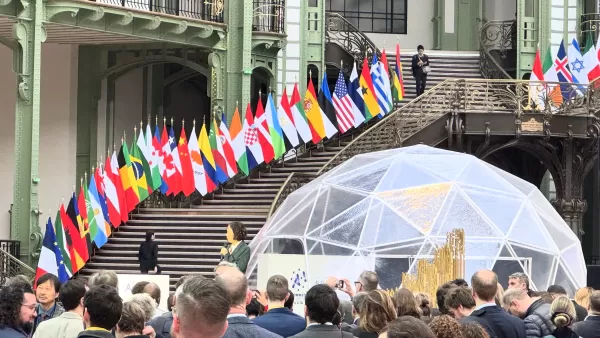
On Monday, Fei-Fei Li, a prominent researcher from Stanford and the founder of World Labs, took the stage at the Grand Palais in Paris to deliver the opening speech at the Artificial Intelligence Action Summit. This week-long event has drawn attention from around the globe, and Li's insights into AI regulation and the broader AI ecosystem were particularly thought-provoking.
Over the weekend, Li hinted at some of her key points, but it was her balanced perspective on AI that really stood out. She skillfully navigated a position that was supportive of business interests while also critical of the dominance of Big Tech and major AI labs.
Advocating for a Diverse AI Ecosystem
Li emphasized the need for a more inclusive and dynamic AI ecosystem. "We need to invest in far healthier and more vibrant AI ecosystems where academia and the community can produce," she told the audience. She stressed the importance of open source communities and the public sector playing significant roles alongside big companies in advancing AI technology. "If AI is going to change the world, we need everyone from all walks of life to have a role in shaping this change," she added.
She warned that if resources remain concentrated in just a few companies, the AI ecosystem could suffer. "The lack of curiosity-driven research, top educational talents, open source efforts, and multidisciplinary explorations would be detrimental," Fei-Fei noted.
Calling for Pragmatic AI Regulation
Li also expressed concerns about the current state of AI regulation worldwide. While she didn't target specific governments or legislation, she advocated for a more pragmatic approach. "For starters, it's essential that we govern on the basis of science, not science fiction," she said. She criticized the sensationalism that often surrounds AI discussions, which can lead to misguided policies. Instead, she called for a scientific method to assess and measure AI's capabilities and limitations, leading to more precise and actionable policies.
She also cautioned against overly restrictive regulations on AI research. "AI is poised to be a powerful technology that can help us to live and work better if used well," Li remarked. She urged a focus on practical applications to ensure AI's beneficial use and guard against negative outcomes.
The Historical Significance of AI
Li highlighted the historical significance of the current period, suggesting that historians might view it as the first true era of AI with "civilizational consequences." While acknowledging the potential impact of AI on jobs, she remained optimistic about its potential to "augment and empower us," provided that policymakers, AI companies, and the research community make the right decisions.
The AI Action Summit is set to conclude on Tuesday, with government leaders and tech CEOs expected to sign and share a statement on AI's future.
Read our full coverage of the Artificial Intelligence Action Summit in Paris.
Related article
 DeepMind CEO Hassabis: I sleep six hours a day, usually feel energetic around 1 a.m.
Fortune recently featured an interview with Demis Hassabis, CEO of Google DeepMind, revealing his unconventional approach to rest and productivity. Hassabis disclosed that he sleeps very little, structuring his waking hours into two distinct work blo
OpenAI, Anthropic Vie for Market Share Despite Revenue Shortfalls
Despite recent reports suggesting OpenAI missed revenue targets, creating pressure on tech stocks this Tuesday, private AI lab investors remain resilient. Seasoned backers have confirmed they will not reduce investment despite negative media coverage
California AV Compliance: A New Era of Tickets, Geofences, and 1M Miles
Guident operates an AuveTech shuttle in South Florida, managing a four-mile route in West Palm Beach and a one-mile route in Boca Raton using its remote monitoring technology. | Credit: GuidentCalifornia is redefining the regulatory landscape for dri
Related Special Topic Recommendations
writing
DeepMind CEO Hassabis: I sleep six hours a day, usually feel energetic around 1 a.m.
Fortune recently featured an interview with Demis Hassabis, CEO of Google DeepMind, revealing his unconventional approach to rest and productivity. Hassabis disclosed that he sleeps very little, structuring his waking hours into two distinct work blo
OpenAI, Anthropic Vie for Market Share Despite Revenue Shortfalls
Despite recent reports suggesting OpenAI missed revenue targets, creating pressure on tech stocks this Tuesday, private AI lab investors remain resilient. Seasoned backers have confirmed they will not reduce investment despite negative media coverage
California AV Compliance: A New Era of Tickets, Geofences, and 1M Miles
Guident operates an AuveTech shuttle in South Florida, managing a four-mile route in West Palm Beach and a one-mile route in Boca Raton using its remote monitoring technology. | Credit: GuidentCalifornia is redefining the regulatory landscape for dri
Related Special Topic Recommendations
writing
 AI Article Outline Tools for Long Form Writing
2026 Latest Best Top-Rated AI Article Outline Tools for Long Form Writing! This curated collection features powerful, game-changing tools that deliver accurate, structured outlines with real-world tests to boost writing efficiency significantly. XIX.AI is part of this elite selection. Get a free vs paid comparison to help you choose the perfect tool. Explore now and Unlock your AI edge!
 9 tools
 xix.ai
chatbot
Best AI Roleplay Chat Apps for Language Practice, Interview Prep, and Daily Fluency
xix.ai
chatbot
Best AI Roleplay Chat Apps for Language Practice, Interview Prep, and Daily Fluency
2026 Latest Best Top-rated AI Roleplay Chat Apps for Language Practice, Interview Prep, and Daily Fluency! XIX.AI curates a powerful game-changing collection that offers free vs paid comparison, real-world tests, and updated rankings weekly. These must-try tools help you boost writing skills, overcome fluency challenges, and improve communication efficiency across all daily scenarios. Explore now to discover your perfect tool for language growth!
10 tools
xix.ai
Music composition
AI Stem Separation Tools for Remix Production, Sampling Prep, and Karaoke Masters
2026 Latest Best Top-rated AI Stem Separation Tools Curated for Remix Production, Sampling Prep, and Karaoke Masters. These powerful game-changing tools offer real-world tests to deliver precise audio isolation, boosting productivity significantly. XIX.AI provides a weekly updated free vs paid comparison guide to help you find the must-try solution that suits your needs. Explore now to unlock your AI edge.
8 tools
xix.ai
Data Analysis
AI SQL Copilots for Revenue Dashboards, Funnel Analysis, and Product Metrics
2026 Latest Best AI SQL Copilots Ranked Top-Rated! XIX.AI curates a powerful game-changing collection for weekly updated real-world tests. These must-try tools help you generate accurate revenue dashboards, analyze sales funnels, and track product metrics swiftly, boosting productivity massively. Explore now to Discover your perfect tool for data-driven decision making! 238 characters
9 tools
xix.ai
Music composition
Best AI Melody Writing Tools for Song Drafts
2026 Latest Best Top-Rated AI Melody Writing Tools for Song Drafts! XIX.AI has curated a highly powerful game-changing collection that goes through rigorous real-world tests to deliver the best writing experience. You can find detailed free vs paid comparisons, accurate rankings, and must-try options designed to help you create stunning song drafts effortlessly and boost your creative productivity significantly. Explore now to discover your perfect tool!
8 tools
xix.ai
chatbot
Best AI Conversation Trainer Tools for Interview Practice
2026 Latest Best Top-rated AI Conversation Trainer Tools for Interview Practice are here on XIX.AI! This curated collection features powerful, game-changing tools that go through rigorous real-world tests to deliver accurate feedback. You’ll find a free vs paid comparison and detailed rankings to help you choose the must-try option that boosts your confidence and skills. Explore now to Discover your perfect tool for interview success!
12 tools
xix.ai

 Comments (13)
0/500
Comments (13)
0/500
![AnthonyMartinez]()
Fei-Fei Li’s warning is spot on. We’re drowning in sci-fi tropes instead of practical policy. 🚫🎬 Let’s focus on real-world impact, not movie monsters.
![JerryGonzalez]()
I was really shocked by Fei-Fei Li’s warning—she compared AI regulation to building a house without blueprints, saying sensationalist hype will mess up everything. It made me think about all the fake AI news we see online these days, hope policymakers actually listen to experts like her.
![EricMiller]()
Fei-Fei Li always brings such a grounded perspective. It's refreshing to hear a leading researcher push back against sci-fi panic in policy discussions. We really need more of this practical focus on current AI capabilities and risks, rather than hypothetical doomsday scenarios. Hope policymakers are actually listening! 😅
![ArthurYoung]()
Finally a voice of reason between the hype and the doomsday scenarios. So tired of regulations being drafted based on Terminator plotlines instead of actual research. Listen to the people building this tech! 🙌
![GregoryWilson]()
AI規制ってホントにSFみたいな話で決めちゃうの?もっと現場の声を聞くべきだと思うんだけど…🤔 李飛飛教授の指摘は核心を突いてるな。実際に研究してる人たちの意見を無視して、恐怖ばかり煽ってたら、せっかくの技術が台無しになりそう。
![ArthurThomas]()
It's refreshing to hear a leading researcher focus on evidence-based policy rather than sci-fi hype. Wish more tech leaders would push back against sensationalism that's distorting public understanding. 🤔 The regulatory focus should be on actual risks like bias and transparency, not imaginary Terminators!
On Monday, Fei-Fei Li, a prominent researcher from Stanford and the founder of World Labs, took the stage at the Grand Palais in Paris to deliver the opening speech at the Artificial Intelligence Action Summit. This week-long event has drawn attention from around the globe, and Li's insights into AI regulation and the broader AI ecosystem were particularly thought-provoking.
Over the weekend, Li hinted at some of her key points, but it was her balanced perspective on AI that really stood out. She skillfully navigated a position that was supportive of business interests while also critical of the dominance of Big Tech and major AI labs.
Advocating for a Diverse AI Ecosystem
Li emphasized the need for a more inclusive and dynamic AI ecosystem. "We need to invest in far healthier and more vibrant AI ecosystems where academia and the community can produce," she told the audience. She stressed the importance of open source communities and the public sector playing significant roles alongside big companies in advancing AI technology. "If AI is going to change the world, we need everyone from all walks of life to have a role in shaping this change," she added.
She warned that if resources remain concentrated in just a few companies, the AI ecosystem could suffer. "The lack of curiosity-driven research, top educational talents, open source efforts, and multidisciplinary explorations would be detrimental," Fei-Fei noted.
Calling for Pragmatic AI Regulation
Li also expressed concerns about the current state of AI regulation worldwide. While she didn't target specific governments or legislation, she advocated for a more pragmatic approach. "For starters, it's essential that we govern on the basis of science, not science fiction," she said. She criticized the sensationalism that often surrounds AI discussions, which can lead to misguided policies. Instead, she called for a scientific method to assess and measure AI's capabilities and limitations, leading to more precise and actionable policies.
She also cautioned against overly restrictive regulations on AI research. "AI is poised to be a powerful technology that can help us to live and work better if used well," Li remarked. She urged a focus on practical applications to ensure AI's beneficial use and guard against negative outcomes.
The Historical Significance of AI
Li highlighted the historical significance of the current period, suggesting that historians might view it as the first true era of AI with "civilizational consequences." While acknowledging the potential impact of AI on jobs, she remained optimistic about its potential to "augment and empower us," provided that policymakers, AI companies, and the research community make the right decisions.
The AI Action Summit is set to conclude on Tuesday, with government leaders and tech CEOs expected to sign and share a statement on AI's future.
Read our full coverage of the Artificial Intelligence Action Summit in Paris.








 DeepMind CEO Hassabis: I sleep six hours a day, usually feel energetic around 1 a.m.
Fortune recently featured an interview with Demis Hassabis, CEO of Google DeepMind, revealing his unconventional approach to rest and productivity. Hassabis disclosed that he sleeps very little, structuring his waking hours into two distinct work blo
DeepMind CEO Hassabis: I sleep six hours a day, usually feel energetic around 1 a.m.
Fortune recently featured an interview with Demis Hassabis, CEO of Google DeepMind, revealing his unconventional approach to rest and productivity. Hassabis disclosed that he sleeps very little, structuring his waking hours into two distinct work blo
 OpenAI, Anthropic Vie for Market Share Despite Revenue Shortfalls
Despite recent reports suggesting OpenAI missed revenue targets, creating pressure on tech stocks this Tuesday, private AI lab investors remain resilient. Seasoned backers have confirmed they will not reduce investment despite negative media coverage
California AV Compliance: A New Era of Tickets, Geofences, and 1M Miles
Guident operates an AuveTech shuttle in South Florida, managing a four-mile route in West Palm Beach and a one-mile route in Boca Raton using its remote monitoring technology. | Credit: GuidentCalifornia is redefining the regulatory landscape for dri
OpenAI, Anthropic Vie for Market Share Despite Revenue Shortfalls
Despite recent reports suggesting OpenAI missed revenue targets, creating pressure on tech stocks this Tuesday, private AI lab investors remain resilient. Seasoned backers have confirmed they will not reduce investment despite negative media coverage
California AV Compliance: A New Era of Tickets, Geofences, and 1M Miles
Guident operates an AuveTech shuttle in South Florida, managing a four-mile route in West Palm Beach and a one-mile route in Boca Raton using its remote monitoring technology. | Credit: GuidentCalifornia is redefining the regulatory landscape for dri

2026 Latest Best Top-Rated AI Article Outline Tools for Long Form Writing! This curated collection features powerful, game-changing tools that deliver accurate, structured outlines with real-world tests to boost writing efficiency significantly. XIX.AI is part of this elite selection. Get a free vs paid comparison to help you choose the perfect tool. Explore now and Unlock your AI edge!
9 tools
xix.ai

2026 Latest Best Top-rated AI Roleplay Chat Apps for Language Practice, Interview Prep, and Daily Fluency! XIX.AI curates a powerful game-changing collection that offers free vs paid comparison, real-world tests, and updated rankings weekly. These must-try tools help you boost writing skills, overcome fluency challenges, and improve communication efficiency across all daily scenarios. Explore now to discover your perfect tool for language growth!
10 tools
xix.ai

2026 Latest Best Top-rated AI Stem Separation Tools Curated for Remix Production, Sampling Prep, and Karaoke Masters. These powerful game-changing tools offer real-world tests to deliver precise audio isolation, boosting productivity significantly. XIX.AI provides a weekly updated free vs paid comparison guide to help you find the must-try solution that suits your needs. Explore now to unlock your AI edge.
8 tools
xix.ai

2026 Latest Best AI SQL Copilots Ranked Top-Rated! XIX.AI curates a powerful game-changing collection for weekly updated real-world tests. These must-try tools help you generate accurate revenue dashboards, analyze sales funnels, and track product metrics swiftly, boosting productivity massively. Explore now to Discover your perfect tool for data-driven decision making! 238 characters
9 tools
xix.ai

2026 Latest Best Top-Rated AI Melody Writing Tools for Song Drafts! XIX.AI has curated a highly powerful game-changing collection that goes through rigorous real-world tests to deliver the best writing experience. You can find detailed free vs paid comparisons, accurate rankings, and must-try options designed to help you create stunning song drafts effortlessly and boost your creative productivity significantly. Explore now to discover your perfect tool!
8 tools
xix.ai

2026 Latest Best Top-rated AI Conversation Trainer Tools for Interview Practice are here on XIX.AI! This curated collection features powerful, game-changing tools that go through rigorous real-world tests to deliver accurate feedback. You’ll find a free vs paid comparison and detailed rankings to help you choose the must-try option that boosts your confidence and skills. Explore now to Discover your perfect tool for interview success!
12 tools
xix.ai

Fei-Fei Li’s warning is spot on. We’re drowning in sci-fi tropes instead of practical policy. 🚫🎬 Let’s focus on real-world impact, not movie monsters.
I was really shocked by Fei-Fei Li’s warning—she compared AI regulation to building a house without blueprints, saying sensationalist hype will mess up everything. It made me think about all the fake AI news we see online these days, hope policymakers actually listen to experts like her.
Fei-Fei Li always brings such a grounded perspective. It's refreshing to hear a leading researcher push back against sci-fi panic in policy discussions. We really need more of this practical focus on current AI capabilities and risks, rather than hypothetical doomsday scenarios. Hope policymakers are actually listening! 😅
Finally a voice of reason between the hype and the doomsday scenarios. So tired of regulations being drafted based on Terminator plotlines instead of actual research. Listen to the people building this tech! 🙌
AI規制ってホントにSFみたいな話で決めちゃうの?もっと現場の声を聞くべきだと思うんだけど…🤔 李飛飛教授の指摘は核心を突いてるな。実際に研究してる人たちの意見を無視して、恐怖ばかり煽ってたら、せっかくの技術が台無しになりそう。
It's refreshing to hear a leading researcher focus on evidence-based policy rather than sci-fi hype. Wish more tech leaders would push back against sensationalism that's distorting public understanding. 🤔 The regulatory focus should be on actual risks like bias and transparency, not imaginary Terminators!












