


 Home
HomeA Practical Model for Safe and Incremental Robotic Automation
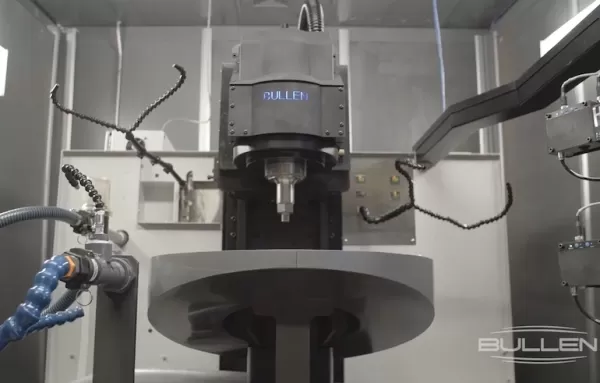
According to Bullen's research and early innovation manager, the goal of testing is not to prevent failure, but to manage it while gaining knowledge. Source: Bullen Ultrasonics
In robotics, errors come at a high price.
Automation projects are typically justified by a clear return on investment (ROI): greater efficiency, enhanced safety and ergonomics, higher throughput, or unlocking additional capacity from existing equipment. When problems arise, the cost is tangible. It manifests as missed launch deadlines, budget overruns, delayed production lines, and undermined business cases.
Mistakes can damage tooling, disrupt production schedules, and, in severe cases, create genuine safety hazards. More commonly, they delay the moment when the system starts delivering value. Too often, automation projects fail not due to a lack of skill or discipline, but because the most crucial insights emerge after key decisions are already finalized.
The issue isn't that teams miscalculate value. It's that robotics penalizes late discovery more harshly than most engineering fields. What distinguishes robotics is not just the potential cost of failure, but how early those costs become unavoidable.
Robotic systems concentrate risk upfront. Once a cell is commissioned, tooling is fabricated, motion paths are validated, cycle times are fixed, and safety systems are certified, change ceases to be routine engineering and becomes a disruptive event. Even minor adjustments can ripple through tooling schedules, supplier agreements, and production plans.
This lock-in fundamentally alters when learning is affordable. Consequently, many automation programs feel fragile at launch. Even after a system is meticulously specified, designed, built, tested, and deployed, the most significant learning often doesn't happen until it's operational.
By then, the learning curve hasn't ended; it has shifted to a phase where changes are more expensive and have a real operational impact. Crashes, extended debugging cycles, and tooling rework at this stage directly threaten the ROI the project was intended to deliver.
That fragility points to a deeper underlying issue.
The core problem: Robotics locks in risk early
Most automation failures are not failures of execution. They are failures of learning.
Teams make reasonable assumptions about reach, payload, inertia, part variation, grip margins, sequencing, and recovery behavior. Individually, these assumptions usually seem sound. Collectively, within an actual robotic cell, they can interact in unforeseen ways.
The problem isn't competence. It's timing.
Many of these assumptions aren't thoroughly tested until late-stage integration or commissioning, when the robot is already interacting with real tooling, actual parts, and genuine production constraints.
At that point, crashes cause more than inconvenience. They can damage expensive end-of-arm tooling (EOAT), destroy long-lead components, and set back manufacturing timelines by weeks or months. Even minor discoveries can cascade into downtime, rushed workarounds, damaged equipment, or compromised safety margins.
When late learning is the dominant failure mode in robotics, prevention depends less on perfect execution and more on *when* learning occurs. The real leverage comes from learning earlier, before high-value tooling and long-lead components are ever put at risk.
What ‘fail fast’ means in robotics
This is where the concept of "fail fast" is often misunderstood.
In software, failing fast usually means deploying quickly and iterating in production. Robotics cannot work that way. You don't experiment by crashing robots into fixtures or discovering payload limits on a live production line.
Failing fast in robotics means something very different. It means forcing uncertainty to surface before physical systems are locked down. It means discovering what doesn't work while the consequences are still low, contained, and reversible.
Timing, not intent, determines whether failure is productive or destructive. That learning must occur upstream of final tooling, validated cycle times, and frozen safety systems.
When learning arrives late in robotics, it manifests as downtime, rework, tooling damage, and safety exposure. It also appears as delayed startups, missed customer commitments, and cost overruns that directly impact ROI. When learning occurs early, it results in better designs and smoother launches.
Failing fast means learning deliberately while there is still time to adapt, before decisions harden and consequences escalate.
Why failure in robotics must also be small and safe
Failing early is necessary, but not sufficient. In robotics, early failure must also be tightly controlled. Once you accept that early failure is necessary, the next question is how to manage it.
Unlike digital systems, robotic failures are not unbounded. You cannot "see what happens" by dropping high-mass parts, colliding end effectors with fixtures, or testing recovery logic on live production assets. Early experimentation must be constrained by design.
This is where failing small and failing safe come in. Failing small means using low-cost, easily replaceable test assets. When something goes wrong—and it will—the cost is measured in hours or dollars, not weeks or capital expenditure.
Failing small is ultimately about reducing the scale of a potential catastrophe. In complex robotic systems, especially those with sophisticated EOAT, crashes can be devastating. End effectors often combine expensive purchased components with custom-manufactured alloy steel parts requiring heat treatment and precision grinding. Many of these components have long lead times and high replacement costs.
A single crash involving production tooling can reset schedules, inflate budgets, and jeopardize delivery commitments. In contrast, printing or fabricating surrogate EOAT for early robot programming allows teams to fail small and learn from low-cost mistakes rather than incurring high-impact damage.
Failing safe means deliberately isolating experimentation from live production systems so mistakes cannot propagate into real harm. This involves using surrogate geometries, offline programming, controlled teach modes, and physically or logically separated test environments.
Safety systems, interlocks, and operational boundaries must be established before experimentation begins. The objective is not to slow learning, but to ensure that errors are absorbed by the test environment rather than endangering personnel, damaging equipment, or disrupting production schedules.
This isn't just cultural language or a tolerance for chaos. It's a control strategy. The goal is not to avoid failure, but to contain it so learning remains inexpensive and safe.
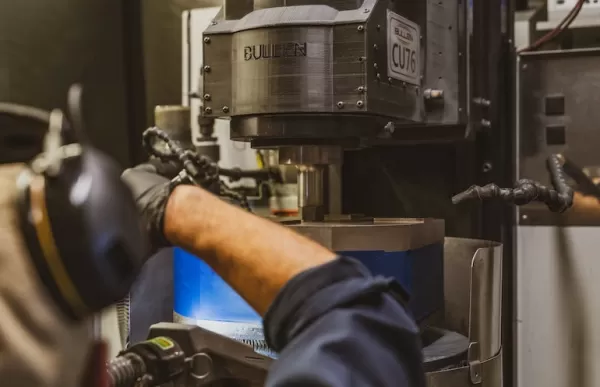
Precision machines from Bullen Ultrasonics.
Three tools that shift learning earlier
Shifting learning earlier requires more than intent. It demands specific validation tools that surface different risks before they compound. In practice, effective robotics programs use specific validation mechanisms to expose different classes of risk early, before those risks accumulate. No single tool is sufficient. Learning only advances when these methods are layered.
1. Software simulation
Simulation is the first line of defense against late discovery.
It validates reach, motion paths, sequencing, and collision envelopes long before a robot ever moves in the real world. Good simulation forces early answers to fundamental questions: Can the robot reach every required position? Are there unavoidable singularities? Does the sequence introduce collisions or awkward transitions? Are the cycle-time targets even realistic?
Simulation doesn't replace physical testing, but it eliminates entire categories of preventable surprises. Obvious failures become early design adjustments instead of commissioning-day emergencies.
However, geometry and motion alone do not capture physical interaction.
2. Printed physical surrogates
Many critical behaviors only reveal themselves through physical interaction.
Gripping reliability, clearances, handoffs, compliance, and recovery motions often behave differently in reality than in software. Printed or fabricated surrogate parts allow teams to explore these behaviors safely. They replicate geometry without carrying the cost or risk of real components.
Teams can test grasp strategies, observe misalignment tolerance, and validate recovery behavior without endangering production tooling. Surrogates also make "what if" testing practical. Imperfect placement, unexpected interference, or failed handoffs can be deliberately explored rather than discovered by accident.
Just as importantly, properly designed surrogate tooling enables parallel progress. In many projects, final EOAT becomes a critical path item due to long manufacturing lead times. If tooling is delayed, robot integration and teaching are often delayed as well.
By printing a surrogate EOAT, integration can proceed in parallel with tooling fabrication. Robot paths can be taught, sequences debugged, process variation measured, and human-machine interaction (HMI) workflows proven for correctness and usability while long-lead components are still in production. This pulls debugging forward in the schedule, enabling fast failure without stalling the overall project timeline.
Surrogates address geometry and interaction, but they cannot reveal dynamic behavior under load.
3. Mass-equivalent testing
Some risks only emerge once mass and inertia are introduced.
Acceleration limits, braking behavior, grip margins, and dynamic stability cannot be validated with lightweight stand-ins. Mass-equivalent testing closes that gap by matching weight and center of gravity without exposing high-value parts or tooling.
This approach assesses whether motion profiles are realistic, whether grip forces are sufficient under load, and whether the system behaves predictably during rapid starts, stops, and transitions. It also allows teams to validate cycle-time assumptions early, before late-discovery compromises erode throughput and ROI. Equally important, it provides room to rethink task sequencing, redistribute work, or redesign portions of the cell while changes are still feasible.
Catching these gaps early protects expensive assets and preserves the original ROI before late-stage changes become costly or impractical.
Safety is non-negotiable
Paradoxically, failing early only works when safety discipline is strongest.
Fail-fast principles apply to design validation, not live production. Robotic programs must maintain strict boundaries between experimentation and operations. This means using controlled teach modes, offline programming, formal hazard analysis, validated safety interlocks, and clear separation between test environments and active production areas.
There is no acceptable tradeoff between speed and safety. Early learning should reduce risk, not introduce it. Teams that confuse failing fast with cutting corners will slow projects down through incidents, audits, and corrective actions that could have been avoided entirely.
Strong safety practices are not constraints on learning. They enable early learning.
When not to fail fast
Even with strong safety discipline, not every system or moment is appropriate for experimentation. Just as uncontrolled failure is dangerous, uncontrolled experimentation is costly.
Fail-fast approaches should pause when safety cannot be adequately bounded, when hypotheses are vague or poorly defined, or when proposed changes threaten stable, proven systems. Protecting a validated production asset is sometimes the most ROI-positive decision available.
Restraint is a core engineering skill. Mature teams understand that disciplined experimentation and disciplined stability are not opposites. They are complementary tools used at different stages of a system's lifecycle.
Why robotics benefits from failing fast
When experimentation is disciplined, the predictable behavior of robots becomes an advantage rather than a liability.
Robots behave consistently. They repeat motions precisely. That repeatability allows teams to isolate variables, trust the data, and converge quickly if learning happens early. Small changes produce observable results. Patterns emerge. Decisions become evidence-based instead of assumption-driven.
This is where early learning converts technical discipline directly into financial outcomes. Late learning wastes this advantage, especially once schedules slip and suboptimal approaches are locked in. That debt appears long after launch as higher operating costs, ongoing maintenance burdens, and lost capacity relative to the original business case. Early learning, by contrast, amplifies the advantage by preserving flexibility while change is still inexpensive.
Fail fast early to avoid late costly failure
Reliable robotic systems don't avoid failure. They avoid *late* failure.
By failing early, deliberately, and safely, teams can move learning out of the commissioning phase and keep risk out of production. This approach protects tooling, preserves schedules, maintains ROI, and prevents small unknowns from becoming large project failures.
In a discipline where risk is front-loaded, learning must be front-loaded as well. The real cost of robotics mistakes isn't failure itself. It's discovering those failures too late—when change is hardest, and consequences are highest.
About the author
Eric Norton is the research and early innovation manager at Bullen Ultrasonics, a global leader in the precision machining of advanced ceramics, glass, and specialty materials using proprietary ultrasonic and laser-based technologies. In this role, he leads the company's innovation strategy and research initiatives to advance the future of ultrasonic machining, laser micromachining, automation, and precision manufacturing.
Over his 15 years at Bullen, Eric has built and now oversees a dedicated R&D function responsible for developing breakthrough technologies, piloting new capabilities, and aligning long-term technical investments with customer and market needs.
Related article
 DeepMind CEO Hassabis: I sleep six hours a day, usually feel energetic around 1 a.m.
Fortune recently featured an interview with Demis Hassabis, CEO of Google DeepMind, revealing his unconventional approach to rest and productivity. Hassabis disclosed that he sleeps very little, structuring his waking hours into two distinct work blo
OpenAI, Anthropic Vie for Market Share Despite Revenue Shortfalls
Despite recent reports suggesting OpenAI missed revenue targets, creating pressure on tech stocks this Tuesday, private AI lab investors remain resilient. Seasoned backers have confirmed they will not reduce investment despite negative media coverage
California AV Compliance: A New Era of Tickets, Geofences, and 1M Miles
Guident operates an AuveTech shuttle in South Florida, managing a four-mile route in West Palm Beach and a one-mile route in Boca Raton using its remote monitoring technology. | Credit: GuidentCalifornia is redefining the regulatory landscape for dri
Related Special Topic Recommendations
chatbot
DeepMind CEO Hassabis: I sleep six hours a day, usually feel energetic around 1 a.m.
Fortune recently featured an interview with Demis Hassabis, CEO of Google DeepMind, revealing his unconventional approach to rest and productivity. Hassabis disclosed that he sleeps very little, structuring his waking hours into two distinct work blo
OpenAI, Anthropic Vie for Market Share Despite Revenue Shortfalls
Despite recent reports suggesting OpenAI missed revenue targets, creating pressure on tech stocks this Tuesday, private AI lab investors remain resilient. Seasoned backers have confirmed they will not reduce investment despite negative media coverage
California AV Compliance: A New Era of Tickets, Geofences, and 1M Miles
Guident operates an AuveTech shuttle in South Florida, managing a four-mile route in West Palm Beach and a one-mile route in Boca Raton using its remote monitoring technology. | Credit: GuidentCalifornia is redefining the regulatory landscape for dri
Related Special Topic Recommendations
chatbot
 Best AI Roleplay Chat Apps for Language Practice, Interview Prep, and Daily Fluency
2026 Latest Best Top-rated AI Roleplay Chat Apps for Language Practice, Interview Prep, and Daily Fluency! XIX.AI curates a powerful game-changing collection that offers free vs paid comparison, real-world tests, and updated rankings weekly. These must-try tools help you boost writing skills, overcome fluency challenges, and improve communication efficiency across all daily scenarios. Explore now to discover your perfect tool for language growth!
 10 tools
 xix.ai
Music composition
AI Stem Separation Tools for Remix Production, Sampling Prep, and Karaoke Masters
xix.ai
Music composition
AI Stem Separation Tools for Remix Production, Sampling Prep, and Karaoke Masters
2026 Latest Best Top-rated AI Stem Separation Tools Curated for Remix Production, Sampling Prep, and Karaoke Masters. These powerful game-changing tools offer real-world tests to deliver precise audio isolation, boosting productivity significantly. XIX.AI provides a weekly updated free vs paid comparison guide to help you find the must-try solution that suits your needs. Explore now to unlock your AI edge.
8 tools
xix.ai
Data Analysis
AI SQL Copilots for Revenue Dashboards, Funnel Analysis, and Product Metrics
2026 Latest Best AI SQL Copilots Ranked Top-Rated! XIX.AI curates a powerful game-changing collection for weekly updated real-world tests. These must-try tools help you generate accurate revenue dashboards, analyze sales funnels, and track product metrics swiftly, boosting productivity massively. Explore now to Discover your perfect tool for data-driven decision making! 238 characters
9 tools
xix.ai
Music composition
Best AI Melody Writing Tools for Song Drafts
2026 Latest Best Top-Rated AI Melody Writing Tools for Song Drafts! XIX.AI has curated a highly powerful game-changing collection that goes through rigorous real-world tests to deliver the best writing experience. You can find detailed free vs paid comparisons, accurate rankings, and must-try options designed to help you create stunning song drafts effortlessly and boost your creative productivity significantly. Explore now to discover your perfect tool!
8 tools
xix.ai
chatbot
Best AI Conversation Trainer Tools for Interview Practice
2026 Latest Best Top-rated AI Conversation Trainer Tools for Interview Practice are here on XIX.AI! This curated collection features powerful, game-changing tools that go through rigorous real-world tests to deliver accurate feedback. You’ll find a free vs paid comparison and detailed rankings to help you choose the must-try option that boosts your confidence and skills. Explore now to Discover your perfect tool for interview success!
12 tools
xix.ai
Design & Art
Best AI Style Transfer Tools for Creative Experiments
2026 Latest Best Top-rated AI Style Transfer Tools for Creative Experiments! XIX.AI has curated a powerful, game-changing collection of must-try tools that deliver exceptional results through real-world tests and rigorous rankings. These top solutions help creatives boost productivity significantly by accelerating content creation and unlocking endless creative possibilities. Explore now to discover your perfect tool and start creating today!
9 tools
xix.ai

 Comments (1)
0/500
Comments (1)
0/500
![JohnAllen]()
So the goal of testing is to 'manage failure' while learning? That sounds like a great way to justify sloppy engineering 🤔. In robotics, a single error can total a whole production line, so 'incremental automation' better come with a really good insurance policy.
According to Bullen's research and early innovation manager, the goal of testing is not to prevent failure, but to manage it while gaining knowledge. Source: Bullen Ultrasonics
In robotics, errors come at a high price.
Automation projects are typically justified by a clear return on investment (ROI): greater efficiency, enhanced safety and ergonomics, higher throughput, or unlocking additional capacity from existing equipment. When problems arise, the cost is tangible. It manifests as missed launch deadlines, budget overruns, delayed production lines, and undermined business cases.
Mistakes can damage tooling, disrupt production schedules, and, in severe cases, create genuine safety hazards. More commonly, they delay the moment when the system starts delivering value. Too often, automation projects fail not due to a lack of skill or discipline, but because the most crucial insights emerge after key decisions are already finalized.
The issue isn't that teams miscalculate value. It's that robotics penalizes late discovery more harshly than most engineering fields. What distinguishes robotics is not just the potential cost of failure, but how early those costs become unavoidable.
Robotic systems concentrate risk upfront. Once a cell is commissioned, tooling is fabricated, motion paths are validated, cycle times are fixed, and safety systems are certified, change ceases to be routine engineering and becomes a disruptive event. Even minor adjustments can ripple through tooling schedules, supplier agreements, and production plans.
This lock-in fundamentally alters when learning is affordable. Consequently, many automation programs feel fragile at launch. Even after a system is meticulously specified, designed, built, tested, and deployed, the most significant learning often doesn't happen until it's operational.
By then, the learning curve hasn't ended; it has shifted to a phase where changes are more expensive and have a real operational impact. Crashes, extended debugging cycles, and tooling rework at this stage directly threaten the ROI the project was intended to deliver.
That fragility points to a deeper underlying issue.
The core problem: Robotics locks in risk early
Most automation failures are not failures of execution. They are failures of learning.
Teams make reasonable assumptions about reach, payload, inertia, part variation, grip margins, sequencing, and recovery behavior. Individually, these assumptions usually seem sound. Collectively, within an actual robotic cell, they can interact in unforeseen ways.
The problem isn't competence. It's timing.
Many of these assumptions aren't thoroughly tested until late-stage integration or commissioning, when the robot is already interacting with real tooling, actual parts, and genuine production constraints.
At that point, crashes cause more than inconvenience. They can damage expensive end-of-arm tooling (EOAT), destroy long-lead components, and set back manufacturing timelines by weeks or months. Even minor discoveries can cascade into downtime, rushed workarounds, damaged equipment, or compromised safety margins.
When late learning is the dominant failure mode in robotics, prevention depends less on perfect execution and more on *when* learning occurs. The real leverage comes from learning earlier, before high-value tooling and long-lead components are ever put at risk.
What ‘fail fast’ means in robotics
This is where the concept of "fail fast" is often misunderstood.
In software, failing fast usually means deploying quickly and iterating in production. Robotics cannot work that way. You don't experiment by crashing robots into fixtures or discovering payload limits on a live production line.
Failing fast in robotics means something very different. It means forcing uncertainty to surface before physical systems are locked down. It means discovering what doesn't work while the consequences are still low, contained, and reversible.
Timing, not intent, determines whether failure is productive or destructive. That learning must occur upstream of final tooling, validated cycle times, and frozen safety systems.
When learning arrives late in robotics, it manifests as downtime, rework, tooling damage, and safety exposure. It also appears as delayed startups, missed customer commitments, and cost overruns that directly impact ROI. When learning occurs early, it results in better designs and smoother launches.
Failing fast means learning deliberately while there is still time to adapt, before decisions harden and consequences escalate.
Why failure in robotics must also be small and safe
Failing early is necessary, but not sufficient. In robotics, early failure must also be tightly controlled. Once you accept that early failure is necessary, the next question is how to manage it.
Unlike digital systems, robotic failures are not unbounded. You cannot "see what happens" by dropping high-mass parts, colliding end effectors with fixtures, or testing recovery logic on live production assets. Early experimentation must be constrained by design.
This is where failing small and failing safe come in. Failing small means using low-cost, easily replaceable test assets. When something goes wrong—and it will—the cost is measured in hours or dollars, not weeks or capital expenditure.
Failing small is ultimately about reducing the scale of a potential catastrophe. In complex robotic systems, especially those with sophisticated EOAT, crashes can be devastating. End effectors often combine expensive purchased components with custom-manufactured alloy steel parts requiring heat treatment and precision grinding. Many of these components have long lead times and high replacement costs.
A single crash involving production tooling can reset schedules, inflate budgets, and jeopardize delivery commitments. In contrast, printing or fabricating surrogate EOAT for early robot programming allows teams to fail small and learn from low-cost mistakes rather than incurring high-impact damage.
Failing safe means deliberately isolating experimentation from live production systems so mistakes cannot propagate into real harm. This involves using surrogate geometries, offline programming, controlled teach modes, and physically or logically separated test environments.
Safety systems, interlocks, and operational boundaries must be established before experimentation begins. The objective is not to slow learning, but to ensure that errors are absorbed by the test environment rather than endangering personnel, damaging equipment, or disrupting production schedules.
This isn't just cultural language or a tolerance for chaos. It's a control strategy. The goal is not to avoid failure, but to contain it so learning remains inexpensive and safe.
Precision machines from Bullen Ultrasonics.
Three tools that shift learning earlier
Shifting learning earlier requires more than intent. It demands specific validation tools that surface different risks before they compound. In practice, effective robotics programs use specific validation mechanisms to expose different classes of risk early, before those risks accumulate. No single tool is sufficient. Learning only advances when these methods are layered.
1. Software simulation
Simulation is the first line of defense against late discovery.
It validates reach, motion paths, sequencing, and collision envelopes long before a robot ever moves in the real world. Good simulation forces early answers to fundamental questions: Can the robot reach every required position? Are there unavoidable singularities? Does the sequence introduce collisions or awkward transitions? Are the cycle-time targets even realistic?
Simulation doesn't replace physical testing, but it eliminates entire categories of preventable surprises. Obvious failures become early design adjustments instead of commissioning-day emergencies.
However, geometry and motion alone do not capture physical interaction.
2. Printed physical surrogates
Many critical behaviors only reveal themselves through physical interaction.
Gripping reliability, clearances, handoffs, compliance, and recovery motions often behave differently in reality than in software. Printed or fabricated surrogate parts allow teams to explore these behaviors safely. They replicate geometry without carrying the cost or risk of real components.
Teams can test grasp strategies, observe misalignment tolerance, and validate recovery behavior without endangering production tooling. Surrogates also make "what if" testing practical. Imperfect placement, unexpected interference, or failed handoffs can be deliberately explored rather than discovered by accident.
Just as importantly, properly designed surrogate tooling enables parallel progress. In many projects, final EOAT becomes a critical path item due to long manufacturing lead times. If tooling is delayed, robot integration and teaching are often delayed as well.
By printing a surrogate EOAT, integration can proceed in parallel with tooling fabrication. Robot paths can be taught, sequences debugged, process variation measured, and human-machine interaction (HMI) workflows proven for correctness and usability while long-lead components are still in production. This pulls debugging forward in the schedule, enabling fast failure without stalling the overall project timeline.
Surrogates address geometry and interaction, but they cannot reveal dynamic behavior under load.
3. Mass-equivalent testing
Some risks only emerge once mass and inertia are introduced.
Acceleration limits, braking behavior, grip margins, and dynamic stability cannot be validated with lightweight stand-ins. Mass-equivalent testing closes that gap by matching weight and center of gravity without exposing high-value parts or tooling.
This approach assesses whether motion profiles are realistic, whether grip forces are sufficient under load, and whether the system behaves predictably during rapid starts, stops, and transitions. It also allows teams to validate cycle-time assumptions early, before late-discovery compromises erode throughput and ROI. Equally important, it provides room to rethink task sequencing, redistribute work, or redesign portions of the cell while changes are still feasible.
Catching these gaps early protects expensive assets and preserves the original ROI before late-stage changes become costly or impractical.
Safety is non-negotiable
Paradoxically, failing early only works when safety discipline is strongest.
Fail-fast principles apply to design validation, not live production. Robotic programs must maintain strict boundaries between experimentation and operations. This means using controlled teach modes, offline programming, formal hazard analysis, validated safety interlocks, and clear separation between test environments and active production areas.
There is no acceptable tradeoff between speed and safety. Early learning should reduce risk, not introduce it. Teams that confuse failing fast with cutting corners will slow projects down through incidents, audits, and corrective actions that could have been avoided entirely.
Strong safety practices are not constraints on learning. They enable early learning.
When not to fail fast
Even with strong safety discipline, not every system or moment is appropriate for experimentation. Just as uncontrolled failure is dangerous, uncontrolled experimentation is costly.
Fail-fast approaches should pause when safety cannot be adequately bounded, when hypotheses are vague or poorly defined, or when proposed changes threaten stable, proven systems. Protecting a validated production asset is sometimes the most ROI-positive decision available.
Restraint is a core engineering skill. Mature teams understand that disciplined experimentation and disciplined stability are not opposites. They are complementary tools used at different stages of a system's lifecycle.
Why robotics benefits from failing fast
When experimentation is disciplined, the predictable behavior of robots becomes an advantage rather than a liability.
Robots behave consistently. They repeat motions precisely. That repeatability allows teams to isolate variables, trust the data, and converge quickly if learning happens early. Small changes produce observable results. Patterns emerge. Decisions become evidence-based instead of assumption-driven.
This is where early learning converts technical discipline directly into financial outcomes. Late learning wastes this advantage, especially once schedules slip and suboptimal approaches are locked in. That debt appears long after launch as higher operating costs, ongoing maintenance burdens, and lost capacity relative to the original business case. Early learning, by contrast, amplifies the advantage by preserving flexibility while change is still inexpensive.
Fail fast early to avoid late costly failure
Reliable robotic systems don't avoid failure. They avoid *late* failure.
By failing early, deliberately, and safely, teams can move learning out of the commissioning phase and keep risk out of production. This approach protects tooling, preserves schedules, maintains ROI, and prevents small unknowns from becoming large project failures.
In a discipline where risk is front-loaded, learning must be front-loaded as well. The real cost of robotics mistakes isn't failure itself. It's discovering those failures too late—when change is hardest, and consequences are highest.
About the author
Eric Norton is the research and early innovation manager at Bullen Ultrasonics, a global leader in the precision machining of advanced ceramics, glass, and specialty materials using proprietary ultrasonic and laser-based technologies. In this role, he leads the company's innovation strategy and research initiatives to advance the future of ultrasonic machining, laser micromachining, automation, and precision manufacturing.
Over his 15 years at Bullen, Eric has built and now oversees a dedicated R&D function responsible for developing breakthrough technologies, piloting new capabilities, and aligning long-term technical investments with customer and market needs.








 DeepMind CEO Hassabis: I sleep six hours a day, usually feel energetic around 1 a.m.
Fortune recently featured an interview with Demis Hassabis, CEO of Google DeepMind, revealing his unconventional approach to rest and productivity. Hassabis disclosed that he sleeps very little, structuring his waking hours into two distinct work blo
DeepMind CEO Hassabis: I sleep six hours a day, usually feel energetic around 1 a.m.
Fortune recently featured an interview with Demis Hassabis, CEO of Google DeepMind, revealing his unconventional approach to rest and productivity. Hassabis disclosed that he sleeps very little, structuring his waking hours into two distinct work blo
 OpenAI, Anthropic Vie for Market Share Despite Revenue Shortfalls
Despite recent reports suggesting OpenAI missed revenue targets, creating pressure on tech stocks this Tuesday, private AI lab investors remain resilient. Seasoned backers have confirmed they will not reduce investment despite negative media coverage
California AV Compliance: A New Era of Tickets, Geofences, and 1M Miles
Guident operates an AuveTech shuttle in South Florida, managing a four-mile route in West Palm Beach and a one-mile route in Boca Raton using its remote monitoring technology. | Credit: GuidentCalifornia is redefining the regulatory landscape for dri
OpenAI, Anthropic Vie for Market Share Despite Revenue Shortfalls
Despite recent reports suggesting OpenAI missed revenue targets, creating pressure on tech stocks this Tuesday, private AI lab investors remain resilient. Seasoned backers have confirmed they will not reduce investment despite negative media coverage
California AV Compliance: A New Era of Tickets, Geofences, and 1M Miles
Guident operates an AuveTech shuttle in South Florida, managing a four-mile route in West Palm Beach and a one-mile route in Boca Raton using its remote monitoring technology. | Credit: GuidentCalifornia is redefining the regulatory landscape for dri

2026 Latest Best Top-rated AI Roleplay Chat Apps for Language Practice, Interview Prep, and Daily Fluency! XIX.AI curates a powerful game-changing collection that offers free vs paid comparison, real-world tests, and updated rankings weekly. These must-try tools help you boost writing skills, overcome fluency challenges, and improve communication efficiency across all daily scenarios. Explore now to discover your perfect tool for language growth!
10 tools
xix.ai

2026 Latest Best Top-rated AI Stem Separation Tools Curated for Remix Production, Sampling Prep, and Karaoke Masters. These powerful game-changing tools offer real-world tests to deliver precise audio isolation, boosting productivity significantly. XIX.AI provides a weekly updated free vs paid comparison guide to help you find the must-try solution that suits your needs. Explore now to unlock your AI edge.
8 tools
xix.ai

2026 Latest Best AI SQL Copilots Ranked Top-Rated! XIX.AI curates a powerful game-changing collection for weekly updated real-world tests. These must-try tools help you generate accurate revenue dashboards, analyze sales funnels, and track product metrics swiftly, boosting productivity massively. Explore now to Discover your perfect tool for data-driven decision making! 238 characters
9 tools
xix.ai

2026 Latest Best Top-Rated AI Melody Writing Tools for Song Drafts! XIX.AI has curated a highly powerful game-changing collection that goes through rigorous real-world tests to deliver the best writing experience. You can find detailed free vs paid comparisons, accurate rankings, and must-try options designed to help you create stunning song drafts effortlessly and boost your creative productivity significantly. Explore now to discover your perfect tool!
8 tools
xix.ai

2026 Latest Best Top-rated AI Conversation Trainer Tools for Interview Practice are here on XIX.AI! This curated collection features powerful, game-changing tools that go through rigorous real-world tests to deliver accurate feedback. You’ll find a free vs paid comparison and detailed rankings to help you choose the must-try option that boosts your confidence and skills. Explore now to Discover your perfect tool for interview success!
12 tools
xix.ai

2026 Latest Best Top-rated AI Style Transfer Tools for Creative Experiments! XIX.AI has curated a powerful, game-changing collection of must-try tools that deliver exceptional results through real-world tests and rigorous rankings. These top solutions help creatives boost productivity significantly by accelerating content creation and unlocking endless creative possibilities. Explore now to discover your perfect tool and start creating today!
9 tools
xix.ai

So the goal of testing is to 'manage failure' while learning? That sounds like a great way to justify sloppy engineering 🤔. In robotics, a single error can total a whole production line, so 'incremental automation' better come with a really good insurance policy.












