


 Home
HomeGoogle's Gemini AI Assistant Arrives on Wrist with Wear OS 6
After several years of iterative updates, Wear OS 6 is poised to be a major step forward. A key change is the replacement of Google Assistant with Gemini on your wrist, accompanied by a comprehensive Material 3 Expressive redesign optimized for circular watch faces. For the third consecutive year, the latest version of Wear OS also brings improvements to battery longevity.
“In recent years, we have fundamentally reimagined Android with Gemini as its core, and now we're expanding Gemini's reach beyond smartphones,” explains Jaime Williams, Product Manager for Wear OS.
Williams notes that integrating Gemini goes beyond a simple swap for the Assistant, which is already present on many Wear OS watches. A primary benefit, common with generative AI, is more natural conversational interactions, meaning your commands don't need to be phrased in a specific, rigid way. Gemini on Wear OS will also interact with other applications. For instance, you can inquire about restaurant reservations, and Gemini will search your Gmail for relevant details. Williams adds that it will handle more complex requests, such as summarizing information. You can still access Gemini through watch complications, the app launcher, a button shortcut, or by saying “Hey Google.”
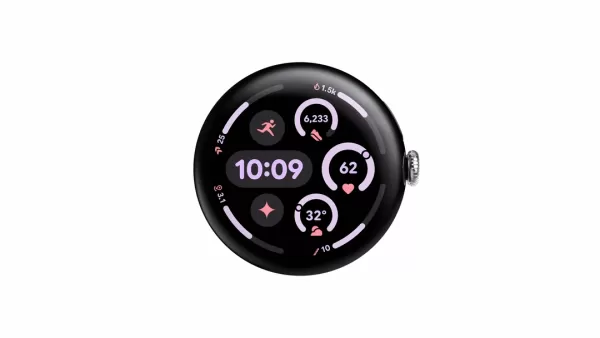
Google has chosen to fully embrace circular design with Material 3 Expressive in Wear OS 6. GIF: GoogleUsing Gemini will require an active internet connection. This means a Bluetooth link to your phone, or a direct Wi-Fi or LTE connection on the watch itself. Williams mentions the team is exploring offline capabilities for the future but did not provide a specific timeline.
“Gemini is independent of Wear OS 6,” Williams states, clarifying that while some features are exclusive to Wear OS 6, Gemini will be available on all current Wear OS devices that run Google Assistant. (Consequently, if your Wear OS watch lacks Assistant, it will not receive Gemini either.)
This is encouraging news given the platform's past difficulties with integrating Assistant. That process was significantly delayed during Google's transition from Wear OS 2 to the unified Wear OS 3 platform developed with Samsung's Tizen OS. Fossil, for example, took two years before ultimately exiting the smartwatch market. While some Wear OS watches still do not have Assistant, this suggests the shift to Gemini might be a smoother transition overall.
Wear OS 6 will feature Google's new Material 3 Expressive design language. “Our goal was to progress beyond a purely functional interface to create one that feels more personally connected. With Wear OS 6, our primary focus was to truly embrace the circular display,” says Lily Darling, Visual and Motion Lead for Wear OS.
Darling was hesitant to confirm whether this means Wear OS (and by extension, Google) is exclusively committing to circular displays. However, she emphasized that Google's approach was to “refine every design element to complement the round form factor.” This philosophy applies to layouts, font selections, scrolling animations, and transitions between screens. On-screen buttons have been adjusted to “follow the curve of the display” for easier tapping, while Tiles and notifications are designed for quicker reading. Notifications now feature sender avatars and embedded thumbnail images, allowing you to identify who is messaging or emailing you at a glance. Color theming has also been brought over from Android, enabling you to quickly coordinate your watch's look with your phone or outfit.
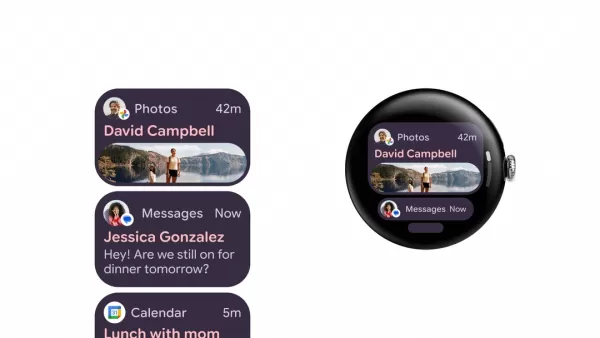
Notifications have been refined for quicker readability. GIF: GoogleGoogle shared less about Wear OS 6's performance, aside from a modest "up to 10 percent" boost in battery life. While this may not be the most thrilling update, Bjorn Kilburn, Google's VP and GM of Wear OS, notes that it remains a top request from smartwatch users.
“Battery life is a complex challenge, and it's a game of incremental gains. We are persistently working on it,” Kilburn says, pointing out that battery improvements will vary depending on usage. The team has specifically enhanced power efficiency for media playback and control on the watch. Therefore, users who frequently use their watch for media can expect a more noticeable improvement than those who do not.
Related
- Wear OS 4 arrives with enhanced battery life features
- Wear OS 5 continues the strong focus on extending battery life
- Android's vibrant new visual overhaul may not be enough to lure Gen Z from iPhones
Regarding the decision for a more substantial update this year, Kilburn attributes it partly to timing. Major updates like this, he explains, require a long development cycle. More specifically, it was a deliberate effort to synchronize the phone and watch experiences. Technically, Android 16 and Wear OS 6 now share the same underlying codebase. This unification accelerated Google's ability to bring Wear OS features to parity with those available on Android phones.
“These are two essential devices that people rely on,” Kilburn remarks, highlighting that the Android and Wear OS teams collaborated extensively to align their roadmaps. The result is that “your phone and watch can feel like a cohesive pair, sharing the same design philosophy simultaneously.”
Related article
 Microsoft, Azure and AI Tech Combat California Wildfire Risks
Microsoft invests in AI-driven wildfire detection, with Juan Lavista Ferres, CVP and Chief Data Scientist, discussing strategies to mitigate environmental damage.According to NASA, climate change impacts everyone on Earth, manifesting as rising tempe
Microsoft CEO Slams AI Labs Over Distillation
Satya Nadella, Microsoft’s CEO, calls out AI labs for hypocrisy regarding distillation criticism, a remark widely interpreted as targeting Anthropic. Credit: Getty ImagesMicrosoft CEO Satya Nadella challenges AI developers for limiting model distilla
Google rolls out fake call detection to protect against AI deepfake impersonation scams
Google announced on Tuesday that Android is launching fake call detection to protect against AI deepfake impersonation scams. The feature is rolling out globally in Phone by Google to Android 12+ devices this month, starting with Pixel devices.As peo
Related Special Topic Recommendations
Design & Art
Microsoft, Azure and AI Tech Combat California Wildfire Risks
Microsoft invests in AI-driven wildfire detection, with Juan Lavista Ferres, CVP and Chief Data Scientist, discussing strategies to mitigate environmental damage.According to NASA, climate change impacts everyone on Earth, manifesting as rising tempe
Microsoft CEO Slams AI Labs Over Distillation
Satya Nadella, Microsoft’s CEO, calls out AI labs for hypocrisy regarding distillation criticism, a remark widely interpreted as targeting Anthropic. Credit: Getty ImagesMicrosoft CEO Satya Nadella challenges AI developers for limiting model distilla
Google rolls out fake call detection to protect against AI deepfake impersonation scams
Google announced on Tuesday that Android is launching fake call detection to protect against AI deepfake impersonation scams. The feature is rolling out globally in Phone by Google to Android 12+ devices this month, starting with Pixel devices.As peo
Related Special Topic Recommendations
Design & Art
 Best AI Style Transfer Tools for Creative Experiments
2026 Latest Best Top-rated AI Style Transfer Tools for Creative Experiments! XIX.AI has curated a powerful, game-changing collection of must-try tools that deliver exceptional results through real-world tests and rigorous rankings. These top solutions help creatives boost productivity significantly by accelerating content creation and unlocking endless creative possibilities. Explore now to discover your perfect tool and start creating today!
 9 tools
 xix.ai
Comic Creation
Best AI Dialogue Bubble Tools for Visual Storytelling
xix.ai
Comic Creation
Best AI Dialogue Bubble Tools for Visual Storytelling
2026 Latest Best Top-Rated AI Dialogue Bubble Tools for Visual Storytelling are here on XIX.AI! This curated collection features powerful, game-changing tools that help creators boost productivity and overcome creative bottlenecks. Get a free vs paid comparison, see real-world tests, and check the latest rankings to find the must-try solutions perfect for crafting engaging visual narratives. Explore now to discover your ideal tool!
10 tools
xix.ai
Meeting Assistant
Top AI Meeting Summary Tools: Track Decisions and Follow-Ups Clearly
2026 Latest Top-Rated Best AI Meeting Summary Tools for Clear Decision Tracking and Effortless Follow-Ups. This curated list showcases powerful, game-changing solutions that boost productivity dramatically by automating meeting notes, identifying key action items, and streamlining team coordination across all projects. Get a free vs paid comparison along with real-world tests and weekly updated rankings to help you find the perfect tool. Explore now to unlock your AI edge!
9 tools
xix.ai
Data Analysis
Best AI Data Cleaning Tools: Fix Missing Values and Duplicates Fast
2026 Latest Best Top-rated AI Data Cleaning Tools for quick fixing of missing values and duplicates. This curated list showcases powerful, game-changing solutions that boost productivity significantly. Each option has undergone rigorous real-world tests to ensure reliability. Get a free vs paid comparison and discover the must-try tool that fits your needs best. Explore now at XIX.AI to Unlock your AI edge.
11 tools
xix.ai
Design & Art
Best AI Creative Ideation Tools for Artists: Break Through Visual Blocks
2026 Latest Best Top-Rated AI Creative Ideation Tools for Artists are curated by XIX.AI to help creators break through visual blocks and boost creativity instantly. These powerful game-changing tools offer real-world tests, detailed free vs paid comparison, and weekly updated rankings. Discover your perfect tool to accelerate content creation and unlock your AI edge today. Explore now!
14 tools
xix.ai
Music composition
AI Beat Makers for TikTok Background Tracks, Reels Audio, and Creator Promo Music
2026 Latest Best AI Beat Makers for TikTok Background Tracks, Reels Audio, and Creator Promo Music! XIX.AI has curated a top-rated list of powerful game-changing tools that go through real-world tests to deliver flawless music for every content need. You’ll find detailed free vs paid comparison data, weekly updated rankings, and must-try options to help you boost creativity and productivity. Explore now to discover your perfect tool!
11 tools
xix.ai

 Comments (1)
0/500
Comments (1)
0/500
![FrankClark]()
Finally, Wear OS gets a serious upgrade! Replacing Google Assistant with Gemini on a tiny screen sounds ambitious—hope it doesn't end up as a battery hog. Still, the Material 3 redesign for circular displays might actually make it usable. 🤔
After several years of iterative updates, Wear OS 6 is poised to be a major step forward. A key change is the replacement of Google Assistant with Gemini on your wrist, accompanied by a comprehensive Material 3 Expressive redesign optimized for circular watch faces. For the third consecutive year, the latest version of Wear OS also brings improvements to battery longevity.
“In recent years, we have fundamentally reimagined Android with Gemini as its core, and now we're expanding Gemini's reach beyond smartphones,” explains Jaime Williams, Product Manager for Wear OS.
Williams notes that integrating Gemini goes beyond a simple swap for the Assistant, which is already present on many Wear OS watches. A primary benefit, common with generative AI, is more natural conversational interactions, meaning your commands don't need to be phrased in a specific, rigid way. Gemini on Wear OS will also interact with other applications. For instance, you can inquire about restaurant reservations, and Gemini will search your Gmail for relevant details. Williams adds that it will handle more complex requests, such as summarizing information. You can still access Gemini through watch complications, the app launcher, a button shortcut, or by saying “Hey Google.”
Using Gemini will require an active internet connection. This means a Bluetooth link to your phone, or a direct Wi-Fi or LTE connection on the watch itself. Williams mentions the team is exploring offline capabilities for the future but did not provide a specific timeline.
“Gemini is independent of Wear OS 6,” Williams states, clarifying that while some features are exclusive to Wear OS 6, Gemini will be available on all current Wear OS devices that run Google Assistant. (Consequently, if your Wear OS watch lacks Assistant, it will not receive Gemini either.)
This is encouraging news given the platform's past difficulties with integrating Assistant. That process was significantly delayed during Google's transition from Wear OS 2 to the unified Wear OS 3 platform developed with Samsung's Tizen OS. Fossil, for example, took two years before ultimately exiting the smartwatch market. While some Wear OS watches still do not have Assistant, this suggests the shift to Gemini might be a smoother transition overall.
Wear OS 6 will feature Google's new Material 3 Expressive design language. “Our goal was to progress beyond a purely functional interface to create one that feels more personally connected. With Wear OS 6, our primary focus was to truly embrace the circular display,” says Lily Darling, Visual and Motion Lead for Wear OS.
Darling was hesitant to confirm whether this means Wear OS (and by extension, Google) is exclusively committing to circular displays. However, she emphasized that Google's approach was to “refine every design element to complement the round form factor.” This philosophy applies to layouts, font selections, scrolling animations, and transitions between screens. On-screen buttons have been adjusted to “follow the curve of the display” for easier tapping, while Tiles and notifications are designed for quicker reading. Notifications now feature sender avatars and embedded thumbnail images, allowing you to identify who is messaging or emailing you at a glance. Color theming has also been brought over from Android, enabling you to quickly coordinate your watch's look with your phone or outfit.
Google shared less about Wear OS 6's performance, aside from a modest "up to 10 percent" boost in battery life. While this may not be the most thrilling update, Bjorn Kilburn, Google's VP and GM of Wear OS, notes that it remains a top request from smartwatch users.
“Battery life is a complex challenge, and it's a game of incremental gains. We are persistently working on it,” Kilburn says, pointing out that battery improvements will vary depending on usage. The team has specifically enhanced power efficiency for media playback and control on the watch. Therefore, users who frequently use their watch for media can expect a more noticeable improvement than those who do not.
Related
- Wear OS 4 arrives with enhanced battery life features
- Wear OS 5 continues the strong focus on extending battery life
- Android's vibrant new visual overhaul may not be enough to lure Gen Z from iPhones
Regarding the decision for a more substantial update this year, Kilburn attributes it partly to timing. Major updates like this, he explains, require a long development cycle. More specifically, it was a deliberate effort to synchronize the phone and watch experiences. Technically, Android 16 and Wear OS 6 now share the same underlying codebase. This unification accelerated Google's ability to bring Wear OS features to parity with those available on Android phones.
“These are two essential devices that people rely on,” Kilburn remarks, highlighting that the Android and Wear OS teams collaborated extensively to align their roadmaps. The result is that “your phone and watch can feel like a cohesive pair, sharing the same design philosophy simultaneously.”








 Microsoft, Azure and AI Tech Combat California Wildfire Risks
Microsoft invests in AI-driven wildfire detection, with Juan Lavista Ferres, CVP and Chief Data Scientist, discussing strategies to mitigate environmental damage.According to NASA, climate change impacts everyone on Earth, manifesting as rising tempe
Microsoft, Azure and AI Tech Combat California Wildfire Risks
Microsoft invests in AI-driven wildfire detection, with Juan Lavista Ferres, CVP and Chief Data Scientist, discussing strategies to mitigate environmental damage.According to NASA, climate change impacts everyone on Earth, manifesting as rising tempe
 Microsoft CEO Slams AI Labs Over Distillation
Satya Nadella, Microsoft’s CEO, calls out AI labs for hypocrisy regarding distillation criticism, a remark widely interpreted as targeting Anthropic. Credit: Getty ImagesMicrosoft CEO Satya Nadella challenges AI developers for limiting model distilla
Microsoft CEO Slams AI Labs Over Distillation
Satya Nadella, Microsoft’s CEO, calls out AI labs for hypocrisy regarding distillation criticism, a remark widely interpreted as targeting Anthropic. Credit: Getty ImagesMicrosoft CEO Satya Nadella challenges AI developers for limiting model distilla
 Google rolls out fake call detection to protect against AI deepfake impersonation scams
Google announced on Tuesday that Android is launching fake call detection to protect against AI deepfake impersonation scams. The feature is rolling out globally in Phone by Google to Android 12+ devices this month, starting with Pixel devices.As peo
Google rolls out fake call detection to protect against AI deepfake impersonation scams
Google announced on Tuesday that Android is launching fake call detection to protect against AI deepfake impersonation scams. The feature is rolling out globally in Phone by Google to Android 12+ devices this month, starting with Pixel devices.As peo

2026 Latest Best Top-rated AI Style Transfer Tools for Creative Experiments! XIX.AI has curated a powerful, game-changing collection of must-try tools that deliver exceptional results through real-world tests and rigorous rankings. These top solutions help creatives boost productivity significantly by accelerating content creation and unlocking endless creative possibilities. Explore now to discover your perfect tool and start creating today!
9 tools
xix.ai

2026 Latest Best Top-Rated AI Dialogue Bubble Tools for Visual Storytelling are here on XIX.AI! This curated collection features powerful, game-changing tools that help creators boost productivity and overcome creative bottlenecks. Get a free vs paid comparison, see real-world tests, and check the latest rankings to find the must-try solutions perfect for crafting engaging visual narratives. Explore now to discover your ideal tool!
10 tools
xix.ai

2026 Latest Top-Rated Best AI Meeting Summary Tools for Clear Decision Tracking and Effortless Follow-Ups. This curated list showcases powerful, game-changing solutions that boost productivity dramatically by automating meeting notes, identifying key action items, and streamlining team coordination across all projects. Get a free vs paid comparison along with real-world tests and weekly updated rankings to help you find the perfect tool. Explore now to unlock your AI edge!
9 tools
xix.ai

2026 Latest Best Top-rated AI Data Cleaning Tools for quick fixing of missing values and duplicates. This curated list showcases powerful, game-changing solutions that boost productivity significantly. Each option has undergone rigorous real-world tests to ensure reliability. Get a free vs paid comparison and discover the must-try tool that fits your needs best. Explore now at XIX.AI to Unlock your AI edge.
11 tools
xix.ai

2026 Latest Best Top-Rated AI Creative Ideation Tools for Artists are curated by XIX.AI to help creators break through visual blocks and boost creativity instantly. These powerful game-changing tools offer real-world tests, detailed free vs paid comparison, and weekly updated rankings. Discover your perfect tool to accelerate content creation and unlock your AI edge today. Explore now!
14 tools
xix.ai

2026 Latest Best AI Beat Makers for TikTok Background Tracks, Reels Audio, and Creator Promo Music! XIX.AI has curated a top-rated list of powerful game-changing tools that go through real-world tests to deliver flawless music for every content need. You’ll find detailed free vs paid comparison data, weekly updated rankings, and must-try options to help you boost creativity and productivity. Explore now to discover your perfect tool!
11 tools
xix.ai

Finally, Wear OS gets a serious upgrade! Replacing Google Assistant with Gemini on a tiny screen sounds ambitious—hope it doesn't end up as a battery hog. Still, the Material 3 redesign for circular displays might actually make it usable. 🤔












