


 Home
HomeUS Halts Microsoft, Adobe From Tech Green Card Program
On October 8, the Trump administration formally suspended several major IT companies, including Microsoft and Adobe, from participating in the green card program aimed at helping foreign technical workers obtain permanent residency in the United States, and accused the relevant companies of fraudulent activities.

The US Secretary of Labor, Keith Sundling, clearly stated that the government will no longer accept any new or pending permanent labor certification applications involving these companies. The affected companies also include well-known service and tech giants such as Capgemini, Cognizant, HCL, Infosys, Tata Group, and Wipro.
Vice President JD Vance emphasized at a press conference that companies must prioritize hiring American local employees, and also revealed that the government will conduct investigations into nine prestigious universities, including Harvard, Yale, and Stanford, to examine whether they are misusing international student programs to suppress local workers' wages.
As one of the largest user groups of H-1B visas and subsequent green card conversions, nearly three-quarters of approved H-1B visas have gone to Indian technical professionals in recent years. In response to the administrative intervention, Microsoft quickly responded, pointing out that the majority of its employees are Americans. Of the approximately 6,000 H-1B applications submitted in the previous fiscal year, 80% were used for the renewal or change of status for existing employees, rather than hiring new employees; the remaining new employee applications accounted for only 1% of the total number of American employees, and all met strict visa standards and were entitled to equal pay for equal work.
As the global competition for AI and hard technology talent enters a feverish stage, the tightening of high-tech enterprise technical immigration channels by the United States may reshape the global flow of high-tech talent and bring far-reaching impacts on the core R&D teams of large technology companies.
Related article
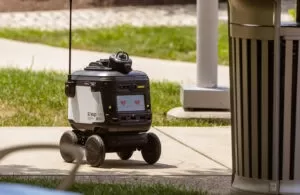
 Robot.com teams with Sodexo to expand sidewalk delivery robot fleet
Robot.com’s sidewalk delivery robot R-Kiwi has completed 2.4 million tasks across campuses and city sidewalks. | Source: Robot.comRobot.com has entered into a seven-year commercial agreement with Sodexo Group, expanding a partnership that began in 20
Suduo Issues Full Apology and Removes AI-Generated Vulgar Videos
Soufun’s officially verified e-commerce store, "Soufun Personal Care Appliances Store," sparked widespread outrage after publishing numerous AI-generated videos with sexually suggestive themes. The content included inappropriate scenarios, such as a
Lovable’s annual revenue exceeds $500M, with weekly project growth hitting 1 million
European AI startup Lovable, specializing in "Vibe Coding," recently announced that its annual recurring revenue (ARR) has officially exceeded $500 million, with over 50 million projects created on its platform. Furthermore, usage has surged, adding
Related Special Topic Recommendations
automation
Robot.com teams with Sodexo to expand sidewalk delivery robot fleet
Robot.com’s sidewalk delivery robot R-Kiwi has completed 2.4 million tasks across campuses and city sidewalks. | Source: Robot.comRobot.com has entered into a seven-year commercial agreement with Sodexo Group, expanding a partnership that began in 20
Suduo Issues Full Apology and Removes AI-Generated Vulgar Videos
Soufun’s officially verified e-commerce store, "Soufun Personal Care Appliances Store," sparked widespread outrage after publishing numerous AI-generated videos with sexually suggestive themes. The content included inappropriate scenarios, such as a
Lovable’s annual revenue exceeds $500M, with weekly project growth hitting 1 million
European AI startup Lovable, specializing in "Vibe Coding," recently announced that its annual recurring revenue (ARR) has officially exceeded $500 million, with over 50 million projects created on its platform. Furthermore, usage has surged, adding
Related Special Topic Recommendations
automation
 Best AI Browser Automation Tools for Web Operations
2026 Latest Best Top-rated AI Browser Automation Tools for Web Operations are here on XIX.AI! This curated list features powerful, game-changing solutions that help boost productivity dramatically through real-world tests and strict rankings. We also provide a free vs paid comparison to help you choose the perfect option for streamlining web tasks, enhancing automation efficiency, and unlocking your AI edge. Explore now!
 9 tools
 xix.ai
Health & Wellness
AI Wellness Tools for Sleep and Habit Tracking
xix.ai
Health & Wellness
AI Wellness Tools for Sleep and Habit Tracking
2026 Latest Best Top-Rated AI Wellness Tools for Sleep and Habit Tracking! XIX.AI curates a powerful, game-changing collection of must-try tools that offer real-world tests and detailed free vs paid comparison. These top-rated solutions help users boost sleep quality, monitor daily habits effectively, and unlock significant productivity improvements. Explore now to Discover your perfect tool and Start creating today to Unlock your AI edge!
11 tools
xix.ai
Business
AI Vendor Due Diligence Platforms for Procurement Reviews and Risk Screening
2026 Latest Best Top-rated AI Vendor Due Diligence Platforms for Procurement Reviews and Risk Screening! This curated list features powerful game-changing tools that go through rigorous real-world tests to deliver accurate rankings. You’ll find a free vs paid comparison, helping you identify the must-try solutions that boost procurement efficiency and cut risks. Backed by XIX.AI, it’s updated weekly. Explore now to discover your perfect tool for smarter sourcing! 238 characters
10 tools
xix.ai
Video creation
Best AI Video Generators for Demos: Turn Scripts into Explainer Videos
2026 Latest Best Top-Rated AI Video Generators for Demos are curated here, offering powerful game-changing solutions to turn scripts into professional explainer videos fast. XIX.AI provides weekly updated rankings based on real-world tests, including free vs paid comparison details. Must-try tools help boost productivity significantly. Explore now to discover your perfect demo video creation tool!
9 tools
xix.ai
Finance
AI Cash Flow Forecasting Tools for Small Business Finance
2026 Latest Best Top-rated AI Cash Flow Forecasting Tools for Small Business Finance are here on XIX.AI! Our curated list features powerful, game-changing solutions that go through real-world tests to help small business owners boost financial accuracy, plan budgets more effectively, and avoid cash flow issues. Get a free vs paid comparison and explore now to find your perfect tool for seamless financial management.
7 tools
xix.ai
code
Best AI Coding Chatbots: Debug Python, JS, and SQL in One Place
2026 Latest Best Top-Rated AI Coding Chatbots Curated for Developers! Experience powerful game-changing tools that help you debug Python, JS, and SQL issues quickly. Get a free vs paid comparison along with real-world tests and detailed rankings to find the perfect fit for boosting your coding productivity. Try XIX.AI today to unlock your AI edge! Explore now.
12 tools
xix.ai

 Comments (0)
0/500
Comments (0)
0/500
On October 8, the Trump administration formally suspended several major IT companies, including Microsoft and Adobe, from participating in the green card program aimed at helping foreign technical workers obtain permanent residency in the United States, and accused the relevant companies of fraudulent activities.
The US Secretary of Labor, Keith Sundling, clearly stated that the government will no longer accept any new or pending permanent labor certification applications involving these companies. The affected companies also include well-known service and tech giants such as Capgemini, Cognizant, HCL, Infosys, Tata Group, and Wipro.
Vice President JD Vance emphasized at a press conference that companies must prioritize hiring American local employees, and also revealed that the government will conduct investigations into nine prestigious universities, including Harvard, Yale, and Stanford, to examine whether they are misusing international student programs to suppress local workers' wages.
As one of the largest user groups of H-1B visas and subsequent green card conversions, nearly three-quarters of approved H-1B visas have gone to Indian technical professionals in recent years. In response to the administrative intervention, Microsoft quickly responded, pointing out that the majority of its employees are Americans. Of the approximately 6,000 H-1B applications submitted in the previous fiscal year, 80% were used for the renewal or change of status for existing employees, rather than hiring new employees; the remaining new employee applications accounted for only 1% of the total number of American employees, and all met strict visa standards and were entitled to equal pay for equal work.
As the global competition for AI and hard technology talent enters a feverish stage, the tightening of high-tech enterprise technical immigration channels by the United States may reshape the global flow of high-tech talent and bring far-reaching impacts on the core R&D teams of large technology companies.








 Robot.com teams with Sodexo to expand sidewalk delivery robot fleet
Robot.com’s sidewalk delivery robot R-Kiwi has completed 2.4 million tasks across campuses and city sidewalks. | Source: Robot.comRobot.com has entered into a seven-year commercial agreement with Sodexo Group, expanding a partnership that began in 20
Suduo Issues Full Apology and Removes AI-Generated Vulgar Videos
Soufun’s officially verified e-commerce store, "Soufun Personal Care Appliances Store," sparked widespread outrage after publishing numerous AI-generated videos with sexually suggestive themes. The content included inappropriate scenarios, such as a
Robot.com teams with Sodexo to expand sidewalk delivery robot fleet
Robot.com’s sidewalk delivery robot R-Kiwi has completed 2.4 million tasks across campuses and city sidewalks. | Source: Robot.comRobot.com has entered into a seven-year commercial agreement with Sodexo Group, expanding a partnership that began in 20
Suduo Issues Full Apology and Removes AI-Generated Vulgar Videos
Soufun’s officially verified e-commerce store, "Soufun Personal Care Appliances Store," sparked widespread outrage after publishing numerous AI-generated videos with sexually suggestive themes. The content included inappropriate scenarios, such as a
 Lovable’s annual revenue exceeds $500M, with weekly project growth hitting 1 million
European AI startup Lovable, specializing in "Vibe Coding," recently announced that its annual recurring revenue (ARR) has officially exceeded $500 million, with over 50 million projects created on its platform. Furthermore, usage has surged, adding
Lovable’s annual revenue exceeds $500M, with weekly project growth hitting 1 million
European AI startup Lovable, specializing in "Vibe Coding," recently announced that its annual recurring revenue (ARR) has officially exceeded $500 million, with over 50 million projects created on its platform. Furthermore, usage has surged, adding
2026 Latest Best Top-rated AI Browser Automation Tools for Web Operations are here on XIX.AI! This curated list features powerful, game-changing solutions that help boost productivity dramatically through real-world tests and strict rankings. We also provide a free vs paid comparison to help you choose the perfect option for streamlining web tasks, enhancing automation efficiency, and unlocking your AI edge. Explore now!
9 tools
xix.ai
2026 Latest Best Top-Rated AI Wellness Tools for Sleep and Habit Tracking! XIX.AI curates a powerful, game-changing collection of must-try tools that offer real-world tests and detailed free vs paid comparison. These top-rated solutions help users boost sleep quality, monitor daily habits effectively, and unlock significant productivity improvements. Explore now to Discover your perfect tool and Start creating today to Unlock your AI edge!
11 tools
xix.ai

2026 Latest Best Top-rated AI Vendor Due Diligence Platforms for Procurement Reviews and Risk Screening! This curated list features powerful game-changing tools that go through rigorous real-world tests to deliver accurate rankings. You’ll find a free vs paid comparison, helping you identify the must-try solutions that boost procurement efficiency and cut risks. Backed by XIX.AI, it’s updated weekly. Explore now to discover your perfect tool for smarter sourcing! 238 characters
10 tools
xix.ai

2026 Latest Best Top-Rated AI Video Generators for Demos are curated here, offering powerful game-changing solutions to turn scripts into professional explainer videos fast. XIX.AI provides weekly updated rankings based on real-world tests, including free vs paid comparison details. Must-try tools help boost productivity significantly. Explore now to discover your perfect demo video creation tool!
9 tools
xix.ai

2026 Latest Best Top-rated AI Cash Flow Forecasting Tools for Small Business Finance are here on XIX.AI! Our curated list features powerful, game-changing solutions that go through real-world tests to help small business owners boost financial accuracy, plan budgets more effectively, and avoid cash flow issues. Get a free vs paid comparison and explore now to find your perfect tool for seamless financial management.
7 tools
xix.ai

2026 Latest Best Top-Rated AI Coding Chatbots Curated for Developers! Experience powerful game-changing tools that help you debug Python, JS, and SQL issues quickly. Get a free vs paid comparison along with real-world tests and detailed rankings to find the perfect fit for boosting your coding productivity. Try XIX.AI today to unlock your AI edge! Explore now.
12 tools
xix.ai












