


 Home
Tongyi Qianwen Qwen-Audio-3.0-TTS Goes Live With 300ms First Packet Delay, 20 Dialects
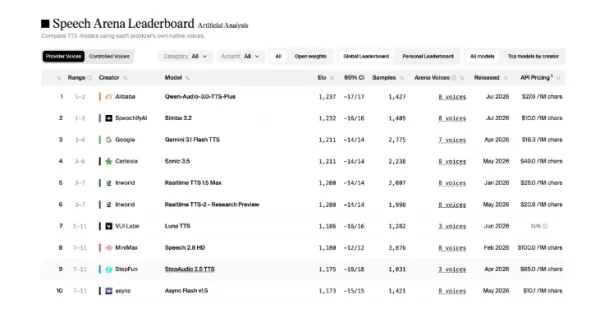
The Alibaba Qwen team has launched the new real-time speech synthesis model Qwen-Audio-3.0-TTS, moving speech synthesis from basic generation to true expression. The Plus version now ranks first globally in the Speech Arena, a respected benchmark by Artificial Analysis, outperforming Gemini 3.1 TTS, ElevenLabs v3, and other major models.
Two versions are available: the Flash version targets real-time interaction with an initial latency of around 300ms, ideal for smart assistants and other low-latency use cases; the Plus version prioritizes high-quality generation, delivering improved naturalness and voice similarity.
Four key breakthroughs in core capabilities:
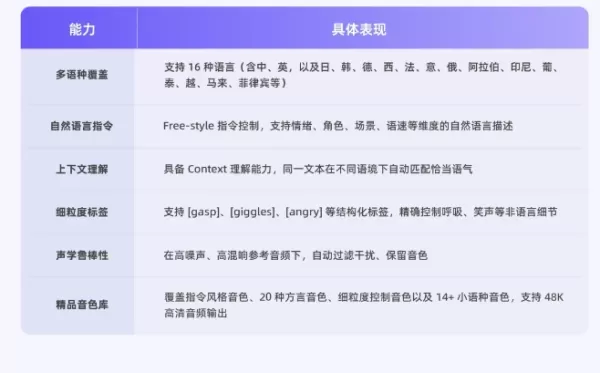
First, multilingual and dialect support has been expanded to 16 languages, with the Plus version achieving an average speaker similarity of 82.75% across all 16 languages — the highest in the industry. It also covers 20 Chinese dialects, maintaining authentic dialect characteristics rather than weakening them, for more native-like expressions.
Second, flexible natural language instructions allow users to generate accurate speech with prompts like "gentle customer service tone" or "live-streaming host style," without needing professional annotations.
Third, fine-grained tag control supports structured tags such as [gasp] and [angry], enabling precise management of non-verbal details like breathing and laughter — suitable for games, audiobooks, and similar scenarios.
Fourth, strong acoustic robustness: even if the reference audio contains high noise or reverberation, the model automatically filters out background noise while preserving voice quality, ensuring stable synthesis output.
The accompanying premium voice library includes various voice types — instructions, dialects, and lesser-used languages — supports 48K high-definition audio output (expected to open on July 24th), and can synthesize up to 3 minutes of long text per session. The model is now fully available on the Alibaba Cloud BaiLian platform, where developers can access and try it, opening up new possibilities in voice interaction.
Related article
 MacWhisper 14 Update Brings Direct Transcript Editing and Fixes High CPU Usage
Jodi Bruijn, the independent developer behind MacWhisper, released version 14.0 yesterday, prioritizing enhanced transcription performance and introducing a dedicated editor view. Since its 2023 launch, MacWhisper has established itself as an AI-powe
Qwen3.5-Max Preview Tops LMArena as China's AI Models Reach Global Front Rank
On March 20, the latest rankings from the authoritative large model blind test platform LMArena revealed that Alibaba's newest flagship preview model in the Qwen series, Qwen3.5-Max-Preview, delivered exceptional performance. Scoring 1464 points, it
Marc Benioff-backed startup aims to solve AI deployment challenges
Big enterprises face such steep challenges in deploying reliable AI tools that entire teams of forward-deployed engineers—specialists embedded within client companies to operationalize AI systems—are emerging to bridge the gap.“Paradoxically, AI driv
Related Special Topic Recommendations
Design & Art
 Top AI Illustration Tools: Create Editorial Scenes and Cover Art Faster
2026 Latest Top-rated AI Illustration Tools: Our curated list features the best powerfully designed tools for creating stunning editorial scenes and eye-catching cover art quickly. Each option has gone through rigorous real-world tests, offering a free vs paid comparison to help you find the perfect match for your workflow. Try these must-try solutions today to unlock your AI edge and boost your creative productivity. Explore now at XIX.AI.
 10 tools
 xix.ai
Education and Learning
Top AI Tutors for Exam Prep: Practice Math, Science, and English
2026 Latest Top-Rated Best AI Tutors for Exam Prep are here on XIX.AI! Our curated list features powerful game-changing tools that offer free vs paid comparison, real-world tests, and weekly updated rankings. They help boost your writing efficiency, simplify complex topic learning, and unlock your academic potential. Explore now to Discover your perfect exam prep tool and Start creating today to Unlock your AI edge!
10 tools
xix.ai
Finance
AI Budget Planning Tools for Personal Money Management
2026 Latest Best Top-Rated AI Budget Planning Tools for Personal Money Management are here on XIX.AI! This curated collection features powerful, game-changing solutions that help you conduct real-world tests, understand spending habits, and create personalized plans to boost productivity. Enjoy a free vs paid comparison along with detailed rankings. Must-try tools designed to simplify money management and unlock your AI edge. Explore now!
11 tools
xix.ai
Health & Wellness
AI Sleep Tracking Assistants: Improve Recovery with Better Bedtime Habits
2026 Latest Best Top-Rated AI Sleep Tracking Assistants curated for ultimate recovery. This fully updated weekly guide features powerful tools that deliver real-world tests, free vs paid comparison, and detailed rankings to help you find the must-try solution that boosts sleep quality and supports better bedtime habits. Explore now at XIX.AI to Unlock your AI edge.
10 tools
xix.ai
Data Analysis
AI SQL Copilots for Product and Revenue Analytics
2026 Latest Best Top-Rated AI SQL Copilots for Product and Revenue Analytics! XIX.AI has curated a powerful, game-changing collection of must-try tools that undergo real-world tests through weekly updated rankings. These tools help users boost productivity significantly by accelerating data analysis, streamlining complex queries, and generating accurate insights to drive smarter business decisions. Explore now to Discover your perfect tool for unlocking your AI edge!
14 tools
xix.ai
Education and Learning
Best AI Homework Helpers That Teach: Learn Concepts, Not Just Answers
2026 Latest Best Top-Rated AI Homework Helpers That Teach Core Concepts Not Just Answers Powerful Tools for Students Must-Try Curated List Weekly Updated Free vs Paid Comparison Real-World Tests Accurate Rankings to Help You Unlock Your Full Learning Potential Explore now to Discover your perfect tool for smarter studying.
10 tools
xix.ai

 Comments (0)
0/500
The Alibaba Qwen team has launched the new real-time speech synthesis model Qwen-Audio-3.0-TTS, moving speech synthesis from basic generation to true expression. The Plus version now ranks first globally in the Speech Arena, a respected benchmark by Artificial Analysis, outperforming Gemini 3.1 TTS, ElevenLabs v3, and other major models.
Two versions are available: the Flash version targets real-time interaction with an initial latency of around 300ms, ideal for smart assistants and other low-latency use cases; the Plus version prioritizes high-quality generation, delivering improved naturalness and voice similarity.
Four key breakthroughs in core capabilities:
First, multilingual and dialect support has been expanded to 16 languages, with the Plus version achieving an average speaker similarity of 82.75% across all 16 languages — the highest in the industry. It also covers 20 Chinese dialects, maintaining authentic dialect characteristics rather than weakening them, for more native-like expressions.
Second, flexible natural language instructions allow users to generate accurate speech with prompts like "gentle customer service tone" or "live-streaming host style," without needing professional annotations.
Third, fine-grained tag control supports structured tags such as [gasp] and [angry], enabling precise management of non-verbal details like breathing and laughter — suitable for games, audiobooks, and similar scenarios.
Fourth, strong acoustic robustness: even if the reference audio contains high noise or reverberation, the model automatically filters out background noise while preserving voice quality, ensuring stable synthesis output.
The accompanying premium voice library includes various voice types — instructions, dialects, and lesser-used languages — supports 48K high-definition audio output (expected to open on July 24th), and can synthesize up to 3 minutes of long text per session. The model is now fully available on the Alibaba Cloud BaiLian platform, where developers can access and try it, opening up new possibilities in voice interaction.








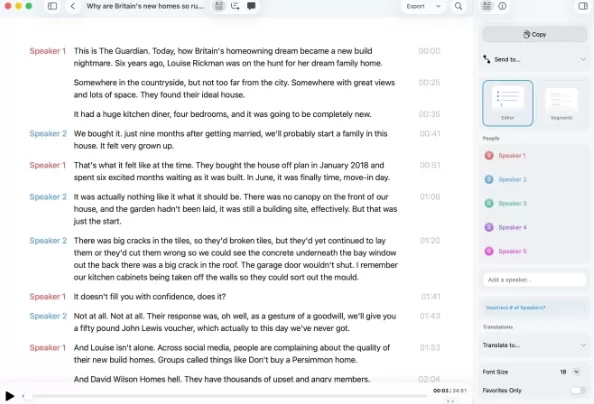 MacWhisper 14 Update Brings Direct Transcript Editing and Fixes High CPU Usage
Jodi Bruijn, the independent developer behind MacWhisper, released version 14.0 yesterday, prioritizing enhanced transcription performance and introducing a dedicated editor view. Since its 2023 launch, MacWhisper has established itself as an AI-powe
 Qwen3.5-Max Preview Tops LMArena as China's AI Models Reach Global Front Rank
On March 20, the latest rankings from the authoritative large model blind test platform LMArena revealed that Alibaba's newest flagship preview model in the Qwen series, Qwen3.5-Max-Preview, delivered exceptional performance. Scoring 1464 points, it
 Marc Benioff-backed startup aims to solve AI deployment challenges
Big enterprises face such steep challenges in deploying reliable AI tools that entire teams of forward-deployed engineers—specialists embedded within client companies to operationalize AI systems—are emerging to bridge the gap.“Paradoxically, AI driv

2026 Latest Top-rated AI Illustration Tools: Our curated list features the best powerfully designed tools for creating stunning editorial scenes and eye-catching cover art quickly. Each option has gone through rigorous real-world tests, offering a free vs paid comparison to help you find the perfect match for your workflow. Try these must-try solutions today to unlock your AI edge and boost your creative productivity. Explore now at XIX.AI.
10 tools
xix.ai

2026 Latest Top-Rated Best AI Tutors for Exam Prep are here on XIX.AI! Our curated list features powerful game-changing tools that offer free vs paid comparison, real-world tests, and weekly updated rankings. They help boost your writing efficiency, simplify complex topic learning, and unlock your academic potential. Explore now to Discover your perfect exam prep tool and Start creating today to Unlock your AI edge!
10 tools
xix.ai

2026 Latest Best Top-Rated AI Budget Planning Tools for Personal Money Management are here on XIX.AI! This curated collection features powerful, game-changing solutions that help you conduct real-world tests, understand spending habits, and create personalized plans to boost productivity. Enjoy a free vs paid comparison along with detailed rankings. Must-try tools designed to simplify money management and unlock your AI edge. Explore now!
11 tools
xix.ai

2026 Latest Best Top-Rated AI Sleep Tracking Assistants curated for ultimate recovery. This fully updated weekly guide features powerful tools that deliver real-world tests, free vs paid comparison, and detailed rankings to help you find the must-try solution that boosts sleep quality and supports better bedtime habits. Explore now at XIX.AI to Unlock your AI edge.
10 tools
xix.ai

2026 Latest Best Top-Rated AI SQL Copilots for Product and Revenue Analytics! XIX.AI has curated a powerful, game-changing collection of must-try tools that undergo real-world tests through weekly updated rankings. These tools help users boost productivity significantly by accelerating data analysis, streamlining complex queries, and generating accurate insights to drive smarter business decisions. Explore now to Discover your perfect tool for unlocking your AI edge!
14 tools
xix.ai

2026 Latest Best Top-Rated AI Homework Helpers That Teach Core Concepts Not Just Answers Powerful Tools for Students Must-Try Curated List Weekly Updated Free vs Paid Comparison Real-World Tests Accurate Rankings to Help You Unlock Your Full Learning Potential Explore now to Discover your perfect tool for smarter studying.
10 tools
xix.ai












