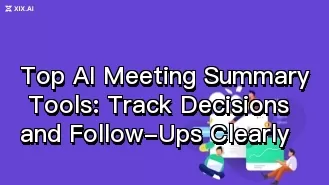
When OpenAI launched Frontier in February, its announcement positioned the platform as a foundation for enterprise AI agents. In reality, it signaled a direct challenge to the revenue model that has supported the software industry for nearly two decades.
Frontier is engineered to function as a semantic layer across a company's existing systems. It connects data warehouses, CRM platforms, ticketing tools, and internal applications, enabling AI agents to operate with the same business context a human employee would possess. OpenAI describes these agents as "AI coworkers" that can be onboarded, assigned specific roles and permissions, and evaluated on their performance.
Early adopters include companies like Uber, State Farm, Intuit, and Thermo Fisher Scientific. The platform's commercial objective is clear. OpenAI's CFO, Sarah Friar, has noted that enterprise clients currently contribute roughly 40% of company revenue, with a goal to raise this closer to 50% by year's end. Frontier is central to that strategy.
How Frontier transforms enterprise workflows
The rationale for Frontier addresses a persistent issue CIOs have highlighted since 2025: deploying AI agents in isolation often adds complexity instead of reducing it. Each new agent introduces another integration point, demanding its own data connections and governance rules, leading to widespread fragmentation.
OpenAI's solution is a unified business context. Instead of each agent developing its own, isolated understanding of company operations, Frontier provides a centralized semantic layer that all agents can access. Fidji Simo, OpenAI's CEO of Applications, explained this plainly during the launch, drawing from her experience leading Instacart.
"We spent months integrating each tool we selected. We still didn't achieve our goal, because each tool excelled at a single use case but didn't connect or communicate with others. We were just building new silos on top of old ones."
Results from early Frontier deployments are significant. One global investment firm using Frontier agents in its sales process reclaimed over 90% of sales personnel time previously consumed by administrative work. A technology client reported saving 1,500 hours per month in product development. At a major manufacturer, agents shortened a production optimization process from six weeks to a single day.
Frontier is also intentionally open. It manages agents developed by OpenAI, those built internally by enterprise teams, and agents from third-party providers like Google, Microsoft, and Anthropic. This openness serves as both a design principle and a strategic move: it positions Frontier as more than a vendor lock-in tactic while expanding its overall governance scope.
The unspoken challenge to the per-user license model
A deeper, structural concern for established software companies exists. The highly profitable per-seat SaaS license model assumes software use directly correlates with employee headcount. If an AI agent performs workflows that once required a human employee to use a platform like Salesforce, the justification for that user license diminishes. As Fortune noted, a market fear is that platforms like Frontier could render SaaS software "invisible," thereby reducing its perceived value.
Salesforce's stock has fallen over 27% year-to-date. Analysts link this decline more to anxieties over AI agent disruption than to weaknesses in core financials. The company's Q4 FY2026 results were strong, with quarterly revenue hitting $11.2 billion, Agentforce annual recurring revenue reaching $800 million, and 29,000 Agentforce deals closed.
Despite this, the stock dipped after hours due to guidance that fell short of Wall Street expectations.
Incumbents are responding. Salesforce introduced its Agentic Enterprise License Agreement, a fixed-price, unlimited-use model for Agentforce designed to make consumption more predictable for corporate buyers.
ServiceNow adopted consumption-based pricing for some AI agent services and, in January, signed a multi-year deal with OpenAI to integrate frontier model capabilities into its platform. Microsoft now offers consumption-based pricing alongside its per-user model for Copilot Studio.
This pricing shift is telling. It indicates these companies recognize the traditional per-user license model cannot persist unchanged in an age of agentic AI. The critical question is whether simple repricing is sufficient, or if the fundamental software architecture itself requires transformation.
Two competing visions for the AI intelligence layer
A strategic divide in enterprise AI centers on one key question: should AI agents reside within systems of record, or operate as a layer above them? Salesforce and ServiceNow champion the embedded model. They argue agents are most effective when closest to the data and that CIOs will inherently trust governance from vendors already managing their core workflows.
Salesforce CEO Marc Benioff has termed Agentforce the "operating system for the agentic enterprise." ServiceNow positions its AI Control Tower as a central governance layer for all agents, regardless of their origin.
OpenAI, and similarly Anthropic with Claude Coworker, advocates for the overlay model. Frontier operates above existing systems, using open standards to connect them rather than replace them. The value proposition is that enterprises shouldn't need to overhaul their entire technology stack to deploy production-grade agents across operations.
Both approaches have merit, presenting real trade-offs for enterprises. The embedded model offers tighter data control and potentially faster value realization within a familiar ecosystem. The overlay model provides greater flexibility and avoids the limitation of agents siloed within a single vendor's data.
Incumbents hold advantages in decades of institutional trust and existing enterprise contracts. OpenAI's strengths lie in superior model capabilities and a growingly credible case for managing an intelligence layer across the entire enterprise, not just one software suite.
The practical choices facing CIOs today
Frontier is currently available to a limited customer set, with broader rollout expected in coming months. Public pricing remains undisclosed, with OpenAI directing inquiries to its enterprise sales team.
For CIOs, the decision isn't yet a binary choice. Most large enterprises simultaneously use Salesforce, ServiceNow, and Microsoft infrastructure. The immediate question is whether Frontier will evolve into an orchestration layer connecting these systems or become a competitive platform that gradually displaces them.
Denise Dresser, OpenAI's Chief Revenue Officer, provided a candid assessment of the current enterprise AI agent landscape: "What most companies still lack is a straightforward way to deploy agents as effective teammates within their business, without needing to re-architect everything underneath."
Closing that gap is the stated goal of every platform in this space. What sets Frontier apart is that OpenAI now possesses the enterprise relationships, production deployments, and model prowess to substantiate its claims. While SaaS incumbents have a lead in trust and data integration, whether that advantage endures is the defining question for enterprise software through 2026.
See also: OpenAI’s enterprise push: The hidden story behind AI’s sales race
Want to learn more about AI and big data from industry leaders? Check out AI & Big Data Expo taking place in Amsterdam, California, and London. The comprehensive event is part of TechEx and is co-located with other leading technology events including the Cyber Security & Cloud Expo. Click here for more information.
AI News is powered by TechForge Media. Explore other upcoming enterprise technology events and webinars here.
Warner Music acquires AI attribution startup Sureel AIWarner Music Group (WMG) confirmed on Wednesday that it is acquiring Sureel AI, an artificial intelligence attribution startup. Sureel’s proprietary technology generates “AI DNA” for musical tracks, deconstructing them into constituent elements to tr
Amazon introduces Alexa for Shopping while pushing Rufus to the backgroundAmazon has launched Alexa for Shopping, merging its Rufus shopping chatbot with Alexa+ across the app, website, and Echo Show devices.The assistant answers product queries, compares items, tracks prices, and supports shopping reminders. It also handl
Microsoft, Azure and AI Tech Combat California Wildfire RisksMicrosoft invests in AI-driven wildfire detection, with Juan Lavista Ferres, CVP and Chief Data Scientist, discussing strategies to mitigate environmental damage.According to NASA, climate change impacts everyone on Earth, manifesting as rising tempe
2026 Latest Best Top-rated AI Conversation Trainer Tools for Interview Practice are here on XIX.AI! This curated collection features powerful, game-changing tools that go through rigorous real-world tests to deliver accurate feedback. You’ll find a free vs paid comparison and detailed rankings to help you choose the must-try option that boosts your confidence and skills. Explore now to Discover your perfect tool for interview success!
2026 Latest Best Top-rated AI Style Transfer Tools for Creative Experiments! XIX.AI has curated a powerful, game-changing collection of must-try tools that deliver exceptional results through real-world tests and rigorous rankings. These top solutions help creatives boost productivity significantly by accelerating content creation and unlocking endless creative possibilities. Explore now to discover your perfect tool and start creating today!
2026 Latest Best Top-Rated AI Dialogue Bubble Tools for Visual Storytelling are here on XIX.AI! This curated collection features powerful, game-changing tools that help creators boost productivity and overcome creative bottlenecks. Get a free vs paid comparison, see real-world tests, and check the latest rankings to find the must-try solutions perfect for crafting engaging visual narratives. Explore now to discover your ideal tool!
2026 Latest Top-Rated Best AI Meeting Summary Tools for Clear Decision Tracking and Effortless Follow-Ups. This curated list showcases powerful, game-changing solutions that boost productivity dramatically by automating meeting notes, identifying key action items, and streamlining team coordination across all projects. Get a free vs paid comparison along with real-world tests and weekly updated rankings to help you find the perfect tool. Explore now to unlock your AI edge!
2026 Latest Best Top-rated AI Data Cleaning Tools for quick fixing of missing values and duplicates. This curated list showcases powerful, game-changing solutions that boost productivity significantly. Each option has undergone rigorous real-world tests to ensure reliability. Get a free vs paid comparison and discover the must-try tool that fits your needs best. Explore now at XIX.AI to Unlock your AI edge.
2026 Latest Best Top-Rated AI Creative Ideation Tools for Artists are curated by XIX.AI to help creators break through visual blocks and boost creativity instantly. These powerful game-changing tools offer real-world tests, detailed free vs paid comparison, and weekly updated rankings. Discover your perfect tool to accelerate content creation and unlock your AI edge today. Explore now!
By clicking "Accept All Cookies", you agree to the storing of cookies on your device to enhance site navigation, analyze site usage, and assist in our marketing efforts.Privacy Policy Notice
When you visit any website, it may store or retrieve information on your browser, mostly in the form of cookies. This information might be about you, your preferences or your device and is mostly used to make the site work as you expect it to. The information does not usually directly identify you, but it can give you a more personalized web experience. Because we respect your right to privacy, you can choose not to allow some types of cookies. Click on the different category headings to find out more and change our default settings.However, blocking some types of cookies may impact your experience of the site and the services we are able to offer. Privacy PolicyStatement
Manage Preferences
Strictly Necessary Cookie
Always Active
These cookies are necessary for the website to function and cannot be switched off in our systems. They are usually only set in response to actions made by you which amount to a request for services, such as setting your privacy preferences, logging in or filling in forms. You can set your browser to block or alert you about these cookies, but some parts of the site will not then work. These cookies do not store any personally identifiable information.



 Home
Home

 Warner Music acquires AI attribution startup Sureel AI
Warner Music Group (WMG) confirmed on Wednesday that it is acquiring Sureel AI, an artificial intelligence attribution startup. Sureel’s proprietary technology generates “AI DNA” for musical tracks, deconstructing them into constituent elements to tr
Warner Music acquires AI attribution startup Sureel AI
Warner Music Group (WMG) confirmed on Wednesday that it is acquiring Sureel AI, an artificial intelligence attribution startup. Sureel’s proprietary technology generates “AI DNA” for musical tracks, deconstructing them into constituent elements to tr
 Best AI Conversation Trainer Tools for Interview Practice
 12 tools
 xix.ai
Design & Art
xix.ai
Design & Art

 Comments (0)
0/500
Comments (0)
0/500








 Warner Music acquires AI attribution startup Sureel AI
Warner Music Group (WMG) confirmed on Wednesday that it is acquiring Sureel AI, an artificial intelligence attribution startup. Sureel’s proprietary technology generates “AI DNA” for musical tracks, deconstructing them into constituent elements to tr
Warner Music acquires AI attribution startup Sureel AI
Warner Music Group (WMG) confirmed on Wednesday that it is acquiring Sureel AI, an artificial intelligence attribution startup. Sureel’s proprietary technology generates “AI DNA” for musical tracks, deconstructing them into constituent elements to tr
 Microsoft, Azure and AI Tech Combat California Wildfire Risks
Microsoft invests in AI-driven wildfire detection, with Juan Lavista Ferres, CVP and Chief Data Scientist, discussing strategies to mitigate environmental damage.According to NASA, climate change impacts everyone on Earth, manifesting as rising tempe
Microsoft, Azure and AI Tech Combat California Wildfire Risks
Microsoft invests in AI-driven wildfire detection, with Juan Lavista Ferres, CVP and Chief Data Scientist, discussing strategies to mitigate environmental damage.According to NASA, climate change impacts everyone on Earth, manifesting as rising tempe