


 Home
HomeGoogle DeepMind Taps AI to Accelerate Fusion Energy Startup's Ambitions
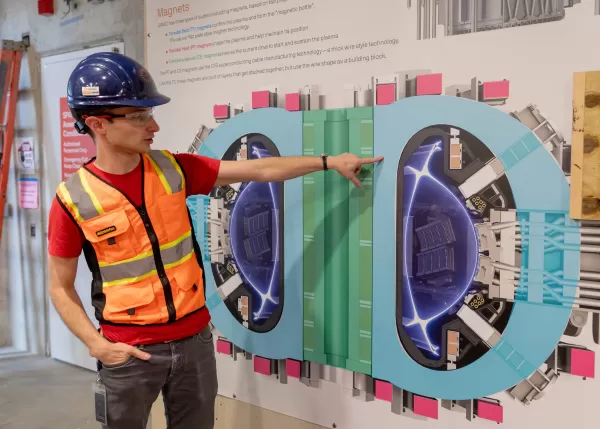
On Thursday, energy startup Commonwealth Fusion Systems (CFS) announced a collaboration with Google's DeepMind division. The partnership will use artificial intelligence to fine-tune and enhance the operation of CFS's upcoming SPARC reactor.
Their strategy involves simulating the plasma that will fuel the reactor using DeepMind's specialized Torax software. By integrating Torax with advanced AI models, the teams aim to discover the optimal methods for achieving practical fusion power.
Fusion power offers a future of abundant, emission-free electricity sourced from a nearly limitless fuel supply: water. With data centers' soaring energy demands, many AI-focused companies see fusion startups as a promising power solution. Google is positioning itself as both an investor and a potential future customer.
This is not Google's first venture into fusion. The tech giant previously partnered with another startup, TAE Technologies, using AI to analyze plasma behavior within TAE's fusion device.
Google's repeated interest is well-founded: AI may be the critical tool needed to make commercial fusion power a reality.
A primary obstacle for fusion startups is confining plasma at extreme temperatures long enough for sustained reactions. Unlike self-sustaining nuclear fission, fusion is notoriously difficult to maintain outside of stellar environments like our sun. Lacking immense gravitational forces, the superheated plasma tends to dissipate and cool rapidly.
In CFS's reactors, powerful superconducting magnets act as a substitute for gravity to contain the plasma, yet the system is highly complex. Operators must develop sophisticated control software capable of continuously adapting to the plasma's dynamic changes.
Techcrunch event DISRUPT FLASH SALE: Save up to $624 until Oct 17
Join over 250 industry leaders from Netflix, Microsoft, Box, Phia, a16z, ElevenLabs, Wayve, Hugging Face, Elad Gil, and Vinod Khosla across 200+ sessions. Gain the insights that drive startup success and sharpen your competitive edge. Secure your ticket before October 17 to save up to $624.
DISRUPT FLASH SALE: Save up to $624 until Oct 17
Join over 250 industry leaders from Netflix, Microsoft, Box, Phia, a16z, ElevenLabs, Wayve, Hugging Face, Elad Gil, and Vinod Khosla across 200+ sessions. Gain the insights that drive startup success and sharpen your competitive edge. Secure your ticket before October 17 to save up to $624.
San Francisco | October 27-29, 2025 REGISTER NOW The challenge is the overwhelming number of operational variables, a task far too complex for human engineers alone. This is precisely the type of intricate problem-solving at which AI excels. Many experts credit artificial intelligence as a key driver behind the fusion industry's rapid progress in recent years.
CFS is currently constructing its SPARC demonstration reactor near Boston. The device, now about two-thirds complete, is slated for operation in 2026. The startup predicts SPARC will be the first fusion device to achieve a net energy gain, producing more power than it consumes.
Google states that its Torax software can utilize reinforcement learning or evolutionary search models to pinpoint the most efficient and reliable pathways to net energy gain. The partners are also investigating the potential for AI to directly control reactor operations.
In August, Google, alongside Nvidia, joined CFS's $863 million Series B2 funding round. Earlier this year, Google committed to purchasing 200 megawatts of power from CFS's first planned commercial plant, ARC, to be built near Richmond, Virginia. The company also maintains an investment in CFS competitor, TAE Technologies.
Related article
 DeepMind CEO Hassabis: I sleep six hours a day, usually feel energetic around 1 a.m.
Fortune recently featured an interview with Demis Hassabis, CEO of Google DeepMind, revealing his unconventional approach to rest and productivity. Hassabis disclosed that he sleeps very little, structuring his waking hours into two distinct work blo
OpenAI, Anthropic Vie for Market Share Despite Revenue Shortfalls
Despite recent reports suggesting OpenAI missed revenue targets, creating pressure on tech stocks this Tuesday, private AI lab investors remain resilient. Seasoned backers have confirmed they will not reduce investment despite negative media coverage
California AV Compliance: A New Era of Tickets, Geofences, and 1M Miles
Guident operates an AuveTech shuttle in South Florida, managing a four-mile route in West Palm Beach and a one-mile route in Boca Raton using its remote monitoring technology. | Credit: GuidentCalifornia is redefining the regulatory landscape for dri
Related Special Topic Recommendations
chatbot
DeepMind CEO Hassabis: I sleep six hours a day, usually feel energetic around 1 a.m.
Fortune recently featured an interview with Demis Hassabis, CEO of Google DeepMind, revealing his unconventional approach to rest and productivity. Hassabis disclosed that he sleeps very little, structuring his waking hours into two distinct work blo
OpenAI, Anthropic Vie for Market Share Despite Revenue Shortfalls
Despite recent reports suggesting OpenAI missed revenue targets, creating pressure on tech stocks this Tuesday, private AI lab investors remain resilient. Seasoned backers have confirmed they will not reduce investment despite negative media coverage
California AV Compliance: A New Era of Tickets, Geofences, and 1M Miles
Guident operates an AuveTech shuttle in South Florida, managing a four-mile route in West Palm Beach and a one-mile route in Boca Raton using its remote monitoring technology. | Credit: GuidentCalifornia is redefining the regulatory landscape for dri
Related Special Topic Recommendations
chatbot
 Best AI Roleplay Chat Apps for Language Practice, Interview Prep, and Daily Fluency
2026 Latest Best Top-rated AI Roleplay Chat Apps for Language Practice, Interview Prep, and Daily Fluency! XIX.AI curates a powerful game-changing collection that offers free vs paid comparison, real-world tests, and updated rankings weekly. These must-try tools help you boost writing skills, overcome fluency challenges, and improve communication efficiency across all daily scenarios. Explore now to discover your perfect tool for language growth!
 10 tools
 xix.ai
Music composition
AI Stem Separation Tools for Remix Production, Sampling Prep, and Karaoke Masters
xix.ai
Music composition
AI Stem Separation Tools for Remix Production, Sampling Prep, and Karaoke Masters
2026 Latest Best Top-rated AI Stem Separation Tools Curated for Remix Production, Sampling Prep, and Karaoke Masters. These powerful game-changing tools offer real-world tests to deliver precise audio isolation, boosting productivity significantly. XIX.AI provides a weekly updated free vs paid comparison guide to help you find the must-try solution that suits your needs. Explore now to unlock your AI edge.
8 tools
xix.ai
Data Analysis
AI SQL Copilots for Revenue Dashboards, Funnel Analysis, and Product Metrics
2026 Latest Best AI SQL Copilots Ranked Top-Rated! XIX.AI curates a powerful game-changing collection for weekly updated real-world tests. These must-try tools help you generate accurate revenue dashboards, analyze sales funnels, and track product metrics swiftly, boosting productivity massively. Explore now to Discover your perfect tool for data-driven decision making! 238 characters
9 tools
xix.ai
Music composition
Best AI Melody Writing Tools for Song Drafts
2026 Latest Best Top-Rated AI Melody Writing Tools for Song Drafts! XIX.AI has curated a highly powerful game-changing collection that goes through rigorous real-world tests to deliver the best writing experience. You can find detailed free vs paid comparisons, accurate rankings, and must-try options designed to help you create stunning song drafts effortlessly and boost your creative productivity significantly. Explore now to discover your perfect tool!
8 tools
xix.ai
chatbot
Best AI Conversation Trainer Tools for Interview Practice
2026 Latest Best Top-rated AI Conversation Trainer Tools for Interview Practice are here on XIX.AI! This curated collection features powerful, game-changing tools that go through rigorous real-world tests to deliver accurate feedback. You’ll find a free vs paid comparison and detailed rankings to help you choose the must-try option that boosts your confidence and skills. Explore now to Discover your perfect tool for interview success!
12 tools
xix.ai
Design & Art
Best AI Style Transfer Tools for Creative Experiments
2026 Latest Best Top-rated AI Style Transfer Tools for Creative Experiments! XIX.AI has curated a powerful, game-changing collection of must-try tools that deliver exceptional results through real-world tests and rigorous rankings. These top solutions help creatives boost productivity significantly by accelerating content creation and unlocking endless creative possibilities. Explore now to discover your perfect tool and start creating today!
9 tools
xix.ai

 Comments (1)
0/500
Comments (1)
0/500
![EricRoberts]()
AIが核融合炉の制御に使われるなんて、SFみたいな話が現実になる日が来るとは…。でも、Googleがエネルギー分野に進出するのは当然の流れかも。競争が激化して、他のテック企業も追随しそうだね。早く実用化してほしい!🔥
On Thursday, energy startup Commonwealth Fusion Systems (CFS) announced a collaboration with Google's DeepMind division. The partnership will use artificial intelligence to fine-tune and enhance the operation of CFS's upcoming SPARC reactor.
Their strategy involves simulating the plasma that will fuel the reactor using DeepMind's specialized Torax software. By integrating Torax with advanced AI models, the teams aim to discover the optimal methods for achieving practical fusion power.
Fusion power offers a future of abundant, emission-free electricity sourced from a nearly limitless fuel supply: water. With data centers' soaring energy demands, many AI-focused companies see fusion startups as a promising power solution. Google is positioning itself as both an investor and a potential future customer.
This is not Google's first venture into fusion. The tech giant previously partnered with another startup, TAE Technologies, using AI to analyze plasma behavior within TAE's fusion device.
Google's repeated interest is well-founded: AI may be the critical tool needed to make commercial fusion power a reality.
A primary obstacle for fusion startups is confining plasma at extreme temperatures long enough for sustained reactions. Unlike self-sustaining nuclear fission, fusion is notoriously difficult to maintain outside of stellar environments like our sun. Lacking immense gravitational forces, the superheated plasma tends to dissipate and cool rapidly.
In CFS's reactors, powerful superconducting magnets act as a substitute for gravity to contain the plasma, yet the system is highly complex. Operators must develop sophisticated control software capable of continuously adapting to the plasma's dynamic changes.
Techcrunch eventDISRUPT FLASH SALE: Save up to $624 until Oct 17
Join over 250 industry leaders from Netflix, Microsoft, Box, Phia, a16z, ElevenLabs, Wayve, Hugging Face, Elad Gil, and Vinod Khosla across 200+ sessions. Gain the insights that drive startup success and sharpen your competitive edge. Secure your ticket before October 17 to save up to $624.
DISRUPT FLASH SALE: Save up to $624 until Oct 17
Join over 250 industry leaders from Netflix, Microsoft, Box, Phia, a16z, ElevenLabs, Wayve, Hugging Face, Elad Gil, and Vinod Khosla across 200+ sessions. Gain the insights that drive startup success and sharpen your competitive edge. Secure your ticket before October 17 to save up to $624.
San Francisco | October 27-29, 2025 REGISTER NOWThe challenge is the overwhelming number of operational variables, a task far too complex for human engineers alone. This is precisely the type of intricate problem-solving at which AI excels. Many experts credit artificial intelligence as a key driver behind the fusion industry's rapid progress in recent years.
CFS is currently constructing its SPARC demonstration reactor near Boston. The device, now about two-thirds complete, is slated for operation in 2026. The startup predicts SPARC will be the first fusion device to achieve a net energy gain, producing more power than it consumes.
Google states that its Torax software can utilize reinforcement learning or evolutionary search models to pinpoint the most efficient and reliable pathways to net energy gain. The partners are also investigating the potential for AI to directly control reactor operations.
In August, Google, alongside Nvidia, joined CFS's $863 million Series B2 funding round. Earlier this year, Google committed to purchasing 200 megawatts of power from CFS's first planned commercial plant, ARC, to be built near Richmond, Virginia. The company also maintains an investment in CFS competitor, TAE Technologies.








 DeepMind CEO Hassabis: I sleep six hours a day, usually feel energetic around 1 a.m.
Fortune recently featured an interview with Demis Hassabis, CEO of Google DeepMind, revealing his unconventional approach to rest and productivity. Hassabis disclosed that he sleeps very little, structuring his waking hours into two distinct work blo
DeepMind CEO Hassabis: I sleep six hours a day, usually feel energetic around 1 a.m.
Fortune recently featured an interview with Demis Hassabis, CEO of Google DeepMind, revealing his unconventional approach to rest and productivity. Hassabis disclosed that he sleeps very little, structuring his waking hours into two distinct work blo
 OpenAI, Anthropic Vie for Market Share Despite Revenue Shortfalls
Despite recent reports suggesting OpenAI missed revenue targets, creating pressure on tech stocks this Tuesday, private AI lab investors remain resilient. Seasoned backers have confirmed they will not reduce investment despite negative media coverage
California AV Compliance: A New Era of Tickets, Geofences, and 1M Miles
Guident operates an AuveTech shuttle in South Florida, managing a four-mile route in West Palm Beach and a one-mile route in Boca Raton using its remote monitoring technology. | Credit: GuidentCalifornia is redefining the regulatory landscape for dri
OpenAI, Anthropic Vie for Market Share Despite Revenue Shortfalls
Despite recent reports suggesting OpenAI missed revenue targets, creating pressure on tech stocks this Tuesday, private AI lab investors remain resilient. Seasoned backers have confirmed they will not reduce investment despite negative media coverage
California AV Compliance: A New Era of Tickets, Geofences, and 1M Miles
Guident operates an AuveTech shuttle in South Florida, managing a four-mile route in West Palm Beach and a one-mile route in Boca Raton using its remote monitoring technology. | Credit: GuidentCalifornia is redefining the regulatory landscape for dri

2026 Latest Best Top-rated AI Roleplay Chat Apps for Language Practice, Interview Prep, and Daily Fluency! XIX.AI curates a powerful game-changing collection that offers free vs paid comparison, real-world tests, and updated rankings weekly. These must-try tools help you boost writing skills, overcome fluency challenges, and improve communication efficiency across all daily scenarios. Explore now to discover your perfect tool for language growth!
10 tools
xix.ai
2026 Latest Best Top-rated AI Stem Separation Tools Curated for Remix Production, Sampling Prep, and Karaoke Masters. These powerful game-changing tools offer real-world tests to deliver precise audio isolation, boosting productivity significantly. XIX.AI provides a weekly updated free vs paid comparison guide to help you find the must-try solution that suits your needs. Explore now to unlock your AI edge.
8 tools
xix.ai

2026 Latest Best AI SQL Copilots Ranked Top-Rated! XIX.AI curates a powerful game-changing collection for weekly updated real-world tests. These must-try tools help you generate accurate revenue dashboards, analyze sales funnels, and track product metrics swiftly, boosting productivity massively. Explore now to Discover your perfect tool for data-driven decision making! 238 characters
9 tools
xix.ai

2026 Latest Best Top-Rated AI Melody Writing Tools for Song Drafts! XIX.AI has curated a highly powerful game-changing collection that goes through rigorous real-world tests to deliver the best writing experience. You can find detailed free vs paid comparisons, accurate rankings, and must-try options designed to help you create stunning song drafts effortlessly and boost your creative productivity significantly. Explore now to discover your perfect tool!
8 tools
xix.ai

2026 Latest Best Top-rated AI Conversation Trainer Tools for Interview Practice are here on XIX.AI! This curated collection features powerful, game-changing tools that go through rigorous real-world tests to deliver accurate feedback. You’ll find a free vs paid comparison and detailed rankings to help you choose the must-try option that boosts your confidence and skills. Explore now to Discover your perfect tool for interview success!
12 tools
xix.ai

2026 Latest Best Top-rated AI Style Transfer Tools for Creative Experiments! XIX.AI has curated a powerful, game-changing collection of must-try tools that deliver exceptional results through real-world tests and rigorous rankings. These top solutions help creatives boost productivity significantly by accelerating content creation and unlocking endless creative possibilities. Explore now to discover your perfect tool and start creating today!
9 tools
xix.ai

AIが核融合炉の制御に使われるなんて、SFみたいな話が現実になる日が来るとは…。でも、Googleがエネルギー分野に進出するのは当然の流れかも。競争が激化して、他のテック企業も追随しそうだね。早く実用化してほしい!🔥












