Home
HomePruna AI Unveils Open-Source AI Model Optimization Framework
Pruna AI, a European startup focused on developing compression algorithms for AI models, is set to release its optimization framework as open source this Thursday. The company has been working on a framework that incorporates various efficiency techniques such as caching, pruning, quantization, and distillation to enhance AI model performance.
John Rachwan, co-founder and CTO of Pruna AI, explained to TechCrunch that their framework not only applies these methods but also standardizes the process of saving, loading, and evaluating compressed models. This allows users to assess any potential quality loss and the performance improvements achieved through compression.
Rachwan likened Pruna AI's role to that of Hugging Face, which standardized the use of transformers and diffusers. "We are doing the same, but for efficiency methods," he stated, emphasizing the standardization of how these methods are applied and managed.
Major AI labs have already adopted similar compression techniques. For example, OpenAI has used distillation to develop faster versions of its models, such as GPT-4 Turbo. Similarly, Black Forest Labs created Flux.1-schnell, a distilled version of their Flux.1 model. Distillation involves a "teacher-student" approach where a larger model's outputs are used to train a smaller, more efficient model.
Rachwan pointed out that while large companies often develop these tools internally, the open-source community typically focuses on single methods. "But you cannot find a tool that aggregates all of them, makes them all easy to use and combine together," he said, highlighting Pruna AI's unique value proposition.
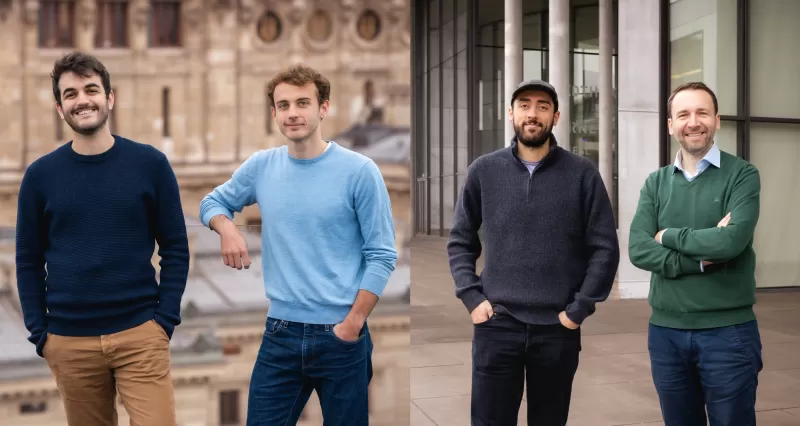
Left to right: Rayan Nait Mazi, Bertrand Charpentier, John Rachwan, Stephan GünnemannImage Credits:Pruna AI Although Pruna AI's framework supports a wide range of models, including large language models, diffusion models, speech-to-text models, and computer vision models, the company is currently focusing on image and video generation models. Existing users of Pruna AI include Scenario and PhotoRoom.
In addition to the open-source version, Pruna AI offers an enterprise edition with advanced optimization features, including an upcoming compression agent. Rachwan described this agent as a tool that automatically finds the best compression combination for a model based on user-specified performance and accuracy requirements.
Pruna AI's pro version is billed by the hour, similar to renting a GPU on cloud services like AWS. By optimizing models, users can significantly reduce inference costs. For instance, Pruna AI managed to compress a Llama model to one-eighth its original size with minimal quality loss, demonstrating the potential cost savings.
The company recently secured a $6.5 million seed funding round from investors including EQT Ventures, Daphni, Motier Ventures, and Kima Ventures. Pruna AI views its compression framework as a strategic investment that can pay for itself through reduced operational costs.
Related article
 Google Unveils Gemini Notebooks, Merging NotebookLM with Personal Knowledge Base
Google recently launched a "Notebooks" feature for Gemini, designed to help users manage complex projects by creating a personalized knowledge base. This update bridges the data gap between Gemini and the AI research assistant NotebookLM, marking a k
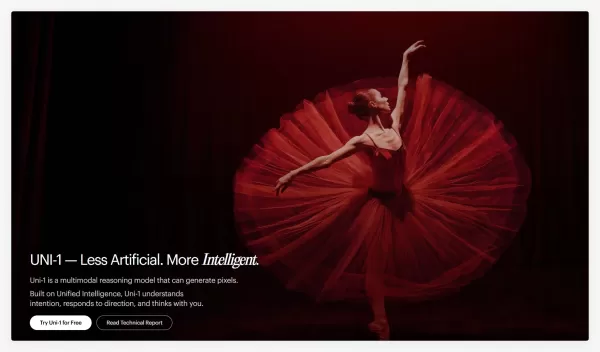
Luma AI unveils Uni-1 autoregressive model that generates text and pixels simultaneously
Luma Labs launched its image generation model Uni-1 on March 23, marking the company's first publicly available model built on the Unified Intelligence architecture. Free trial access is now open on the official website, with API pricing announced an
NVIDIA's Xinzhou Wu: autonomous driving's ChatGPT moment has arrived, L4 mass production no longer a dream
In the rapidly evolving field of physical AI, autonomous driving is often viewed as the first major challenge to overcome. Recently, Wu Xinzhou, Vice President of NVIDIA, outlined the company's ambitious vision for intelligent driving at a Beijing co
Related Special Topic Recommendations
chatbot
Google Unveils Gemini Notebooks, Merging NotebookLM with Personal Knowledge Base
Google recently launched a "Notebooks" feature for Gemini, designed to help users manage complex projects by creating a personalized knowledge base. This update bridges the data gap between Gemini and the AI research assistant NotebookLM, marking a k
Luma AI unveils Uni-1 autoregressive model that generates text and pixels simultaneously
Luma Labs launched its image generation model Uni-1 on March 23, marking the company's first publicly available model built on the Unified Intelligence architecture. Free trial access is now open on the official website, with API pricing announced an
NVIDIA's Xinzhou Wu: autonomous driving's ChatGPT moment has arrived, L4 mass production no longer a dream
In the rapidly evolving field of physical AI, autonomous driving is often viewed as the first major challenge to overcome. Recently, Wu Xinzhou, Vice President of NVIDIA, outlined the company's ambitious vision for intelligent driving at a Beijing co
Related Special Topic Recommendations
chatbot
 Top-Rated AI Romantic Chatbots: Build Long-Term Relationships with Consistent Personalities
Discover the 2026 latest top-rated AI romantic chatbots for building genuine, long-term connections. Our curated list features powerful, consistent personalities, free vs paid comparisons, and real-world tests. Find your perfect companion and start building today at XIX.AI.
 10 tools
 xix.ai
Education and Learning
Best AI Data Science Mentors: Master SQL, Pandas & Machine Learning Workflows
xix.ai
Education and Learning
Best AI Data Science Mentors: Master SQL, Pandas & Machine Learning Workflows
Discover the 2026 best AI data science mentors to master SQL, Pandas & ML workflows. Explore our top-rated, curated selection at XIX.AI for powerful, game-changing guidance. Compare free vs paid options with real-world insights. Unlock your data science mastery today.
10 tools
xix.ai
chatbot
Best AI Flirting & Conversation Trainers: Improve Social Charisma and Confidence in Real-Time
Discover the 2026 best AI flirting and conversation trainers on XIX.AI. Our curated, top-rated selection helps you build social charisma and confidence in real-time. Explore must-try, game-changing tools with free vs paid comparisons and weekly updated rankings. Unlock your social edge today.
10 tools
xix.ai
code
Best AI Tools for Automated Unit Testing: Generate Jest, PyTest & JUnit Test Cases in One Click
Discover the 2026 latest top-rated AI tools for automated unit testing. Our curated selection features powerful, game-changing solutions to generate Jest, PyTest & JUnit test cases instantly. Compare free vs paid options with real-world tests and weekly updated rankings on XIX.AI. Unlock your AI edge and boost development productivity today.
10 tools
xix.ai
Data Analysis
Best AI Data Visualization Tools: Auto-Generate Interactive BI Dashboards from Raw Files
Discover the 2026 best AI data visualization tools at XIX.AI. Our curated, top-rated selection helps you auto-generate powerful, interactive BI dashboards from raw files instantly. Compare free vs paid options with real-world tests and weekly updated rankings. Unlock your data's potential today.
10 tools
xix.ai
Social Media
AI Branding Kits for Social Media: Maintain Consistent Brand Visuals Across All Channels
Discover the 2026 best AI branding kits for social media. XIX.AI's curated list features top-rated, game-changing tools to maintain perfectly consistent brand visuals across all channels. Compare free vs paid options with real-world tests. Unlock your brand's visual edge today.
10 tools
xix.ai

 Comments (32)
0/500
Comments (32)
0/500
![WilliamRoberts]()
开源这事儿挺有意思,我看Pruna AI这框架里集成了缓存、剪枝、量化这些技术,是不是真能大幅降低推理成本啊?有人试过吗?感觉现在AI模型优化都卷得不行了,期待周四看看代码质量怎么样。😄
![WyattHill]()
Finalmente algo open-source pra otimizar modelos grandes! A quantidade de técnicas que mencionaram (cache, poda, quantização) é impressionante. Vai ser interessante testar isso em alguns projetos que tenho em mente. Acho que isso pode ajudar muito desenvolvedores independentes como eu a ter acesso a modelos mais eficientes. Boa iniciativa da startup europeia! 👏
![PaulRoberts]()
O framework de código aberto da Pruna AI é uma bênção para nós entusiastas de AI DIY! É como ter uma faca suíça para otimizar modelos. Consegui reduzir meus modelos sem perder muita precisão, o que é incrível. O único problema? A documentação poderia ser mais detalhada. Ainda assim, mal posso esperar para ver o que mais eles vão lançar! 🚀
![DouglasMitchell]()
El marco de código abierto de Pruna AI es un regalo para nosotros los entusiastas del AI DIY. ¡Es como tener un cuchillo suizo para optimizar modelos! He podido reducir mis modelos sin perder mucha precisión, lo cual es genial. El único inconveniente es que la documentación podría ser más completa. ¡Aun así, no puedo esperar a ver qué más sacan! 🚀
![WillieMartinez]()
Pruna AI's open-source framework sounds promising, but the setup was a bit of a headache. Once I got it running, the optimization really sped up my models. Just wish the documentation was clearer. Still, it's a solid tool for anyone looking to optimize AI models! 🤓
![JamesLopez]()
Pruna AI's open-source framework is a godsend for us DIY AI enthusiasts! It's like having a Swiss Army knife for optimizing models. I've been able to shrink my models without losing much accuracy, which is just awesome. The only hiccup? The documentation could use a bit more love. Still, can't wait to see what else they roll out! 🚀
Pruna AI, a European startup focused on developing compression algorithms for AI models, is set to release its optimization framework as open source this Thursday. The company has been working on a framework that incorporates various efficiency techniques such as caching, pruning, quantization, and distillation to enhance AI model performance.
John Rachwan, co-founder and CTO of Pruna AI, explained to TechCrunch that their framework not only applies these methods but also standardizes the process of saving, loading, and evaluating compressed models. This allows users to assess any potential quality loss and the performance improvements achieved through compression.
Rachwan likened Pruna AI's role to that of Hugging Face, which standardized the use of transformers and diffusers. "We are doing the same, but for efficiency methods," he stated, emphasizing the standardization of how these methods are applied and managed.
Major AI labs have already adopted similar compression techniques. For example, OpenAI has used distillation to develop faster versions of its models, such as GPT-4 Turbo. Similarly, Black Forest Labs created Flux.1-schnell, a distilled version of their Flux.1 model. Distillation involves a "teacher-student" approach where a larger model's outputs are used to train a smaller, more efficient model.
Rachwan pointed out that while large companies often develop these tools internally, the open-source community typically focuses on single methods. "But you cannot find a tool that aggregates all of them, makes them all easy to use and combine together," he said, highlighting Pruna AI's unique value proposition.
In addition to the open-source version, Pruna AI offers an enterprise edition with advanced optimization features, including an upcoming compression agent. Rachwan described this agent as a tool that automatically finds the best compression combination for a model based on user-specified performance and accuracy requirements.
Pruna AI's pro version is billed by the hour, similar to renting a GPU on cloud services like AWS. By optimizing models, users can significantly reduce inference costs. For instance, Pruna AI managed to compress a Llama model to one-eighth its original size with minimal quality loss, demonstrating the potential cost savings.
The company recently secured a $6.5 million seed funding round from investors including EQT Ventures, Daphni, Motier Ventures, and Kima Ventures. Pruna AI views its compression framework as a strategic investment that can pay for itself through reduced operational costs.








 Google Unveils Gemini Notebooks, Merging NotebookLM with Personal Knowledge Base
Google recently launched a "Notebooks" feature for Gemini, designed to help users manage complex projects by creating a personalized knowledge base. This update bridges the data gap between Gemini and the AI research assistant NotebookLM, marking a k
Google Unveils Gemini Notebooks, Merging NotebookLM with Personal Knowledge Base
Google recently launched a "Notebooks" feature for Gemini, designed to help users manage complex projects by creating a personalized knowledge base. This update bridges the data gap between Gemini and the AI research assistant NotebookLM, marking a k
 Luma AI unveils Uni-1 autoregressive model that generates text and pixels simultaneously
Luma Labs launched its image generation model Uni-1 on March 23, marking the company's first publicly available model built on the Unified Intelligence architecture. Free trial access is now open on the official website, with API pricing announced an
Luma AI unveils Uni-1 autoregressive model that generates text and pixels simultaneously
Luma Labs launched its image generation model Uni-1 on March 23, marking the company's first publicly available model built on the Unified Intelligence architecture. Free trial access is now open on the official website, with API pricing announced an
 NVIDIA's Xinzhou Wu: autonomous driving's ChatGPT moment has arrived, L4 mass production no longer a dream
In the rapidly evolving field of physical AI, autonomous driving is often viewed as the first major challenge to overcome. Recently, Wu Xinzhou, Vice President of NVIDIA, outlined the company's ambitious vision for intelligent driving at a Beijing co
NVIDIA's Xinzhou Wu: autonomous driving's ChatGPT moment has arrived, L4 mass production no longer a dream
In the rapidly evolving field of physical AI, autonomous driving is often viewed as the first major challenge to overcome. Recently, Wu Xinzhou, Vice President of NVIDIA, outlined the company's ambitious vision for intelligent driving at a Beijing co
Discover the 2026 latest top-rated AI romantic chatbots for building genuine, long-term connections. Our curated list features powerful, consistent personalities, free vs paid comparisons, and real-world tests. Find your perfect companion and start building today at XIX.AI.
10 tools
xix.ai

Discover the 2026 best AI data science mentors to master SQL, Pandas & ML workflows. Explore our top-rated, curated selection at XIX.AI for powerful, game-changing guidance. Compare free vs paid options with real-world insights. Unlock your data science mastery today.
10 tools
xix.ai
Discover the 2026 best AI flirting and conversation trainers on XIX.AI. Our curated, top-rated selection helps you build social charisma and confidence in real-time. Explore must-try, game-changing tools with free vs paid comparisons and weekly updated rankings. Unlock your social edge today.
10 tools
xix.ai
Discover the 2026 latest top-rated AI tools for automated unit testing. Our curated selection features powerful, game-changing solutions to generate Jest, PyTest & JUnit test cases instantly. Compare free vs paid options with real-world tests and weekly updated rankings on XIX.AI. Unlock your AI edge and boost development productivity today.
10 tools
xix.ai
Discover the 2026 best AI data visualization tools at XIX.AI. Our curated, top-rated selection helps you auto-generate powerful, interactive BI dashboards from raw files instantly. Compare free vs paid options with real-world tests and weekly updated rankings. Unlock your data's potential today.
10 tools
xix.ai
Discover the 2026 best AI branding kits for social media. XIX.AI's curated list features top-rated, game-changing tools to maintain perfectly consistent brand visuals across all channels. Compare free vs paid options with real-world tests. Unlock your brand's visual edge today.
10 tools
xix.ai

开源这事儿挺有意思,我看Pruna AI这框架里集成了缓存、剪枝、量化这些技术,是不是真能大幅降低推理成本啊?有人试过吗?感觉现在AI模型优化都卷得不行了,期待周四看看代码质量怎么样。😄
Finalmente algo open-source pra otimizar modelos grandes! A quantidade de técnicas que mencionaram (cache, poda, quantização) é impressionante. Vai ser interessante testar isso em alguns projetos que tenho em mente. Acho que isso pode ajudar muito desenvolvedores independentes como eu a ter acesso a modelos mais eficientes. Boa iniciativa da startup europeia! 👏
O framework de código aberto da Pruna AI é uma bênção para nós entusiastas de AI DIY! É como ter uma faca suíça para otimizar modelos. Consegui reduzir meus modelos sem perder muita precisão, o que é incrível. O único problema? A documentação poderia ser mais detalhada. Ainda assim, mal posso esperar para ver o que mais eles vão lançar! 🚀
El marco de código abierto de Pruna AI es un regalo para nosotros los entusiastas del AI DIY. ¡Es como tener un cuchillo suizo para optimizar modelos! He podido reducir mis modelos sin perder mucha precisión, lo cual es genial. El único inconveniente es que la documentación podría ser más completa. ¡Aun así, no puedo esperar a ver qué más sacan! 🚀
Pruna AI's open-source framework sounds promising, but the setup was a bit of a headache. Once I got it running, the optimization really sped up my models. Just wish the documentation was clearer. Still, it's a solid tool for anyone looking to optimize AI models! 🤓
Pruna AI's open-source framework is a godsend for us DIY AI enthusiasts! It's like having a Swiss Army knife for optimizing models. I've been able to shrink my models without losing much accuracy, which is just awesome. The only hiccup? The documentation could use a bit more love. Still, can't wait to see what else they roll out! 🚀