


 Home
Home
NVIDIA's Xinzhou Wu: autonomous driving's ChatGPT moment has arrived, L4 mass production no longer a dream
In the rapidly evolving field of physical AI, autonomous driving is often viewed as the first major challenge to overcome. Recently, Wu Xinzhou, Vice President of NVIDIA, outlined the company's ambitious vision for intelligent driving at a Beijing communication event. He not only described the "five-layer cake" architecture supporting assisted driving but also provided a clear timeline for the rollout of Level 4 autonomous driving.
The 'Five-Layer Cake' Creates a Full-Stack Ecosystem
NVIDIA has moved beyond simply supplying chips, aiming instead to build a comprehensive service system through a trio of computing platforms: vehicle-side inference, cloud training, and simulation verification. Wu Xinzhou metaphorically refers to this as the "five-layer cake," spanning from the underlying Hyperion hardware platform, through the operating system, open model Alpamayo, and simulation toolchain, all the way up to the top-level cloud infrastructure.
At the heart of this system is a focus on lowering the development barrier for automakers. Particularly during the shift from modular to end-to-end architectures, NVIDIA leverages its powerful simulation capabilities to run two million scenario validations each day, significantly boosting model training efficiency. The company is now actively encouraging major car manufacturers to adopt the Hyperion platform, aiming for a major leap in standardization and scalability.
Vision-First Approach with Built-in Redundancy
On the technical front, Wu Xinzhou is a strong advocate of vision-based solutions. He argues that visual sensors offer pixel density and information limits far beyond those of LiDAR, making them more than capable of supporting high-level assisted driving. However, for more advanced L3 and L4 systems, NVIDIA still sees LiDAR as an essential safety redundancy. He revealed that the company is collaborating with suppliers in Europe and the US to secure stable hardware support for high-level intelligent driving solutions.
L4 Countdown: 30 Cities by 2028
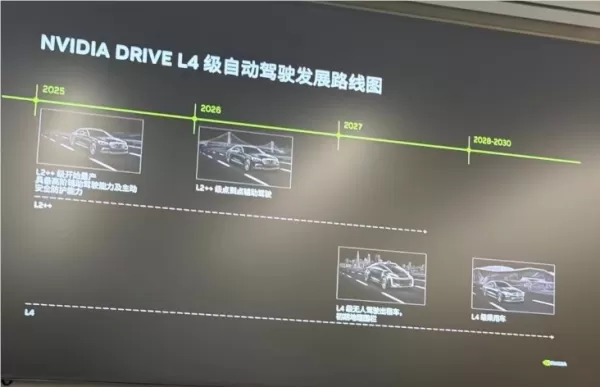
Amid ongoing industry debate about skipping L3 to jump directly to L4, Wu Xinzhou takes a pragmatic view. He believes L3 offers immediate value by freeing human drivers from certain tasks, while L4 demands substantial cloud operations. According to NVIDIA’s roadmap: a mass-production project with Mercedes-Benz is set for 2025; an L4 pilot with Google is planned for 2027; and by 2028, NVIDIA intends to partner with Uber to offer driverless services during the Los Angeles Olympics, targeting coverage in 20 to 30 cities worldwide.
Physical AI Expands: From Cars to Robots
Related article
 Stripe to Acquire OpenRouter as AI Model Routing Gains Momentum
Stripe has agreed to acquire OpenRouter, an AI model-routing platform that gives developers access to hundreds of models through a single interface. The deal adds model selection and routing to Stripe’s existing work around AI usage and token-based b
Former OpenAI Researcher Barrett Zoph Returns to Google to Support Gemini Development
Barret Zoph, who previously abruptly left and joined OpenAI due to a disagreement with Thinking Machines Lab CEO Miriam Mularati, has once again changed employers. Alphabet's Google announced that Zoph will return as Vice President of Research, bring
How Recursive Intelligence Raised $335M at $4B Valuation in 4 Months
The co-founders of startup Ricursive Intelligence seemed destined to be co-founders.Anna Goldie, CEO, and Azalia Mirhoseini, CTO, are so well-known in the AI community that they were among those AI engineers who “got those weird emails from Zuckerber
Related Special Topic Recommendations
Design & Art
Stripe to Acquire OpenRouter as AI Model Routing Gains Momentum
Stripe has agreed to acquire OpenRouter, an AI model-routing platform that gives developers access to hundreds of models through a single interface. The deal adds model selection and routing to Stripe’s existing work around AI usage and token-based b
Former OpenAI Researcher Barrett Zoph Returns to Google to Support Gemini Development
Barret Zoph, who previously abruptly left and joined OpenAI due to a disagreement with Thinking Machines Lab CEO Miriam Mularati, has once again changed employers. Alphabet's Google announced that Zoph will return as Vice President of Research, bring
How Recursive Intelligence Raised $335M at $4B Valuation in 4 Months
The co-founders of startup Ricursive Intelligence seemed destined to be co-founders.Anna Goldie, CEO, and Azalia Mirhoseini, CTO, are so well-known in the AI community that they were among those AI engineers who “got those weird emails from Zuckerber
Related Special Topic Recommendations
Design & Art
 Top AI Illustration Tools: Create Editorial Scenes and Cover Art Faster
2026 Latest Top-rated AI Illustration Tools: Our curated list features the best powerfully designed tools for creating stunning editorial scenes and eye-catching cover art quickly. Each option has gone through rigorous real-world tests, offering a free vs paid comparison to help you find the perfect match for your workflow. Try these must-try solutions today to unlock your AI edge and boost your creative productivity. Explore now at XIX.AI.
 10 tools
 xix.ai
Education and Learning
Top AI Tutors for Exam Prep: Practice Math, Science, and English
xix.ai
Education and Learning
Top AI Tutors for Exam Prep: Practice Math, Science, and English
2026 Latest Top-Rated Best AI Tutors for Exam Prep are here on XIX.AI! Our curated list features powerful game-changing tools that offer free vs paid comparison, real-world tests, and weekly updated rankings. They help boost your writing efficiency, simplify complex topic learning, and unlock your academic potential. Explore now to Discover your perfect exam prep tool and Start creating today to Unlock your AI edge!
10 tools
xix.ai
Finance
AI Budget Planning Tools for Personal Money Management
2026 Latest Best Top-Rated AI Budget Planning Tools for Personal Money Management are here on XIX.AI! This curated collection features powerful, game-changing solutions that help you conduct real-world tests, understand spending habits, and create personalized plans to boost productivity. Enjoy a free vs paid comparison along with detailed rankings. Must-try tools designed to simplify money management and unlock your AI edge. Explore now!
11 tools
xix.ai
Health & Wellness
AI Sleep Tracking Assistants: Improve Recovery with Better Bedtime Habits
2026 Latest Best Top-Rated AI Sleep Tracking Assistants curated for ultimate recovery. This fully updated weekly guide features powerful tools that deliver real-world tests, free vs paid comparison, and detailed rankings to help you find the must-try solution that boosts sleep quality and supports better bedtime habits. Explore now at XIX.AI to Unlock your AI edge.
10 tools
xix.ai
Data Analysis
AI SQL Copilots for Product and Revenue Analytics
2026 Latest Best Top-Rated AI SQL Copilots for Product and Revenue Analytics! XIX.AI has curated a powerful, game-changing collection of must-try tools that undergo real-world tests through weekly updated rankings. These tools help users boost productivity significantly by accelerating data analysis, streamlining complex queries, and generating accurate insights to drive smarter business decisions. Explore now to Discover your perfect tool for unlocking your AI edge!
14 tools
xix.ai
Education and Learning
Best AI Homework Helpers That Teach: Learn Concepts, Not Just Answers
2026 Latest Best Top-Rated AI Homework Helpers That Teach Core Concepts Not Just Answers Powerful Tools for Students Must-Try Curated List Weekly Updated Free vs Paid Comparison Real-World Tests Accurate Rankings to Help You Unlock Your Full Learning Potential Explore now to Discover your perfect tool for smarter studying.
10 tools
xix.ai

 Comments (0)
0/500
Comments (0)
0/500
In the rapidly evolving field of physical AI, autonomous driving is often viewed as the first major challenge to overcome. Recently, Wu Xinzhou, Vice President of NVIDIA, outlined the company's ambitious vision for intelligent driving at a Beijing communication event. He not only described the "five-layer cake" architecture supporting assisted driving but also provided a clear timeline for the rollout of Level 4 autonomous driving.
The 'Five-Layer Cake' Creates a Full-Stack Ecosystem
NVIDIA has moved beyond simply supplying chips, aiming instead to build a comprehensive service system through a trio of computing platforms: vehicle-side inference, cloud training, and simulation verification. Wu Xinzhou metaphorically refers to this as the "five-layer cake," spanning from the underlying Hyperion hardware platform, through the operating system, open model Alpamayo, and simulation toolchain, all the way up to the top-level cloud infrastructure.
At the heart of this system is a focus on lowering the development barrier for automakers. Particularly during the shift from modular to end-to-end architectures, NVIDIA leverages its powerful simulation capabilities to run two million scenario validations each day, significantly boosting model training efficiency. The company is now actively encouraging major car manufacturers to adopt the Hyperion platform, aiming for a major leap in standardization and scalability.
Vision-First Approach with Built-in Redundancy
On the technical front, Wu Xinzhou is a strong advocate of vision-based solutions. He argues that visual sensors offer pixel density and information limits far beyond those of LiDAR, making them more than capable of supporting high-level assisted driving. However, for more advanced L3 and L4 systems, NVIDIA still sees LiDAR as an essential safety redundancy. He revealed that the company is collaborating with suppliers in Europe and the US to secure stable hardware support for high-level intelligent driving solutions.
L4 Countdown: 30 Cities by 2028
Amid ongoing industry debate about skipping L3 to jump directly to L4, Wu Xinzhou takes a pragmatic view. He believes L3 offers immediate value by freeing human drivers from certain tasks, while L4 demands substantial cloud operations. According to NVIDIA’s roadmap: a mass-production project with Mercedes-Benz is set for 2025; an L4 pilot with Google is planned for 2027; and by 2028, NVIDIA intends to partner with Uber to offer driverless services during the Los Angeles Olympics, targeting coverage in 20 to 30 cities worldwide.
Physical AI Expands: From Cars to Robots








 Stripe to Acquire OpenRouter as AI Model Routing Gains Momentum
Stripe has agreed to acquire OpenRouter, an AI model-routing platform that gives developers access to hundreds of models through a single interface. The deal adds model selection and routing to Stripe’s existing work around AI usage and token-based b
Stripe to Acquire OpenRouter as AI Model Routing Gains Momentum
Stripe has agreed to acquire OpenRouter, an AI model-routing platform that gives developers access to hundreds of models through a single interface. The deal adds model selection and routing to Stripe’s existing work around AI usage and token-based b
 Former OpenAI Researcher Barrett Zoph Returns to Google to Support Gemini Development
Barret Zoph, who previously abruptly left and joined OpenAI due to a disagreement with Thinking Machines Lab CEO Miriam Mularati, has once again changed employers. Alphabet's Google announced that Zoph will return as Vice President of Research, bring
Former OpenAI Researcher Barrett Zoph Returns to Google to Support Gemini Development
Barret Zoph, who previously abruptly left and joined OpenAI due to a disagreement with Thinking Machines Lab CEO Miriam Mularati, has once again changed employers. Alphabet's Google announced that Zoph will return as Vice President of Research, bring
 How Recursive Intelligence Raised $335M at $4B Valuation in 4 Months
The co-founders of startup Ricursive Intelligence seemed destined to be co-founders.Anna Goldie, CEO, and Azalia Mirhoseini, CTO, are so well-known in the AI community that they were among those AI engineers who “got those weird emails from Zuckerber
How Recursive Intelligence Raised $335M at $4B Valuation in 4 Months
The co-founders of startup Ricursive Intelligence seemed destined to be co-founders.Anna Goldie, CEO, and Azalia Mirhoseini, CTO, are so well-known in the AI community that they were among those AI engineers who “got those weird emails from Zuckerber

2026 Latest Top-rated AI Illustration Tools: Our curated list features the best powerfully designed tools for creating stunning editorial scenes and eye-catching cover art quickly. Each option has gone through rigorous real-world tests, offering a free vs paid comparison to help you find the perfect match for your workflow. Try these must-try solutions today to unlock your AI edge and boost your creative productivity. Explore now at XIX.AI.
10 tools
xix.ai

2026 Latest Top-Rated Best AI Tutors for Exam Prep are here on XIX.AI! Our curated list features powerful game-changing tools that offer free vs paid comparison, real-world tests, and weekly updated rankings. They help boost your writing efficiency, simplify complex topic learning, and unlock your academic potential. Explore now to Discover your perfect exam prep tool and Start creating today to Unlock your AI edge!
10 tools
xix.ai

2026 Latest Best Top-Rated AI Budget Planning Tools for Personal Money Management are here on XIX.AI! This curated collection features powerful, game-changing solutions that help you conduct real-world tests, understand spending habits, and create personalized plans to boost productivity. Enjoy a free vs paid comparison along with detailed rankings. Must-try tools designed to simplify money management and unlock your AI edge. Explore now!
11 tools
xix.ai

2026 Latest Best Top-Rated AI Sleep Tracking Assistants curated for ultimate recovery. This fully updated weekly guide features powerful tools that deliver real-world tests, free vs paid comparison, and detailed rankings to help you find the must-try solution that boosts sleep quality and supports better bedtime habits. Explore now at XIX.AI to Unlock your AI edge.
10 tools
xix.ai

2026 Latest Best Top-Rated AI SQL Copilots for Product and Revenue Analytics! XIX.AI has curated a powerful, game-changing collection of must-try tools that undergo real-world tests through weekly updated rankings. These tools help users boost productivity significantly by accelerating data analysis, streamlining complex queries, and generating accurate insights to drive smarter business decisions. Explore now to Discover your perfect tool for unlocking your AI edge!
14 tools
xix.ai

2026 Latest Best Top-Rated AI Homework Helpers That Teach Core Concepts Not Just Answers Powerful Tools for Students Must-Try Curated List Weekly Updated Free vs Paid Comparison Real-World Tests Accurate Rankings to Help You Unlock Your Full Learning Potential Explore now to Discover your perfect tool for smarter studying.
10 tools
xix.ai












