


 Home
HomeOrbital data centers could be key to SpaceX's valuation
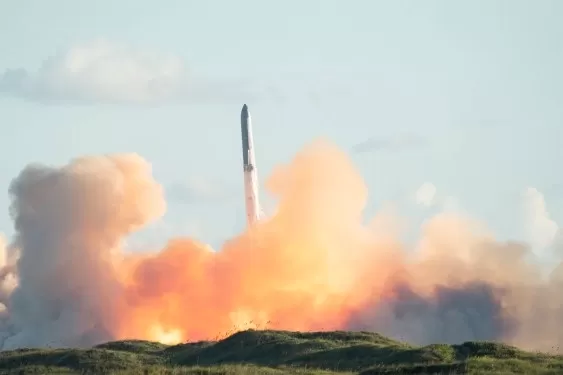
SpaceX has reportedly submitted confidential documents for an IPO, aiming to raise $75 billion at a $1.75 trillion valuation. CEO Elon Musk has indicated that orbital data centers will play a major role in SpaceX's future.
In the latest episode of TechCrunch's Equity podcast, Kirsten Korosec, Sean O'Kane, and I explored Musk's vision along with other companies chasing similar ambitions.
Making orbital data centers a reality will require substantial technological development and massive capital investment. However, as Sean noted, with growing opposition to data centers across the country, executives like Musk and Jeff Bezos may see the engineering challenge as less daunting than the social hurdles on Earth.
Below is an edited preview of our conversation, condensed for clarity and length.
Sean: This has been a trend — a rapidly forming one, I'd say — over the past six to twelve months, and we have several examples. SpaceX is one, though in some ways Elon Musk seems late to this trend. For now, let's set aside the actual mechanics and feasibility of space-based data centers. We can dive into that later if needed.
Kirsten: We have an excellent story we'll link in the show notes. One of our newest hires, Tim Fernholz, is fantastic — he covers the physics and constraints thoroughly.
Sean: Yeah, it's a fascinating engineering, physics, and orbital mechanics challenge. But clearly many companies and individuals are going to pursue it. SpaceX will be among them, building on what they're already doing with Starlink.
There's a Y Combinator-backed startup, originally called Starcloud, that was one of the first to try building a large business around this. It just raised $170 million this week, pushing its valuation to unicorn status.
Jeff Bezos is also pursuing this. It's a next-generation version of the competition between Starlink and Amazon's LEO satellite network, and Blue Origin will have its own satellite network operational in the next few years.
So a lot of activity is emerging, and it feels like this wasn't happening a year ago. Elon Musk's pitch — he's known to hate bureaucracy, and he's already built a data center in Memphis. Perhaps now he understands the challenges and risks needed to bypass red tape.
There's widespread opposition to data centers across the country. Some say, 'We have space access, so let's try doing it up there.' The engineering challenge might be easier than the social challenge back on Earth.
Kirsten: It also generates excitement. If a company is about to go public and working on space data centers, people can have positive expectations and overlook the constraints. It signals a forward-looking company, not one stuck in the past. It's a smart strategy.
Anthony: Elon Musk isn't the only one using this approach, but he's remarkably effective at saying, 'Don't judge my companies by current profits; judge them by the grand visions I paint of the future.'
Returning to Sean's point, what's interesting is how this fits into the broader data center rollout and opposition. Maybe people won't be able to build as many data centers as they want. None of us are engineers qualified to assess these plans' viability. There's certainly a fantasy element, but even when plans are laid out, they seem like a drop in the bucket compared to Earth-based compute needs. So it's unlikely this replaces many new Earth data centers; rather, it's a supplement.
Sean: Two things stand out to me. First, we've seen some pullback from data centers — not only due to opposition but also because demand might be lower. AI labs are jockeying, saying they might not need to lease as much from certain companies. If that trend solidifies compared to five months ago, do we lose momentum for something as extreme as space data centers, even if they work?
Second, building massive space data centers with satellites that constitute the 'data center' is business for SpaceX. Unlike other companies, SpaceX is primarily a launch company, even though Starlink generates revenue. They are the vehicle that delivers data centers to space, and they can book that as revenue.
So of course Musk wants to send more satellites into space — whether it works or not, he'd eventually have to prove it — because it generates more revenue for SpaceX, making it look better as a public company. Then the cycle continues until he finds the next thing to pitch to investors.
Loading the player...
Related article
 SpaceX Stock Drops Below $135 IPO Price Ahead of Starship Launch
SpaceX shares dipped slightly above $135 on Wednesday, marking a decline from the $135 benchmark set by CEO Elon Musk and the company prior to its massive June 12 IPO, which raised nearly $86 billion.Throughout the day, the stock traded mostly below
Could This Mark the Beginning of a Crisis for Token Economies?
Microsoft recently introduced significant price adjustments to GitHub Copilot, changes so substantial that a Reddit user referred to the situation as the Tokenpocalypse within their company.In the most recent episode of TechCrunch’s Equity podcast, K
Elon Musk praises Mythos/Fable, vows not to cut off Anthropic
Can Anthropic rely on Elon Musk to host its models? After users on X suggested that Musk might arbitrarily remove the AI lab from SpaceX’s servers to cripple a competitor, Musk responded with effusive praise, stating that such a move is “not my style
Related Special Topic Recommendations
Music composition
SpaceX Stock Drops Below $135 IPO Price Ahead of Starship Launch
SpaceX shares dipped slightly above $135 on Wednesday, marking a decline from the $135 benchmark set by CEO Elon Musk and the company prior to its massive June 12 IPO, which raised nearly $86 billion.Throughout the day, the stock traded mostly below
Could This Mark the Beginning of a Crisis for Token Economies?
Microsoft recently introduced significant price adjustments to GitHub Copilot, changes so substantial that a Reddit user referred to the situation as the Tokenpocalypse within their company.In the most recent episode of TechCrunch’s Equity podcast, K
Elon Musk praises Mythos/Fable, vows not to cut off Anthropic
Can Anthropic rely on Elon Musk to host its models? After users on X suggested that Musk might arbitrarily remove the AI lab from SpaceX’s servers to cripple a competitor, Musk responded with effusive praise, stating that such a move is “not my style
Related Special Topic Recommendations
Music composition
 AI Stem Separation Tools for Remix Production, Sampling Prep, and Karaoke Masters
2026 Latest Best Top-rated AI Stem Separation Tools Curated for Remix Production, Sampling Prep, and Karaoke Masters. These powerful game-changing tools offer real-world tests to deliver precise audio isolation, boosting productivity significantly. XIX.AI provides a weekly updated free vs paid comparison guide to help you find the must-try solution that suits your needs. Explore now to unlock your AI edge.
 8 tools
 xix.ai
Data Analysis
AI SQL Copilots for Revenue Dashboards, Funnel Analysis, and Product Metrics
xix.ai
Data Analysis
AI SQL Copilots for Revenue Dashboards, Funnel Analysis, and Product Metrics
2026 Latest Best AI SQL Copilots Ranked Top-Rated! XIX.AI curates a powerful game-changing collection for weekly updated real-world tests. These must-try tools help you generate accurate revenue dashboards, analyze sales funnels, and track product metrics swiftly, boosting productivity massively. Explore now to Discover your perfect tool for data-driven decision making! 238 characters
9 tools
xix.ai
Music composition
Best AI Melody Writing Tools for Song Drafts
2026 Latest Best Top-Rated AI Melody Writing Tools for Song Drafts! XIX.AI has curated a highly powerful game-changing collection that goes through rigorous real-world tests to deliver the best writing experience. You can find detailed free vs paid comparisons, accurate rankings, and must-try options designed to help you create stunning song drafts effortlessly and boost your creative productivity significantly. Explore now to discover your perfect tool!
8 tools
xix.ai
chatbot
Best AI Conversation Trainer Tools for Interview Practice
2026 Latest Best Top-rated AI Conversation Trainer Tools for Interview Practice are here on XIX.AI! This curated collection features powerful, game-changing tools that go through rigorous real-world tests to deliver accurate feedback. You’ll find a free vs paid comparison and detailed rankings to help you choose the must-try option that boosts your confidence and skills. Explore now to Discover your perfect tool for interview success!
12 tools
xix.ai
Design & Art
Best AI Style Transfer Tools for Creative Experiments
2026 Latest Best Top-rated AI Style Transfer Tools for Creative Experiments! XIX.AI has curated a powerful, game-changing collection of must-try tools that deliver exceptional results through real-world tests and rigorous rankings. These top solutions help creatives boost productivity significantly by accelerating content creation and unlocking endless creative possibilities. Explore now to discover your perfect tool and start creating today!
9 tools
xix.ai
Comic Creation
Best AI Dialogue Bubble Tools for Visual Storytelling
2026 Latest Best Top-Rated AI Dialogue Bubble Tools for Visual Storytelling are here on XIX.AI! This curated collection features powerful, game-changing tools that help creators boost productivity and overcome creative bottlenecks. Get a free vs paid comparison, see real-world tests, and check the latest rankings to find the must-try solutions perfect for crafting engaging visual narratives. Explore now to discover your ideal tool!
10 tools
xix.ai

 Comments (1)
0/500
Comments (1)
0/500
![RalphJohnson]()
軌道データセンター?SpaceXのバリューチェーンが宇宙まで伸びるとは驚きだ。 Elon Muskの野望は相変わらずすごいけど、コストとリスクが伴うよね。🚀💻
SpaceX has reportedly submitted confidential documents for an IPO, aiming to raise $75 billion at a $1.75 trillion valuation. CEO Elon Musk has indicated that orbital data centers will play a major role in SpaceX's future.
In the latest episode of TechCrunch's Equity podcast, Kirsten Korosec, Sean O'Kane, and I explored Musk's vision along with other companies chasing similar ambitions.
Making orbital data centers a reality will require substantial technological development and massive capital investment. However, as Sean noted, with growing opposition to data centers across the country, executives like Musk and Jeff Bezos may see the engineering challenge as less daunting than the social hurdles on Earth.
Below is an edited preview of our conversation, condensed for clarity and length.
Sean: This has been a trend — a rapidly forming one, I'd say — over the past six to twelve months, and we have several examples. SpaceX is one, though in some ways Elon Musk seems late to this trend. For now, let's set aside the actual mechanics and feasibility of space-based data centers. We can dive into that later if needed.
Kirsten: We have an excellent story we'll link in the show notes. One of our newest hires, Tim Fernholz, is fantastic — he covers the physics and constraints thoroughly.
Sean: Yeah, it's a fascinating engineering, physics, and orbital mechanics challenge. But clearly many companies and individuals are going to pursue it. SpaceX will be among them, building on what they're already doing with Starlink.
There's a Y Combinator-backed startup, originally called Starcloud, that was one of the first to try building a large business around this. It just raised $170 million this week, pushing its valuation to unicorn status.
Jeff Bezos is also pursuing this. It's a next-generation version of the competition between Starlink and Amazon's LEO satellite network, and Blue Origin will have its own satellite network operational in the next few years.
So a lot of activity is emerging, and it feels like this wasn't happening a year ago. Elon Musk's pitch — he's known to hate bureaucracy, and he's already built a data center in Memphis. Perhaps now he understands the challenges and risks needed to bypass red tape.
There's widespread opposition to data centers across the country. Some say, 'We have space access, so let's try doing it up there.' The engineering challenge might be easier than the social challenge back on Earth.
Kirsten: It also generates excitement. If a company is about to go public and working on space data centers, people can have positive expectations and overlook the constraints. It signals a forward-looking company, not one stuck in the past. It's a smart strategy.
Anthony: Elon Musk isn't the only one using this approach, but he's remarkably effective at saying, 'Don't judge my companies by current profits; judge them by the grand visions I paint of the future.'
Returning to Sean's point, what's interesting is how this fits into the broader data center rollout and opposition. Maybe people won't be able to build as many data centers as they want. None of us are engineers qualified to assess these plans' viability. There's certainly a fantasy element, but even when plans are laid out, they seem like a drop in the bucket compared to Earth-based compute needs. So it's unlikely this replaces many new Earth data centers; rather, it's a supplement.
Sean: Two things stand out to me. First, we've seen some pullback from data centers — not only due to opposition but also because demand might be lower. AI labs are jockeying, saying they might not need to lease as much from certain companies. If that trend solidifies compared to five months ago, do we lose momentum for something as extreme as space data centers, even if they work?
Second, building massive space data centers with satellites that constitute the 'data center' is business for SpaceX. Unlike other companies, SpaceX is primarily a launch company, even though Starlink generates revenue. They are the vehicle that delivers data centers to space, and they can book that as revenue.
So of course Musk wants to send more satellites into space — whether it works or not, he'd eventually have to prove it — because it generates more revenue for SpaceX, making it look better as a public company. Then the cycle continues until he finds the next thing to pitch to investors.
Loading the player...








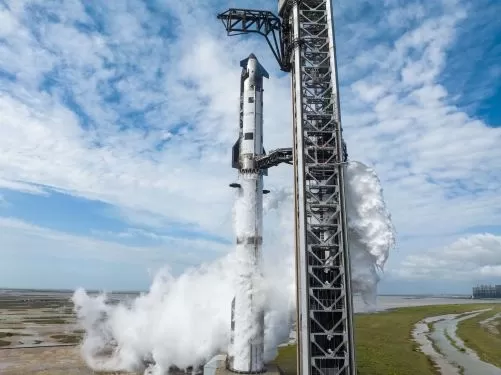 SpaceX Stock Drops Below $135 IPO Price Ahead of Starship Launch
SpaceX shares dipped slightly above $135 on Wednesday, marking a decline from the $135 benchmark set by CEO Elon Musk and the company prior to its massive June 12 IPO, which raised nearly $86 billion.Throughout the day, the stock traded mostly below
SpaceX Stock Drops Below $135 IPO Price Ahead of Starship Launch
SpaceX shares dipped slightly above $135 on Wednesday, marking a decline from the $135 benchmark set by CEO Elon Musk and the company prior to its massive June 12 IPO, which raised nearly $86 billion.Throughout the day, the stock traded mostly below
 Could This Mark the Beginning of a Crisis for Token Economies?
Microsoft recently introduced significant price adjustments to GitHub Copilot, changes so substantial that a Reddit user referred to the situation as the Tokenpocalypse within their company.In the most recent episode of TechCrunch’s Equity podcast, K
Could This Mark the Beginning of a Crisis for Token Economies?
Microsoft recently introduced significant price adjustments to GitHub Copilot, changes so substantial that a Reddit user referred to the situation as the Tokenpocalypse within their company.In the most recent episode of TechCrunch’s Equity podcast, K
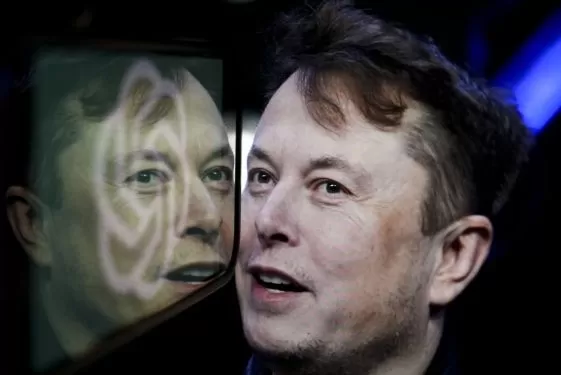 Elon Musk praises Mythos/Fable, vows not to cut off Anthropic
Can Anthropic rely on Elon Musk to host its models? After users on X suggested that Musk might arbitrarily remove the AI lab from SpaceX’s servers to cripple a competitor, Musk responded with effusive praise, stating that such a move is “not my style
Elon Musk praises Mythos/Fable, vows not to cut off Anthropic
Can Anthropic rely on Elon Musk to host its models? After users on X suggested that Musk might arbitrarily remove the AI lab from SpaceX’s servers to cripple a competitor, Musk responded with effusive praise, stating that such a move is “not my style

2026 Latest Best Top-rated AI Stem Separation Tools Curated for Remix Production, Sampling Prep, and Karaoke Masters. These powerful game-changing tools offer real-world tests to deliver precise audio isolation, boosting productivity significantly. XIX.AI provides a weekly updated free vs paid comparison guide to help you find the must-try solution that suits your needs. Explore now to unlock your AI edge.
8 tools
xix.ai

2026 Latest Best AI SQL Copilots Ranked Top-Rated! XIX.AI curates a powerful game-changing collection for weekly updated real-world tests. These must-try tools help you generate accurate revenue dashboards, analyze sales funnels, and track product metrics swiftly, boosting productivity massively. Explore now to Discover your perfect tool for data-driven decision making! 238 characters
9 tools
xix.ai

2026 Latest Best Top-Rated AI Melody Writing Tools for Song Drafts! XIX.AI has curated a highly powerful game-changing collection that goes through rigorous real-world tests to deliver the best writing experience. You can find detailed free vs paid comparisons, accurate rankings, and must-try options designed to help you create stunning song drafts effortlessly and boost your creative productivity significantly. Explore now to discover your perfect tool!
8 tools
xix.ai

2026 Latest Best Top-rated AI Conversation Trainer Tools for Interview Practice are here on XIX.AI! This curated collection features powerful, game-changing tools that go through rigorous real-world tests to deliver accurate feedback. You’ll find a free vs paid comparison and detailed rankings to help you choose the must-try option that boosts your confidence and skills. Explore now to Discover your perfect tool for interview success!
12 tools
xix.ai

2026 Latest Best Top-rated AI Style Transfer Tools for Creative Experiments! XIX.AI has curated a powerful, game-changing collection of must-try tools that deliver exceptional results through real-world tests and rigorous rankings. These top solutions help creatives boost productivity significantly by accelerating content creation and unlocking endless creative possibilities. Explore now to discover your perfect tool and start creating today!
9 tools
xix.ai

2026 Latest Best Top-Rated AI Dialogue Bubble Tools for Visual Storytelling are here on XIX.AI! This curated collection features powerful, game-changing tools that help creators boost productivity and overcome creative bottlenecks. Get a free vs paid comparison, see real-world tests, and check the latest rankings to find the must-try solutions perfect for crafting engaging visual narratives. Explore now to discover your ideal tool!
10 tools
xix.ai

軌道データセンター?SpaceXのバリューチェーンが宇宙まで伸びるとは驚きだ。 Elon Muskの野望は相変わらずすごいけど、コストとリスクが伴うよね。🚀💻












