


 Home
HomeOpenAI Delays IPO to 2027 Amid Valuation Surge to $1.2 Trillion
OpenAI, the pioneer in artificial intelligence, is currently negotiating private funding with investors to target a staggering $1.2 trillion valuation. This figure marks a dramatic leap from the $85.2 billion post-money valuation set in March, following a $12.2 billion round, keeping the company at the top of private tech fundraising. However, this ambitious valuation hinges on an IPO reaching similar heights by 2027. While an earlier listing was initially considered, the company has opted to delay until 2027, with CEO Sam Altman emphasizing that $1 trillion is the absolute floor for going public.
Major investors remain heavily committed. Microsoft, the largest institutional shareholder, has invested over $13 billion for roughly 27% equity. NVIDIA’s contribution of around $30 billion is largely in computing power, while SoftBank provided a $4 billion bridge loan in March. Amazon’s $5 billion investment is tied to IPO milestones or general AI advancements. Notably, the $12.2 billion figure includes various conditions and deferred rights, such as NVIDIA’s contribution, which offsets GPU infrastructure costs rather than being pure cash.
Financially, OpenAI demonstrates robust revenue growth. By February 2026, annualized revenue hit approximately $25 billion, a 92% increase over the previous 12 months. With Q1 revenue at $5.7 billion, the full-year target is $30 billion, though some estimates suggest it may approach $40 billion by mid-2026. Enterprise business has emerged as the primary growth driver, contributing over 40% of revenue and expected to rival consumer segments by year-end.
Despite high growth, losses are widening. Q1 2026 operating losses reached $9.3 billion, rising to $12.3 billion in Q2, with full-year losses projected between $27 billion and $33 billion. Reasoning costs hit $14.1 billion in 2026, and strategic investments toward 30 gigawatts of computing capacity by 2030 drive up computing and talent expenses. Although gross margins improved from 33% to 39% in Q1 2026, efficiency gains are quickly reinvested into R&D, perpetuating operating losses. At current revenue levels and a $1.2 trillion valuation, the price-to-sales ratio stands at 40x, drawing market scrutiny due to the lack of a clear profitability path.
OpenAI maintains a dominant user base but faces competitive pressures. By February 2026, ChatGPT recorded 900 million weekly active users, surpassing 1 billion monthly active users in May. It boasts over 50 million individual subscribers and 9 million paid enterprise users, with 92% of Fortune 500 companies using its services. However, Sensor Tower data indicates its global AI assistant market share dropped to 46% in May. Meanwhile, competitor Anthropic has exceeded OpenAI in enterprise API spending, with annualized revenue reaching $30 billion in April 2026. This intense competition has forced OpenAI to revise its product roadmap twice in six months and adjust feature release schedules.
The nature of these losses sparks debate: are they cyclical expansion costs or structural traits? Analysis suggests strong structural characteristics: reasoning costs scale rigidly with usage, and a 30-gigawatt commitment locks in fixed costs regardless of demand. This model, driven by continuous computing consumption and massive infrastructure spending, implies that high losses are a long-term feature rather than a short-term phase.
Supporters argue that each technological shift creates giants whose value exceeds expectations, citing ChatGPT’s widespread adoption as evidence of infrastructure-level integration. Conversely, critics worry that converging model capabilities and intense competition could lead to price wars, jeopardizing the high cost base. Ultimately, the $1.2 trillion valuation reflects a bet on OpenAI’s revenue growth and the broader AI capital expenditure cycle. Future success depends on breaking through gross margins, sustaining enterprise revenue growth, and significantly narrowing the loss trajectory.
Related article
 AntGroup Unveils Ling-3.0-flash-VL, a 124B-Parameter Native Multimodal Large Model
The Ant Open Source team has officially launched Ling-3.0-flash-VL, the first native multimodal large model in the Bailing series. Built on the MoE architecture of Ling-3.0-flash, this model features 124B total parameters, with only 5.5B activated pe
Microsoft Classic Outlook to Integrate Copilot AI for Email Drafting on Windows 10 and 11
Windows Latest reports that Microsoft intends to bring the Copilot update to the classic Outlook for Windows 10 and 11 by late 2026, introducing an "email drafting" feature. This strategy signals Microsoft's push to extend AI tools from the new Outlo
Volcano Engine's Seedance AI shifts focus from copyright protection to IP commercialization
Yule Capital reports that ByteDance’s Huoshan Engine has invited several copyright holders to beta test its new “AI Copyright Management Platform.” This tool enables brand owners and short-form drama producers to commercially leverage legally license
Related Special Topic Recommendations
Health & Wellness
AntGroup Unveils Ling-3.0-flash-VL, a 124B-Parameter Native Multimodal Large Model
The Ant Open Source team has officially launched Ling-3.0-flash-VL, the first native multimodal large model in the Bailing series. Built on the MoE architecture of Ling-3.0-flash, this model features 124B total parameters, with only 5.5B activated pe
Microsoft Classic Outlook to Integrate Copilot AI for Email Drafting on Windows 10 and 11
Windows Latest reports that Microsoft intends to bring the Copilot update to the classic Outlook for Windows 10 and 11 by late 2026, introducing an "email drafting" feature. This strategy signals Microsoft's push to extend AI tools from the new Outlo
Volcano Engine's Seedance AI shifts focus from copyright protection to IP commercialization
Yule Capital reports that ByteDance’s Huoshan Engine has invited several copyright holders to beta test its new “AI Copyright Management Platform.” This tool enables brand owners and short-form drama producers to commercially leverage legally license
Related Special Topic Recommendations
Health & Wellness
 Best AI Wellness Companions: Reduce Stress with Daily Mindfulness Support
2026 Latest Best Top-Rated AI Wellness Companions Ranked by Experts. This curated list features powerful game-changing tools that offer daily mindfulness support to help users reduce stress, boost focus, and improve overall well-being through real-world tests. Get a free vs paid comparison to find your perfect match. Explore now at XIX.AI to unlock your AI edge.
 9 tools
 xix.ai
Text-to-speech
AI Speech Styling Tools for Natural Voice Output
xix.ai
Text-to-speech
AI Speech Styling Tools for Natural Voice Output
2026 Latest Best Top-Rated AI Speech Styling Tools for Natural Voice Output are here on XIX.AI. This curated collection features powerful, game-changing tools that deliver highly customizable voice tones, perfect for boosting writing efficiency and creating engaging content. We conduct real-world tests to provide accurate weekly updated rankings, along with a free vs paid comparison to help you choose the best fit for your needs. Explore now to Discover your perfect tool and Unlock your AI edge.
20 tools
xix.ai
SEO
AI Rank Tracking Tools for Google, AI Overviews, and Answer Engine Visibility
2026 Latest Best Top-rated AI Rank Tracking Tools for Google, AI Overviews, and Answer Engine Visibility are here on XIX.AI. This curated list features powerful game-changing tools that go through rigorous real-world tests to deliver accurate rankings data. Get a free vs paid comparison, see top performers, and discover must-try options to boost your content’s visibility across search engines. Explore now to find the perfect tool for your needs.
10 tools
xix.ai
Productivity
Best AI Second-Brain Organizers for Notes and Tasks
2026 Latest Best Top-Rated AI Second-Brain Organizers for Notes and Tasks! XIX.AI has curated a highly powerful game-changing collection, featuring weekly updated rankings, free vs paid comparison, and real-world tests to help you find the perfect tool that boosts productivity dramatically. Explore now to unlock your AI edge!
11 tools
xix.ai
Prompt
AI Prompt Testing Platforms for ChatGPT and Claude Workflows
2026 Latest Best Top-Rated AI Prompt Testing Platforms for ChatGPT and Claude Workflows! XIX.AI curates a powerful game-changing collection, featuring weekly updated rankings, free vs paid comparison, real-world tests, and detailed feature breakdowns to help you identify the must-try tools that boost productivity and deliver flawless outputs. Explore now to discover your perfect solution and unlock your AI edge. (249 characters)
9 tools
xix.ai
Marketing
AI Landing Page Copy Tools for SaaS A/B Tests, Pricing Pages, and Demo Conversion
2026 Latest Best AI Landing Page Copy Tools for SaaS A/B Tests, Pricing Pages, and Demo Conversion are here on XIX.AI. This curated list of top-rated tools offers powerful game-changing solutions to boost content quality, improve writing efficiency, and enhance overall productivity. We conduct real-world tests and provide a free vs paid comparison along with weekly updated rankings. Must-try options help you break through creation bottlenecks. Explore now to discover your perfect tool and unlock your AI edge!
8 tools
xix.ai

 Comments (0)
0/500
Comments (0)
0/500
OpenAI, the pioneer in artificial intelligence, is currently negotiating private funding with investors to target a staggering $1.2 trillion valuation. This figure marks a dramatic leap from the $85.2 billion post-money valuation set in March, following a $12.2 billion round, keeping the company at the top of private tech fundraising. However, this ambitious valuation hinges on an IPO reaching similar heights by 2027. While an earlier listing was initially considered, the company has opted to delay until 2027, with CEO Sam Altman emphasizing that $1 trillion is the absolute floor for going public.
Major investors remain heavily committed. Microsoft, the largest institutional shareholder, has invested over $13 billion for roughly 27% equity. NVIDIA’s contribution of around $30 billion is largely in computing power, while SoftBank provided a $4 billion bridge loan in March. Amazon’s $5 billion investment is tied to IPO milestones or general AI advancements. Notably, the $12.2 billion figure includes various conditions and deferred rights, such as NVIDIA’s contribution, which offsets GPU infrastructure costs rather than being pure cash.
Financially, OpenAI demonstrates robust revenue growth. By February 2026, annualized revenue hit approximately $25 billion, a 92% increase over the previous 12 months. With Q1 revenue at $5.7 billion, the full-year target is $30 billion, though some estimates suggest it may approach $40 billion by mid-2026. Enterprise business has emerged as the primary growth driver, contributing over 40% of revenue and expected to rival consumer segments by year-end.
Despite high growth, losses are widening. Q1 2026 operating losses reached $9.3 billion, rising to $12.3 billion in Q2, with full-year losses projected between $27 billion and $33 billion. Reasoning costs hit $14.1 billion in 2026, and strategic investments toward 30 gigawatts of computing capacity by 2030 drive up computing and talent expenses. Although gross margins improved from 33% to 39% in Q1 2026, efficiency gains are quickly reinvested into R&D, perpetuating operating losses. At current revenue levels and a $1.2 trillion valuation, the price-to-sales ratio stands at 40x, drawing market scrutiny due to the lack of a clear profitability path.
OpenAI maintains a dominant user base but faces competitive pressures. By February 2026, ChatGPT recorded 900 million weekly active users, surpassing 1 billion monthly active users in May. It boasts over 50 million individual subscribers and 9 million paid enterprise users, with 92% of Fortune 500 companies using its services. However, Sensor Tower data indicates its global AI assistant market share dropped to 46% in May. Meanwhile, competitor Anthropic has exceeded OpenAI in enterprise API spending, with annualized revenue reaching $30 billion in April 2026. This intense competition has forced OpenAI to revise its product roadmap twice in six months and adjust feature release schedules.
The nature of these losses sparks debate: are they cyclical expansion costs or structural traits? Analysis suggests strong structural characteristics: reasoning costs scale rigidly with usage, and a 30-gigawatt commitment locks in fixed costs regardless of demand. This model, driven by continuous computing consumption and massive infrastructure spending, implies that high losses are a long-term feature rather than a short-term phase.
Supporters argue that each technological shift creates giants whose value exceeds expectations, citing ChatGPT’s widespread adoption as evidence of infrastructure-level integration. Conversely, critics worry that converging model capabilities and intense competition could lead to price wars, jeopardizing the high cost base. Ultimately, the $1.2 trillion valuation reflects a bet on OpenAI’s revenue growth and the broader AI capital expenditure cycle. Future success depends on breaking through gross margins, sustaining enterprise revenue growth, and significantly narrowing the loss trajectory.








 AntGroup Unveils Ling-3.0-flash-VL, a 124B-Parameter Native Multimodal Large Model
The Ant Open Source team has officially launched Ling-3.0-flash-VL, the first native multimodal large model in the Bailing series. Built on the MoE architecture of Ling-3.0-flash, this model features 124B total parameters, with only 5.5B activated pe
AntGroup Unveils Ling-3.0-flash-VL, a 124B-Parameter Native Multimodal Large Model
The Ant Open Source team has officially launched Ling-3.0-flash-VL, the first native multimodal large model in the Bailing series. Built on the MoE architecture of Ling-3.0-flash, this model features 124B total parameters, with only 5.5B activated pe
 Microsoft Classic Outlook to Integrate Copilot AI for Email Drafting on Windows 10 and 11
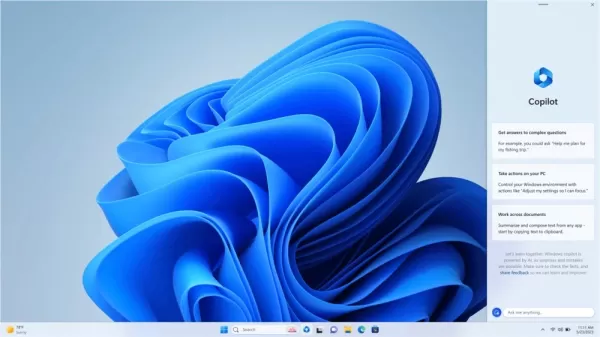
Windows Latest reports that Microsoft intends to bring the Copilot update to the classic Outlook for Windows 10 and 11 by late 2026, introducing an "email drafting" feature. This strategy signals Microsoft's push to extend AI tools from the new Outlo
Microsoft Classic Outlook to Integrate Copilot AI for Email Drafting on Windows 10 and 11
Windows Latest reports that Microsoft intends to bring the Copilot update to the classic Outlook for Windows 10 and 11 by late 2026, introducing an "email drafting" feature. This strategy signals Microsoft's push to extend AI tools from the new Outlo
 Volcano Engine's Seedance AI shifts focus from copyright protection to IP commercialization
Yule Capital reports that ByteDance’s Huoshan Engine has invited several copyright holders to beta test its new “AI Copyright Management Platform.” This tool enables brand owners and short-form drama producers to commercially leverage legally license
Volcano Engine's Seedance AI shifts focus from copyright protection to IP commercialization
Yule Capital reports that ByteDance’s Huoshan Engine has invited several copyright holders to beta test its new “AI Copyright Management Platform.” This tool enables brand owners and short-form drama producers to commercially leverage legally license

2026 Latest Best Top-Rated AI Wellness Companions Ranked by Experts. This curated list features powerful game-changing tools that offer daily mindfulness support to help users reduce stress, boost focus, and improve overall well-being through real-world tests. Get a free vs paid comparison to find your perfect match. Explore now at XIX.AI to unlock your AI edge.
9 tools
xix.ai

2026 Latest Best Top-Rated AI Speech Styling Tools for Natural Voice Output are here on XIX.AI. This curated collection features powerful, game-changing tools that deliver highly customizable voice tones, perfect for boosting writing efficiency and creating engaging content. We conduct real-world tests to provide accurate weekly updated rankings, along with a free vs paid comparison to help you choose the best fit for your needs. Explore now to Discover your perfect tool and Unlock your AI edge.
20 tools
xix.ai

2026 Latest Best Top-rated AI Rank Tracking Tools for Google, AI Overviews, and Answer Engine Visibility are here on XIX.AI. This curated list features powerful game-changing tools that go through rigorous real-world tests to deliver accurate rankings data. Get a free vs paid comparison, see top performers, and discover must-try options to boost your content’s visibility across search engines. Explore now to find the perfect tool for your needs.
10 tools
xix.ai

2026 Latest Best Top-Rated AI Second-Brain Organizers for Notes and Tasks! XIX.AI has curated a highly powerful game-changing collection, featuring weekly updated rankings, free vs paid comparison, and real-world tests to help you find the perfect tool that boosts productivity dramatically. Explore now to unlock your AI edge!
11 tools
xix.ai

2026 Latest Best Top-Rated AI Prompt Testing Platforms for ChatGPT and Claude Workflows! XIX.AI curates a powerful game-changing collection, featuring weekly updated rankings, free vs paid comparison, real-world tests, and detailed feature breakdowns to help you identify the must-try tools that boost productivity and deliver flawless outputs. Explore now to discover your perfect solution and unlock your AI edge. (249 characters)
9 tools
xix.ai

2026 Latest Best AI Landing Page Copy Tools for SaaS A/B Tests, Pricing Pages, and Demo Conversion are here on XIX.AI. This curated list of top-rated tools offers powerful game-changing solutions to boost content quality, improve writing efficiency, and enhance overall productivity. We conduct real-world tests and provide a free vs paid comparison along with weekly updated rankings. Must-try options help you break through creation bottlenecks. Explore now to discover your perfect tool and unlock your AI edge!
8 tools
xix.ai












