


 Home
NVIDIA Unveils Open-Source Nemotron 3 Series with Fivefold Inference Boost
At the 2026 GTC conference, NVIDIA unveiled a major expansion of its open-source model family, designed to broadly accelerate innovation across agents, physics AI, and healthcare. The centerpiece of this launch is the Nemotron 3 series of fully understanding multimodal models, with Nemotron 3 Ultra being the standout. Deeply optimized for the Blackwell architecture, it delivers a fivefold increase in throughput efficiency, enabling it to handle complex code assistance and enterprise-grade workflows with remarkable speed.
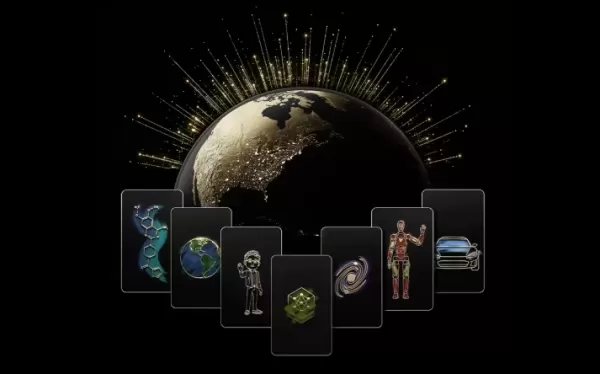
Beyond the core inference models, NVIDIA also highlighted its latest multimodal interaction breakthroughs: Nemotron 3 Omni seamlessly blends audio, visual, and language understanding; Nemotron 3 VoiceChat connects speech recognition and synthesis for an ultra-low-latency, real-time conversational experience. These models have already gained deployment support from industry leaders like CrowdStrike and ServiceNow.
In the realm of physics AI and robotics, NVIDIA introduced the world's foundational model, Cosmos 3, which for the first time unifies synthetic world generation with action simulation. For embodied intelligence, the humanoid-robot-specific Isaac GR00T N1.7 and the autonomous driving inference model Alpamayo 1.5 are now ready for commercial deployment. Jensen Huang also announced the upcoming GR00T N2, slated for year-end, which promises to double the task success rate in novel environments.
Significant progress was also announced for medical research. The BioNeMo platform now includes a protein complex generation model, paired with an updated AlphaFold database developed in partnership with Google DeepMind. This combination is set to dramatically shorten drug discovery timelines. NVIDIA confirmed that all the aforementioned models, datasets, and NIM microservices are now available on GitHub and Hugging Face, allowing developers to deploy instantly from the cloud to the edge.
Related article
 Ctrip Business Travel Unveils AI Ecosystem with 7 Industry Agents and 17 Core Capabilities
Ctrip Business Travel has officially unveiled the "Ctrip Business Travel AI Ecosystem," leveraging large language models to fundamentally restructure corporate travel management. This comprehensive ecosystem addresses four core scenarios: travel arra
Stripe to Acquire OpenRouter as AI Model Routing Gains Momentum
Stripe has agreed to acquire OpenRouter, an AI model-routing platform that gives developers access to hundreds of models through a single interface. The deal adds model selection and routing to Stripe’s existing work around AI usage and token-based b
Former OpenAI Researcher Barrett Zoph Returns to Google to Support Gemini Development
Barret Zoph, who previously abruptly left and joined OpenAI due to a disagreement with Thinking Machines Lab CEO Miriam Mularati, has once again changed employers. Alphabet's Google announced that Zoph will return as Vice President of Research, bring
Related Special Topic Recommendations
Design & Art
 Top AI Illustration Tools: Create Editorial Scenes and Cover Art Faster
2026 Latest Top-rated AI Illustration Tools: Our curated list features the best powerfully designed tools for creating stunning editorial scenes and eye-catching cover art quickly. Each option has gone through rigorous real-world tests, offering a free vs paid comparison to help you find the perfect match for your workflow. Try these must-try solutions today to unlock your AI edge and boost your creative productivity. Explore now at XIX.AI.
 10 tools
 xix.ai
Education and Learning
Top AI Tutors for Exam Prep: Practice Math, Science, and English
2026 Latest Top-Rated Best AI Tutors for Exam Prep are here on XIX.AI! Our curated list features powerful game-changing tools that offer free vs paid comparison, real-world tests, and weekly updated rankings. They help boost your writing efficiency, simplify complex topic learning, and unlock your academic potential. Explore now to Discover your perfect exam prep tool and Start creating today to Unlock your AI edge!
10 tools
xix.ai
Finance
AI Budget Planning Tools for Personal Money Management
2026 Latest Best Top-Rated AI Budget Planning Tools for Personal Money Management are here on XIX.AI! This curated collection features powerful, game-changing solutions that help you conduct real-world tests, understand spending habits, and create personalized plans to boost productivity. Enjoy a free vs paid comparison along with detailed rankings. Must-try tools designed to simplify money management and unlock your AI edge. Explore now!
11 tools
xix.ai
Health & Wellness
AI Sleep Tracking Assistants: Improve Recovery with Better Bedtime Habits
2026 Latest Best Top-Rated AI Sleep Tracking Assistants curated for ultimate recovery. This fully updated weekly guide features powerful tools that deliver real-world tests, free vs paid comparison, and detailed rankings to help you find the must-try solution that boosts sleep quality and supports better bedtime habits. Explore now at XIX.AI to Unlock your AI edge.
10 tools
xix.ai
Data Analysis
AI SQL Copilots for Product and Revenue Analytics
2026 Latest Best Top-Rated AI SQL Copilots for Product and Revenue Analytics! XIX.AI has curated a powerful, game-changing collection of must-try tools that undergo real-world tests through weekly updated rankings. These tools help users boost productivity significantly by accelerating data analysis, streamlining complex queries, and generating accurate insights to drive smarter business decisions. Explore now to Discover your perfect tool for unlocking your AI edge!
14 tools
xix.ai
Education and Learning
Best AI Homework Helpers That Teach: Learn Concepts, Not Just Answers
2026 Latest Best Top-Rated AI Homework Helpers That Teach Core Concepts Not Just Answers Powerful Tools for Students Must-Try Curated List Weekly Updated Free vs Paid Comparison Real-World Tests Accurate Rankings to Help You Unlock Your Full Learning Potential Explore now to Discover your perfect tool for smarter studying.
10 tools
xix.ai

 Comments (0)
0/500
At the 2026 GTC conference, NVIDIA unveiled a major expansion of its open-source model family, designed to broadly accelerate innovation across agents, physics AI, and healthcare. The centerpiece of this launch is the Nemotron 3 series of fully understanding multimodal models, with Nemotron 3 Ultra being the standout. Deeply optimized for the Blackwell architecture, it delivers a fivefold increase in throughput efficiency, enabling it to handle complex code assistance and enterprise-grade workflows with remarkable speed.
Beyond the core inference models, NVIDIA also highlighted its latest multimodal interaction breakthroughs: Nemotron 3 Omni seamlessly blends audio, visual, and language understanding; Nemotron 3 VoiceChat connects speech recognition and synthesis for an ultra-low-latency, real-time conversational experience. These models have already gained deployment support from industry leaders like CrowdStrike and ServiceNow.
In the realm of physics AI and robotics, NVIDIA introduced the world's foundational model, Cosmos 3, which for the first time unifies synthetic world generation with action simulation. For embodied intelligence, the humanoid-robot-specific Isaac GR00T N1.7 and the autonomous driving inference model Alpamayo 1.5 are now ready for commercial deployment. Jensen Huang also announced the upcoming GR00T N2, slated for year-end, which promises to double the task success rate in novel environments.
Significant progress was also announced for medical research. The BioNeMo platform now includes a protein complex generation model, paired with an updated AlphaFold database developed in partnership with Google DeepMind. This combination is set to dramatically shorten drug discovery timelines. NVIDIA confirmed that all the aforementioned models, datasets, and NIM microservices are now available on GitHub and Hugging Face, allowing developers to deploy instantly from the cloud to the edge.








 Ctrip Business Travel Unveils AI Ecosystem with 7 Industry Agents and 17 Core Capabilities
Ctrip Business Travel has officially unveiled the "Ctrip Business Travel AI Ecosystem," leveraging large language models to fundamentally restructure corporate travel management. This comprehensive ecosystem addresses four core scenarios: travel arra
 Stripe to Acquire OpenRouter as AI Model Routing Gains Momentum
Stripe has agreed to acquire OpenRouter, an AI model-routing platform that gives developers access to hundreds of models through a single interface. The deal adds model selection and routing to Stripe’s existing work around AI usage and token-based b
 Former OpenAI Researcher Barrett Zoph Returns to Google to Support Gemini Development
Barret Zoph, who previously abruptly left and joined OpenAI due to a disagreement with Thinking Machines Lab CEO Miriam Mularati, has once again changed employers. Alphabet's Google announced that Zoph will return as Vice President of Research, bring

2026 Latest Top-rated AI Illustration Tools: Our curated list features the best powerfully designed tools for creating stunning editorial scenes and eye-catching cover art quickly. Each option has gone through rigorous real-world tests, offering a free vs paid comparison to help you find the perfect match for your workflow. Try these must-try solutions today to unlock your AI edge and boost your creative productivity. Explore now at XIX.AI.
10 tools
xix.ai

2026 Latest Top-Rated Best AI Tutors for Exam Prep are here on XIX.AI! Our curated list features powerful game-changing tools that offer free vs paid comparison, real-world tests, and weekly updated rankings. They help boost your writing efficiency, simplify complex topic learning, and unlock your academic potential. Explore now to Discover your perfect exam prep tool and Start creating today to Unlock your AI edge!
10 tools
xix.ai

2026 Latest Best Top-Rated AI Budget Planning Tools for Personal Money Management are here on XIX.AI! This curated collection features powerful, game-changing solutions that help you conduct real-world tests, understand spending habits, and create personalized plans to boost productivity. Enjoy a free vs paid comparison along with detailed rankings. Must-try tools designed to simplify money management and unlock your AI edge. Explore now!
11 tools
xix.ai

2026 Latest Best Top-Rated AI Sleep Tracking Assistants curated for ultimate recovery. This fully updated weekly guide features powerful tools that deliver real-world tests, free vs paid comparison, and detailed rankings to help you find the must-try solution that boosts sleep quality and supports better bedtime habits. Explore now at XIX.AI to Unlock your AI edge.
10 tools
xix.ai

2026 Latest Best Top-Rated AI SQL Copilots for Product and Revenue Analytics! XIX.AI has curated a powerful, game-changing collection of must-try tools that undergo real-world tests through weekly updated rankings. These tools help users boost productivity significantly by accelerating data analysis, streamlining complex queries, and generating accurate insights to drive smarter business decisions. Explore now to Discover your perfect tool for unlocking your AI edge!
14 tools
xix.ai

2026 Latest Best Top-Rated AI Homework Helpers That Teach Core Concepts Not Just Answers Powerful Tools for Students Must-Try Curated List Weekly Updated Free vs Paid Comparison Real-World Tests Accurate Rankings to Help You Unlock Your Full Learning Potential Explore now to Discover your perfect tool for smarter studying.
10 tools
xix.ai












