


 Home
HomeNeoCognition secures $40M seed to develop human-like learning agents
Investors are actively seeking out AI researchers to launch startups focused on making AI more reliable and efficient.
Yu Su, an Ohio State professor who leads an AI agent lab, said he initially resisted pressure from venture capitalists to commercialize his research. He finally took the leap last year and spun out his work into a startup after realizing that advances in foundational models could enable truly personalized agents.
NeoCognition, a startup that Su describes as a research lab developing self-learning AI agents, has just emerged from stealth mode with $40 million in seed funding. The round was co-led by Cambium Capital and Walden Catalyst Ventures, with participation from Vista Equity Partners and angel investors, including Intel CEO Lip-Bu Tan and Databricks co-founder Ion Stoica.
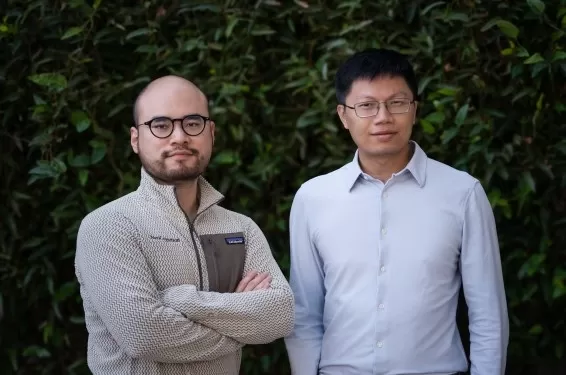
“Today’s agents are generalists,” Su (pictured left) told TechCrunch. “Every time you ask them to perform a task, you’re taking a leap of faith.”
According to Su, the core issue is a lack of consistency. He said that current agents—whether from Claude Code, OpenClaw, or Perplexity’s computer tools—successfully complete tasks as intended only about 50% of the time.
Because agents are still so unreliable, they aren’t ready to be trusted as independent workers, Su told TechCrunch. NeoCognition aims to change that by developing an agent system that can self-learn to become an expert in any domain, similar to how humans learn.
Su argues that while human intelligence is broad, its true power lies in our ability to specialize. When we enter a new environment or profession, we can quickly master its unique rules, relationships, and consequences.
NeoCognition is building agents to mirror this exact process.
“For humans, our continuous learning process is essentially the process of building a world model for any profession or environment,” Su said. “We believe that for agents to become experts, they need to learn autonomously to build a model of any given micro-world.”
Su sees this capacity for rapid specialization as the critical missing piece to making AI work reliably on its own.
While it is possible to train agents for autonomous tasks, they must be custom-engineered for a specific vertical. NeoCognition is different because it builds agents that are generalists, capable of self-learning and specializing in any domain.
NeoCognition plans to sell its agent systems to enterprises, including established SaaS companies, which can use them to build agent-workers or enhance their existing product offerings.
Su highlighted that the investment from Vista Equity Partners is especially valuable for this reason. As one of the largest private equity firms in the software space, Vista can give NeoCognition direct access to a vast portfolio of companies looking to modernize their products with AI.
NeoCognition currently employs about 15 people, most of whom hold PhDs.
Related article
 Sesame, AI Startup by Oculus Founders, Debuts on iOS
On Thursday, Sesame, an AI startup founded by the creators of Oculus and other former Meta VR team members, unveiled a public preview of its conversational AI agents, which have been in development for over a year. Through its new iOS application, Se
NEA’s Tiffany Luck: Enterprises Still Grappling With AI ROI
Loading the player…Earlier this year, “tokenmaxxing” dominated Silicon Valley, with CEOs urging staff to maximize AI usage. That enthusiasm quickly met reality. Uber reportedly exceeded its annual AI budget within months, some firms reduced Claude li
Binance lets AI agents trade, but users keep them in check
Binance, the world’s largest cryptocurrency exchange with over 300 million registered users, launched a new platform on Thursday that enables AI agents to analyze markets and execute trades on behalf of users, bringing autonomous artificial intellige
Related Special Topic Recommendations
writing
Sesame, AI Startup by Oculus Founders, Debuts on iOS
On Thursday, Sesame, an AI startup founded by the creators of Oculus and other former Meta VR team members, unveiled a public preview of its conversational AI agents, which have been in development for over a year. Through its new iOS application, Se
NEA’s Tiffany Luck: Enterprises Still Grappling With AI ROI
Loading the player…Earlier this year, “tokenmaxxing” dominated Silicon Valley, with CEOs urging staff to maximize AI usage. That enthusiasm quickly met reality. Uber reportedly exceeded its annual AI budget within months, some firms reduced Claude li
Binance lets AI agents trade, but users keep them in check
Binance, the world’s largest cryptocurrency exchange with over 300 million registered users, launched a new platform on Thursday that enables AI agents to analyze markets and execute trades on behalf of users, bringing autonomous artificial intellige
Related Special Topic Recommendations
writing
 AI Article Outline Tools for Long Form Writing
2026 Latest Best Top-Rated AI Article Outline Tools for Long Form Writing! This curated collection features powerful, game-changing tools that deliver accurate, structured outlines with real-world tests to boost writing efficiency significantly. XIX.AI is part of this elite selection. Get a free vs paid comparison to help you choose the perfect tool. Explore now and Unlock your AI edge!
 9 tools
 xix.ai
chatbot
Best AI Roleplay Chat Apps for Language Practice, Interview Prep, and Daily Fluency
xix.ai
chatbot
Best AI Roleplay Chat Apps for Language Practice, Interview Prep, and Daily Fluency
2026 Latest Best Top-rated AI Roleplay Chat Apps for Language Practice, Interview Prep, and Daily Fluency! XIX.AI curates a powerful game-changing collection that offers free vs paid comparison, real-world tests, and updated rankings weekly. These must-try tools help you boost writing skills, overcome fluency challenges, and improve communication efficiency across all daily scenarios. Explore now to discover your perfect tool for language growth!
10 tools
xix.ai
Music composition
AI Stem Separation Tools for Remix Production, Sampling Prep, and Karaoke Masters
2026 Latest Best Top-rated AI Stem Separation Tools Curated for Remix Production, Sampling Prep, and Karaoke Masters. These powerful game-changing tools offer real-world tests to deliver precise audio isolation, boosting productivity significantly. XIX.AI provides a weekly updated free vs paid comparison guide to help you find the must-try solution that suits your needs. Explore now to unlock your AI edge.
8 tools
xix.ai
Data Analysis
AI SQL Copilots for Revenue Dashboards, Funnel Analysis, and Product Metrics
2026 Latest Best AI SQL Copilots Ranked Top-Rated! XIX.AI curates a powerful game-changing collection for weekly updated real-world tests. These must-try tools help you generate accurate revenue dashboards, analyze sales funnels, and track product metrics swiftly, boosting productivity massively. Explore now to Discover your perfect tool for data-driven decision making! 238 characters
9 tools
xix.ai
Music composition
Best AI Melody Writing Tools for Song Drafts
2026 Latest Best Top-Rated AI Melody Writing Tools for Song Drafts! XIX.AI has curated a highly powerful game-changing collection that goes through rigorous real-world tests to deliver the best writing experience. You can find detailed free vs paid comparisons, accurate rankings, and must-try options designed to help you create stunning song drafts effortlessly and boost your creative productivity significantly. Explore now to discover your perfect tool!
8 tools
xix.ai
chatbot
Best AI Conversation Trainer Tools for Interview Practice
2026 Latest Best Top-rated AI Conversation Trainer Tools for Interview Practice are here on XIX.AI! This curated collection features powerful, game-changing tools that go through rigorous real-world tests to deliver accurate feedback. You’ll find a free vs paid comparison and detailed rankings to help you choose the must-try option that boosts your confidence and skills. Explore now to Discover your perfect tool for interview success!
12 tools
xix.ai

 Comments (0)
0/500
Comments (0)
0/500
Investors are actively seeking out AI researchers to launch startups focused on making AI more reliable and efficient.
Yu Su, an Ohio State professor who leads an AI agent lab, said he initially resisted pressure from venture capitalists to commercialize his research. He finally took the leap last year and spun out his work into a startup after realizing that advances in foundational models could enable truly personalized agents.
NeoCognition, a startup that Su describes as a research lab developing self-learning AI agents, has just emerged from stealth mode with $40 million in seed funding. The round was co-led by Cambium Capital and Walden Catalyst Ventures, with participation from Vista Equity Partners and angel investors, including Intel CEO Lip-Bu Tan and Databricks co-founder Ion Stoica.
“Today’s agents are generalists,” Su (pictured left) told TechCrunch. “Every time you ask them to perform a task, you’re taking a leap of faith.”
According to Su, the core issue is a lack of consistency. He said that current agents—whether from Claude Code, OpenClaw, or Perplexity’s computer tools—successfully complete tasks as intended only about 50% of the time.
Because agents are still so unreliable, they aren’t ready to be trusted as independent workers, Su told TechCrunch. NeoCognition aims to change that by developing an agent system that can self-learn to become an expert in any domain, similar to how humans learn.
Su argues that while human intelligence is broad, its true power lies in our ability to specialize. When we enter a new environment or profession, we can quickly master its unique rules, relationships, and consequences.
NeoCognition is building agents to mirror this exact process.
“For humans, our continuous learning process is essentially the process of building a world model for any profession or environment,” Su said. “We believe that for agents to become experts, they need to learn autonomously to build a model of any given micro-world.”
Su sees this capacity for rapid specialization as the critical missing piece to making AI work reliably on its own.
While it is possible to train agents for autonomous tasks, they must be custom-engineered for a specific vertical. NeoCognition is different because it builds agents that are generalists, capable of self-learning and specializing in any domain.
NeoCognition plans to sell its agent systems to enterprises, including established SaaS companies, which can use them to build agent-workers or enhance their existing product offerings.
Su highlighted that the investment from Vista Equity Partners is especially valuable for this reason. As one of the largest private equity firms in the software space, Vista can give NeoCognition direct access to a vast portfolio of companies looking to modernize their products with AI.
NeoCognition currently employs about 15 people, most of whom hold PhDs.








 Sesame, AI Startup by Oculus Founders, Debuts on iOS
On Thursday, Sesame, an AI startup founded by the creators of Oculus and other former Meta VR team members, unveiled a public preview of its conversational AI agents, which have been in development for over a year. Through its new iOS application, Se
Sesame, AI Startup by Oculus Founders, Debuts on iOS
On Thursday, Sesame, an AI startup founded by the creators of Oculus and other former Meta VR team members, unveiled a public preview of its conversational AI agents, which have been in development for over a year. Through its new iOS application, Se
 NEA’s Tiffany Luck: Enterprises Still Grappling With AI ROI
Loading the player…Earlier this year, “tokenmaxxing” dominated Silicon Valley, with CEOs urging staff to maximize AI usage. That enthusiasm quickly met reality. Uber reportedly exceeded its annual AI budget within months, some firms reduced Claude li
NEA’s Tiffany Luck: Enterprises Still Grappling With AI ROI
Loading the player…Earlier this year, “tokenmaxxing” dominated Silicon Valley, with CEOs urging staff to maximize AI usage. That enthusiasm quickly met reality. Uber reportedly exceeded its annual AI budget within months, some firms reduced Claude li
 Binance lets AI agents trade, but users keep them in check
Binance, the world’s largest cryptocurrency exchange with over 300 million registered users, launched a new platform on Thursday that enables AI agents to analyze markets and execute trades on behalf of users, bringing autonomous artificial intellige
Binance lets AI agents trade, but users keep them in check
Binance, the world’s largest cryptocurrency exchange with over 300 million registered users, launched a new platform on Thursday that enables AI agents to analyze markets and execute trades on behalf of users, bringing autonomous artificial intellige

2026 Latest Best Top-Rated AI Article Outline Tools for Long Form Writing! This curated collection features powerful, game-changing tools that deliver accurate, structured outlines with real-world tests to boost writing efficiency significantly. XIX.AI is part of this elite selection. Get a free vs paid comparison to help you choose the perfect tool. Explore now and Unlock your AI edge!
9 tools
xix.ai

2026 Latest Best Top-rated AI Roleplay Chat Apps for Language Practice, Interview Prep, and Daily Fluency! XIX.AI curates a powerful game-changing collection that offers free vs paid comparison, real-world tests, and updated rankings weekly. These must-try tools help you boost writing skills, overcome fluency challenges, and improve communication efficiency across all daily scenarios. Explore now to discover your perfect tool for language growth!
10 tools
xix.ai
2026 Latest Best Top-rated AI Stem Separation Tools Curated for Remix Production, Sampling Prep, and Karaoke Masters. These powerful game-changing tools offer real-world tests to deliver precise audio isolation, boosting productivity significantly. XIX.AI provides a weekly updated free vs paid comparison guide to help you find the must-try solution that suits your needs. Explore now to unlock your AI edge.
8 tools
xix.ai
2026 Latest Best AI SQL Copilots Ranked Top-Rated! XIX.AI curates a powerful game-changing collection for weekly updated real-world tests. These must-try tools help you generate accurate revenue dashboards, analyze sales funnels, and track product metrics swiftly, boosting productivity massively. Explore now to Discover your perfect tool for data-driven decision making! 238 characters
9 tools
xix.ai

2026 Latest Best Top-Rated AI Melody Writing Tools for Song Drafts! XIX.AI has curated a highly powerful game-changing collection that goes through rigorous real-world tests to deliver the best writing experience. You can find detailed free vs paid comparisons, accurate rankings, and must-try options designed to help you create stunning song drafts effortlessly and boost your creative productivity significantly. Explore now to discover your perfect tool!
8 tools
xix.ai
2026 Latest Best Top-rated AI Conversation Trainer Tools for Interview Practice are here on XIX.AI! This curated collection features powerful, game-changing tools that go through rigorous real-world tests to deliver accurate feedback. You’ll find a free vs paid comparison and detailed rankings to help you choose the must-try option that boosts your confidence and skills. Explore now to Discover your perfect tool for interview success!
12 tools
xix.ai












