


 Home
HomeHuawei to launch new AI chip in Q1 2027, challenging Nvidia
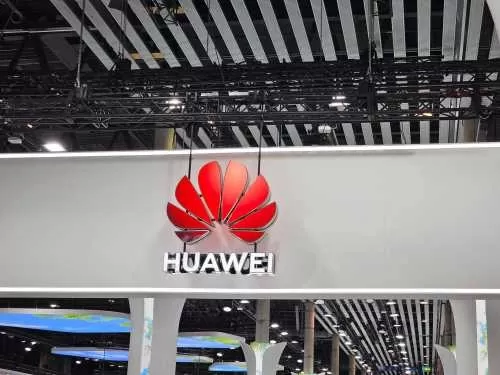
Huawei has accelerated the release of its next-generation Ascend 960DT AI processor to Q1 2027, aiming to compete directly with Nvidia, the company revealed at its Huawei Connect event on Thursday.
Previously, the Chinese technology leader targeted a Q3 2027 launch for the chip, according to a Huawei spokesperson speaking to TechCrunch.
“The Ascend 960DT is now scheduled for Q1 2027. The Ascend 960 series is launching ahead of schedule, delivering double the performance and improving annually,” the spokesperson stated, noting that David Wang, Huawei’s rotating acting chairman, announced the revised timeline at Huawei Connect on Thursday.
This update arrives just one week before a scheduled meeting between U.S. President Trump and Chinese President Xi Jinping in Washington, DC, on September 24.
Huawei is working to combine hundreds of thousands, and eventually millions, of AI chips into a single massive computing system. The company refers to this strategy as its Peerium Computing Architecture, which utilizes UnifiedBus—a proprietary technology for connecting processors with memory, storage, and networking components. Eric Xu, Huawei’s rotating chairman, stated that the company is leveraging this new architecture to build larger AI computing systems optimized for both training and inference tasks.
Huawei’s Atlas 950 SuperPoD and SuperCluster are the inaugural systems built on this architecture. The company claims an Atlas 950 SuperCluster can link up to 256,000 accelerator cards.
However, the accelerated chip timeline has raised questions about Huawei’s broader AI infrastructure. Chinese tech analyst Rui Ma noted on X that Huawei previously stated its Atlas 960 SuperPoD would scale to 15,488 Ascend 960 chips, whereas this week’s announcement described a system with only 4,096 chips. “The chip itself is arriving WAY earlier, but the SuperPoD they announced is much smaller than what they originally laid out,” Ma wrote.
Huawei continues to push forward with its chip development despite U.S. restrictions limiting China’s access to advanced semiconductor technology. Ma suggested that these restrictions are unlikely to deter China’s pursuit of domestic semiconductor capabilities.
“I believe it is futile to halt China’s semiconductor development because the stakes for self-sufficiency are simply too high at this point,” she wrote.
Trump has resisted calls from AI industry leaders to slow technological progress due to safety concerns, arguing that the U.S. must maintain its competitive edge over China. Meanwhile, Xu argued that China needs to accelerate AI development to catch up with the U.S., stating that Chinese companies must advance further before they can fully understand and mitigate the risks posed by more powerful AI systems, according to the Financial Times.
Related article
 Snowflake Signs $6B AWS Deal for AI Chips
Snowflake, a leading cloud data platform, has entered into a $6 billion, five-year partnership with Amazon Web Services, confirmed on Wednesday.While Snowflake has historically operated on AWS, it now supports Microsoft Azure and Google Cloud as well
Bristol Myers Squibb acquires Nvidia AI platform to accelerate drug discovery
Bristol Myers Squibb has acquired an Nvidia DGX SuperPOD powered by the Vera Rubin architecture to accelerate artificial intelligence applications in its drug discovery and development pipeline.The pharmaceutical giant will be the first life sciences
China to Approve NVIDIA H200 AI Chip Imports
NVIDIA H200 chips enter mainland China as Beijing balances local chipmaking goals with AI acceleration. Credit: Liu Liqun/Getty ImagesChina is easing limitations on NVIDIA H200 AI, permitting these shipments to help domestic technology firms train ad
Related Special Topic Recommendations
Business
Snowflake Signs $6B AWS Deal for AI Chips
Snowflake, a leading cloud data platform, has entered into a $6 billion, five-year partnership with Amazon Web Services, confirmed on Wednesday.While Snowflake has historically operated on AWS, it now supports Microsoft Azure and Google Cloud as well
Bristol Myers Squibb acquires Nvidia AI platform to accelerate drug discovery
Bristol Myers Squibb has acquired an Nvidia DGX SuperPOD powered by the Vera Rubin architecture to accelerate artificial intelligence applications in its drug discovery and development pipeline.The pharmaceutical giant will be the first life sciences
China to Approve NVIDIA H200 AI Chip Imports
NVIDIA H200 chips enter mainland China as Beijing balances local chipmaking goals with AI acceleration. Credit: Liu Liqun/Getty ImagesChina is easing limitations on NVIDIA H200 AI, permitting these shipments to help domestic technology firms train ad
Related Special Topic Recommendations
Business
 AI Proposal Writing Assistants for Agencies: Draft Better Client Pitches
2026 Latest Best AI Proposal Writing Assistants for Agencies: XIX.AI curates a top-rated list of powerful tools that go through rigorous real-world tests to deliver game-changing results. These must-try solutions help agencies craft highly persuasive client pitches faster, boosting productivity significantly. Get a free vs paid comparison and see the rankings for yourself before exploring now to find your perfect tool.
 8 tools
 xix.ai
Social Media
AI TikTok Hook Generators for Short-Form Creators
xix.ai
Social Media
AI TikTok Hook Generators for Short-Form Creators
2026 Latest Best AI TikTok Hook Generators for Short-Form Creators! XIX.AI has curated a top-rated list of powerful, game-changing tools that go through real-world tests to deliver must-try hooks every week. You’ll find easy free vs paid comparison options along with detailed rankings to help you find the perfect solution for boosting your content creation efficiency. Explore now to Unlock your AI edge!
16 tools
xix.ai
Productivity
Best AI Email Triage Tools for Team Productivity
2026 Latest Best Top-Rated AI Email Triage Tools for Team Productivity! XIX.AI curates a powerful, game-changing collection of must-try tools that help teams quickly sort through massive email volumes, boost writing efficiency, and save countless hours each week. Our rigorous real-world tests and updated rankings ensure you find the perfect fit for your workflow. Explore now to unlock your AI edge!
10 tools
xix.ai
Music composition
Top AI Songwriting Assistants: Develop Lyrics, Chords, and Melodies
2026 Latest Top-Rated Best AI Songwriting Assistants are here on XIX.AI! This curated list features powerfully efficient tools that go through real-world tests to deliver high-quality lyrics, chords, and melodies effortlessly. Get a free vs paid comparison to find the perfect fit for your creative needs. Explore now to unlock your AI edge in music creation!
12 tools
xix.ai
automation
Top AI Agent Builders: Design Multi-Step Business Automations
2026 Latest Top-Rated Best AI Agent Builders for Creating Multi-Step Business Automations. This curated list features powerful, game-changing tools that go through rigorous real-world tests. You’ll find detailed free vs paid comparisons, comprehensive rankings, and weekly updated insights to help you choose the perfect solution that boosts your productivity significantly. Explore now at XIX.AI to unlock your AI edge!
11 tools
xix.ai
Productivity
AI Task Planning Tools for Busy Professionals
2026 Latest Best Top-rated AI Task Planning Tools for Busy Professionals! XIX.AI has curated a powerful, game-changing collection of highly efficient tools that help users streamline workflows, boost productivity, and overcome daily scheduling challenges. Each option goes through rigorous real-world tests to ensure reliability. Get a free vs paid comparison and discover the perfect tool to unlock your AI edge. Explore now!
15 tools
xix.ai

 Comments (0)
0/500
Comments (0)
0/500
Huawei has accelerated the release of its next-generation Ascend 960DT AI processor to Q1 2027, aiming to compete directly with Nvidia, the company revealed at its Huawei Connect event on Thursday.
Previously, the Chinese technology leader targeted a Q3 2027 launch for the chip, according to a Huawei spokesperson speaking to TechCrunch.
“The Ascend 960DT is now scheduled for Q1 2027. The Ascend 960 series is launching ahead of schedule, delivering double the performance and improving annually,” the spokesperson stated, noting that David Wang, Huawei’s rotating acting chairman, announced the revised timeline at Huawei Connect on Thursday.
This update arrives just one week before a scheduled meeting between U.S. President Trump and Chinese President Xi Jinping in Washington, DC, on September 24.
Huawei is working to combine hundreds of thousands, and eventually millions, of AI chips into a single massive computing system. The company refers to this strategy as its Peerium Computing Architecture, which utilizes UnifiedBus—a proprietary technology for connecting processors with memory, storage, and networking components. Eric Xu, Huawei’s rotating chairman, stated that the company is leveraging this new architecture to build larger AI computing systems optimized for both training and inference tasks.
Huawei’s Atlas 950 SuperPoD and SuperCluster are the inaugural systems built on this architecture. The company claims an Atlas 950 SuperCluster can link up to 256,000 accelerator cards.
However, the accelerated chip timeline has raised questions about Huawei’s broader AI infrastructure. Chinese tech analyst Rui Ma noted on X that Huawei previously stated its Atlas 960 SuperPoD would scale to 15,488 Ascend 960 chips, whereas this week’s announcement described a system with only 4,096 chips. “The chip itself is arriving WAY earlier, but the SuperPoD they announced is much smaller than what they originally laid out,” Ma wrote.
Huawei continues to push forward with its chip development despite U.S. restrictions limiting China’s access to advanced semiconductor technology. Ma suggested that these restrictions are unlikely to deter China’s pursuit of domestic semiconductor capabilities.
“I believe it is futile to halt China’s semiconductor development because the stakes for self-sufficiency are simply too high at this point,” she wrote.
Trump has resisted calls from AI industry leaders to slow technological progress due to safety concerns, arguing that the U.S. must maintain its competitive edge over China. Meanwhile, Xu argued that China needs to accelerate AI development to catch up with the U.S., stating that Chinese companies must advance further before they can fully understand and mitigate the risks posed by more powerful AI systems, according to the Financial Times.








 Snowflake Signs $6B AWS Deal for AI Chips
Snowflake, a leading cloud data platform, has entered into a $6 billion, five-year partnership with Amazon Web Services, confirmed on Wednesday.While Snowflake has historically operated on AWS, it now supports Microsoft Azure and Google Cloud as well
Snowflake Signs $6B AWS Deal for AI Chips
Snowflake, a leading cloud data platform, has entered into a $6 billion, five-year partnership with Amazon Web Services, confirmed on Wednesday.While Snowflake has historically operated on AWS, it now supports Microsoft Azure and Google Cloud as well
 Bristol Myers Squibb acquires Nvidia AI platform to accelerate drug discovery
Bristol Myers Squibb has acquired an Nvidia DGX SuperPOD powered by the Vera Rubin architecture to accelerate artificial intelligence applications in its drug discovery and development pipeline.The pharmaceutical giant will be the first life sciences
Bristol Myers Squibb acquires Nvidia AI platform to accelerate drug discovery
Bristol Myers Squibb has acquired an Nvidia DGX SuperPOD powered by the Vera Rubin architecture to accelerate artificial intelligence applications in its drug discovery and development pipeline.The pharmaceutical giant will be the first life sciences
 China to Approve NVIDIA H200 AI Chip Imports
NVIDIA H200 chips enter mainland China as Beijing balances local chipmaking goals with AI acceleration. Credit: Liu Liqun/Getty ImagesChina is easing limitations on NVIDIA H200 AI, permitting these shipments to help domestic technology firms train ad
China to Approve NVIDIA H200 AI Chip Imports
NVIDIA H200 chips enter mainland China as Beijing balances local chipmaking goals with AI acceleration. Credit: Liu Liqun/Getty ImagesChina is easing limitations on NVIDIA H200 AI, permitting these shipments to help domestic technology firms train ad

2026 Latest Best AI Proposal Writing Assistants for Agencies: XIX.AI curates a top-rated list of powerful tools that go through rigorous real-world tests to deliver game-changing results. These must-try solutions help agencies craft highly persuasive client pitches faster, boosting productivity significantly. Get a free vs paid comparison and see the rankings for yourself before exploring now to find your perfect tool.
8 tools
xix.ai

2026 Latest Best AI TikTok Hook Generators for Short-Form Creators! XIX.AI has curated a top-rated list of powerful, game-changing tools that go through real-world tests to deliver must-try hooks every week. You’ll find easy free vs paid comparison options along with detailed rankings to help you find the perfect solution for boosting your content creation efficiency. Explore now to Unlock your AI edge!
16 tools
xix.ai

2026 Latest Best Top-Rated AI Email Triage Tools for Team Productivity! XIX.AI curates a powerful, game-changing collection of must-try tools that help teams quickly sort through massive email volumes, boost writing efficiency, and save countless hours each week. Our rigorous real-world tests and updated rankings ensure you find the perfect fit for your workflow. Explore now to unlock your AI edge!
10 tools
xix.ai

2026 Latest Top-Rated Best AI Songwriting Assistants are here on XIX.AI! This curated list features powerfully efficient tools that go through real-world tests to deliver high-quality lyrics, chords, and melodies effortlessly. Get a free vs paid comparison to find the perfect fit for your creative needs. Explore now to unlock your AI edge in music creation!
12 tools
xix.ai

2026 Latest Top-Rated Best AI Agent Builders for Creating Multi-Step Business Automations. This curated list features powerful, game-changing tools that go through rigorous real-world tests. You’ll find detailed free vs paid comparisons, comprehensive rankings, and weekly updated insights to help you choose the perfect solution that boosts your productivity significantly. Explore now at XIX.AI to unlock your AI edge!
11 tools
xix.ai

2026 Latest Best Top-rated AI Task Planning Tools for Busy Professionals! XIX.AI has curated a powerful, game-changing collection of highly efficient tools that help users streamline workflows, boost productivity, and overcome daily scheduling challenges. Each option goes through rigorous real-world tests to ensure reliability. Get a free vs paid comparison and discover the perfect tool to unlock your AI edge. Explore now!
15 tools
xix.ai












