Bristol Myers Squibb has acquired an Nvidia DGX SuperPOD powered by the Vera Rubin architecture to accelerate artificial intelligence applications in its drug discovery and development pipeline.
The pharmaceutical giant will be the first life sciences organization to deploy a DGX SuperPOD based on Vera Rubin, Nvidia’s latest AI computing architecture unveiled earlier this year as the successor to previous generations.
Expanding computing capacity
The new cluster consists of eight DGX Vera Rubin NVL72 systems, with each rack-scale unit integrating Nvidia’s Vera central processing units and Rubin graphics processing units.
BMS will leverage this infrastructure to train proprietary models and execute predictions across its research initiatives, supporting work with compounds, proteins, and other scientific datasets.
Financial details of the transaction remain undisclosed. The acquisition augments BMS’s existing Nvidia infrastructure, which includes an older SuperPOD that executives noted is two or three generations behind Vera Rubin.
BMS has operated its current DGX SuperPOD for approximately three years. The company intends to integrate it with the new Vera Rubin system into a unified computing environment accessible from its global research sites.
The SuperPOD software stack will manage training, prediction, and development workloads across the infrastructure. According to BMS, this expanded setup will grant broader direct access to computing resources for more scientists.
Greg Meyers, BMS’s chief digital and technology officer, stated that computing demands have surged as the company deploys larger AI models throughout its research organization.
Erin Davis, vice president of research business insights and technology at BMS, noted that existing infrastructure is operating at full capacity. She attributed this demand to large-scale predictions involving complex molecules and the development of internal foundation models.
Davis emphasized that the new system will not be restricted to a small group of computational researchers. BMS plans to make it available across the entire research organization, eliminating the wait times and access restrictions of the current setup.
Applying AI in drug discovery
BMS reported that AI now informs the design of every small-molecule program and the majority of its large-molecule programs. The technology is applied to target identification, lead optimization, large-molecule predictions, and internal model development.
The company stated that AI-enabled target identification has reduced manual research efforts by several weeks. Large-molecule prediction workloads are also driving the need for additional graphics processing capacity.
Robert Plenge, BMS’s chief research officer, said the new system will enable scientists to evaluate more potential drug candidates during early development stages.
“Maybe before we could do 10 and now we can do dozens,” Plenge said.
Computational screening allows researchers to assess potential compounds before selecting a smaller subset for synthesis and laboratory testing.
BMS employs this approach through a method called “Predict First,” which uses model-generated predictions to exclude molecules that fail to meet required properties before candidates are selected for synthesis.
Payal Sheth, senior vice president of therapeutic discovery sciences at BMS, said researchers use these predictions to identify molecules with the desired combination of properties.
“We use predictions as a way to prioritise synthesis of molecules with multi parameter optimisation,” Sheth said. “This ensures precious laboratory experiments are aligned with progressing molecules that have the highest probability of success.”
This method reduces the number of compounds sent for laboratory testing, allowing researchers to focus experiments on molecules that meet a program’s predicted requirements.
BMS has also used AI to expand its library of CELMoD compounds, which are engineered to selectively degrade cancer-causing proteins. The company is studying these compounds in blood cancers and other diseases.
BMS stated that modeling work helped researchers examine additional protein targets and potential compounds before deciding which candidates to pursue experimentally.
The company is also using AI tools to shorten the time required to produce medicines for clinical trials. Plenge said the process has already been reduced by between 20% and 30% and could reach 50% in the coming years.
He cited an experimental sickle cell disease treatment in early clinical development as an example of AI-supported research. Plenge said the treatment likely would not have been discovered without the company’s AI tools.
These figures refer to the time required to identify and produce candidates for clinical testing, rather than their subsequent performance in trials.
The Vera Rubin system will also give researchers access to Nvidia’s BioNeMo Agent Toolkit for biological and drug-discovery applications.
BioNeMo provides tools for protein-structure prediction, molecular generation, molecular docking, sequence analysis, and genomics. It can also connect several computational tools within the same research workflow.
BMS executives emphasized that human researchers will continue to review model outputs and decide which compounds or programs should advance.
Connecting research sites
BMS is introducing tools designed to reduce the specialist knowledge required to initiate complex computing tasks. The company said researchers will be able to start some prediction requests using natural-language instructions.
The environment will be managed through Nvidia Mission Control, which handles cluster provisioning, infrastructure monitoring, and workload management, according to BMS.
The unified infrastructure will allow data and model outputs generated at one site to be used by teams elsewhere. BMS noted that datasets from a program in Lawrenceville, New Jersey, for example, can be incorporated into models used by researchers in San Diego.
Sheth said the shared environment is intended to retain information from experiments and research programs across the organization.
“The compute infrastructure is what connects all of our scientists together and ensures that our learnings are institutionalised,” Sheth said.
The two SuperPODs will operate through a common data environment, allowing teams at different sites to access shared datasets and model outputs. BMS stated that the environment will include information from experiments, clinical readouts, and research partnerships.
The company plans to allocate the new computing capacity across small- and large-molecule design, clinical research, and digital-twin applications. BMS did not provide details about the planned digital-twin work or the amount of capacity assigned to each area.
Meyers said the Vera Rubin system will provide more computing capacity relative to its electricity use. BMS and Nvidia stated that the eight-system cluster will deliver up to 10 times the performance per megawatt of the infrastructure it replaces.
“When you host these things, you have to pay an electric bill,” Meyers said. “Think of it as 10 times more compute capacity per watt spent … Electricity is not getting cheaper.”
BMS did not provide a specific deployment date or identify where the new system will be hosted.
See also: US public health agencies to test OpenAI and Anthropic AI models
Want to learn more about AI and big data from industry leaders? Check out AI & Big Data Expo taking place in Amsterdam, California, and London. The comprehensive event is part of TechEx and is co-located with other leading technology events including the Cyber Security & Cloud Expo. Click here for more information.
AI News is powered by TechForge Media. Explore other upcoming enterprise technology events and webinars here.
Anthropic Unveils Sonnet 5.5 as Faster, Cheaper Work PartnerAmidst the ongoing competition among AI models, Anthropic has launched the latest iteration of Sonnet, its mid-range offering, promising substantially improved speed and lower costs compared to the previous version.Anthropic positions Sonnet 5.5 as a
Meta AI App Rises to No. 5 on App Store Following Muse Spark LaunchMeta’s AI application has experienced a significant surge in downloads following Wednesday’s release of its latest AI model, Muse Spark. This marks the first model launch under Alexandr Wang, head of Meta’s Superintelligence Labs, who joined from Sca
DeepMind CEO Urges US-Led Testing of AI ModelsDemis Hassabis, Co-Founder and CEO of Google DeepMind. Credit: Demis Hassabis/LinkedInGoogle DeepMind CEO Demis Hassabis highlights the dangers of artificial general intelligence and advocates for a US-led governance frameworkGoogle DeepMind’s CEO, D
2026 Latest Top-rated AI SEO Auditors for Small Teams are here on XIX.AI! Our curated list features powerful tools that help you fix hidden issues fast, boost your rankings, and save time. Get a free vs paid comparison along with real-world tests to choose the best option for your needs. Explore now to Discover your perfect tool and Unlock your AI edge.
2026 Latest Best Top-Rated AI Podcast Voice Cloning Tools for Long-Form Narration are here on XIX.AI! This curated list features powerful, game-changing solutions that deliver professional-quality audio with zero effort. We conduct real-world tests and provide a free vs paid comparison along with weekly updated rankings to help you find the must-try tool that boosts your productivity significantly. Explore now to unlock your AI edge!
2026 Latest Best Top-rated AI Internal Linking Tools for Content Hubs: This curated list features powerful game-changing solutions that drastically cut manual work. XIX.AI has conducted real-world tests and provided a detailed free vs paid comparison alongside weekly updated rankings to help you find the must-try tool that boosts productivity and supercharges your content strategy. Explore now to unlock your AI edge!
2026 Latest Best AI UI Design Tools for Web and Mobile Projects are here on XIX.AI! This curated list features top-rated, powerful tools that go through rigorous real-world tests to deliver game-changing results for boosting creativity and productivity. You’ll also find a free vs paid comparison, weekly updated rankings, and detailed insights. Must-try options help you overcome design bottlenecks and create high-quality interfaces faster. Explore now to discover your perfect tool!
2026 Latest Top-rated Best Prompt Engineering Tools for Teams are featured here on XIX.AI. This curated collection includes powerful game-changing options that go through rigorous real-world tests. You’ll find a free vs paid comparison, detailed rankings, and easy tools to test, version track, and refine team prompts to boost productivity significantly. Explore now to Discover your perfect tool!
2026 Latest Best AI Prompt Libraries for Work: XIX.AI curates a top-rated collection of powerful, game-changing prompt sets designed to help you reuse proven templates across countless tasks and boost your productivity significantly. Enjoy free vs paid comparison, detailed real-world tests, and updated rankings weekly. Explore now to discover your perfect tool and unlock your AI edge!
By clicking "Accept All Cookies", you agree to the storing of cookies on your device to enhance site navigation, analyze site usage, and assist in our marketing efforts.Privacy Policy Notice
When you visit any website, it may store or retrieve information on your browser, mostly in the form of cookies. This information might be about you, your preferences or your device and is mostly used to make the site work as you expect it to. The information does not usually directly identify you, but it can give you a more personalized web experience. Because we respect your right to privacy, you can choose not to allow some types of cookies. Click on the different category headings to find out more and change our default settings.However, blocking some types of cookies may impact your experience of the site and the services we are able to offer. Privacy PolicyStatement
Manage Preferences
Strictly Necessary Cookie
Always Active
These cookies are necessary for the website to function and cannot be switched off in our systems. They are usually only set in response to actions made by you which amount to a request for services, such as setting your privacy preferences, logging in or filling in forms. You can set your browser to block or alert you about these cookies, but some parts of the site will not then work. These cookies do not store any personally identifiable information.



 Home
Home
 Anthropic Unveils Sonnet 5.5 as Faster, Cheaper Work Partner
Amidst the ongoing competition among AI models, Anthropic has launched the latest iteration of Sonnet, its mid-range offering, promising substantially improved speed and lower costs compared to the previous version.Anthropic positions Sonnet 5.5 as a
Anthropic Unveils Sonnet 5.5 as Faster, Cheaper Work Partner
Amidst the ongoing competition among AI models, Anthropic has launched the latest iteration of Sonnet, its mid-range offering, promising substantially improved speed and lower costs compared to the previous version.Anthropic positions Sonnet 5.5 as a
 Top AI SEO Auditors for Small Teams: Fix Issues Before Rankings Slip
 11 tools
 xix.ai
Text-to-speech
xix.ai
Text-to-speech

 Comments (0)
0/500
Comments (0)
0/500








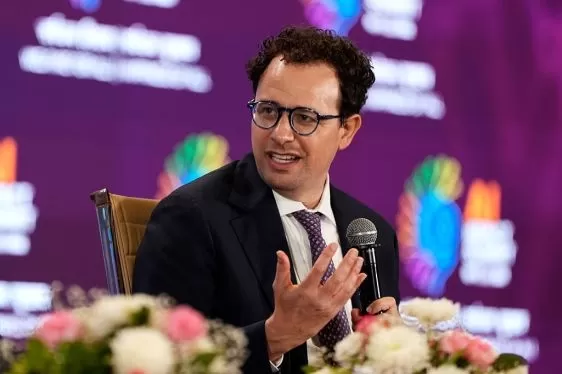 Anthropic Unveils Sonnet 5.5 as Faster, Cheaper Work Partner
Amidst the ongoing competition among AI models, Anthropic has launched the latest iteration of Sonnet, its mid-range offering, promising substantially improved speed and lower costs compared to the previous version.Anthropic positions Sonnet 5.5 as a
Anthropic Unveils Sonnet 5.5 as Faster, Cheaper Work Partner
Amidst the ongoing competition among AI models, Anthropic has launched the latest iteration of Sonnet, its mid-range offering, promising substantially improved speed and lower costs compared to the previous version.Anthropic positions Sonnet 5.5 as a
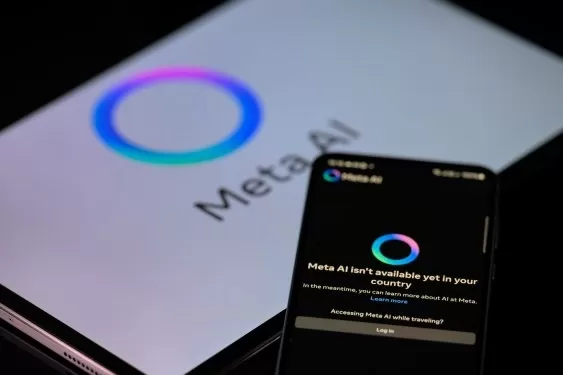 Meta AI App Rises to No. 5 on App Store Following Muse Spark Launch
Meta’s AI application has experienced a significant surge in downloads following Wednesday’s release of its latest AI model, Muse Spark. This marks the first model launch under Alexandr Wang, head of Meta’s Superintelligence Labs, who joined from Sca
Meta AI App Rises to No. 5 on App Store Following Muse Spark Launch
Meta’s AI application has experienced a significant surge in downloads following Wednesday’s release of its latest AI model, Muse Spark. This marks the first model launch under Alexandr Wang, head of Meta’s Superintelligence Labs, who joined from Sca
 DeepMind CEO Urges US-Led Testing of AI Models
Demis Hassabis, Co-Founder and CEO of Google DeepMind. Credit: Demis Hassabis/LinkedInGoogle DeepMind CEO Demis Hassabis highlights the dangers of artificial general intelligence and advocates for a US-led governance frameworkGoogle DeepMind’s CEO, D
DeepMind CEO Urges US-Led Testing of AI Models
Demis Hassabis, Co-Founder and CEO of Google DeepMind. Credit: Demis Hassabis/LinkedInGoogle DeepMind CEO Demis Hassabis highlights the dangers of artificial general intelligence and advocates for a US-led governance frameworkGoogle DeepMind’s CEO, D