


 Home
HomeChina to Approve NVIDIA H200 AI Chip Imports
![NVIDIA H200 chips enter mainland China as Beijing balances local chipmaking goals with AI acceleration. Credit: Liu Liqun/Getty Images]()
NVIDIA H200 chips enter mainland China as Beijing balances local chipmaking goals with AI acceleration. Credit: Liu Liqun/Getty Images
China is easing limitations on NVIDIA H200 AI, permitting these shipments to help domestic technology firms train advanced models alongside local chips
Beijing is advancing its AI ambitions with a little help from NVIDIA by allowing controlled shipments of the US tech giant’s H200 chips to enter the mainland, relaxing regulatory restrictions to keep pace with international competitors.
The move is aimed at helping domestic technology firms train advanced models alongside local chips and to prevent local technology companies from falling behind US rivals in the race for advanced AI.
Major enterprise players, including ByteDance and Tencent, have reportedly secured initial consignments of approximately 10,000 NVIDIA H200 units each. Additional Chinese tech firms are expected to secure regulatory clearance for similar quantities shortly, as noted by the Financial Times.
While Washington permits Chinese firms to purchase up to 100,000 H200 units each under specific licensing agreements, the hardware remains two generations behind NVIDIA’s premier silicon offerings, which remain strictly off-limits under US trade restrictions.
US President Donald Trump said on 29 July that his administration is considering asserting more control over AI tools after the unprecedented incident. Credit: The White House
Impeding processing plans
To maintain momentum for local semiconductor manufacturers, Chinese authorities prefer that technology organisations deploy imported components beyond the mainland border.
Officials have advised firms that they can route and operate these processors through Hong Kong. However, utilising the region as a hardware hub comes with severe operational hurdles.
Hong Kong faces significant power constraints and lacks the necessary data centre infrastructure to accommodate high-density computing loads.
Industry stakeholders remain optimistic that regulatory conditions will ease over time as local infrastructure adapts to compute demands.
On the other hand, NVIDIA maintains an estimated 500,000 H200 units in reserve according to the FT, intended primarily for customers based in China.
Jensen Huang, Chairman and CEO of NVIDIA. Credit: Getty Images
Previous distribution efforts have stalled following regulatory scrutiny from Beijing aimed at bolstering local chip manufacturers such as Huawei.
Server integration partners, which were held up due to restrictions, are beginning to resume sales as well.
Technology firm Lenovo, which is a NVIDIA partner, informed clients last week that they can place new orders for systems powered by NVIDIA H200 components. This aggregates central processing units and networking gear into enterprise AI servers.
However, procuring these integrated systems is not automatic as prospective buyers must navigate a dedicated submission process managed by the National Development and Reform Commission (NDRC).
Beijing continues balancing this approval process against its long-term ambition to cultivate a self-sustaining semiconductor ecosystem capable of meeting national demands.
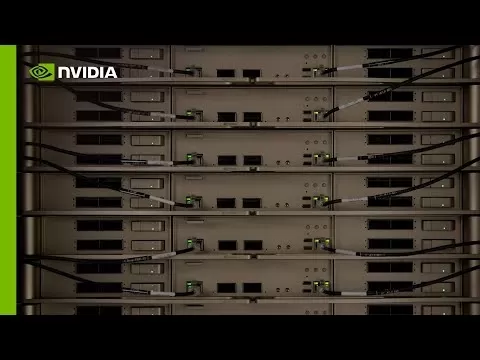
Bridging gaps in complex model training
On one hand, limited access to high-end semiconductor manufacturing tools prevents domestic foundries from satisfying total market demand. Consequently, on the other side of the pole, foreign hardware remains essential for resource-intensive AI workflows.
Regulators are therefore loosening limitations on US chips, granting access to international silicon so local developers can build foundational systems capable of competing with frontier global architectures like Anthropic Mythos 5.
As a result, recent releases from Chinese AI laboratories demonstrated a rapidly shrinking capability gap between domestic and global models.
In July, Moonshot unveiled Kimi K3, which demonstrated performance metrics exceptionally close to top American models.
Shortly after this development, technology firms Alibaba, DeepSeek and Z.ai introduced comparable iterations of their own.
Comparison data on coding performance that was released by the company. Credit: Moonshot
To optimise available resources, Chinese AI developers employ a hybrid infrastructure model, deploying domestic chips for real-time inference and response generation, while reserving NVIDIA processors for complex model training and pattern identification.
The hardware logistics are also unfolding alongside broader geopolitical pressures. According to an internal draft reviewed by Reuters, the US is planning to inform dozens of countries that they must choose sides in the global AI race. This came along with a warning that signing up for Beijing’s competing frameworks could lead to exclusion from a US-led coalition.
China responded by urging international respect for digital sovereignty, stating that it opposes division in the AI development.
“Each country has the right to choose its partners based on its national conditions and development needs,” said Lin Jian, Foreign Ministry Spokesperson of China Foreign Ministry at a regular briefing.
Related article
 Trump’s AI Strategy: What’s Next for US Policy
On August 3, five Democratic senators urged the Trump administration to clarify its oversight of frontier AI models, highlighting concerns regarding the competitive threat posed by Chinese AI systems. Credit: GettyFollowing recent cyber incidents, th
NVIDIA Boosts Jetson Orin Nano 2 Inference Speed for Edge Robotics
Jetson Orin Nano 2 consumes less power at the same performance level of its predecessor. Source: NVIDIAAs AI models become more efficient, more devices can become autonomous, but developers need compact, energy-efficient computers built for edge AI,
How Unitree is Shaping the Future of Humanoid Robotics
Unitree’s New Creature of Embodied AI with ultra-wide 4D LiDAR technology for advanced real-world navigation. Credit: UnitreeWang Xingxing, CEO of Unitree, targets world model breakthroughs to help humanoid machines execute 80% of tasks when placed i
Related Special Topic Recommendations
Meeting Assistant
Trump’s AI Strategy: What’s Next for US Policy
On August 3, five Democratic senators urged the Trump administration to clarify its oversight of frontier AI models, highlighting concerns regarding the competitive threat posed by Chinese AI systems. Credit: GettyFollowing recent cyber incidents, th
NVIDIA Boosts Jetson Orin Nano 2 Inference Speed for Edge Robotics
Jetson Orin Nano 2 consumes less power at the same performance level of its predecessor. Source: NVIDIAAs AI models become more efficient, more devices can become autonomous, but developers need compact, energy-efficient computers built for edge AI,
How Unitree is Shaping the Future of Humanoid Robotics
Unitree’s New Creature of Embodied AI with ultra-wide 4D LiDAR technology for advanced real-world navigation. Credit: UnitreeWang Xingxing, CEO of Unitree, targets world model breakthroughs to help humanoid machines execute 80% of tasks when placed i
Related Special Topic Recommendations
Meeting Assistant
 Best AI Agenda Builders: Plan Better Weekly Syncs in Minutes
2026 Latest Best AI Agenda Builders page features a curated list of top-rated tools that make planning weekly team syncs effortless. These powerful solutions help you create organized, efficient agendas in just minutes, saving valuable time and boosting productivity. XIX.AI ensures all entries go through rigorous real-world tests before inclusion. Get a free vs paid comparison and discover the must-try options that deliver game-changing results. Explore now to find your perfect tool for smoother workflows!
 15 tools
 xix.ai
Business
Best AI Business Plan Tools for Startups
xix.ai
Business
Best AI Business Plan Tools for Startups
2026 Latest Best Top-Rated AI Business Plan Tools for Startups! XIX.AI curates a powerful, game-changing collection of must-try tools that go through real-world tests and rigorous weekly updated rankings. These top solutions help startups draft flawless plans, boost productivity, and unlock their full AI edge. Explore now to discover your perfect tool!
9 tools
xix.ai
Marketing
Best AI Persona Builder Tools for Audience Research
2026 Latest Best Top-rated AI Persona Builder Tools for Audience Research are here on XIX.AI! This curated list features powerful, game-changing tools that help you conduct real-world tests and create accurate audience profiles through detailed free vs paid comparison. You’ll discover the must-try options that boost writing efficiency and unlock your AI edge in marketing strategies. Explore now to find your perfect tool!
9 tools
xix.ai
Video creation
AI Demo Video Tools for SaaS Product Marketing
2026 Latest Best Top-rated AI Demo Video Tools for SaaS Product Marketing, carefully curated by XIX.AI. These powerful game-changing solutions help marketers create high-quality video content fast, boost writing efficiency, and streamline marketing workflows. Enjoy a free vs paid comparison along with real-world tests and updated rankings weekly. Explore now to Discover your perfect tool for boosting SaaS sales!
9 tools
xix.ai
Prompt
AI Prompt Testing Tools for Better Output Quality
2026 Latest Best Top-rated AI Prompt Testing Tools for Better Output Quality! XIX.AI has curated a powerful, game-changing collection of highly efficient tools that undergo rigorous real-world tests to ensure consistent top-tier results. You’ll find detailed free vs paid comparison insights, comprehensive rankings, and expert guidance to help you identify the must-try solutions that boost your workflow significantly. Explore now to unlock your AI edge!
11 tools
xix.ai
Business
AI Customer Insight Tools for Product Positioning
2026 Latest Best Top-rated AI Customer Insight Tools for Product Positioning! XIX.AI has curated a powerful, game-changing collection that goes through real-world tests and weekly updated rankings. It helps you uncover customer needs quickly to boost writing efficiency, create optimal SEO content, and craft perfect social media messages without wasting time. Explore now to Discover your perfect tool and Unlock your AI edge.
10 tools
xix.ai

 Comments (0)
0/500
Comments (0)
0/500
NVIDIA H200 chips enter mainland China as Beijing balances local chipmaking goals with AI acceleration. Credit: Liu Liqun/Getty Images
China is easing limitations on NVIDIA H200 AI, permitting these shipments to help domestic technology firms train advanced models alongside local chips
Beijing is advancing its AI ambitions with a little help from NVIDIA by allowing controlled shipments of the US tech giant’s H200 chips to enter the mainland, relaxing regulatory restrictions to keep pace with international competitors.
The move is aimed at helping domestic technology firms train advanced models alongside local chips and to prevent local technology companies from falling behind US rivals in the race for advanced AI.
Major enterprise players, including ByteDance and Tencent, have reportedly secured initial consignments of approximately 10,000 NVIDIA H200 units each. Additional Chinese tech firms are expected to secure regulatory clearance for similar quantities shortly, as noted by the Financial Times.
While Washington permits Chinese firms to purchase up to 100,000 H200 units each under specific licensing agreements, the hardware remains two generations behind NVIDIA’s premier silicon offerings, which remain strictly off-limits under US trade restrictions.
US President Donald Trump said on 29 July that his administration is considering asserting more control over AI tools after the unprecedented incident. Credit: The White House
Impeding processing plans
To maintain momentum for local semiconductor manufacturers, Chinese authorities prefer that technology organisations deploy imported components beyond the mainland border.
Officials have advised firms that they can route and operate these processors through Hong Kong. However, utilising the region as a hardware hub comes with severe operational hurdles.
Hong Kong faces significant power constraints and lacks the necessary data centre infrastructure to accommodate high-density computing loads.
Industry stakeholders remain optimistic that regulatory conditions will ease over time as local infrastructure adapts to compute demands.
On the other hand, NVIDIA maintains an estimated 500,000 H200 units in reserve according to the FT, intended primarily for customers based in China.
Jensen Huang, Chairman and CEO of NVIDIA. Credit: Getty Images
Previous distribution efforts have stalled following regulatory scrutiny from Beijing aimed at bolstering local chip manufacturers such as Huawei.
Server integration partners, which were held up due to restrictions, are beginning to resume sales as well.
Technology firm Lenovo, which is a NVIDIA partner, informed clients last week that they can place new orders for systems powered by NVIDIA H200 components. This aggregates central processing units and networking gear into enterprise AI servers.
However, procuring these integrated systems is not automatic as prospective buyers must navigate a dedicated submission process managed by the National Development and Reform Commission (NDRC).
Beijing continues balancing this approval process against its long-term ambition to cultivate a self-sustaining semiconductor ecosystem capable of meeting national demands.
Bridging gaps in complex model training
On one hand, limited access to high-end semiconductor manufacturing tools prevents domestic foundries from satisfying total market demand. Consequently, on the other side of the pole, foreign hardware remains essential for resource-intensive AI workflows.
Regulators are therefore loosening limitations on US chips, granting access to international silicon so local developers can build foundational systems capable of competing with frontier global architectures like Anthropic Mythos 5.
As a result, recent releases from Chinese AI laboratories demonstrated a rapidly shrinking capability gap between domestic and global models.
In July, Moonshot unveiled Kimi K3, which demonstrated performance metrics exceptionally close to top American models.
Shortly after this development, technology firms Alibaba, DeepSeek and Z.ai introduced comparable iterations of their own.
Comparison data on coding performance that was released by the company. Credit: Moonshot
To optimise available resources, Chinese AI developers employ a hybrid infrastructure model, deploying domestic chips for real-time inference and response generation, while reserving NVIDIA processors for complex model training and pattern identification.
The hardware logistics are also unfolding alongside broader geopolitical pressures. According to an internal draft reviewed by Reuters, the US is planning to inform dozens of countries that they must choose sides in the global AI race. This came along with a warning that signing up for Beijing’s competing frameworks could lead to exclusion from a US-led coalition.
China responded by urging international respect for digital sovereignty, stating that it opposes division in the AI development.
“Each country has the right to choose its partners based on its national conditions and development needs,” said Lin Jian, Foreign Ministry Spokesperson of China Foreign Ministry at a regular briefing.








 Trump’s AI Strategy: What’s Next for US Policy
On August 3, five Democratic senators urged the Trump administration to clarify its oversight of frontier AI models, highlighting concerns regarding the competitive threat posed by Chinese AI systems. Credit: GettyFollowing recent cyber incidents, th
Trump’s AI Strategy: What’s Next for US Policy
On August 3, five Democratic senators urged the Trump administration to clarify its oversight of frontier AI models, highlighting concerns regarding the competitive threat posed by Chinese AI systems. Credit: GettyFollowing recent cyber incidents, th
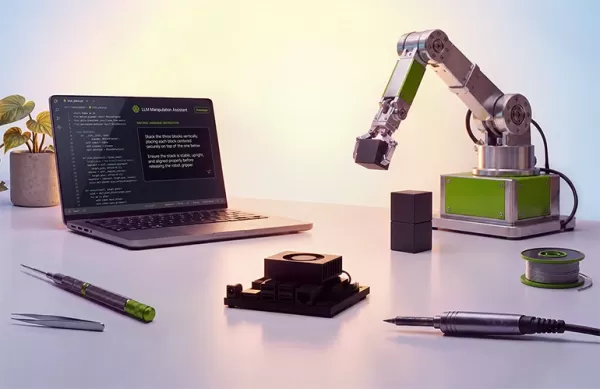 NVIDIA Boosts Jetson Orin Nano 2 Inference Speed for Edge Robotics
Jetson Orin Nano 2 consumes less power at the same performance level of its predecessor. Source: NVIDIAAs AI models become more efficient, more devices can become autonomous, but developers need compact, energy-efficient computers built for edge AI,
NVIDIA Boosts Jetson Orin Nano 2 Inference Speed for Edge Robotics
Jetson Orin Nano 2 consumes less power at the same performance level of its predecessor. Source: NVIDIAAs AI models become more efficient, more devices can become autonomous, but developers need compact, energy-efficient computers built for edge AI,
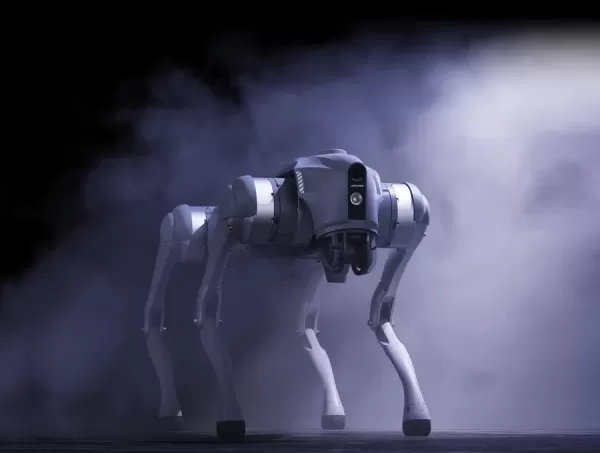 How Unitree is Shaping the Future of Humanoid Robotics
Unitree’s New Creature of Embodied AI with ultra-wide 4D LiDAR technology for advanced real-world navigation. Credit: UnitreeWang Xingxing, CEO of Unitree, targets world model breakthroughs to help humanoid machines execute 80% of tasks when placed i
How Unitree is Shaping the Future of Humanoid Robotics
Unitree’s New Creature of Embodied AI with ultra-wide 4D LiDAR technology for advanced real-world navigation. Credit: UnitreeWang Xingxing, CEO of Unitree, targets world model breakthroughs to help humanoid machines execute 80% of tasks when placed i

2026 Latest Best AI Agenda Builders page features a curated list of top-rated tools that make planning weekly team syncs effortless. These powerful solutions help you create organized, efficient agendas in just minutes, saving valuable time and boosting productivity. XIX.AI ensures all entries go through rigorous real-world tests before inclusion. Get a free vs paid comparison and discover the must-try options that deliver game-changing results. Explore now to find your perfect tool for smoother workflows!
15 tools
xix.ai

2026 Latest Best Top-Rated AI Business Plan Tools for Startups! XIX.AI curates a powerful, game-changing collection of must-try tools that go through real-world tests and rigorous weekly updated rankings. These top solutions help startups draft flawless plans, boost productivity, and unlock their full AI edge. Explore now to discover your perfect tool!
9 tools
xix.ai

2026 Latest Best Top-rated AI Persona Builder Tools for Audience Research are here on XIX.AI! This curated list features powerful, game-changing tools that help you conduct real-world tests and create accurate audience profiles through detailed free vs paid comparison. You’ll discover the must-try options that boost writing efficiency and unlock your AI edge in marketing strategies. Explore now to find your perfect tool!
9 tools
xix.ai

2026 Latest Best Top-rated AI Demo Video Tools for SaaS Product Marketing, carefully curated by XIX.AI. These powerful game-changing solutions help marketers create high-quality video content fast, boost writing efficiency, and streamline marketing workflows. Enjoy a free vs paid comparison along with real-world tests and updated rankings weekly. Explore now to Discover your perfect tool for boosting SaaS sales!
9 tools
xix.ai

2026 Latest Best Top-rated AI Prompt Testing Tools for Better Output Quality! XIX.AI has curated a powerful, game-changing collection of highly efficient tools that undergo rigorous real-world tests to ensure consistent top-tier results. You’ll find detailed free vs paid comparison insights, comprehensive rankings, and expert guidance to help you identify the must-try solutions that boost your workflow significantly. Explore now to unlock your AI edge!
11 tools
xix.ai

2026 Latest Best Top-rated AI Customer Insight Tools for Product Positioning! XIX.AI has curated a powerful, game-changing collection that goes through real-world tests and weekly updated rankings. It helps you uncover customer needs quickly to boost writing efficiency, create optimal SEO content, and craft perfect social media messages without wasting time. Explore now to Discover your perfect tool and Unlock your AI edge.
10 tools
xix.ai












