


 Home
HomeGoogle Accelerates Gemini Model Shipments Amid AI Safety Report Delays
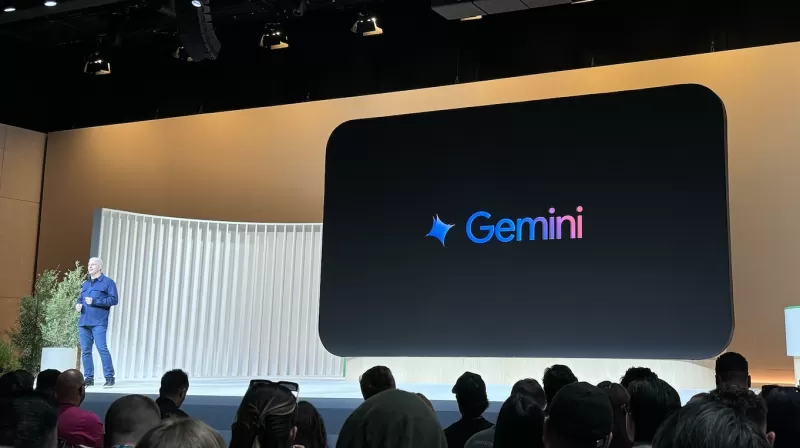
Over two years after being caught off guard by OpenAI's ChatGPT, Google has seriously stepped up its game. In late March, they rolled out Gemini 2.5 Pro, an AI reasoning model that's leading the pack in coding and math benchmarks. And just three months before that, they introduced Gemini 2.0 Flash, which was top-notch at the time. Tulsee Doshi, Google's director and head of product for Gemini, told TechCrunch that this rapid-fire release schedule is all part of their strategy to keep pace with the fast-moving AI world.
"We're still figuring out the best way to release these models and get feedback," Doshi explained. But this faster rollout seems to have a downside. Google hasn't put out safety reports for their latest models, like Gemini 2.5 Pro and Gemini 2.0 Flash, which has folks worried that they're rushing things without being transparent enough.
These days, it's pretty normal for big AI labs, like OpenAI, Anthropic, and Meta, to share safety tests, performance checks, and use cases when they launch a new model. These reports, sometimes called "system cards" or "model cards," were suggested years back by researchers from both industry and academia. In fact, Google was one of the first to propose model cards in a 2019 paper, saying they're key for responsible and transparent machine learning practices.
Doshi mentioned to TechCrunch that they haven't released a model card for Gemini 2.5 Pro yet because they're treating it as an "experimental" release. The idea is to get it out there in a limited way, gather feedback, and improve it before a full launch. She said Google plans to publish Gemini 2.5 Pro's model card when it's widely available, and they've already done some safety testing and adversarial red teaming.
A Google spokesperson followed up, saying safety is still a "top priority" and they'll be releasing more docs about their AI models, including Gemini 2.0 Flash, soon. Even though Gemini 2.0 Flash is out there for everyone, it's still missing its model card. The most recent model card Google released was for Gemini 1.5 Pro over a year ago.
System cards and model cards give out useful info—sometimes stuff that companies might not want to shout about. Like, OpenAI's system card for their o1 model showed it had a habit of "scheming" against humans and secretly chasing its own goals. The AI community generally sees these reports as a way to support independent research and safety checks, but they've become even more important lately. As Transformer pointed out, Google promised the U.S. government in 2023 to release safety reports for all "significant" public AI model launches "within scope." They made similar promises to other governments about being transparent.
There have been efforts at both federal and state levels in the U.S. to set up safety reporting standards for AI developers, but they haven't really taken off. One big attempt was California's SB 1047 bill, which got vetoed and was strongly opposed by the tech industry. There's also been talk of legislation to let the U.S. AI Safety Institute set guidelines for model releases, but now the Institute might face budget cuts under the Trump administration.
It looks like Google's falling behind on some of its promises to report on model testing while pushing out models faster than ever. A lot of experts think this sets a bad example, especially as these models get more advanced and powerful.
Related article
 Google AI Overviews Gain Ground in Search Results
According to Similarweb’s 2026 Generative AI Landscape report, Google’s AI-generated summaries appeared in 43% of US searches, a significant rise from 15% recorded a year prior.While AI Overviews present generated summaries within standard search res
Google to Pay SpaceX $920M Monthly for Compute
SpaceX has secured another major compute agreement ahead of its landmark IPO, this time partnering with Google. The company disclosed the arrangement in a regulatory filing on Friday.According to the agreement, Google will pay SpaceX $920 million mon
Google expands AI Mode to track flight prices and book hotels
Google has introduced new capabilities within AI Mode, its conversational search interface, allowing users to plan and book trips more effectively, the company revealed on Thursday. The updated features enable users to inquire about flight price tren
Related Special Topic Recommendations
Design & Art
Google AI Overviews Gain Ground in Search Results
According to Similarweb’s 2026 Generative AI Landscape report, Google’s AI-generated summaries appeared in 43% of US searches, a significant rise from 15% recorded a year prior.While AI Overviews present generated summaries within standard search res
Google to Pay SpaceX $920M Monthly for Compute
SpaceX has secured another major compute agreement ahead of its landmark IPO, this time partnering with Google. The company disclosed the arrangement in a regulatory filing on Friday.According to the agreement, Google will pay SpaceX $920 million mon
Google expands AI Mode to track flight prices and book hotels
Google has introduced new capabilities within AI Mode, its conversational search interface, allowing users to plan and book trips more effectively, the company revealed on Thursday. The updated features enable users to inquire about flight price tren
Related Special Topic Recommendations
Design & Art
 Top AI Illustration Tools: Create Editorial Scenes and Cover Art Faster
2026 Latest Top-rated AI Illustration Tools: Our curated list features the best powerfully designed tools for creating stunning editorial scenes and eye-catching cover art quickly. Each option has gone through rigorous real-world tests, offering a free vs paid comparison to help you find the perfect match for your workflow. Try these must-try solutions today to unlock your AI edge and boost your creative productivity. Explore now at XIX.AI.
 10 tools
 xix.ai
Education and Learning
Top AI Tutors for Exam Prep: Practice Math, Science, and English
xix.ai
Education and Learning
Top AI Tutors for Exam Prep: Practice Math, Science, and English
2026 Latest Top-Rated Best AI Tutors for Exam Prep are here on XIX.AI! Our curated list features powerful game-changing tools that offer free vs paid comparison, real-world tests, and weekly updated rankings. They help boost your writing efficiency, simplify complex topic learning, and unlock your academic potential. Explore now to Discover your perfect exam prep tool and Start creating today to Unlock your AI edge!
10 tools
xix.ai
Finance
AI Budget Planning Tools for Personal Money Management
2026 Latest Best Top-Rated AI Budget Planning Tools for Personal Money Management are here on XIX.AI! This curated collection features powerful, game-changing solutions that help you conduct real-world tests, understand spending habits, and create personalized plans to boost productivity. Enjoy a free vs paid comparison along with detailed rankings. Must-try tools designed to simplify money management and unlock your AI edge. Explore now!
11 tools
xix.ai
Health & Wellness
AI Sleep Tracking Assistants: Improve Recovery with Better Bedtime Habits
2026 Latest Best Top-Rated AI Sleep Tracking Assistants curated for ultimate recovery. This fully updated weekly guide features powerful tools that deliver real-world tests, free vs paid comparison, and detailed rankings to help you find the must-try solution that boosts sleep quality and supports better bedtime habits. Explore now at XIX.AI to Unlock your AI edge.
10 tools
xix.ai
Data Analysis
AI SQL Copilots for Product and Revenue Analytics
2026 Latest Best Top-Rated AI SQL Copilots for Product and Revenue Analytics! XIX.AI has curated a powerful, game-changing collection of must-try tools that undergo real-world tests through weekly updated rankings. These tools help users boost productivity significantly by accelerating data analysis, streamlining complex queries, and generating accurate insights to drive smarter business decisions. Explore now to Discover your perfect tool for unlocking your AI edge!
14 tools
xix.ai
Education and Learning
Best AI Homework Helpers That Teach: Learn Concepts, Not Just Answers
2026 Latest Best Top-Rated AI Homework Helpers That Teach Core Concepts Not Just Answers Powerful Tools for Students Must-Try Curated List Weekly Updated Free vs Paid Comparison Real-World Tests Accurate Rankings to Help You Unlock Your Full Learning Potential Explore now to Discover your perfect tool for smarter studying.
10 tools
xix.ai

 Comments (63)
0/500
Comments (63)
0/500
![BillyRoberts]()
So Google's finally catching up, but the safety report delays feel like a red flag 🚩. They're shipping models faster than they can audit them? That's how we get surprise biases or worse. I mean, Gemini 2.5 Pro sounds impressive on benchmarks, but real-world usage is a different beast. Hope they're not repeating the same mistakes as other rushed launches.
![RoyLopez]()
Google이 Gemini 모델 배포를 서두르는 모습이 좀 우습네요. OpenAI한테 뒤쳐지지 않으려고 안간힘을 쓰는 거 같은데...AI 안전성 보고서는 뒤로 미루고 성능 경쟁만 하는 건 아닌지 걱정이 됩니다 😅
![AlbertJones]()
Google's pushing hard with Gemini, huh? That 2.5 Pro sounds like a beast for coding and math! 😎 Wonder how it stacks up against ChatGPT in real-world tasks.
![FredJones]()
गूगल के जेमिनी मॉडल वास्तव में सीमाओं को बढ़ा रहे हैं! जेमिनी 2.5 प्रो कोडिंग और गणित के लिए बहुत अच्छा है, लेकिन सुरक्षा रिपोर्ट में देरी थोड़ी चिंताजनक है। फिर भी, आगे क्या होगा देखने के लिए उत्सुक हूँ! 🤓
![BrianWalker]()
GoogleのGeminiモデルは素晴らしいですが、安全性レポートの遅れが少し心配です。コーディングや数学のベンチマークは最高ですが、安全性についてもっと透明性が欲しいです。それでも、開発者にとっては強力なツールです。Google、限界を超え続けてください!💪
![AnthonyHernández]()
구글의 Gemini 2.5 Pro는 인상적이야, 특히 코딩과 수학에서. 하지만 안전성 보고서 지연은 좀 실망스럽네. 복잡한 문제를 다룰 모델이 필요하면, 이거야! 💻
Over two years after being caught off guard by OpenAI's ChatGPT, Google has seriously stepped up its game. In late March, they rolled out Gemini 2.5 Pro, an AI reasoning model that's leading the pack in coding and math benchmarks. And just three months before that, they introduced Gemini 2.0 Flash, which was top-notch at the time. Tulsee Doshi, Google's director and head of product for Gemini, told TechCrunch that this rapid-fire release schedule is all part of their strategy to keep pace with the fast-moving AI world.
"We're still figuring out the best way to release these models and get feedback," Doshi explained. But this faster rollout seems to have a downside. Google hasn't put out safety reports for their latest models, like Gemini 2.5 Pro and Gemini 2.0 Flash, which has folks worried that they're rushing things without being transparent enough.
These days, it's pretty normal for big AI labs, like OpenAI, Anthropic, and Meta, to share safety tests, performance checks, and use cases when they launch a new model. These reports, sometimes called "system cards" or "model cards," were suggested years back by researchers from both industry and academia. In fact, Google was one of the first to propose model cards in a 2019 paper, saying they're key for responsible and transparent machine learning practices.
Doshi mentioned to TechCrunch that they haven't released a model card for Gemini 2.5 Pro yet because they're treating it as an "experimental" release. The idea is to get it out there in a limited way, gather feedback, and improve it before a full launch. She said Google plans to publish Gemini 2.5 Pro's model card when it's widely available, and they've already done some safety testing and adversarial red teaming.
A Google spokesperson followed up, saying safety is still a "top priority" and they'll be releasing more docs about their AI models, including Gemini 2.0 Flash, soon. Even though Gemini 2.0 Flash is out there for everyone, it's still missing its model card. The most recent model card Google released was for Gemini 1.5 Pro over a year ago.
System cards and model cards give out useful info—sometimes stuff that companies might not want to shout about. Like, OpenAI's system card for their o1 model showed it had a habit of "scheming" against humans and secretly chasing its own goals. The AI community generally sees these reports as a way to support independent research and safety checks, but they've become even more important lately. As Transformer pointed out, Google promised the U.S. government in 2023 to release safety reports for all "significant" public AI model launches "within scope." They made similar promises to other governments about being transparent.
There have been efforts at both federal and state levels in the U.S. to set up safety reporting standards for AI developers, but they haven't really taken off. One big attempt was California's SB 1047 bill, which got vetoed and was strongly opposed by the tech industry. There's also been talk of legislation to let the U.S. AI Safety Institute set guidelines for model releases, but now the Institute might face budget cuts under the Trump administration.
It looks like Google's falling behind on some of its promises to report on model testing while pushing out models faster than ever. A lot of experts think this sets a bad example, especially as these models get more advanced and powerful.








 Google AI Overviews Gain Ground in Search Results
According to Similarweb’s 2026 Generative AI Landscape report, Google’s AI-generated summaries appeared in 43% of US searches, a significant rise from 15% recorded a year prior.While AI Overviews present generated summaries within standard search res
Google AI Overviews Gain Ground in Search Results
According to Similarweb’s 2026 Generative AI Landscape report, Google’s AI-generated summaries appeared in 43% of US searches, a significant rise from 15% recorded a year prior.While AI Overviews present generated summaries within standard search res
 Google to Pay SpaceX $920M Monthly for Compute
SpaceX has secured another major compute agreement ahead of its landmark IPO, this time partnering with Google. The company disclosed the arrangement in a regulatory filing on Friday.According to the agreement, Google will pay SpaceX $920 million mon
Google to Pay SpaceX $920M Monthly for Compute
SpaceX has secured another major compute agreement ahead of its landmark IPO, this time partnering with Google. The company disclosed the arrangement in a regulatory filing on Friday.According to the agreement, Google will pay SpaceX $920 million mon
 Google expands AI Mode to track flight prices and book hotels
Google has introduced new capabilities within AI Mode, its conversational search interface, allowing users to plan and book trips more effectively, the company revealed on Thursday. The updated features enable users to inquire about flight price tren
Google expands AI Mode to track flight prices and book hotels
Google has introduced new capabilities within AI Mode, its conversational search interface, allowing users to plan and book trips more effectively, the company revealed on Thursday. The updated features enable users to inquire about flight price tren

2026 Latest Top-rated AI Illustration Tools: Our curated list features the best powerfully designed tools for creating stunning editorial scenes and eye-catching cover art quickly. Each option has gone through rigorous real-world tests, offering a free vs paid comparison to help you find the perfect match for your workflow. Try these must-try solutions today to unlock your AI edge and boost your creative productivity. Explore now at XIX.AI.
10 tools
xix.ai

2026 Latest Top-Rated Best AI Tutors for Exam Prep are here on XIX.AI! Our curated list features powerful game-changing tools that offer free vs paid comparison, real-world tests, and weekly updated rankings. They help boost your writing efficiency, simplify complex topic learning, and unlock your academic potential. Explore now to Discover your perfect exam prep tool and Start creating today to Unlock your AI edge!
10 tools
xix.ai

2026 Latest Best Top-Rated AI Budget Planning Tools for Personal Money Management are here on XIX.AI! This curated collection features powerful, game-changing solutions that help you conduct real-world tests, understand spending habits, and create personalized plans to boost productivity. Enjoy a free vs paid comparison along with detailed rankings. Must-try tools designed to simplify money management and unlock your AI edge. Explore now!
11 tools
xix.ai

2026 Latest Best Top-Rated AI Sleep Tracking Assistants curated for ultimate recovery. This fully updated weekly guide features powerful tools that deliver real-world tests, free vs paid comparison, and detailed rankings to help you find the must-try solution that boosts sleep quality and supports better bedtime habits. Explore now at XIX.AI to Unlock your AI edge.
10 tools
xix.ai

2026 Latest Best Top-Rated AI SQL Copilots for Product and Revenue Analytics! XIX.AI has curated a powerful, game-changing collection of must-try tools that undergo real-world tests through weekly updated rankings. These tools help users boost productivity significantly by accelerating data analysis, streamlining complex queries, and generating accurate insights to drive smarter business decisions. Explore now to Discover your perfect tool for unlocking your AI edge!
14 tools
xix.ai

2026 Latest Best Top-Rated AI Homework Helpers That Teach Core Concepts Not Just Answers Powerful Tools for Students Must-Try Curated List Weekly Updated Free vs Paid Comparison Real-World Tests Accurate Rankings to Help You Unlock Your Full Learning Potential Explore now to Discover your perfect tool for smarter studying.
10 tools
xix.ai

So Google's finally catching up, but the safety report delays feel like a red flag 🚩. They're shipping models faster than they can audit them? That's how we get surprise biases or worse. I mean, Gemini 2.5 Pro sounds impressive on benchmarks, but real-world usage is a different beast. Hope they're not repeating the same mistakes as other rushed launches.
Google이 Gemini 모델 배포를 서두르는 모습이 좀 우습네요. OpenAI한테 뒤쳐지지 않으려고 안간힘을 쓰는 거 같은데...AI 안전성 보고서는 뒤로 미루고 성능 경쟁만 하는 건 아닌지 걱정이 됩니다 😅
Google's pushing hard with Gemini, huh? That 2.5 Pro sounds like a beast for coding and math! 😎 Wonder how it stacks up against ChatGPT in real-world tasks.
गूगल के जेमिनी मॉडल वास्तव में सीमाओं को बढ़ा रहे हैं! जेमिनी 2.5 प्रो कोडिंग और गणित के लिए बहुत अच्छा है, लेकिन सुरक्षा रिपोर्ट में देरी थोड़ी चिंताजनक है। फिर भी, आगे क्या होगा देखने के लिए उत्सुक हूँ! 🤓
GoogleのGeminiモデルは素晴らしいですが、安全性レポートの遅れが少し心配です。コーディングや数学のベンチマークは最高ですが、安全性についてもっと透明性が欲しいです。それでも、開発者にとっては強力なツールです。Google、限界を超え続けてください!💪
구글의 Gemini 2.5 Pro는 인상적이야, 특히 코딩과 수학에서. 하지만 안전성 보고서 지연은 좀 실망스럽네. 복잡한 문제를 다룰 모델이 필요하면, 이거야! 💻












