


 Home
HomeFormer Infosys Chief’s AI Startup Secures Another $53M
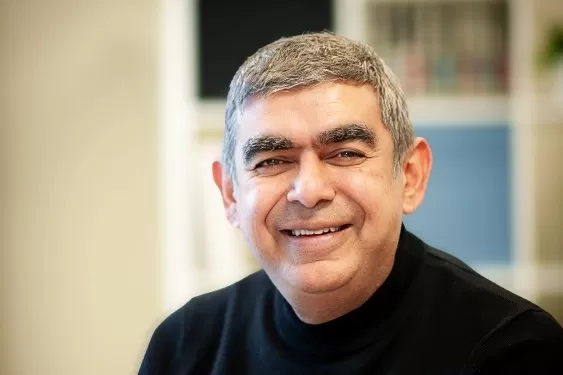
Hang Ten Systems, an AI startup established by former Infosys CEO Vishal Sikka just four months ago, has secured an additional $53 million in seed funding. This latest investment round was finalized merely five weeks after the initial $32 million seed round, according to company statements provided to TechCrunch.
Lead by Temasek’s early-stage investment platform Xora, this new capital brings Hang Ten’s total funding to $85 million. Mayfield, which led the previous investment, also participated. Other notable investors include Aramco Ventures, Intel CEO Lip-Bu Tan, Micron CEO Sanjay Mehrotra, and Yahoo co-founder Jerry Yang, who serves on the company’s board.
Launched in May, Hang Ten operates on the premise that AI can fundamentally transform how large enterprises build and maintain software. The startup advises companies—typically those with annual revenues exceeding $10 billion—on AI strategy while also assisting in software development and modernization.
“The build process itself has essentially become close to zero marginal cost and close to zero time,” Sikka (pictured above) explained to TechCrunch. He emphasized that AI is shifting the focus of software development from writing code to defining requirements and validating system performance.
This thesis appears to be gaining traction with clients. Within 25 days of the initial meeting with one customer, Hang Ten signed a multimillion-dollar contract to develop a mission-critical software system, Sikka noted, adding that he had never witnessed enterprise deals move with such speed.
Hang Ten is currently collaborating with a mix of existing clients and late-stage prospects across 21 major enterprises, according to Sikka. Some prospects are in the proposal or contract-negotiation phase. The startup has secured multiple seven-figure contracts and is pursuing eight-figure deals, with clients spanning the U.S., Europe, the Middle East, and Asia, including Fresenius Kabi, Saudi Aramco, and Siemens Energy.
Early customer successes prompted Xora to approach Hang Ten regarding investment, Sikka said, noting that Xora saw an opportunity to introduce the startup to other companies within Temasek’s portfolio. While Sikka declined to disclose Hang Ten’s valuation, he confirmed that the second seed round represented a significant increase.
With this fresh capital, Hang Ten plans to expand its engineering, consulting, and sales teams. The Palo Alto-based startup currently employs about 20 to 25 people across the U.S., the Middle East, and Australia, with plans to hire in Europe and India, Sikka stated.
Hang Ten enters a competitive market where AI model developers like OpenAI and Anthropic are expanding their enterprise offerings, while traditional consulting firms are racing to integrate generative AI into their services.
“Enterprises still need trusted partners who are independent of the underlying platform and work solely in the interest of the enterprise,” Sikka said. “There will always be room for companies like us.”
Hang Ten’s competitive edge lies not in building another AI model, but in adapting AI to the complex software development processes of large enterprises. CTO Sanjay Rajagopalan told TechCrunch that the startup’s engineers utilize an in-house framework called Hobie, which packages reusable AI “skills” for regulated industries and complex enterprise software projects.
“We are actually delivering production software,” Rajagopalan said. “It’s not like we are doing some kind of PoC.”
Hang Ten’s approach is already placing it in competition with traditional systems integrators. Many of the startup’s engagements, Sikka said, are replacing incumbent providers, though more than half of its current opportunities involve new projects that companies had previously deferred, rather than work taken from existing vendors.
Rajagopalan noted that Hang Ten can use teams of about two to four people for some projects that might previously have required around 30, although customers or independent third parties still handle final quality checks and certification. The startup promises clients a 10-fold improvement in cost, speed, or a combination of both, he said.
Even within its first four months, Hang Ten has received serious acquisition offers from “very big companies,” Sikka told TechCrunch. He declined to identify the prospective buyers, stating that the startup has turned them down for now as it focuses on business expansion.
Before founding Hang Ten, Sikka co-founded enterprise AI startup VianAI in 2019 after leaving Infosys in 2017. It raised $50 million in seed funding and later secured $140 million in a 2021 round led by SoftBank Vision Fund 2.
Sikka departed that startup in April, according to his LinkedIn profile. He told TechCrunch that VianAI is “going through a transaction,” declining to provide further details.
Regarding how startups like Hang Ten could disrupt service providers like Infosys, Sikka noted, “We are fortunate that we don’t have the burden of legacy that we have to transform.”
The startup takes its name from “hang ten,” a surfing maneuver where a surfer rides with all 10 toes over the front of the board. For Sikka, it reflects the startup’s ambition to help enterprises ride the ongoing AI wave, which he described as “probably the biggest wave of our lives.”
Related article
 Crypto exchange OKX aims to empower AI agents to hire and pay each other
As AI agents start serving individuals and collaborating with each other, they require mechanisms to locate tasks, compensate for services, and establish credibility. Crypto exchange OKX anticipates this future is arriving sooner than anticipated, in
Thiel-backed startup claims AI can judge journalism, despite risks to whistleblowers
Following his role in the lawsuit that led to Gawker’s bankruptcy, Aron D’Souza identified a critical flaw in the American media landscape: individuals harmed by coverage lacked effective means to respond.His answer is technology. D’Souza’s new ventu
Prentis, New AI Lab Co-Founded by Reid Hoffman and Marc Pincus, in Talks to Raise $100M
Prentis, an emerging AI research lab specializing in computer-use models, is co-founded by serial entrepreneur Ritankar Das alongside tech industry leaders Reid Hoffman and Marc Pincus. According to two individuals familiar with the matter, the compa
Related Special Topic Recommendations
Academic Research
Crypto exchange OKX aims to empower AI agents to hire and pay each other
As AI agents start serving individuals and collaborating with each other, they require mechanisms to locate tasks, compensate for services, and establish credibility. Crypto exchange OKX anticipates this future is arriving sooner than anticipated, in
Thiel-backed startup claims AI can judge journalism, despite risks to whistleblowers
Following his role in the lawsuit that led to Gawker’s bankruptcy, Aron D’Souza identified a critical flaw in the American media landscape: individuals harmed by coverage lacked effective means to respond.His answer is technology. D’Souza’s new ventu
Prentis, New AI Lab Co-Founded by Reid Hoffman and Marc Pincus, in Talks to Raise $100M
Prentis, an emerging AI research lab specializing in computer-use models, is co-founded by serial entrepreneur Ritankar Das alongside tech industry leaders Reid Hoffman and Marc Pincus. According to two individuals familiar with the matter, the compa
Related Special Topic Recommendations
Academic Research
 AI Systematic Review Tools for Research Screening
2026 Latest Best Top-Rated AI Systematic Review Tools for Research Screening are here on XIX.AI! This curated collection includes powerful, game-changing solutions that go through rigorous real-world tests to deliver accurate results. We also offer a free vs paid comparison along with weekly updated rankings to help you find the must-try option that boosts your research efficiency significantly. Explore now to unlock your AI edge in academic work!
 11 tools
 xix.ai
Design & Art
AI Moodboard Tools for Brand and Art Direction
xix.ai
Design & Art
AI Moodboard Tools for Brand and Art Direction
2026 Latest Best AI Moodboard Tools for Brand and Art Direction! XIX.AI has curated a top-rated list of powerful, game-changing tools that help creators boost productivity significantly. You’ll find detailed weekly updated rankings, free vs paid comparison, and real-world tests to help you choose the perfect option. Must-try features include instant idea generation, seamless collaboration, and optimized workflows for all your design projects. Explore now to unlock your AI edge!
9 tools
xix.ai
Academic Research
AI Systematic Review Tools for Screening Abstracts, Datasets, and Citation Networks
2026 Latest Best Top-rated AI Systematic Review Tools for Screening Abstracts, Datasets, and Citation Networks are curated by XIX.AI through rigorous real-world tests. These powerful game-changing tools offer a free vs paid comparison to help researchers boost productivity significantly. Explore now to discover your perfect tool for accelerating scientific research.
9 tools
xix.ai
Text-to-speech
Best AI Multilingual Voice Tools for Global Content
2026 Latest Best Top-rated AI Multilingual Voice Tools for Global Content are here on XIX.AI! This curated list features powerful, game-changing options that deliver flawless speech in dozens of languages, perfect for creating high-quality content fast and boosting writing efficiency across global markets. Get a free vs paid comparison along with real-world tests and our updated weekly rankings to help you find the must-try tool that suits your needs. Explore now to unlock your AI edge!
10 tools
xix.ai
Marketing
Best AI Persona Builders: Turn CRM Data into Actionable Profiles
2026 Latest Best Top-rated AI Persona Builders help you turn valuable CRM data into actionable customer profiles quickly. This curated list showcases powerful, game-changing tools that go through real-world tests to deliver accurate insights. Get a free vs paid comparison and discover which option suits your needs best. XIX.AI is also included in this must-try selection. Explore now to Unlock your AI edge!
9 tools
xix.ai
Data Analysis
AI SQL Analysis Tools for Business Intelligence Teams
2026 Latest Best Top-rated AI SQL Analysis Tools for Business Intelligence Teams! XIX.AI has curated a powerful, game-changing collection that goes through rigorous real-world tests. You’ll find a free vs paid comparison, detailed rankings, and in-depth insights to help you boost productivity significantly. Must-try options are available to unlock your AI edge. Explore now!
11 tools
xix.ai

 Comments (0)
0/500
Comments (0)
0/500
Hang Ten Systems, an AI startup established by former Infosys CEO Vishal Sikka just four months ago, has secured an additional $53 million in seed funding. This latest investment round was finalized merely five weeks after the initial $32 million seed round, according to company statements provided to TechCrunch.
Lead by Temasek’s early-stage investment platform Xora, this new capital brings Hang Ten’s total funding to $85 million. Mayfield, which led the previous investment, also participated. Other notable investors include Aramco Ventures, Intel CEO Lip-Bu Tan, Micron CEO Sanjay Mehrotra, and Yahoo co-founder Jerry Yang, who serves on the company’s board.
Launched in May, Hang Ten operates on the premise that AI can fundamentally transform how large enterprises build and maintain software. The startup advises companies—typically those with annual revenues exceeding $10 billion—on AI strategy while also assisting in software development and modernization.
“The build process itself has essentially become close to zero marginal cost and close to zero time,” Sikka (pictured above) explained to TechCrunch. He emphasized that AI is shifting the focus of software development from writing code to defining requirements and validating system performance.
This thesis appears to be gaining traction with clients. Within 25 days of the initial meeting with one customer, Hang Ten signed a multimillion-dollar contract to develop a mission-critical software system, Sikka noted, adding that he had never witnessed enterprise deals move with such speed.
Hang Ten is currently collaborating with a mix of existing clients and late-stage prospects across 21 major enterprises, according to Sikka. Some prospects are in the proposal or contract-negotiation phase. The startup has secured multiple seven-figure contracts and is pursuing eight-figure deals, with clients spanning the U.S., Europe, the Middle East, and Asia, including Fresenius Kabi, Saudi Aramco, and Siemens Energy.
Early customer successes prompted Xora to approach Hang Ten regarding investment, Sikka said, noting that Xora saw an opportunity to introduce the startup to other companies within Temasek’s portfolio. While Sikka declined to disclose Hang Ten’s valuation, he confirmed that the second seed round represented a significant increase.
With this fresh capital, Hang Ten plans to expand its engineering, consulting, and sales teams. The Palo Alto-based startup currently employs about 20 to 25 people across the U.S., the Middle East, and Australia, with plans to hire in Europe and India, Sikka stated.
Hang Ten enters a competitive market where AI model developers like OpenAI and Anthropic are expanding their enterprise offerings, while traditional consulting firms are racing to integrate generative AI into their services.
“Enterprises still need trusted partners who are independent of the underlying platform and work solely in the interest of the enterprise,” Sikka said. “There will always be room for companies like us.”
Hang Ten’s competitive edge lies not in building another AI model, but in adapting AI to the complex software development processes of large enterprises. CTO Sanjay Rajagopalan told TechCrunch that the startup’s engineers utilize an in-house framework called Hobie, which packages reusable AI “skills” for regulated industries and complex enterprise software projects.
“We are actually delivering production software,” Rajagopalan said. “It’s not like we are doing some kind of PoC.”
Hang Ten’s approach is already placing it in competition with traditional systems integrators. Many of the startup’s engagements, Sikka said, are replacing incumbent providers, though more than half of its current opportunities involve new projects that companies had previously deferred, rather than work taken from existing vendors.
Rajagopalan noted that Hang Ten can use teams of about two to four people for some projects that might previously have required around 30, although customers or independent third parties still handle final quality checks and certification. The startup promises clients a 10-fold improvement in cost, speed, or a combination of both, he said.
Even within its first four months, Hang Ten has received serious acquisition offers from “very big companies,” Sikka told TechCrunch. He declined to identify the prospective buyers, stating that the startup has turned them down for now as it focuses on business expansion.
Before founding Hang Ten, Sikka co-founded enterprise AI startup VianAI in 2019 after leaving Infosys in 2017. It raised $50 million in seed funding and later secured $140 million in a 2021 round led by SoftBank Vision Fund 2.
Sikka departed that startup in April, according to his LinkedIn profile. He told TechCrunch that VianAI is “going through a transaction,” declining to provide further details.
Regarding how startups like Hang Ten could disrupt service providers like Infosys, Sikka noted, “We are fortunate that we don’t have the burden of legacy that we have to transform.”
The startup takes its name from “hang ten,” a surfing maneuver where a surfer rides with all 10 toes over the front of the board. For Sikka, it reflects the startup’s ambition to help enterprises ride the ongoing AI wave, which he described as “probably the biggest wave of our lives.”








 Crypto exchange OKX aims to empower AI agents to hire and pay each other
As AI agents start serving individuals and collaborating with each other, they require mechanisms to locate tasks, compensate for services, and establish credibility. Crypto exchange OKX anticipates this future is arriving sooner than anticipated, in
Crypto exchange OKX aims to empower AI agents to hire and pay each other
As AI agents start serving individuals and collaborating with each other, they require mechanisms to locate tasks, compensate for services, and establish credibility. Crypto exchange OKX anticipates this future is arriving sooner than anticipated, in
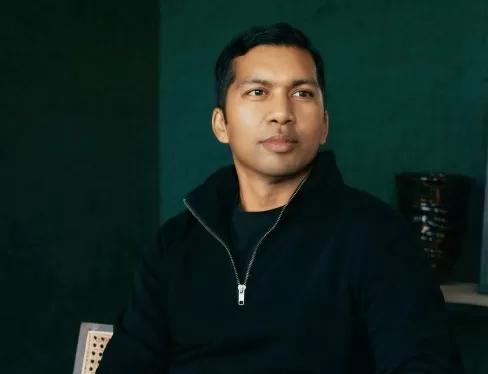 Thiel-backed startup claims AI can judge journalism, despite risks to whistleblowers
Following his role in the lawsuit that led to Gawker’s bankruptcy, Aron D’Souza identified a critical flaw in the American media landscape: individuals harmed by coverage lacked effective means to respond.His answer is technology. D’Souza’s new ventu
Thiel-backed startup claims AI can judge journalism, despite risks to whistleblowers
Following his role in the lawsuit that led to Gawker’s bankruptcy, Aron D’Souza identified a critical flaw in the American media landscape: individuals harmed by coverage lacked effective means to respond.His answer is technology. D’Souza’s new ventu
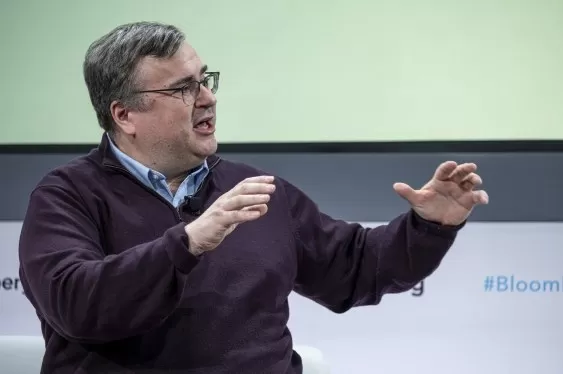 Prentis, New AI Lab Co-Founded by Reid Hoffman and Marc Pincus, in Talks to Raise $100M
Prentis, an emerging AI research lab specializing in computer-use models, is co-founded by serial entrepreneur Ritankar Das alongside tech industry leaders Reid Hoffman and Marc Pincus. According to two individuals familiar with the matter, the compa
Prentis, New AI Lab Co-Founded by Reid Hoffman and Marc Pincus, in Talks to Raise $100M
Prentis, an emerging AI research lab specializing in computer-use models, is co-founded by serial entrepreneur Ritankar Das alongside tech industry leaders Reid Hoffman and Marc Pincus. According to two individuals familiar with the matter, the compa
2026 Latest Best Top-Rated AI Systematic Review Tools for Research Screening are here on XIX.AI! This curated collection includes powerful, game-changing solutions that go through rigorous real-world tests to deliver accurate results. We also offer a free vs paid comparison along with weekly updated rankings to help you find the must-try option that boosts your research efficiency significantly. Explore now to unlock your AI edge in academic work!
11 tools
xix.ai

2026 Latest Best AI Moodboard Tools for Brand and Art Direction! XIX.AI has curated a top-rated list of powerful, game-changing tools that help creators boost productivity significantly. You’ll find detailed weekly updated rankings, free vs paid comparison, and real-world tests to help you choose the perfect option. Must-try features include instant idea generation, seamless collaboration, and optimized workflows for all your design projects. Explore now to unlock your AI edge!
9 tools
xix.ai

2026 Latest Best Top-rated AI Systematic Review Tools for Screening Abstracts, Datasets, and Citation Networks are curated by XIX.AI through rigorous real-world tests. These powerful game-changing tools offer a free vs paid comparison to help researchers boost productivity significantly. Explore now to discover your perfect tool for accelerating scientific research.
9 tools
xix.ai

2026 Latest Best Top-rated AI Multilingual Voice Tools for Global Content are here on XIX.AI! This curated list features powerful, game-changing options that deliver flawless speech in dozens of languages, perfect for creating high-quality content fast and boosting writing efficiency across global markets. Get a free vs paid comparison along with real-world tests and our updated weekly rankings to help you find the must-try tool that suits your needs. Explore now to unlock your AI edge!
10 tools
xix.ai

2026 Latest Best Top-rated AI Persona Builders help you turn valuable CRM data into actionable customer profiles quickly. This curated list showcases powerful, game-changing tools that go through real-world tests to deliver accurate insights. Get a free vs paid comparison and discover which option suits your needs best. XIX.AI is also included in this must-try selection. Explore now to Unlock your AI edge!
9 tools
xix.ai
2026 Latest Best Top-rated AI SQL Analysis Tools for Business Intelligence Teams! XIX.AI has curated a powerful, game-changing collection that goes through rigorous real-world tests. You’ll find a free vs paid comparison, detailed rankings, and in-depth insights to help you boost productivity significantly. Must-try options are available to unlock your AI edge. Explore now!
11 tools
xix.ai












