


 Home
HomeFigure AI Issues Cease-and-Desist to Secondary Market Brokers
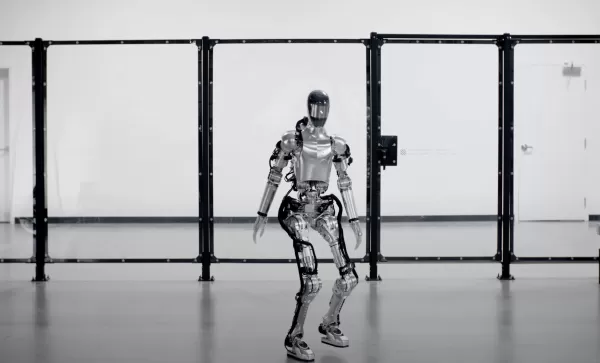
Last month, Brett Adcock, the founder of robotics company Figure AI, announced on X that his firm's stock had become "the most sought-after private share in the secondary market."
However, the company has issued cease-and-desist letters to at least two brokers operating in the secondary market, according to those brokers who spoke with TechCrunch. These individuals stated that Figure AI's legal notices demanded an immediate halt to the marketing of its shares.
Both brokers indicated they received the letters shortly after Bloomberg reported in mid-February that Figure was pursuing a $1.5 billion funding round at a valuation of $39.5 billion—a dramatic fifteen-fold increase from its $2.6 billion valuation in February 2024.
A Figure AI spokesperson told TechCrunch that the company sends such letters when brokers market its stock without authorization, indicating that this is a standard practice.
“This year, upon discovering an unauthorized third-party broker promoting Figure shares without board approval, the company issued a cease and desist order, as it has done previously in similar situations,” the spokesperson said in a written statement. “We prohibit secondary trading of our shares without board authorization and will continue to safeguard the company against unauthorized brokers.”
Because Figure is a private rather than public company, its investors cannot freely sell their shares without company-approved arrangements. This limitation is precisely why secondary markets have emerged, offering investors alternative liquidity options—such as loans secured by their shares—ahead of an IPO.
Brokers who received Figure’s letters shared alternative explanations with TechCrunch regarding why some CEOs disapprove of secondary share sales.
According to these brokers, existing shareholders attempted to sell their stock at prices below the targeted $39.5 billion valuation. Both brokers noted that some companies resist the idea of lower-priced secondary shares competing with a new funding round.
Sim Desai, founder and CEO of the secondary marketplace Hiive, commented to TechCrunch—without referencing Figure specifically—that companies sometimes block secondary sales because they view it as a "zero-sum game."
Desai, however, argues the opposite may be true: an active secondary market could generate more interest in primary share offerings during a new round.
But if secondary trading fails to stimulate primary round interest, the problem may be valuation-related. “If a product is difficult to sell, it often comes down to pricing and valuation rather than a lack of available capital,” Desai noted.
Figure has also recently been featured in several news reports detailing its progress with key customer BMW. In at least one instance, the company responded by claiming the article contained significant inaccuracies and is considering legal action.
The amount Figure AI raises in its next round—and at what valuation—remains uncertain. It is also unclear whether current investors will have early liquidity options through secondary transactions.
Related article
 Former OpenAI Chief Scientist Ilya’s SSI Unveils First Model
AI has achieved another major milestone. Following his departure from OpenAI, former chief scientist Ilya Sutskever established Safe Superintelligence Inc. (SSI), which has recently unveiled details regarding its inaugural model. Reports from oversea
Lovable Leads Atech's Seed Round as AI Ambient Coding Officially Enters the Hardware Field
On May 14, 2026, AI application development platform Lovable announced its participation in the $800,000 seed funding round for Danish hardware startup Atech. Led by Lovable, the round attracted top-tier venture capital firms including the a16z Scout
Anthropic Expands Claude AI Coding Tools to Japan in Push for Overseas Growth
Anthropic, a prominent U.S. artificial intelligence firm, is intensifying its global outreach. On Wednesday, the company hosted a major developer gathering, "Code with Claude," in Tokyo, drawing close to 500 software engineers. This initiative seeks
Related Special Topic Recommendations
chatbot
Former OpenAI Chief Scientist Ilya’s SSI Unveils First Model
AI has achieved another major milestone. Following his departure from OpenAI, former chief scientist Ilya Sutskever established Safe Superintelligence Inc. (SSI), which has recently unveiled details regarding its inaugural model. Reports from oversea
Lovable Leads Atech's Seed Round as AI Ambient Coding Officially Enters the Hardware Field
On May 14, 2026, AI application development platform Lovable announced its participation in the $800,000 seed funding round for Danish hardware startup Atech. Led by Lovable, the round attracted top-tier venture capital firms including the a16z Scout
Anthropic Expands Claude AI Coding Tools to Japan in Push for Overseas Growth
Anthropic, a prominent U.S. artificial intelligence firm, is intensifying its global outreach. On Wednesday, the company hosted a major developer gathering, "Code with Claude," in Tokyo, drawing close to 500 software engineers. This initiative seeks
Related Special Topic Recommendations
chatbot
 Best AI Conversation Trainer Tools for Interview Practice
2026 Latest Best Top-rated AI Conversation Trainer Tools for Interview Practice are here on XIX.AI! This curated collection features powerful, game-changing tools that go through rigorous real-world tests to deliver accurate feedback. You’ll find a free vs paid comparison and detailed rankings to help you choose the must-try option that boosts your confidence and skills. Explore now to Discover your perfect tool for interview success!
 12 tools
 xix.ai
Design & Art
Best AI Style Transfer Tools for Creative Experiments
xix.ai
Design & Art
Best AI Style Transfer Tools for Creative Experiments
2026 Latest Best Top-rated AI Style Transfer Tools for Creative Experiments! XIX.AI has curated a powerful, game-changing collection of must-try tools that deliver exceptional results through real-world tests and rigorous rankings. These top solutions help creatives boost productivity significantly by accelerating content creation and unlocking endless creative possibilities. Explore now to discover your perfect tool and start creating today!
9 tools
xix.ai
Comic Creation
Best AI Dialogue Bubble Tools for Visual Storytelling
2026 Latest Best Top-Rated AI Dialogue Bubble Tools for Visual Storytelling are here on XIX.AI! This curated collection features powerful, game-changing tools that help creators boost productivity and overcome creative bottlenecks. Get a free vs paid comparison, see real-world tests, and check the latest rankings to find the must-try solutions perfect for crafting engaging visual narratives. Explore now to discover your ideal tool!
10 tools
xix.ai
Meeting Assistant
Top AI Meeting Summary Tools: Track Decisions and Follow-Ups Clearly
2026 Latest Top-Rated Best AI Meeting Summary Tools for Clear Decision Tracking and Effortless Follow-Ups. This curated list showcases powerful, game-changing solutions that boost productivity dramatically by automating meeting notes, identifying key action items, and streamlining team coordination across all projects. Get a free vs paid comparison along with real-world tests and weekly updated rankings to help you find the perfect tool. Explore now to unlock your AI edge!
9 tools
xix.ai
Data Analysis
Best AI Data Cleaning Tools: Fix Missing Values and Duplicates Fast
2026 Latest Best Top-rated AI Data Cleaning Tools for quick fixing of missing values and duplicates. This curated list showcases powerful, game-changing solutions that boost productivity significantly. Each option has undergone rigorous real-world tests to ensure reliability. Get a free vs paid comparison and discover the must-try tool that fits your needs best. Explore now at XIX.AI to Unlock your AI edge.
11 tools
xix.ai
Design & Art
Best AI Creative Ideation Tools for Artists: Break Through Visual Blocks
2026 Latest Best Top-Rated AI Creative Ideation Tools for Artists are curated by XIX.AI to help creators break through visual blocks and boost creativity instantly. These powerful game-changing tools offer real-world tests, detailed free vs paid comparison, and weekly updated rankings. Discover your perfect tool to accelerate content creation and unlock your AI edge today. Explore now!
14 tools
xix.ai

 Comments (0)
0/500
Comments (0)
0/500
Last month, Brett Adcock, the founder of robotics company Figure AI, announced on X that his firm's stock had become "the most sought-after private share in the secondary market."
However, the company has issued cease-and-desist letters to at least two brokers operating in the secondary market, according to those brokers who spoke with TechCrunch. These individuals stated that Figure AI's legal notices demanded an immediate halt to the marketing of its shares.
Both brokers indicated they received the letters shortly after Bloomberg reported in mid-February that Figure was pursuing a $1.5 billion funding round at a valuation of $39.5 billion—a dramatic fifteen-fold increase from its $2.6 billion valuation in February 2024.
A Figure AI spokesperson told TechCrunch that the company sends such letters when brokers market its stock without authorization, indicating that this is a standard practice.
“This year, upon discovering an unauthorized third-party broker promoting Figure shares without board approval, the company issued a cease and desist order, as it has done previously in similar situations,” the spokesperson said in a written statement. “We prohibit secondary trading of our shares without board authorization and will continue to safeguard the company against unauthorized brokers.”
Because Figure is a private rather than public company, its investors cannot freely sell their shares without company-approved arrangements. This limitation is precisely why secondary markets have emerged, offering investors alternative liquidity options—such as loans secured by their shares—ahead of an IPO.
Brokers who received Figure’s letters shared alternative explanations with TechCrunch regarding why some CEOs disapprove of secondary share sales.
According to these brokers, existing shareholders attempted to sell their stock at prices below the targeted $39.5 billion valuation. Both brokers noted that some companies resist the idea of lower-priced secondary shares competing with a new funding round.
Sim Desai, founder and CEO of the secondary marketplace Hiive, commented to TechCrunch—without referencing Figure specifically—that companies sometimes block secondary sales because they view it as a "zero-sum game."
Desai, however, argues the opposite may be true: an active secondary market could generate more interest in primary share offerings during a new round.
But if secondary trading fails to stimulate primary round interest, the problem may be valuation-related. “If a product is difficult to sell, it often comes down to pricing and valuation rather than a lack of available capital,” Desai noted.
Figure has also recently been featured in several news reports detailing its progress with key customer BMW. In at least one instance, the company responded by claiming the article contained significant inaccuracies and is considering legal action.
The amount Figure AI raises in its next round—and at what valuation—remains uncertain. It is also unclear whether current investors will have early liquidity options through secondary transactions.








 Former OpenAI Chief Scientist Ilya’s SSI Unveils First Model
AI has achieved another major milestone. Following his departure from OpenAI, former chief scientist Ilya Sutskever established Safe Superintelligence Inc. (SSI), which has recently unveiled details regarding its inaugural model. Reports from oversea
Former OpenAI Chief Scientist Ilya’s SSI Unveils First Model
AI has achieved another major milestone. Following his departure from OpenAI, former chief scientist Ilya Sutskever established Safe Superintelligence Inc. (SSI), which has recently unveiled details regarding its inaugural model. Reports from oversea
 Lovable Leads Atech's Seed Round as AI Ambient Coding Officially Enters the Hardware Field
On May 14, 2026, AI application development platform Lovable announced its participation in the $800,000 seed funding round for Danish hardware startup Atech. Led by Lovable, the round attracted top-tier venture capital firms including the a16z Scout
Lovable Leads Atech's Seed Round as AI Ambient Coding Officially Enters the Hardware Field
On May 14, 2026, AI application development platform Lovable announced its participation in the $800,000 seed funding round for Danish hardware startup Atech. Led by Lovable, the round attracted top-tier venture capital firms including the a16z Scout
 Anthropic Expands Claude AI Coding Tools to Japan in Push for Overseas Growth
Anthropic, a prominent U.S. artificial intelligence firm, is intensifying its global outreach. On Wednesday, the company hosted a major developer gathering, "Code with Claude," in Tokyo, drawing close to 500 software engineers. This initiative seeks
Anthropic Expands Claude AI Coding Tools to Japan in Push for Overseas Growth
Anthropic, a prominent U.S. artificial intelligence firm, is intensifying its global outreach. On Wednesday, the company hosted a major developer gathering, "Code with Claude," in Tokyo, drawing close to 500 software engineers. This initiative seeks

2026 Latest Best Top-rated AI Conversation Trainer Tools for Interview Practice are here on XIX.AI! This curated collection features powerful, game-changing tools that go through rigorous real-world tests to deliver accurate feedback. You’ll find a free vs paid comparison and detailed rankings to help you choose the must-try option that boosts your confidence and skills. Explore now to Discover your perfect tool for interview success!
12 tools
xix.ai

2026 Latest Best Top-rated AI Style Transfer Tools for Creative Experiments! XIX.AI has curated a powerful, game-changing collection of must-try tools that deliver exceptional results through real-world tests and rigorous rankings. These top solutions help creatives boost productivity significantly by accelerating content creation and unlocking endless creative possibilities. Explore now to discover your perfect tool and start creating today!
9 tools
xix.ai

2026 Latest Best Top-Rated AI Dialogue Bubble Tools for Visual Storytelling are here on XIX.AI! This curated collection features powerful, game-changing tools that help creators boost productivity and overcome creative bottlenecks. Get a free vs paid comparison, see real-world tests, and check the latest rankings to find the must-try solutions perfect for crafting engaging visual narratives. Explore now to discover your ideal tool!
10 tools
xix.ai

2026 Latest Top-Rated Best AI Meeting Summary Tools for Clear Decision Tracking and Effortless Follow-Ups. This curated list showcases powerful, game-changing solutions that boost productivity dramatically by automating meeting notes, identifying key action items, and streamlining team coordination across all projects. Get a free vs paid comparison along with real-world tests and weekly updated rankings to help you find the perfect tool. Explore now to unlock your AI edge!
9 tools
xix.ai

2026 Latest Best Top-rated AI Data Cleaning Tools for quick fixing of missing values and duplicates. This curated list showcases powerful, game-changing solutions that boost productivity significantly. Each option has undergone rigorous real-world tests to ensure reliability. Get a free vs paid comparison and discover the must-try tool that fits your needs best. Explore now at XIX.AI to Unlock your AI edge.
11 tools
xix.ai

2026 Latest Best Top-Rated AI Creative Ideation Tools for Artists are curated by XIX.AI to help creators break through visual blocks and boost creativity instantly. These powerful game-changing tools offer real-world tests, detailed free vs paid comparison, and weekly updated rankings. Discover your perfect tool to accelerate content creation and unlock your AI edge today. Explore now!
14 tools
xix.ai












